
MET Aero TT Helmets
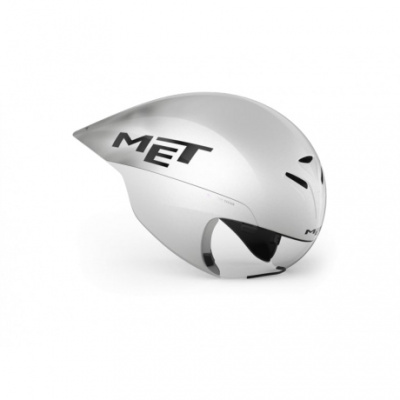
When the clock is running, Met Aero TT Helmets are built around one idea: aerodynamic drag is the enemy, and every design decision exists to fight it. Met develops these helmets in the wind tunnel and refines them with WorldTour teams, so the shapes you see on the shelf have been earned rather than assumed. What sets Met apart is how they think about the whole system - airflow isn't just managed over the head, it's directed across your shoulders and down your back, reducing drag at a full-body level. That's the thinking behind their Wide Body aerodynamic concept, and it's more meaningful than it sounds when you're pushing hard on a dual carriageway with a headwind doing its worst.
The range splits cleanly between long-tail and short-tail profiles. Long-tail designs deliver the lowest drag numbers when your head stays locked in one position. Short-tail helmets give you more crosswind stability and better performance when your head moves - think technical sporting courses or exposed sections where the wind shifts. Both approaches include the Mag-Clip Shield magnetic visor system, MIPS-C2® brain protection, and the Safe-T Orbital fit system. Whether you're chasing a club-run PB or lining up for a national qualifier, there's a Met time trial helmet matched to how you actually race.
Prices and availability can change quickly. Delivery charges are not always included in listed prices.
Final price, stock status and delivery terms are set by retailer. We may receive a commission on purchases made.
Aerodynamics and Ventilation: Drag Reduction Without the Sauna
The Wide Body aerodynamic concept is the engineering thread running through Met's TT range. Rather than treating the helmet as an isolated shape, Met's wind tunnel work looked at how airflow behaves when it leaves the helmet and hits your shoulders. The Wide Body profile pushes that air outwards, reducing the turbulent wake that builds up behind a rider's head and torso. It's a measurable drag reduction on top of whatever the helmet shell itself achieves - and on a 25-mile TT, those watts add up.
Ventilation is the trade-off that TT helmets always have to navigate. Seal everything up for aero gains and you cook at threshold effort. Met's answer is strategically placed front intakes and internal air channels through the EPS liner that keep air moving without punching holes in the aerodynamic profile. The polycarbonate outer shell maintains the smooth surface that matters for drag reduction, while the EPS liner does the structural and thermal work underneath. It's not as breezy as a road helmet - it was never going to be - but for the duration of a typical British time trial effort, heat build-up is manageable. That said, if you're racing longer triathlon distances in warm conditions, check the specific model's ventilation spec before committing.
Anti-fog performance matters more than most riders expect. Early morning club TTs on damp autumn mornings in the UK mean a cold visor hitting warm, humid air from your effort. Met's ventilation channelling helps reduce fogging at the lens, which is genuinely useful when you need clear sightlines through a technical finish section.
Choosing Between the Met Drone and Met Codatronca
The two helmets you'll spend most time deciding between are the Met Drone Wide Body and the Met Codatronca, and the choice comes down to how you ride rather than which looks faster in a photo.
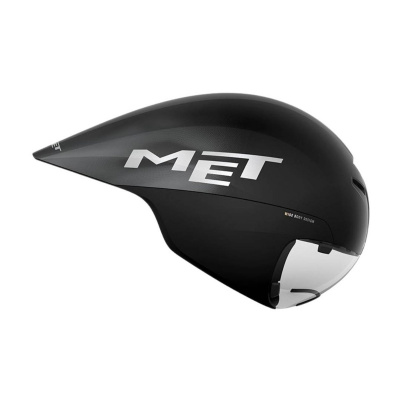
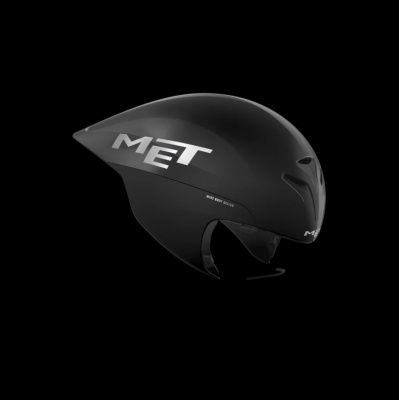
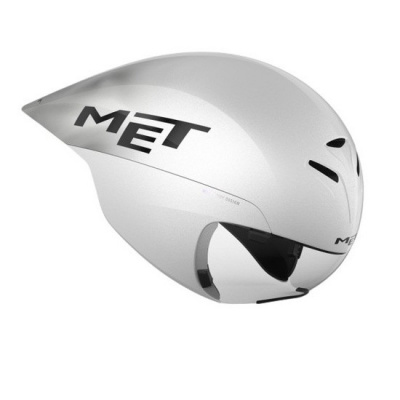
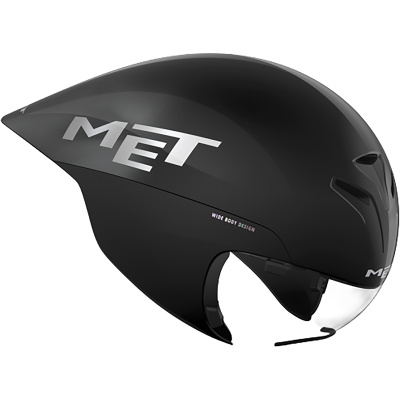
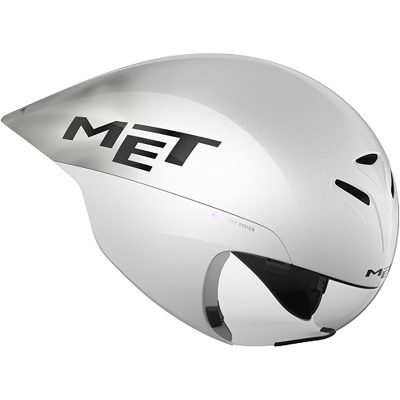
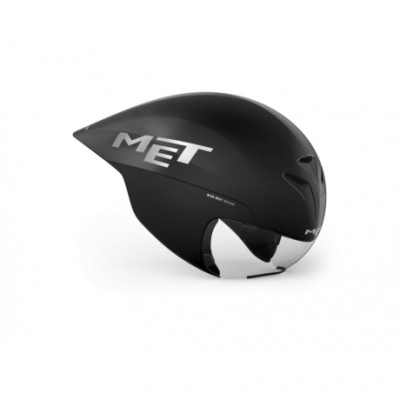
The Met Drone is a long-tail helmet - the tail extends down towards your back to smooth the transition between helmet and spine when you're locked into your aero position. In that static, chin-down posture, it's the lower-drag option. The Wide Body shaping extends that advantage by managing shoulder airflow simultaneously. If you race on flat, open courses and your bike fit allows you to hold an aggressive position for the full duration, the Drone is doing real aerodynamic work in your favour. It suits riders who've dialled their position on the turbo and can replicate it on the road without looking around much.
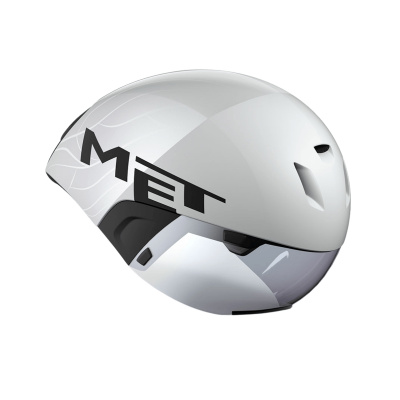
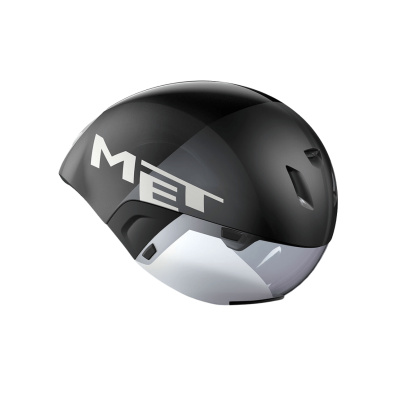
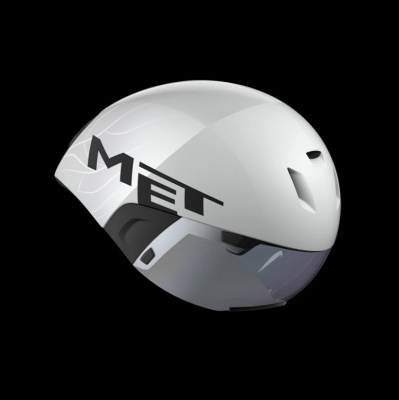
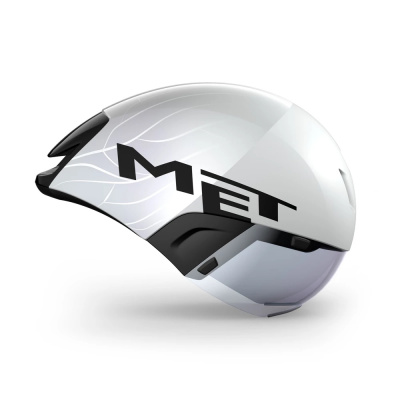
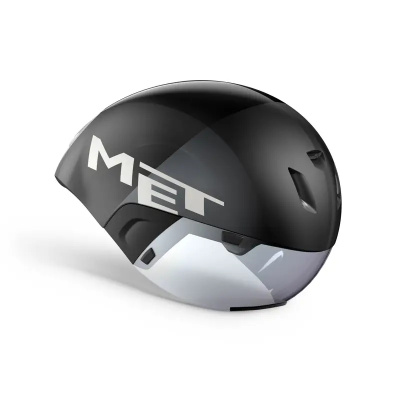
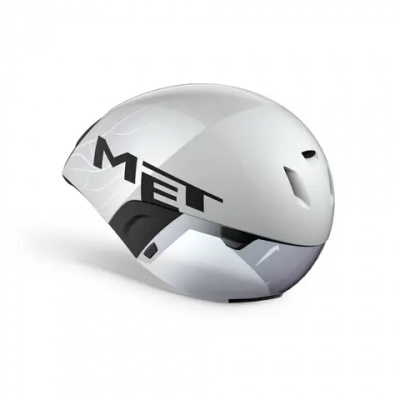
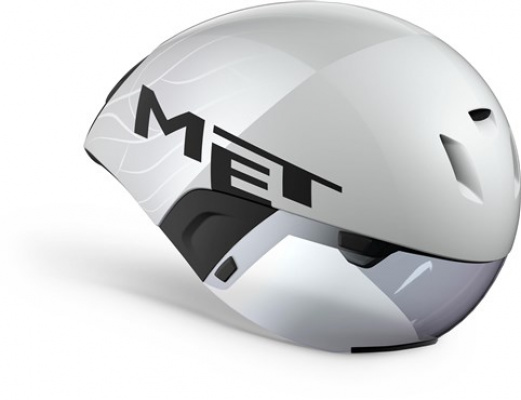
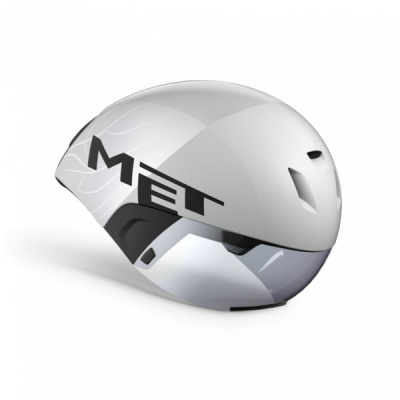
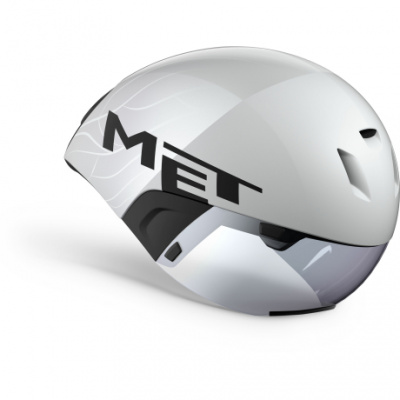
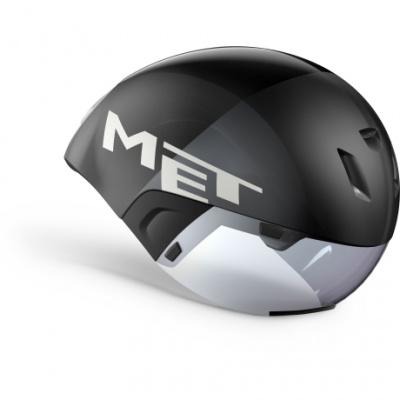
The Met Codatronca takes a different approach. It's a short-tail aero helmet with a wider front profile, and it's faster the moment your head lifts or turns. On exposed UK dual carriageway sections where crosswinds arrive without warning, a long tail can act like a weathervane - creating instability that costs you energy and concentration. The Codatronca sidesteps that. It's also the more practical choice for sporting courses with roundabouts, junctions, or climbs where you naturally look around. Compared to something like a Giro aero TT helmet in the short-tail category, the Codatronca's Wide Body shoulder-airflow management gives it a point of difference worth understanding.
Fit is where both helmets either work for you or they don't, and Met has done the right things here. The Safe-T Orbital fit system uses a dial-adjustable cradle that wraps around the back of the skull - not just a horizontal band, but a system that accounts for head shape in multiple planes. That matters on a TT helmet because the fit has to stay secure when you drop your chin to your chest and your body weight shifts forward onto the extensions. A helmet that slides even slightly disrupts the aerodynamic seal between the tail and your back. Dial it snug, check it moves with you rather than against you, and you're sorted. The Fidlock magnetic buckle on the chinstrap completes that picture - one-handed magnetic closure that's quick to operate with gloves on and locks positively without fiddling.
MIPS-C2® brain protection is integrated into Met's TT helmets, which puts them ahead of some rivals - Kask aero TT helmets and POC aero TT helmets handle rotational impact management differently, so if MIPS is a requirement for you, Met's approach is worth noting. MIPS-C2® is a low-profile liner system that allows the helmet to rotate independently of the head during an angled impact, reducing rotational forces on the brain. It adds minimal weight and no perceptible bulk.
Visor Systems and Racing in British Conditions
The Mag-Clip Shield is one of Met's more practical pieces of engineering. The visor attaches magnetically, which means it clicks into place cleanly and releases without tools. On race morning, when you're juggling a number, a skinsuit, and a pre-race routine, that matters. It also means swapping between a clear lens for dull mornings and a tinted lens for bright days takes seconds rather than minutes.
Anti-fog performance is built into the ventilation design rather than relying purely on lens coatings. On the kind of overcast, damp morning that UK time trials specialise in - think a late-season 10-mile on a Somerset A-road - having airflow across the inner lens surface is the difference between a clear view and squinting through condensation by the second mile. It's not a solved problem across all conditions, but Met's approach is better than a sealed visor with no airflow path.
Short-tail helmets like the Codatronca have a practical crosswind advantage on the exposed sections common to UK TT courses. Long dual-carriageway stretches in Lincolnshire or the Fens can throw lateral gusts that a long tail amplifies into a handling distraction. If your regular course has that kind of exposure, the short-tail profile removes a variable. It's a trade-off - you give up some straight-line aero efficiency in exchange for stability and composure, and for many British courses that's a worthwhile swap.
If you need a replacement visor or fresh retention pads down the line, our Met helmet spares page covers those components directly. And if you're racing in winter or early spring when temperatures drop before your warmup is done, a thermal skull cap worn under the helmet is a practical fix - our Met headwear range includes options cut to sit flat under a TT shell without disrupting the fit dial.
MET Aero TT Helmets FAQs
Are short tail or long tail TT helmets faster?
A long-tail helmet like the Met Drone delivers lower drag when you hold a static, aggressive head position throughout the effort. The moment your head lifts or turns - or crosswinds push in from the side - a short-tail design like the Met Codatronca becomes the faster choice. Match the helmet to your actual riding position and your typical course, not the wind tunnel headline figure.
Do Met aero helmets come with a visor?
Yes. Met time trial helmets include the Mag-Clip Shield - a magnetically attached visor that integrates cleanly with the helmet's aerodynamic profile. The magnetic system makes it straightforward to remove or swap lenses on race morning, which is useful if conditions change between warm-up and the start ramp.
How should a time trial helmet fit?
It should sit low on the forehead and feel snug without any pressure points. Use the Safe-T Orbital dial to lock the cradle around your skull, then drop into your aero position and check the helmet doesn't shift. If it moves when you tuck your chin, tighten the dial further - any movement breaks the aerodynamic line between the tail and your back.