
Fingerscrossed Base Layers
FINGERSCROSSED base layers sit at the foundation of how well everything else you wear actually works. Get this layer right and your jersey breathes properly, your jacket doesn't clam up, and you stay comfortable from the first pedal stroke to the café stop. Get it wrong and no amount of Gore-Tex overhead will save you from that cold, clammy feeling on a long descent.
The FINGERSCROSSED cycling base layer range is built around one clear idea: aggressive moisture management next to the skin, so sweat moves away from your body before it gets a chance to chill you. That's done through hydrophilic yarn treatments that pull moisture to the outer face of the fabric, seamless tubular construction that removes the pressure points and chafe lines you'd otherwise feel under a tight aero jersey, and high-stretch elastane blends that keep the garment locked to your skin whatever position you're in on the bike.
There's a summer vs winter cycling base layers split in the range, too - open-mesh structures for hot, humid days and denser weights for cold-weather miles. If you're after dedicated female support layers, the FINGERSCROSSED Sports Bras collection is the place to head.
Prices and availability can change quickly. Delivery charges are not always included in listed prices.
Final price, stock status and delivery terms are set by retailer. We may receive a commission on purchases made.
Fabric Tech and Weather Performance: Managing the Microclimate
The difference between a good base layer and a great one comes down to what happens when you're working hard. On a humid July climb in the Peak District, sweat builds fast and a fabric that simply absorbs moisture turns into a cold, wet compress the moment you crest the top and the wind hits. FINGERSCROSSED addresses this with hydrophilic yarn treatments - fibres engineered to actively transport moisture from your skin to the outer face of the fabric, where it can evaporate through your jersey rather than pooling against your body. It's the difference between feeling fresh at the top and feeling like you've been shrink-wrapped.
For summer riding, the open-mesh structures used in the lighter-weight variants maximise airflow across the skin. The breathable mesh creates channels that let heat escape and speed up evaporation - genuinely useful when UK humidity makes even moderate efforts feel stuffy. The seamless cycling base layer construction means there are no thick seam lines trapping heat or creating friction across the shoulders.
Winter variants shift the balance. A denser knit traps a thin layer of warm air close to the skin, giving you meaningful insulation on cold February mornings without adding bulk under a thermal jacket. The moisture-wicking function doesn't disappear in the heavier weights, either - thermoregulation is still the priority, which matters on a winter ride where you'll swing between hard climbing efforts and exposed ridge descents in quick succession. Compared to what brands like Assos or Rapha offer at a similar level, FINGERSCROSSED leans into minimalist construction and lets the fabric science do the work rather than adding thermal panels or bonded zones.
Understanding the FINGERSCROSSED Fit
A base layer that doesn't maintain contact with your skin simply doesn't work. If it bags at the torso or bunches behind the shoulders, moisture has nowhere to go and you're just wearing an expensive vest. FINGERSCROSSED uses seamless tubular construction throughout the range - the body of the garment is knitted as a single continuous tube rather than assembled from panels and sewn together. That removes the seam lines that typically cause pressure points under the bib straps of a tight road kit or across the shoulder blades when you're deep on the drops.
The lightweight elastane blend gives the fabric a high degree of stretch in every direction, which means the fit stays consistent whether you're upright on a sportive or stretched out on a time trial setup. It also means the base layer recovers its shape after washing rather than going baggy and loose across the chest. For riders who run slim-cut aero jerseys - and plenty of FINGERSCROSSED's own jerseys are cut that way - there's no excess material to bunch up underneath and create pressure points mid-ride.
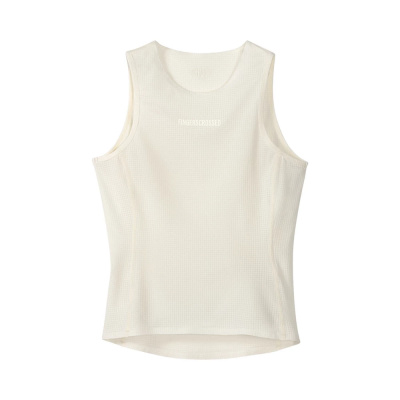
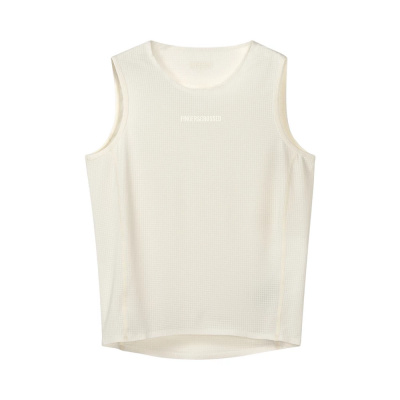
The sleeveless cycling base layer options are worth flagging specifically. They suit riders who run arm warmers independently and want a base layer that doesn't add sleeve bulk under the cuff, or those who simply find a sleeved base layer too warm for anything above a brisk spring morning. The next-to-skin fit across the torso is identical to the sleeved versions - same construction, same wicking performance, just with more freedom through the arms.
Fit tension matters here. The garment should feel snug but not restrictive - think close contact rather than compression. If it's pulling uncomfortably across the chest, size up. If there's any slack at the midriff when you bend forward into a riding position, size down. Brands like MAAP and Pas Normal Studios take a broadly similar approach to next-to-skin fit in their base layer ranges, so if you're familiar with sizing in those, FINGERSCROSSED will feel comparable.
Layering and Care for UK Riding
Building a kit around a FINGERSCROSSED base layer is straightforward once you know which variant to anchor your layering system to. In summer, a sleeveless mesh base layer under a lightweight short-sleeve jersey is often enough for anything above ten degrees. The mesh pulls sweat off your skin, the jersey lets it disperse into the air, and you stay cooler than you would with just the jersey alone - yes, even in the heat. Pair that setup with a FINGERSCROSSED gilet stuffed in a back pocket for the inevitable British weather ambush and you've got most of the riding year covered at the lighter end.
For winter miles, a long-sleeve base layer under a midlayer or FINGERSCROSSED jacket handles the heavy lifting on core temperature. The base layer manages the sweat, the midlayer adds warmth, and the outer shell deals with wind and rain. Trying to do all three jobs with one thick jacket never quite works - this layering approach is always more versatile, especially on rides with big climbs where you're generating heat on the way up and losing it fast on the way down.
Care makes a real difference to how long a technical base layer performs. Wash at 30°C on a gentle cycle - always inside a mesh laundry bag, so the open-mesh structures don't snag on jersey zips or hook-and-loop cuffs in the drum. Never use fabric softener. It sounds counterintuitive, but softener coats the technical fibres and clogs the hydrophilic treatment that makes the moisture-wicking work. Once that's gone, the fabric just holds sweat rather than moving it. Air dry flat rather than tumble drying, and these base layers will hold their shape and performance through a full season of regular use. Worth knowing if you're washing kit multiple times a week through a wet autumn - and in the UK, you almost certainly will be. Picking up a few pairs of FINGERSCROSSED socks at the same time and washing everything together on the same gentle cycle keeps the whole kit in good shape.
Fingerscrossed Base Layers FAQs
Should a cycling base layer be tight?
It needs to sit flush against your skin across the whole torso - that constant contact is what allows moisture-wicking to actually work. Any slack or bagging means sweat pools against your body rather than transferring through the fabric. Snug is right. Uncomfortably restrictive is too far - size up if it's pulling across the chest.
Do I need a base layer for summer cycling?
Worth it, yes - particularly on humid UK days where sweat builds fast. A lightweight, open-mesh base layer pulls moisture away from your skin and lets it evaporate through your jersey, keeping you cooler and drier than bare skin under a jersey alone. It feels counterintuitive but it genuinely works.
How do you wash a FINGERSCROSSED base layer?
30°C, gentle cycle, inside a mesh laundry bag to protect the open-mesh construction from snagging. No fabric softener - it coats the technical fibres and kills the wicking performance over time. Air dry flat rather than tumble drying to keep the elastane blend in shape.