
Fingerscrossed Socks
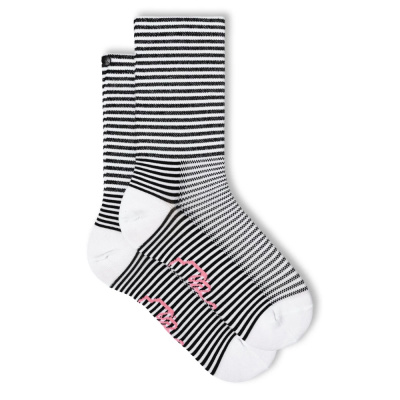
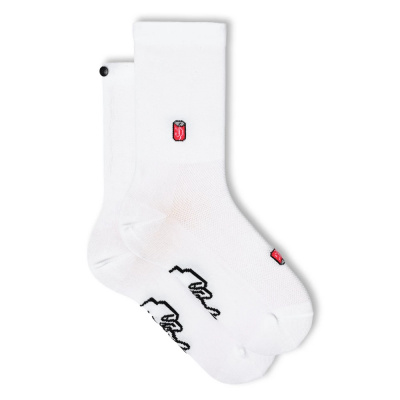
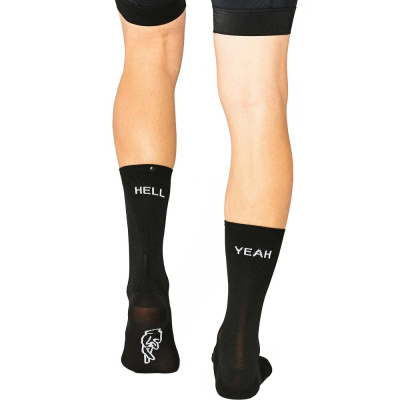
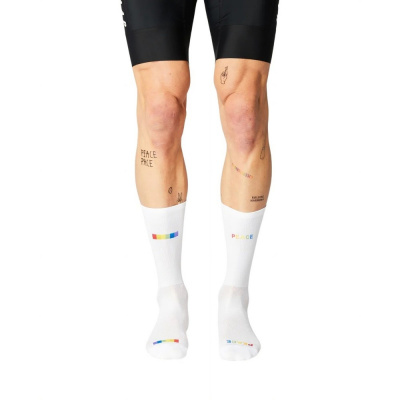
FINGERSCROSSED cycling socks sit in a category of their own - performance-driven, visually sharp, and built around proprietary materials that genuinely change how your feet behave over a long ride. That signature left-sock rivet isn't just a style tic; it marks out a brand that sweats the details most sock makers gloss over.
The core of the range runs on PROLEN®YARN, a proprietary fibre that's roughly 50% lighter than cotton and, crucially, doesn't hold onto moisture. Sweat moves away from your skin fast, which means fewer hot spots and a noticeably drier feel on a humid summer climb or a wet February commute. The compression is high - proper arch-hugging, instep-locking compression - so the sock stays put inside a carbon shoe sole rather than creeping and bunching through the miles.
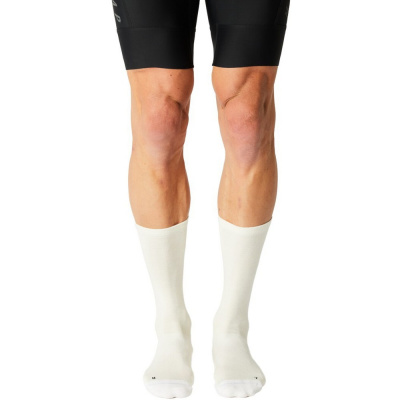
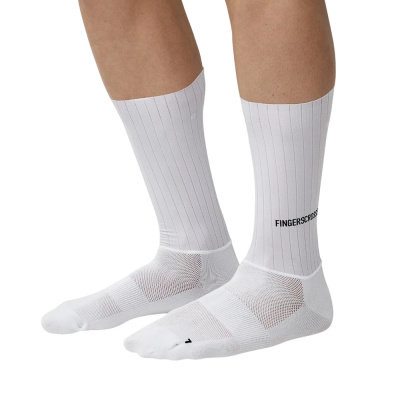
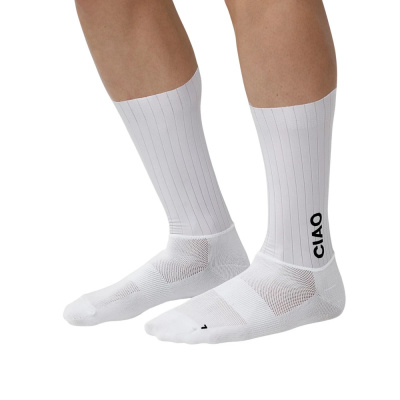
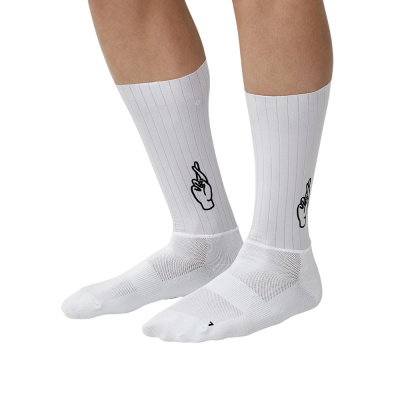
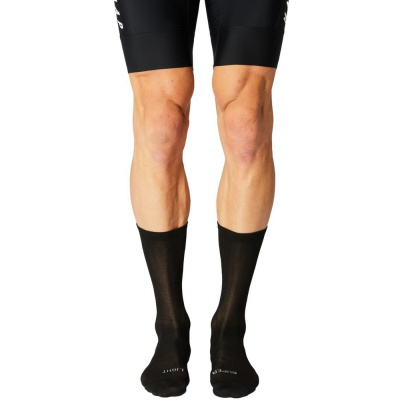
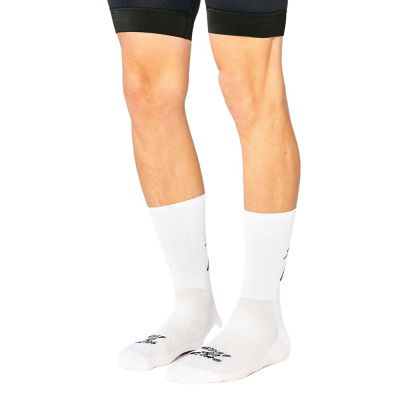
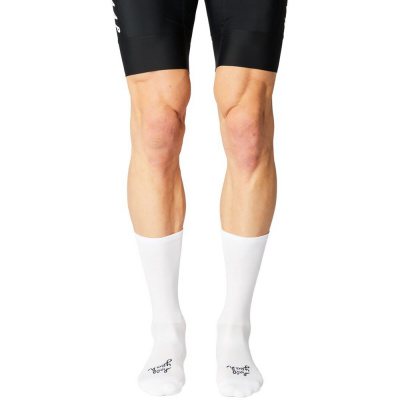
For winter riding, the Merino wool blend range adds genuine insulation that holds its warmth even when road spray has soaked through. And for those chasing marginal gains on race day, the Aero models bring a taller cuff, ribbed fabric, and silicone upper grippers to stop any slippage under load. Whatever the ride, FINGERSCROSSED has a sock built for it - and built to last, thanks to triple-reinforced heel and toe construction that shrugs off gritty UK roads far longer than standard knits.
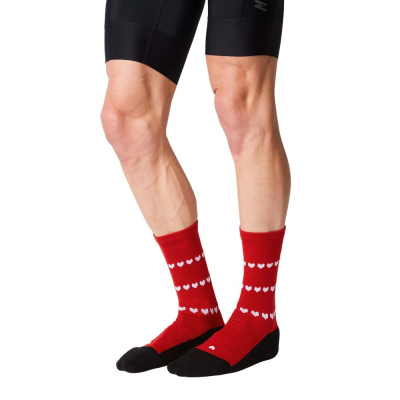
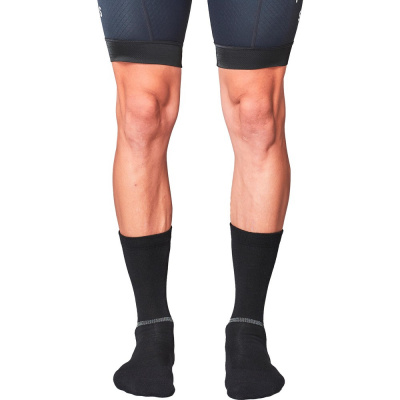
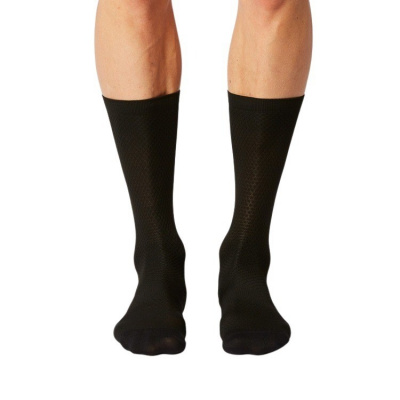
Prices and availability can change quickly. Delivery charges are not always included in listed prices.
Final price, stock status and delivery terms are set by retailer. We may receive a commission on purchases made.
PROLEN®YARN and What It Actually Does for Your Feet
Most cycling socks lean on nylon or cotton blends that absorb moisture and hold it against your skin. PROLEN®YARN works differently - it's hydrophobic at the fibre level, so sweat is transferred outward rather than soaked up. The practical result is a foot that stays drier and cooler on a long summer ride in the Surrey Hills, and one that's less prone to the friction blisters that creep in around the 80km mark when a damp sock starts shifting inside a stiff shoe.
The weight saving matters too. At around half the weight of equivalent cotton constructions, the sock feels barely there - which sounds trivial until you've worn a thick, heavy sock in July and spent the last hour thinking about nothing else. Thermoregulation is genuinely strong across the range, not just a spec-sheet claim; the fibre structure responds to skin temperature rather than sitting as a fixed insulator.
For winter riding - and anyone who's ridden in Scotland or Wales between October and March knows how relentlessly damp the roads get - the merino wool blend range changes the equation. Merino retains warmth when wet in a way synthetic fibres don't, so even after road spray has done its worst, the insulation stays active. Pair them with FINGERSCROSSED overshoes for shoulder-season rides and you've got a genuinely resilient system. On the race end of the spectrum, the Aero socks use a tightly ribbed breathable mesh structure designed to reduce aerodynamic drag - a marginal gain in isolation, but one that stacks with everything else on a time-critical effort.
Classic, Aero, and Winter - Which One's Yours
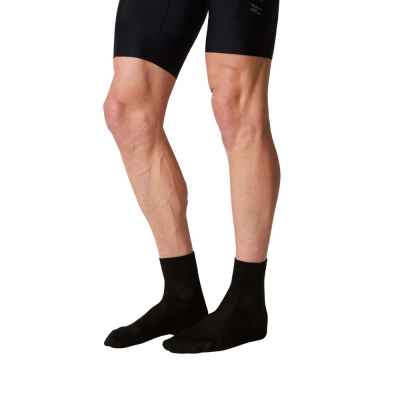
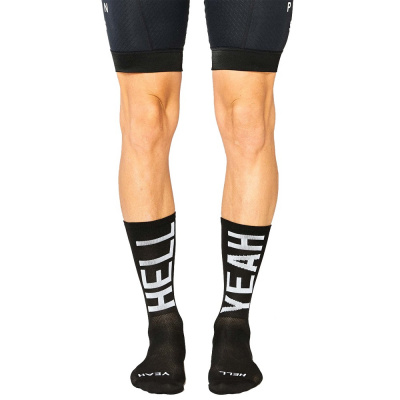
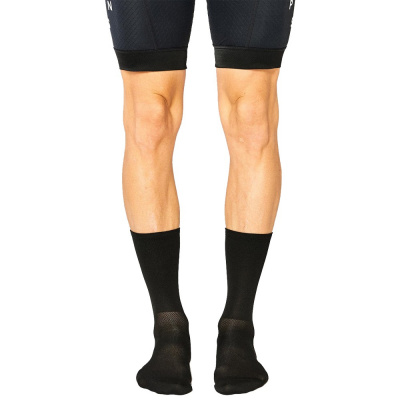
The FINGERSCROSSED range breaks into three clear families, and knowing the difference saves you buying the wrong one. The Classic is your everyday workhorse: mid-calf height, high-compression elastane bands through the arch and instep, and a fit that's tight enough to feel locked in without being restrictive. It's the sock you'd reach for on a four-hour club run or a daily training ride. The compression fit around the instep is worth calling out specifically - it prevents the sock from gathering under your foot inside a carbon-soled shoe, which is one of those small annoyances that becomes a big one after two hours.
The Aero model steps up in cuff height and adds silicone gripper bands on the upper to prevent any movement when you're putting down hard efforts. The ribbed fabric isn't decorative - it's structured to interact with airflow in a way that a plain knit doesn't. If you race, or you're the type who clocks their moving time and takes the data seriously, it's the one to look at. It compares well against what Castelli and MAAP offer at this level - broadly similar aerodynamic intent, though FINGERSCROSSED's proprietary yarn gives it a distinct feel underfoot.
The Winter sock is a thicker, Merino-blended construction built for cold-morning rides when you'd otherwise be doubling up socks inside your shoes. It's not a sock you'd want in July, but from October through to April on UK roads it earns its place. Worth noting: the compression is slightly lower than the Classic to accommodate the heavier knit, so arch support isn't quite as firm - a reasonable trade-off for the added warmth. If you're building out a full cold-weather setup, the socks work well alongside FINGERSCROSSED base layers for a consistent fit approach across the range.
Washing, Layering, and Making Them Last
Get the care wrong and you'll undo everything the materials do well. Wash FINGERSCROSSED socks inside out at 30°C with a mild detergent - that's non-negotiable. Fabric softener coats the fibres and kills the moisture-wicking properties of both PROLEN®YARN and Merino; it might feel like you're being kind to the sock, but you're quietly wrecking it. Never tumble dry them. High heat degrades the high-compression elastane bands in the arch and destroys the silicone gripper adhesion on the Aero models - two features that are central to why the sock works. Lay them flat or hang them; they dry fast anyway.
For shoulder-season riding, the Classic sock with a fitted overboot is a solid combination that covers most UK conditions without going full winter mode. If you're between seasons and the temperature is hovering around 8 - 12°C, that pairing will handle a Peak District road ride without overheating on the climbs or leaving you cold on the descents. Compared to brands like DeFeet or GripGrab, FINGERSCROSSED sits at the premium end of the market - the construction and materials justify it, but you do need to look after them to get the longevity the reinforced heel and toe promises.
The triple-reinforced heel and toe is worth a mention here. Road spray forces grit into the shoe-sock interface, and that constant abrasion is what wears out a standard sock from the inside faster than you'd expect. The reinforced zones on FINGERSCROSSED socks resist that friction noticeably longer than typical knits - it's not glamorous engineering, but it's the kind of detail that adds up over a season of regular riding. Rounding out a full kit? The socks sit naturally alongside FINGERSCROSSED bib shorts and FINGERSCROSSED jerseys if you're building a matched setup.
Fingerscrossed Socks FAQs
Are FINGERSCROSSED cycling socks true to size?
Yes, they run true to size - but the compression is firm, so if you're on the border between two sizes or you simply prefer a less snug fit, go up a size. The high-compression design is intentional, not a manufacturing quirk, so it's worth factoring that in before you order.
What material are FINGERSCROSSED socks made from?
The Classic and Aero ranges are built primarily from PROLEN®YARN - a lightweight, hydrophobic synthetic fibre that moves moisture away from skin quickly and lasts longer than cotton or standard nylon blends. The Winter range incorporates a Merino wool blend for insulation that holds its warmth even in wet conditions.
How do you wash FINGERSCROSSED cycling socks?
Wash them inside out at 30°C with a mild detergent. Skip the fabric softener - it degrades both the PROLEN®YARN wicking properties and the Merino fibres. Never tumble dry them; heat breaks down the elastane compression bands and the silicone grippers on the Aero models. Hang or lay flat to dry.