
Acid Saddles
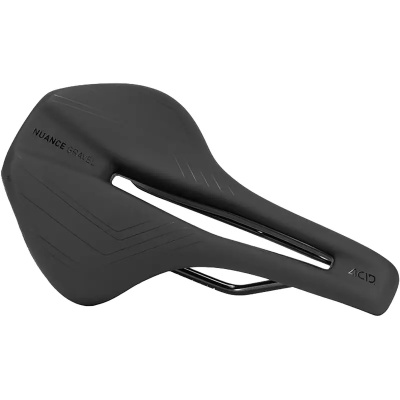
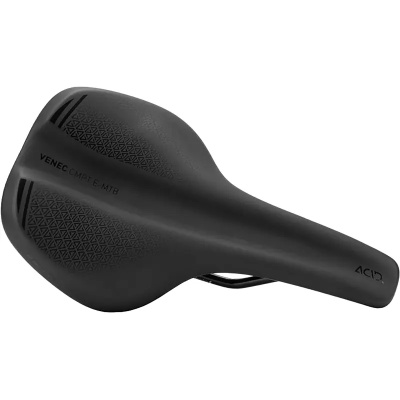
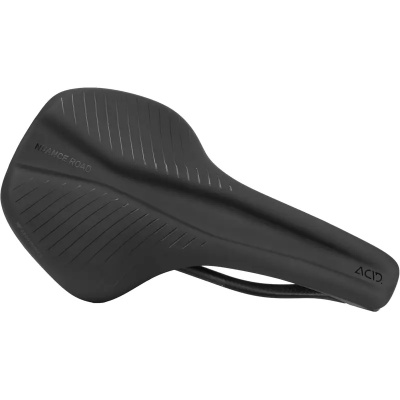
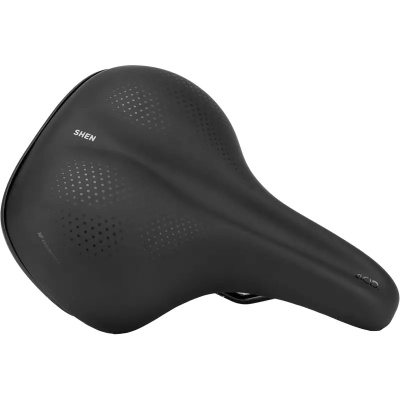
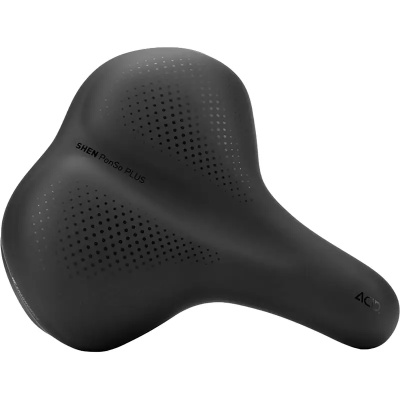
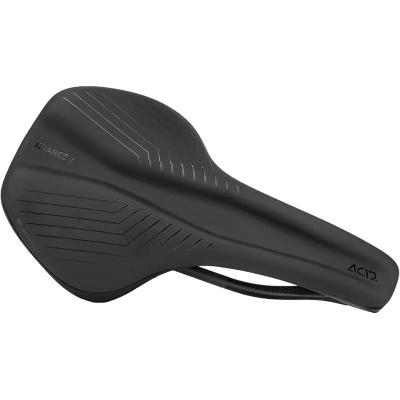
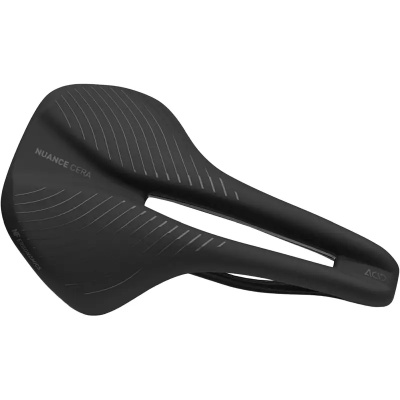
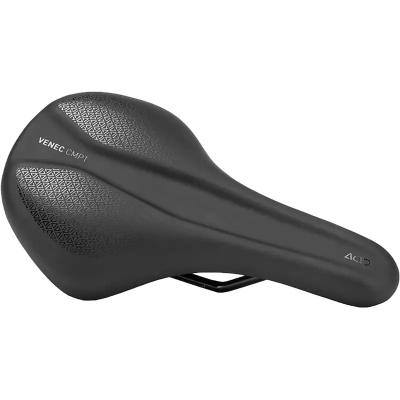
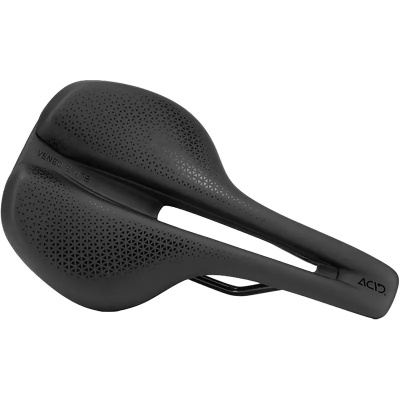
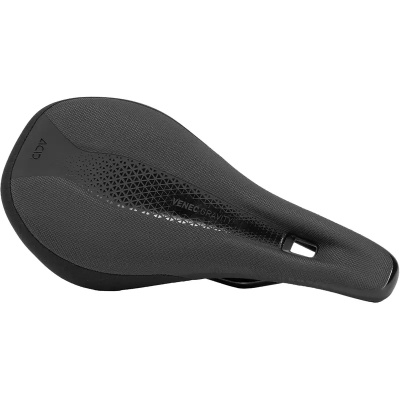
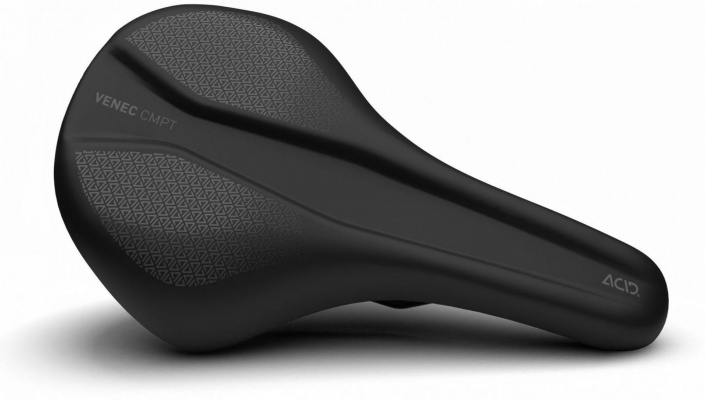
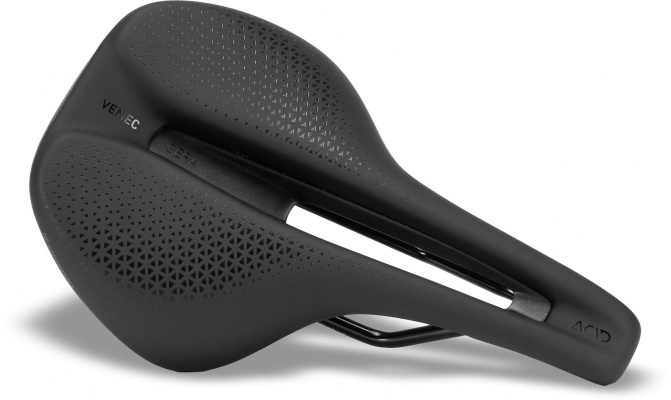
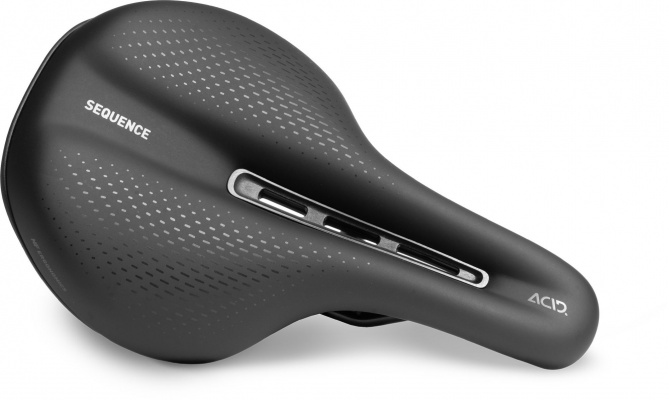
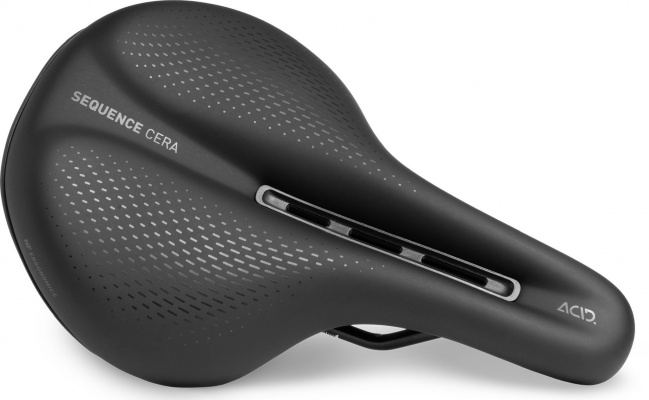
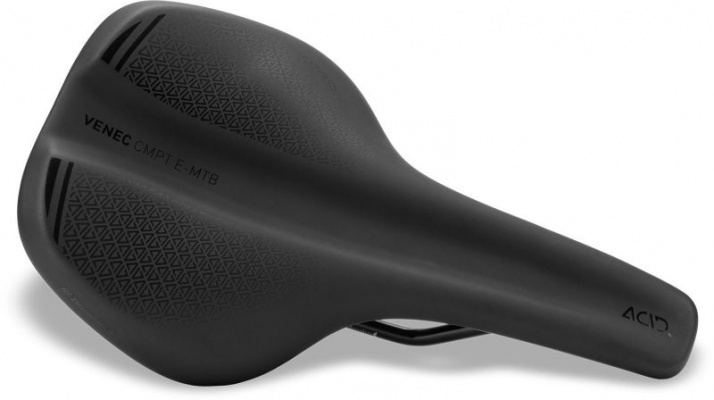
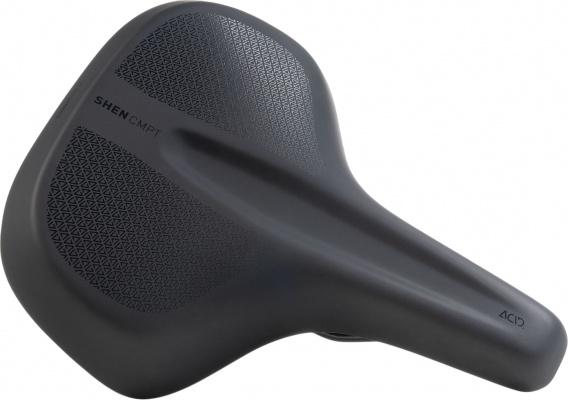
Acid Bike Saddles arrive as the in-house answer to one of cycling's oldest complaints: why does sitting down have to hurt? Born from Cube's engineering labs and refined with input from medical ergonomics specialists, the range tackles numbness, pressure points, and inefficient pedalling through a suite of technologies grouped under the Natural Fit banner. You'll find everything from the race-ready Acid Venec saddle - flat-profiled and stripped back for bent-over aggression on road and gravel - to the plush Acid Sequence saddle, which cradles upright tourers through long days in the Lakes or across the Hebrides. CrMo and carbon rail options keep weight competitive without sacrificing durability, while FlexMotionCut shell cutouts and Deep Shell contouring let your pelvis rotate naturally through each pedal stroke. Designed primarily to complement Cube framesets, these saddles slot just as happily onto any bike with standard 7mm rails. No fuss, no proprietary adapters, just thoughtful geometry that works whether you're hammering out interval sessions on Box Hill or commuting through Manchester drizzle.
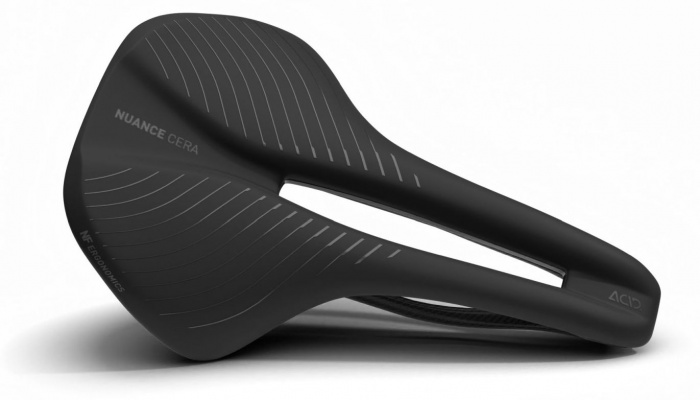
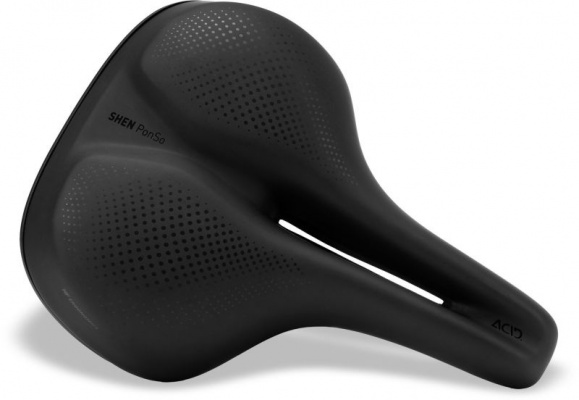
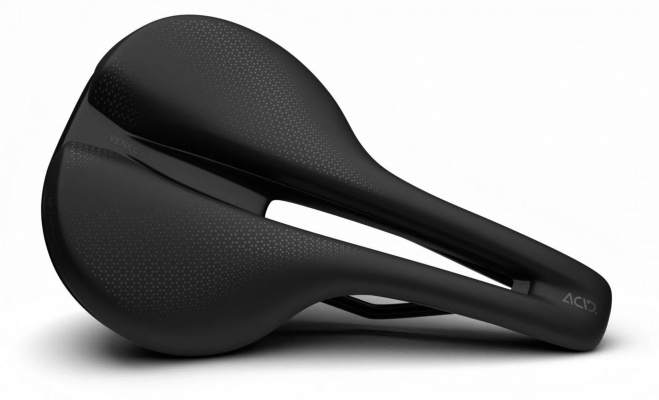
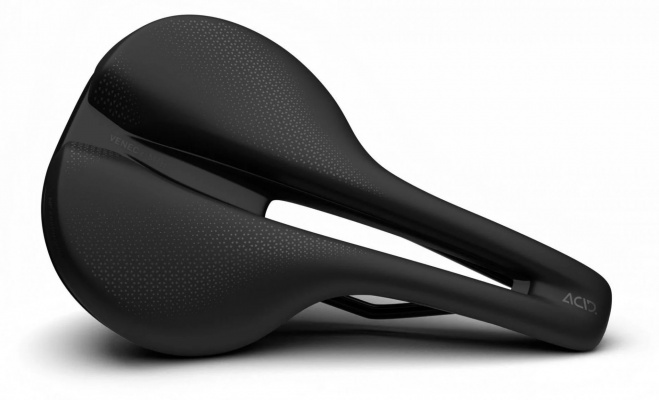
Prices and availability can change quickly. Delivery charges are not always included in listed prices.
Final price, stock status and delivery terms are set by retailer. We may receive a commission on purchases made.
Engineering Comfort: The Natural Fit Concept
The Natural Fit philosophy isn't marketing speak - it's the result of Acid's collaboration with biomechanics researchers who mapped pelvic tilt, soft-tissue pressure zones, and thigh clearance across hundreds of riders. The outcome is a saddle architecture that prioritises functional support over generic padding. At the heart of it sits the Deep Shell, a contoured base that cradles your sit bones and allows controlled pelvic rotation as your back angle shifts through climbs, descents, and flat sprints. Think of it as a cradle rather than a plank.
FlexMotionCut takes things further. This isn't just a pressure relief channel - it's a strategic cutout that flexes under load, reducing numbness in soft tissue while giving your inner thighs clearance during the pedal stroke. No chafing, no dead zones. The shell itself bends slightly with each revolution, absorbing micro-vibrations that would otherwise rattle up through rigid designs. Pair that with Air Foam padding - Acid's proprietary shock absorption material - and you've got a perch that damps out Welsh trail centre chatter without feeling mushy under power. Entry-level models use denser PU covering for durability, while premium variants layer Air Foam over the Deep Shell for a more refined ride. It's a sliding scale: firmer equals more direct power transfer, softer buys you all-day comfort on the South Downs Way.
Model Guide: Venec vs. Sequence vs. Nuance
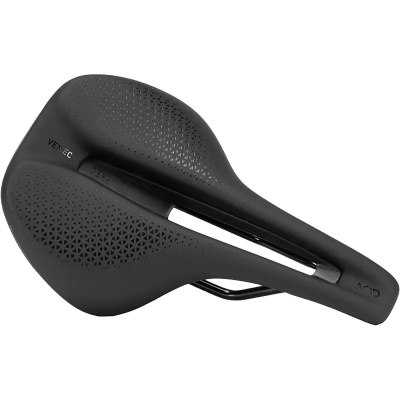
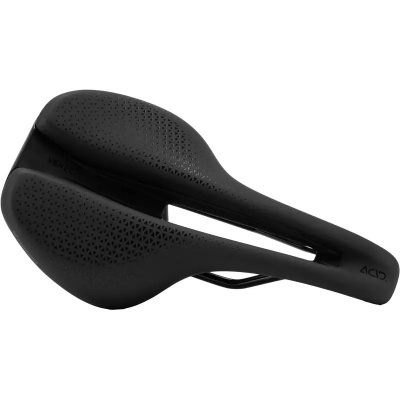
Choosing between Acid's model lines comes down to your back angle and the kind of miles you're logging. The Acid Venec saddle is built for riders who spend most of their time bent low - think road racers, gravel grinders, or XC whippets chasing Strava segments around Swinley Forest. Its T-shaped profile is narrow at the nose, flat across the rear, and designed for a 45-degree torso angle. Minimal padding keeps weight down (often sub-200g with carbon rails), and the firm shell ensures every watt goes straight into the drivetrain. It's not plush, but it's not supposed to be.
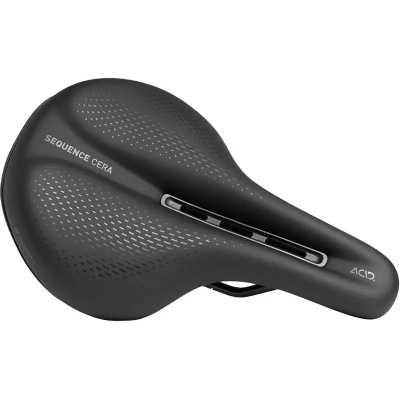
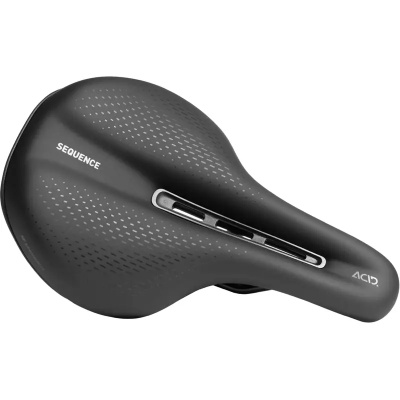
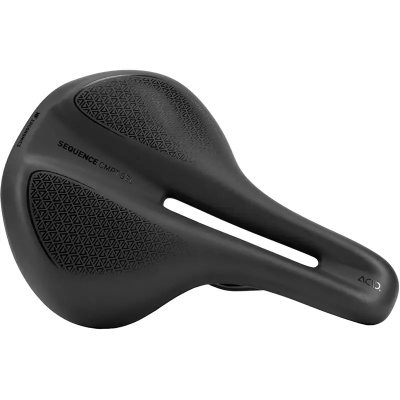
The Acid Sequence saddle flips the script. Wider at the rear, generously padded, and shaped for an upright 90-degree posture, it's the touring and trekking specialist. If you're riding the C2C with panniers or commuting year-round through Edinburgh's cobbles, this is your saddle. The broader sit-bone platform spreads load across a larger area, and the extra Air Foam absorbs the kind of sustained vibration that turns a five-hour ride into a five-hour ordeal on a race saddle. It's heavier, yes, but comfort over distance is the trade-off.
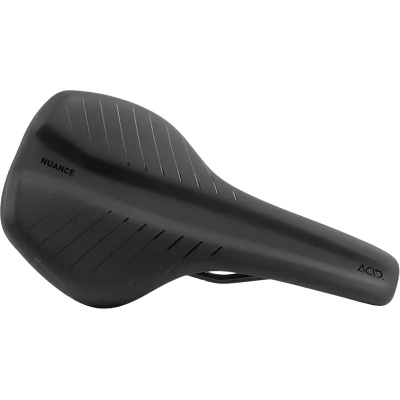
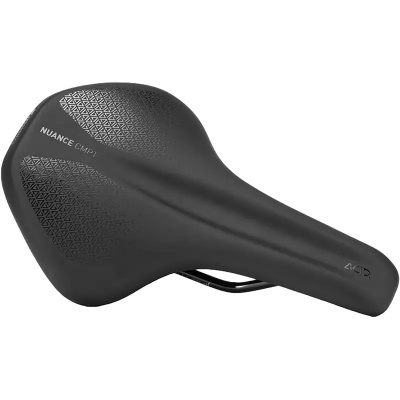
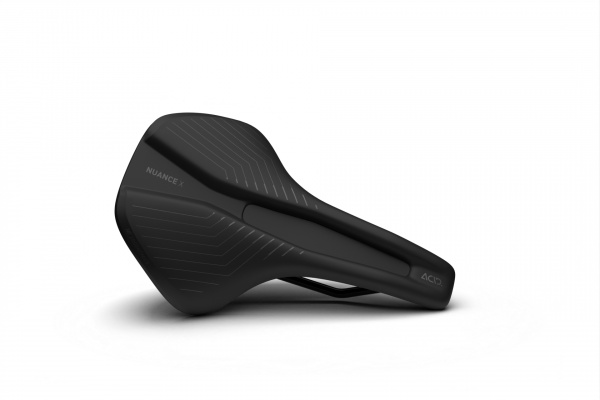
Sitting between them is the Nuance, aimed at athletic city riders and hybrid users who want a middle ground. Moderately padded, moderately wide, it suits the 60-degree back angle of flat-bar fitness bikes and urban hybrids. Not as aggressive as the Venec, not as cushy as the Sequence - just a solid all-rounder for mixed-use riding. If you're hopping between weekend trail centres and weekday commutes, it's worth a look alongside Ergon saddles or Bontrager saddles in the same category.
Sizing and Rail Compatibility
Saddle width isn't a guess. Acid bases its sizing on sit-bone measurement - the distance between the two bony protrusions at the base of your pelvis. Sit on corrugated cardboard or memory foam for a minute, measure the centre-to-centre distance of the two impressions, and add 20-30mm for padding overlap. Most riders fall into either Regular (roughly 130-140mm sit-bone spacing) or Large (150mm and above). Get it wrong and you'll either perch on the edges (too narrow) or chafe on excess material (too wide). Simple as that.
Rail standards are equally straightforward. Acid uses industry-standard 7mm round CrMo rails on entry and mid-tier models, swapping to oval carbon rails on premium variants for weight savings and marginal stiffness gains. Both fit any standard seatpost clamp - two-bolt, single-bolt, or dropper-post cradles. No proprietary fittings, no adapters required. Are Acid saddles compatible with non-Cube bikes? Absolutely. The only Cube-specific feature is the optional SILink saddle adapter, which lets you mount Acid saddlebags without straps - but that's a nice-to-have, not a dealbreaker. If you're running a Cube saddle already and want to upgrade, swapping to an Acid is a straight bolt-on affair. Same goes for any other brand.
One practical note: if you're pairing an Acid saddle with Acid pedals, check your cleat position. A wider saddle can subtly alter your knee tracking, so you may need to tweak cleat alignment to keep everything in line. Not a fault, just biomechanics.
Acid & Cube: A Heritage of Integration
Acid exists as Cube's component arm, developed in-house to ensure every accessory - from saddles to locks - matches the geometry and aesthetic intent of the framesets. If you've bought a Cube bike, fitting an Acid saddle maintains the factory setup: the angles, the weight distribution, the visual cohesion. It's not just about looks - Cube's engineers design saddles to complement specific frame geometries, so a Venec on a Litening road bike or a Sequence on a Touring Hybrid isn't arbitrary; it's calculated.
That said, you don't need to own a Cube to benefit. What sets Acid apart from brands like Fizik or Fabric is the medical-grade ergonomic testing baked into the Natural Fit system. While those brands lean on rider feedback and pro-team data, Acid's development process includes lab-based pressure mapping and collaboration with sports medicine professionals. The result is a saddle range that prioritises measurable comfort metrics - contact pressure distribution, pelvic tilt accommodation, vibration damping - over subjective feel alone. It's a different approach, and it shows in the details: the precise depth of the FlexMotionCut, the multi-density foam layering, the way the Deep Shell flexes under load without collapsing. If you're upgrading from a stock saddle on any brand - Canyon, Specialized, Trek - an Acid is a high-performance swap that won't break the bank or your sit bones.