
Trek Child Seats
Choosing the right Trek child seat starts with one thing: knowing exactly what your bike can take. Trek's range of compatible child seats spans rack-mounted systems built around the MIK HD standard through to frame-mounted options for riders on aluminium hardtails - and getting that match right matters far more than any other feature on the list.
Trek's ecosystem leans heavily on the MIK HD (Mounting is Key Heavy Duty) standard. Where older or budget rack systems wobble under load, MIK HD gives you a rigid, tool-free click-and-go connection that doesn't shift on a fast descent or a lumpy canal towpath. It's a proper mechanical fit, not a strap-and-hope affair.
Whether you're riding a Trek FX Sport, a Dual Sport, or a Trek e-bike like the Allant+, the compatibility question comes first - frame material, rack rating, seat tube clearance, cable routing. Get those right and the rest is straightforward. Get them wrong and no harness system in the world makes it safe.
Browse Trek-compatible child seats below, filtered by mounting type, weight limit, and harness spec. We've pulled together the options so you can match the seat to your bike, not just your budget.
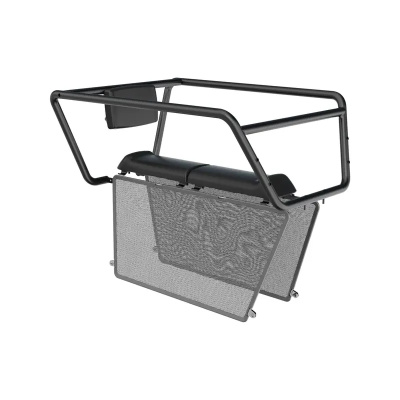
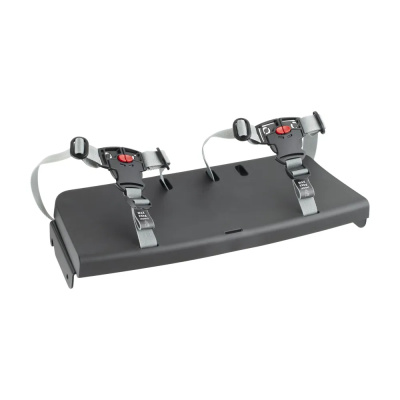
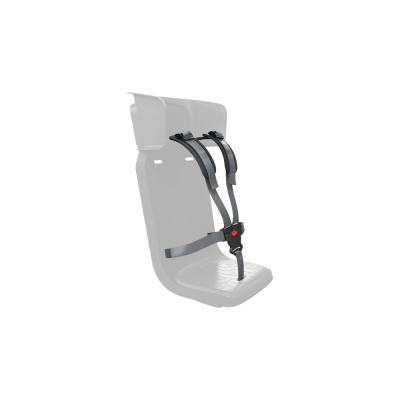
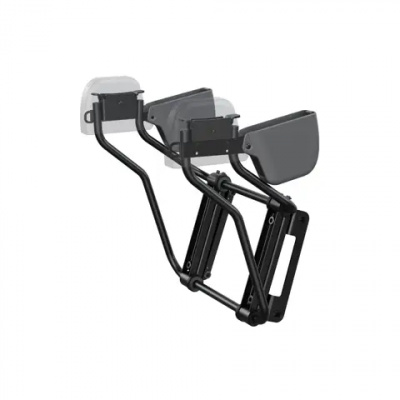
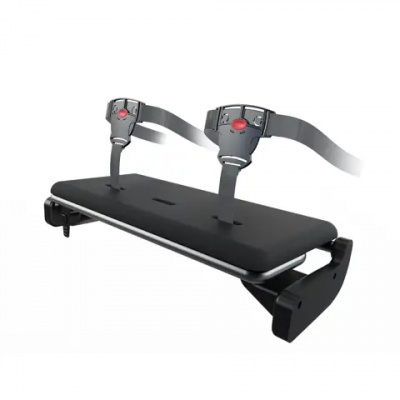
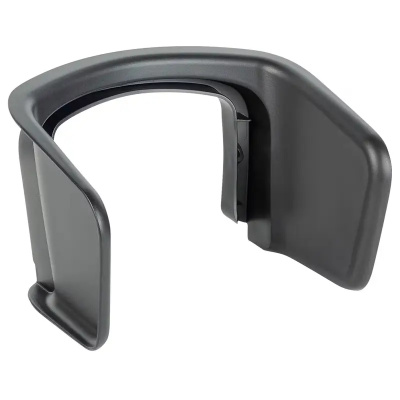
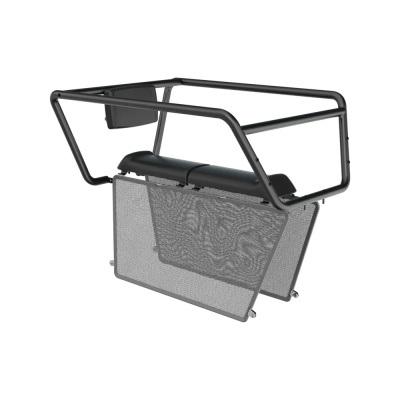
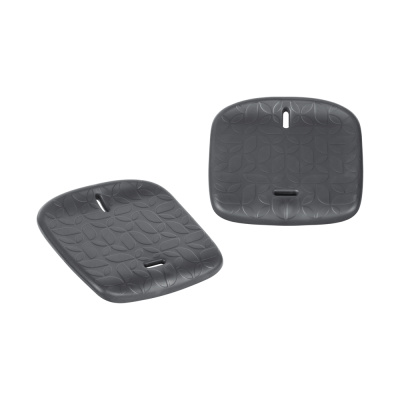
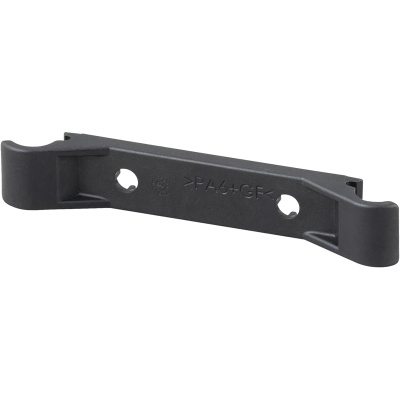
Prices and availability can change quickly. Delivery charges are not always included in listed prices.
Final price, stock status and delivery terms are set by retailer. We may receive a commission on purchases made.
Fitting a Child Seat to Your Trek: Compatibility, Standards, and What to Check First
Not all Trek bikes accept all child seats, and the margin for error here is zero. The single most important distinction is between standard MIK racks and MIK HD racks. Standard MIK is a luggage system - rated to 22kg, not ISO 11243 certified, and not designed to carry a child. MIK HD is a different class entirely: reinforced, rated to 27kg, ISO 11243 certified, and equipped with the specific locking mechanism that compatible child seats require. If your Trek rear rack doesn't carry the MIK HD designation, a rack-mounted child seat isn't an option until you swap it out. A Trek-compatible pannier rack upgrade is the straightforward fix.
Frame material is the other critical factor, and this one's non-negotiable. Never fit a frame-mounted child seat to a carbon Trek. That means no clamping onto the seat tube of a Trek FX Sport Carbon, a Domane, or any other carbon-framed model. The clamping force required to secure the bracket will crush the carbon tubing - it's not a risk calculation, it's a certainty. Carbon doesn't dent and warn you; it fails. Frame-mounted seats belong on aluminium bikes only. Trek's Alpha Aluminum frames, used across the Marlin, Roscoe, and FX range, are the natural home for this mounting style.
On smaller Trek Marlin or Roscoe frames - particularly in shorter sizes - check seat tube clearance carefully before ordering. Frame-mounted brackets need a clear run of seat tube above the front derailleur, and on compact frames with external cable routing, that space can be tighter than it looks on the spec sheet. Measure before you buy. If clearance is marginal, a rack-mounted route via MIK HD is the cleaner solution.
Rack-Mounted vs Frame-Mounted: Which Works on Your Trek
The mounting system you choose shapes how the bike handles as much as how the seat fits. Rack-mounted seats, attached via MIK HD, sit lower over the rear axle. That lower centre of gravity makes a measurable difference on a loaded Trek hybrid or e-bike - the bike tracks more predictably, particularly when you're filtering through traffic or navigating a tight turn at low speed. If you're on a Trek Allant+ or a Dual Sport with a pre-fitted heavy-duty rack, this is the route to take.
Frame-mounted seats work differently. The metal mounting prongs that clamp to the seat tube act as a simple suspension interface, absorbing a degree of road buzz before it reaches the child. On an aluminium hardtail like the Trek Marlin - which has no rear rack and no suspension behind the bottom bracket - that built-in compliance is genuinely useful on a rough bridleway or a badly surfaced school run. The trade-off is handling: a frame-mounted seat raises the load higher, so the bike feels slightly more top-heavy at low speed. Manageable, but worth knowing before you first clip in with a passenger aboard.
Brands like Hamax and Thule produce seats across both mounting styles, with explicit MIK HD compatibility listed on key models. Urban Iki and Bobike also cover both camps. Cross-reference the mounting type against your Trek's specific rack or frame spec before adding to basket - compatibility lists exist for a reason.
UK Conditions and Keeping the Setup Honest Over Time
British roads do child seat hardware no favours. Potholed back lanes, winter grit salt, and the general damp that comes with riding through October to March all work away at the mechanical bits you rely on. A few straightforward habits keep things safe.
On MIK HD setups, the quick-release mechanism in the baseplate can seize over winter if grit and salt work their way into the locking channel. A light application of dry PTFE spray on the mechanism every month or two - not wet lubricant, which attracts more grit - keeps it releasing cleanly. It takes thirty seconds and it means you're not wrestling with a stuck seat in a cold car park when you're already running late for the school gates.
Frame-mounted bracket bolts need checking with a torque wrench every few months. The spec is typically 5 - 8 Nm depending on the manufacturer, and UK road vibration - particularly on the kind of crumbling cycle path surfaces you find across most urban commuter routes - is effective at backing bolts out gradually. You won't necessarily feel it happening. Build a torque check into your seasonal routine alongside checking tyre pressure and brake pads. A kickstand is also worth fitting if you're loading and unloading a child solo - stability while you buckle the harness matters more than it sounds.
Seat padding is worth checking when buying. Closed-cell foam or moulded plastic with a removable, machine-washable cover handles UK weather far better than open-cell foam, which absorbs water, takes an age to dry, and starts to smell within a season. Rust-resistant harness buckles are standard on most quality seats now, but worth confirming. A 5-point harness that retains its adjustment click reliably after a wet winter is the one you want - test the ratchet mechanism before you ride.
Mudguards help, too. A rear mudguard keeps road spray off both the seat and your passenger. Trek-compatible mudguards fit neatly into the existing rack and frame mounts on most hybrid and e-bike models, so it's an easy addition to the family setup. Polisport seats are worth a look if you want integrated mudguard-style rear shells as part of the seat design itself.
Trek Child Seats FAQs
Can I put a child seat on a Trek Marlin?
Yes - a frame-mounted child seat fits an aluminium Trek Marlin provided there's sufficient clear seat tube above the front derailleur. Check cable routing on your specific frame size before ordering. A rack-mounted seat is also possible if you fit an aftermarket rear rack rated to at least 27kg with MIK HD compatibility.
What is the difference between MIK and MIK HD for child seats?
Standard MIK racks are rated to 22kg and designed for luggage only - they are not ISO 11243 certified and are not safe for child seats. MIK HD is a reinforced, heavy-duty standard rated to 27kg, ISO 11243 certified, and equipped with the specific locking mechanism that child seat compatibility requires. Always confirm your rack carries the MIK HD designation before fitting a child seat.
Can I mount a child seat on a carbon Trek bike?
Frame-mounted child seats must never be fitted to a carbon Trek - the clamping force will cause tube failure. There's no grey area here. If your carbon model has mounting points for a reinforced rear rack, a rack-mounted MIK HD seat may be possible, but check Trek's published weight limits for that specific rack and frame before proceeding.