
SDG Pedals
SDG pedals have built a quiet reputation in the flat-pedal world by doing the unglamorous stuff exceptionally well - staying together when rocks intervene, keeping your feet planted when the trail turns to soup, and not demanding a rebuild every other month. The nylon composite bodies are the centrepiece of that pitch: where a machined alloy pedal can snag on a rock and pivot your foot off the platform at the worst moment, SDG's composite construction deflects and moves on. Your momentum stays forward. That matters whether you're picking a line through Peak District grit or navigating rooty singletrack in the Trossachs.
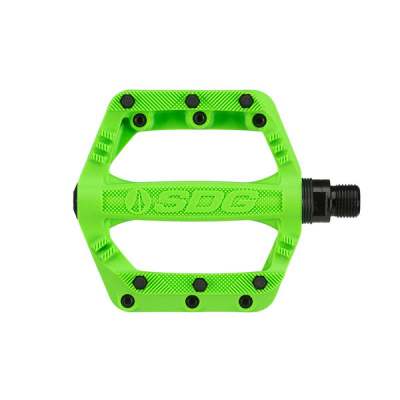
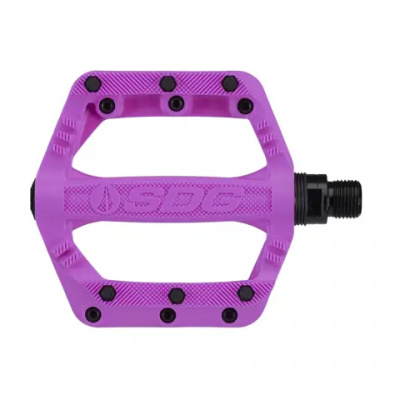
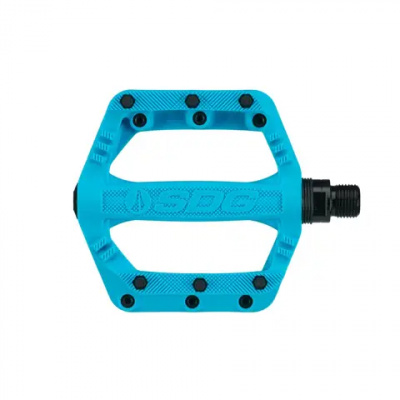
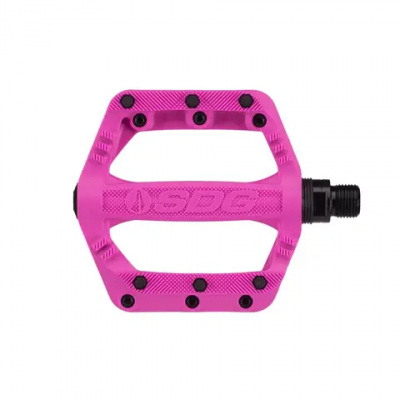
The range is focused rather than overwhelming. The SDG Comp handles adult trail and enduro duty with a genuinely large platform and an aggressive pin arrangement. The SDG Slater scales things down for younger riders - proportioned properly, not just shrunk. Both share the same core engineering: bottom-loading steel traction pins, a CNC machined chromoly axle, and a dual bearing setup that doesn't surrender to a winter's worth of Scottish grit paste. If you're cross-shopping with DMR pedals or Burgtec pedals, SDG sits comfortably in that bracket - dependable, serviceable, and priced where most riders actually shop.
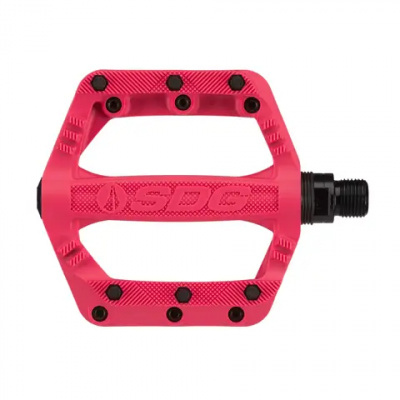
Prices and availability can change quickly. Delivery charges are not always included in listed prices.
Final price, stock status and delivery terms are set by retailer. We may receive a commission on purchases made.
Fitment, Thread Standards and Pin Replacement
Both the Comp and Slater run a standard 9/16 inch thread, so they'll bolt straight onto any modern MTB crank with a 9/16 inch pedal eye - which covers the vast majority of bikes you're likely to be fitting these to. If you're running older one-piece or cottered cranks, those use a half-inch thread and won't accept these spindles, but that scenario is rare enough that it's barely worth mentioning for most buyers.
One practical note: check your crank arm's boot clearance before you torque these in. Some carbon cranks have a pronounced shoulder around the pedal eye, and fitting a washer helps the spindle seat cleanly without stressing the interface. It takes thirty seconds and saves you a headache later. SDG's chromoly axle is CNC machined to tight tolerances, so thread engagement is clean - you're not wrestling them in.
The bottom-loading traction pin design is where SDG earns genuine points over cheaper alternatives. On a top-loading pedal, every rock strike crushes the pin head slightly, making removal increasingly miserable. SDG's pins thread in from beneath the platform, so the heads are protected. When a pin bends after a big rock impact - and eventually one will - you swap it out with a standard hex key in minutes, not an afternoon of swearing. Replacement pins are inexpensive and widely stocked. For a pedal you're running on proper trail bikes, that kind of field-repairability genuinely matters.
Comp vs. Slater: Picking the Right Platform
The SDG Comp is the workhorse. A 110mm x 105mm platform gives you a substantial footprint - wide enough that your shoe isn't hanging off the edge mid-corner, and shaped to suit most adult MTB shoes comfortably. Eighteen pins total, nine per side, are arranged to maximise engagement across the platform rather than clustering them centrally where they'd do less work. In wet conditions on rooty Welsh trail centres or loose Peak District hardpack, that pin count and spread keeps your foot locked without needing to consciously think about placement.
The SDG Slater exists because a scaled-down adult pedal isn't the same as a pedal designed for a child. Shorter cranks on youth bikes mean pedal strike is a real concern, and a full-size platform that extends too far outboard is more hazard than help. The Slater's 90mm x 90mm platform is engineered around proper youth foot placement - smaller shoe, shorter stance width, lower ground clearance needed. It's not a cost-cut version of the Comp; it's a different tool for a different rider. If you're speccing a first proper trail bike for a younger rider, the Slater is the correct choice rather than fitting adult pedals and hoping for the best.
Both models share the same nylon composite body and the same dual bearing system. The spec gap between adult and youth versions is in platform geometry, not in the quality of the internals - which is the right way to do it. Alternatives like Hope pedals or Deity pedals tend toward alloy construction at comparable price points, which brings weight savings but also the rock-snagging trade-off SDG specifically designed around.
Keeping Them Running Through a UK Winter
The nylon composite body does something alloy can't match in thick mud: it sheds it. Alloy platforms have a habit of holding onto a clay-mud sandwich between your shoe and the pins, which kills grip faster than the mud itself. The composite surface gives wet soil less to cling to, so the pins stay exposed and functional. Not a miracle, but a genuine practical advantage on a muddy February ride.
The dual bearing system - a sealed cartridge bearing paired with a DU bushing on the chromoly axle - is what keeps these pedals spinning smoothly over a full riding season rather than developing that grinding, loose-feeling slop that kills cheaper pedals by Christmas. Sealed bearings block the grit paste that builds up on Peak District and Scottish trails; the DU bushing handles the lateral load at the outboard end of the axle. Together they're a more robust setup than a pedal relying on loose ball bearings alone.
Servicing is straightforward and worth doing before winter rather than after. Remove the end cap, unbolt the axle nut, and slide the chromoly spindle out of the body. You'll find the DU bushing and the sealed cartridge bearing accessible at this point. Clean both, check the bushing for wear, and pack everything with a quality marine or waterproof grease before reassembly. That layer of fresh grease is what keeps winter grit from working into the system. Do it once at the start of the season and you'll likely get through without needing to repeat it until spring. If you're refreshing your contact points at the same time, pairing new pedals with SDG saddles or a new SDG dropper post makes sense - worn saddle and sticky dropper post are the two other places your body interfaces with the bike, and they compound each other when neglected. SDG also offer dropper levers if yours is due a replacement at the same time.
One thing worth flagging honestly: nylon composite bodies are more susceptible to sharp impact cracking than alloy in extreme cold. Hard Scottish winter riding on frozen ground is a different proposition from autumn gloop. The trade-off for the mud-shedding and rock-deflection properties is that composite isn't indestructible in every scenario. For most UK conditions, it's the better choice - but if you're regularly riding in hard frost, that's worth factoring in. Crank Brothers pedals offer a different construction approach if alloy body durability in frozen conditions is your priority.
SDG Pedals FAQs
Are SDG pedals good for mountain biking?
Yes, and specifically because of how the nylon composite body behaves on rock strikes - it deflects rather than catching, which keeps your foot on the platform. The Comp's 110mm x 105mm platform with 9 bottom-loading pins per side provides solid grip across trail and enduro riding. For UK conditions in particular, the sealed cartridge and DU bushing combo makes them a sensible long-term choice.
How do you service SDG flat pedals?
Remove the end cap, unbolt the axle nut, and slide the chromoly spindle clear of the body. Clean the DU bushing and sealed cartridge bearing, check for wear, then repack with waterproof or marine grease before reassembling. Doing this once before winter is usually enough to keep them running cleanly through to spring without further intervention.
What is the difference between SDG Comp and Slater pedals?
The Comp is a full-size adult pedal - 110mm x 105mm platform, 18 pins total - suited to trail and enduro riding. The Slater is engineered for younger riders, with a 90mm x 90mm platform sized for smaller feet and shorter cranks where pedal strike clearance is a genuine concern. Both share the same internal bearing setup; the difference is in platform geometry, not component quality.