
Rockrider Touring Bikes
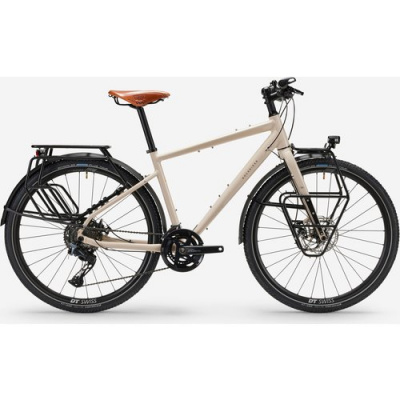
Rockrider touring bikes have quietly become one of the most sensible choices in UK off-road bikepacking - and it's not hard to see why. Decathlon's dedicated mountain bike brand has spent years refining aluminium hardtails that carry weight without complaint, survive grim winter conditions, and don't demand a second mortgage before you've packed a single dry bag. These are bikes built around all-day geometry, robust 1x drivetrains, and frames with enough mounts to strap on a full bikepacking setup and still leave room for a spare derailleur hanger.
The range splits broadly into two directions. The EXPL (Explore) series leans into loaded, long-distance comfort - relaxed geometry, generous tyre clearance, practical frame mounts. The XC hardtails suit riders who want to move faster and lighter, trading some carrying capacity for a snappier ride feel. Both families handle the South Downs Way, the Badger Divide, or a week riding the Welsh hills without drama.
Whether you're planning a supported off-road expedition or just want a hardtail that can double as a weekend tourer, Rockrider offers a clear, well-structured answer at prices that leave budget for the good bivvy gear.
Prices and availability can change quickly. Delivery charges are not always included in listed prices.
Final price, stock status and delivery terms are set by retailer. We may receive a commission on purchases made.
Decoding the Rockrider Off-Road Touring Lineup
The EXPL series is where most touring-focused riders should start. These hardtails use EXPL geometry - a more upright, longer-reach position designed for comfort across multi-hour days rather than chasing KOMs. Frame mounts are built in from the ground up: bottle bosses, fork mounts on some models, and rear dropout eyelets that actually accommodate a rack. Payload capacity is meaningful rather than theoretical. If you're loading up for a Rockrider bikepacking bikes trip lasting several days, the EXPL 500 and EXPL 520 are the natural starting point - both run 29er wheels, use a 1x drivetrain with a wide-range cassette, and come with enough frame clearance to fit tyres substantial enough for genuine off-road use.
The XC range is a different conversation. These are lighter, more performance-oriented hardtail frames with tighter geometry. They're not primarily touring bikes, but riders who want a fast-and-light setup - minimal luggage, high mileage days, moving efficiently - find the XC 100 a capable platform. Less mount real estate, but more composed on technical ground at pace.
If you're here for pure trail riding rather than loaded touring, head over to the Rockrider Mountain Bikes page. And if pedal-assist touring is the goal, the Rockrider E-Bikes range covers that ground instead.
The Tech That Actually Matters When You're Loaded Up
Rockrider's engineering choices read like a checklist written by someone who's been caught out mid-route. The Evo6 frame geometry deserves particular attention: it's designed to maintain rear-wheel stiffness under heavy loads, so the bike doesn't start to feel vague and wandery when you've got three bags hanging off it. That rear-end composure matters more than most riders expect until they've tried a flexy alternative with a full pack.
The U-Fit suspension forks on entry-level models use a weight-adjustable coil system rather than air. Less fiddly in the field - no pump required to re-set sag after temperature changes, and the internals are simpler to service if something goes wrong three days from a bike shop. You lose a little weight savings compared to air forks, but you gain reliability and straightforward maintenance. A fair swap for off-road expedition riding.
Frame mount availability varies by model, so check specs carefully before buying. The better-equipped EXPL models include dedicated points for frame bags, fork bags, and conventional rear rack attachment. For everything you need to fill those mounts, the Rockrider Frame Bags, Bar Bags, Saddle Bags, and Pannier Bags pages are a logical next stop once you've settled on a bike.
Sealed cartridge bearings in the headset and bottom bracket are standard across the range - important when UK riding means repeated dousings in gritty, peaty water. A bottom bracket that lasts a season rather than six weeks is worth more than most spec upgrades at this price point.
Running a Rockrider Touring Rig Through a British Winter
UK conditions are fairly unforgiving on touring bikes. Welsh clay in January is a different proposition to a dry Spanish gravel track, and the bikes need to cope accordingly. The good news: 29er EXPL models typically offer enough frame and fork clearance to run 2.4-inch tyres without packing out with mud every hundred metres. That clearance is non-negotiable if you're riding anything resembling a bridleway after prolonged rain.
The 1x drivetrain setup - most models running Microshift or Shimano depending on spec level - keeps the chain line simple and reduces the number of components that can get clogged or bent. Fewer cables, fewer moving parts, more reliable when the going is grim. For the Badger Divide or the South Downs Way in November, that simplicity pays off. Check your chain wear more frequently than you think necessary; abrasive grit accelerates wear faster on 1x systems where the chain does all the gear-range work.
Rear rack compatibility is worth a moment's thought. Entry EXPL models with traditional dropout eyelets take a standard rack without fuss. On higher-spec frames that ditch the upper seat stay bosses in favour of a cleaner line, you'll need a seat collar clamp adapter to mount a conventional rack - not a deal-breaker, but worth knowing before you're standing in a car park wondering why the rack won't fit. Many riders on these models skip the rack entirely and run a large bikepacking setup with frame bags instead, which sidesteps the issue completely.
Tyre choice is probably the single highest-impact upgrade you can make to a Rockrider for UK touring. The stock rubber is functional, but a set of more aggressively treaded or tubeless-ready options transforms wet-weather grip and puncture resilience. Browse the Rockrider MTB Tyres range for compatible options. If you're comparing the broader Rockrider off-road touring bikes proposition against panniers-and-road alternatives, it's also worth a look at what Riverside Touring Bikes offer - a different approach to the same loaded-riding problem.
Rockrider Touring Bikes FAQs
Are Rockrider mountain bikes good for touring?
Yes. Rockrider hardtails - particularly the EXPL series - are well-suited to off-road touring and bikepacking. The aluminium frames are robust, the geometry favours all-day comfort over outright speed, and the 1x drivetrains are reliable enough for multi-day trips on rough ground. They're not perfect-fit expedition bikes, but at the price they're difficult to argue with.
Can you put a pannier rack on a Rockrider bike?
On most entry-level EXPL models, yes - there are standard rear dropout eyelets that accept a conventional rack without adapters. Higher-spec frames sometimes omit the upper seat stay bosses, in which case a seat post clamp adapter solves the problem. Alternatively, a large saddle bag or full bikepacking setup avoids the rack question entirely.
Which Rockrider bike is best for bikepacking?
The EXPL 500 and EXPL 520 are the strongest all-round choices for loaded bikepacking - comfortable geometry, solid 1x drivetrains, decent frame mounts, and enough tyre clearance for UK conditions. If you're riding faster and lighter with minimal luggage, the XC 100 is worth considering, though it has less mount real estate.