
Kx Wheels Gravel Wheels
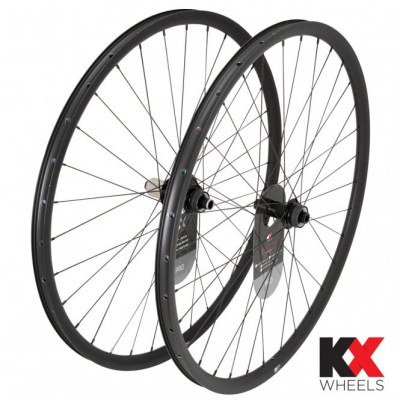
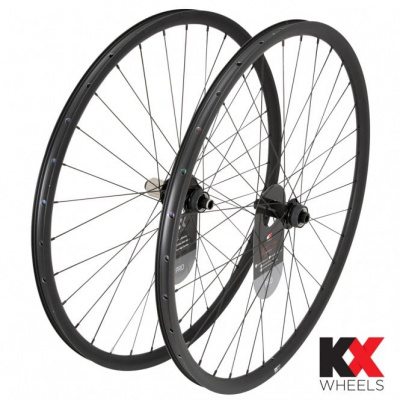
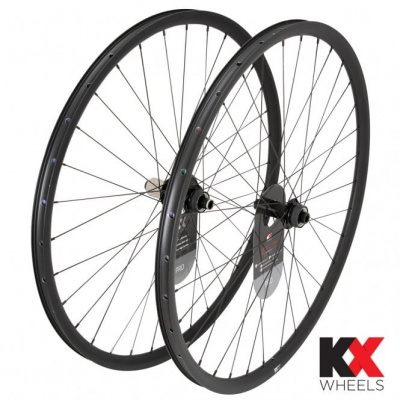
KX gravel wheels sit at an interesting crossroads: wide enough to run proper volume tyres at low pressure, stiff enough to track accurately when the path turns rough, and built with bearing quality that doesn't give up the moment winter mud gets involved. That's a harder combination to nail than it sounds. Most riders upgrading from stock wheels notice the difference immediately - not just in weight, but in how the bike responds to input on loose climbs and rooty descents. KX wheelsets are available in both 700c and 650b formats, covering everything from fast mixed-surface riding to gnarlier, loaded gravel routes. The internal rim profiles are sized to get the best from 38c to 45c tyres, keeping the tyre shape consistent rather than ballooning it out. Sealed cartridge bearings and a fast-engaging freehub round things out, so you're not losing drive when you stamp on the pedals out of a tight corner. Whether you're picking your way across South Downs flint in November or clocking up long summer miles on bridleways, there's a KX wheelset worth considering. Compare current UK prices in the listings below.
Prices and availability can change quickly. Delivery charges are not always included in listed prices.
Final price, stock status and delivery terms are set by retailer. We may receive a commission on purchases made.
Fitment Standards and What Actually Fits
Get the axle standard wrong and you've bought yourself a very expensive paperweight. KX gravel wheels use 12x100mm thru-axles front and 12x142mm rear - both the current standard across modern gravel and adventure bikes, so compatibility isn't usually an issue unless you're running an older quick-release frame. Worth double-checking before you buy.
Rotor mounting is predominantly Centerlock disc, which makes swapping rotors quick and keeps the interface clean. If your existing rotors are 6-bolt, a standard Centerlock-to-6-bolt adapter sorts it without drama - your local mechanic will have one, or they're easy to source.
Internal rim width matters more than most riders give it credit for. KX gravel wheels typically run a 24mm internal rim width or wider, which is the right profile for tyres in the 38mm to 50mm range. Go narrower than that and you risk the lightbulb effect - where the tyre rounds out unnaturally, handling suffers, and puncture resistance drops. The 24mm-plus profile keeps the tyre's casing doing what it was designed to do, which directly affects how it grips in loose conditions. Most KX rims also feature hookless rims construction on their higher-spec options; check the max tyre pressure rating on the rim bed if you're going hookless, as the ceiling is lower than a hooked rim.
Freehub compatibility covers both Shimano HG and SRAM XDR bodies depending on the model, so check which you need before ordering. Need to swap from Shimano HG to SRAM XDR, or looking for replacement pawls? Check out our dedicated KX Wheels MTB Wheels page for related drivetrain spares and freehub options across the KX range.
Alloy or Carbon - Where the Money Goes
KX's gravel wheel range splits into two clear camps, and the choice isn't just about budget - it's about what kind of riding you're doing and how often you're doing it.
The alloy wheelsets are the workhorses. Heavier, yes, but genuinely robust against the kind of abuse that UK gravel dishes out - think compacted flint edges, cattle-grid impacts, and the occasional accidental ditch. They're also more straightforward to repair if a rim takes a knock. For riders who do most of their miles in autumn and winter, or who want a training set to thrash without anxiety, the alloy options make a lot of sense. The double-sealed cartridge bearings run through both tiers, so you're not sacrificing bearing quality by going alloy.
Step up to carbon and the difference is rotational weight, which you feel most on long climbs - less so on flat gravel paths. Carbon layups in the KX premium tier are also stiffer laterally, which translates to better tracking through rutted sections where an alloy rim might flex enough to feel vague. Straight-pull spokes feature on the higher-end models, improving spoke tension consistency and reducing the chance of a spoke working loose after hard use. The bearings are also upgraded, running tighter tolerances that suit high-torque off-road riding.
The honest trade-off: carbon rims are more vulnerable to sharp impacts than alloy, and a cracked rim is a write-off rather than a workshop fix. If you're riding exposed chalk downs with loose flint regularly, factor that in. If you're doing longer, smoother gravel routes where pace matters, carbon earns its cost. Riders wanting to compare KX's carbon tier against alternatives should also look at DT Swiss gravel wheels and Hope gravel wheels, both of which offer similarly constructed options at comparable price points. Mavic gravel wheels are worth a look too if you favour integrated tyre systems.
One thing consistent across the range: the RapidEngage pawl system. It reduces the engagement angle to near-instant pickup, which matters when you're ratcheting through a technical section or punching out of a slow corner on a loose climb. You feel it most when traction is marginal - the drive is there before you've had time to think about it. That's a meaningful functional advantage over freehubs with sluggish engagement, not just a spec-sheet figure.
Keeping KX Wheels Running Through a UK Winter
UK winters are genuinely hard on wheels. It's not just the rain - it's the combination of grit, road salt, chalk paste, and the kind of sustained mud that finds every gap in a bearing seal. Knowing what needs attention, and when, keeps your wheels performing and saves you from an expensive bearing replacement mid-season.
The sealed cartridge bearings in KX wheels are designed for exactly this environment, but sealed doesn't mean immortal. Pull the freehub body off every three to four months of wet-weather riding, clean out any grit that's worked its way into the freehub body, and re-grease the pawls and pawl springs. It takes twenty minutes and prevents the kind of gradual degradation that ends with a freewheel that skips under load - never a good moment on a climb.
The bearing shells themselves are worth inspecting at the same time. Spin each bearing by hand and feel for any roughness or grittiness. If there's resistance, replace them before they score the bearing seats. Cartridge bearings are cheap; bearing seat repairs aren't.
On the tubeless side, sealant dries out faster than most riders expect - particularly in cold weather. Refresh your tubeless ready setup every three to four months, and definitely before you head out on anything sharp. South Downs flint is particularly punishing on sealant that's past its best; it'll seal small holes, but only if there's enough fluid left to do the job. Check sealant levels by removing the valve core and using a syringe - it takes two minutes and gives you a clear read without cracking the bead.
Spoke tension is worth a periodic check too, especially after any impact. A loose spoke will quickly affect wheel true and can cascade into a more significant wheel failure if left. Most KX gravel wheels leave the factory with tension well set, but a few months of hard use on rough surfaces can shift things. A basic spoke key and a few minutes at the truing stand pays dividends. If you also run a KX road set, the same bearing maintenance logic applies - see the KX road wheels section for model-specific guidance. For a broader look at how KX compares across the wider gravel wheel market, Fulcrum gravel wheels offer a useful Italian-engineered reference point at similar spec levels.
Kx Wheels Gravel Wheels FAQs
Are KX gravel wheels tubeless ready out of the box?
Most current KX gravel wheels come pre-taped and include tubeless valves, so the rim bed is ready to go. You'll need to add your chosen tubeless tyres and sealant to complete the setup. It's worth checking the specific model listing to confirm, as a small number of entry-level options may require additional tape.
What is the maximum tyre width for KX gravel wheels?
On rims with a 24mm internal width - which covers most of the KX gravel range - you can safely run tyres from 35mm up to 50mm. Always cross-reference with your frame's clearance before fitting the widest options. Running a tyre significantly narrower than the internal rim width will affect casing shape and handling.
Do KX gravel wheels use Centerlock or 6-bolt rotor mounts?
KX gravel wheels predominantly use Centerlock disc rotor mounts, which are quicker to fit and give a cleaner interface. If you're running 6-bolt rotors, a standard Centerlock-to-6-bolt adapter works without issue and is widely available from any bike shop.