
Hope Gravel Wheels
Hope gravel wheels are machined in Barnoldswick, Lancashire, and they're built for riders who've grown tired of watching standard bearings grind themselves to dust after a handful of sodden British winters. The centrepiece is the Pro 5 hub - a thoroughly re-engineered unit that cuts drag, stiffens the shell, and ramps engagement up to 108 points. That last point matters more than the spec sheet suggests: on a steep, rooty climb where your rear wheel is fighting for traction, the difference between near-instant drive pickup and a half-crank of dead travel is the difference between cleaning the section and dabbing.
The 20Five aluminium rims are welded and machined in-house, tubeless ready straight off the build, and sized to work with the 28c-to-45c range that covers most UK gravel riding - bridleways in the Dales, forest roads in Kielder, or winter lanes where the mud hasn't decided what it wants to be yet. Zero-drag labyrinth seals keep the grime out of the freehub without adding rotational resistance, and every individual component - pawl springs included - is available as a spare. These wheels don't become disposable when one part fails. That's a rare thing at any price point.
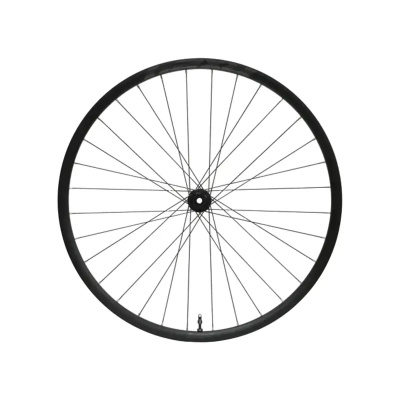
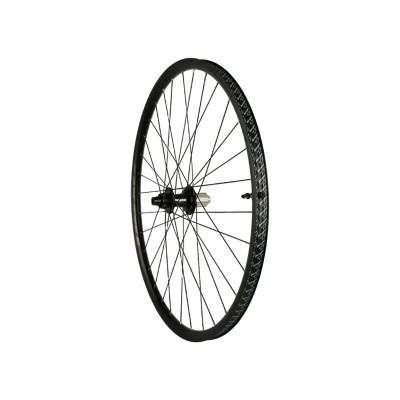
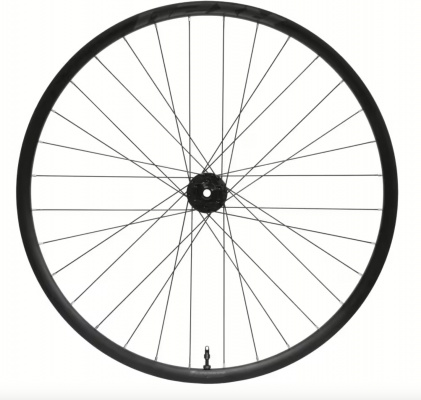
Prices and availability can change quickly. Delivery charges are not always included in listed prices.
Final price, stock status and delivery terms are set by retailer. We may receive a commission on purchases made.
Will They Fit Your Gravel Bike? Axle Standards and Drivetrain Compatibility
Hope gravel wheels in Hope 700c gravel wheels configuration run 12x100mm up front and 12x142mm at the rear - the thru-axle standard you'll find on virtually every modern gravel frame worth considering. Switching axle configurations is handled via push-in end caps, so if you're running an older frame or a bikepacking rig with non-standard spacing, you're not stuck. No proprietary tooling, no faff.
Freehub compatibility is where Hope's modularity really pays off. The Hope Pro 5 gravel wheels system accepts bodies for Shimano HG 11-speed, Shimano MicroSpline (for 12-speed Shimano groupsets), SRAM XDR (covering the full SRAM AXS 12-speed range), and Campagnolo N3W. Swapping bodies takes minutes and requires nothing more exotic than a cassette lockring tool and a hex key. If you're building up a new groupset mid-season, you change the body rather than the wheels.
Rotor mounting is available in both Centerlock and 6-bolt. Centerlock is increasingly common on gravel forks from the likes of Mavic and other performance-focused brands, but it does require a specific splined lockring tool - the same one used for Shimano cassettes, as it happens, so most home mechanics already own it. If your frame and fork use 6-bolt mounts, that option's available too. Worth checking your fork spec before you order; it's an easy thing to overlook.
20Five vs. Fortus: Choosing the Right Hope Rim for Your Riding
Hope's gravel-specific rim is the Hope 20Five gravel wheelset - a welded aluminium hoop with an internal width optimised for tyres in the 28c-to-45c window. That covers the vast majority of gravel use: fast, hard-packed fire roads where a 32c tyre feels right, and looser, wetter riding where you want 40c or more for float and compliance. The rim profile is designed to support the tyre sidewall properly across that range, which matters for tubeless setups where bead security under low pressures is critical.
Some riders building more aggressive, underbiked gravel rigs - think 50c-plus rubber, bikepacking loads, mixed off-road routes - look at the Fortus XC rim as an alternative. It's a lighter, narrower profile built for cross-country mountain biking, but it pairs with the same Pro 5 hubs and can handle wider tyres than its XC label implies. The trade-off is that the narrower internal width doesn't support very wide tyre casings as well, and the rim is tuned for lower volumes. It's a niche choice, but a legitimate one for riders chasing minimum weight on a gravel-to-light-MTB build.
The shift from the older Pro 4 to the current Pro 5 hub is worth understanding. The engagement jumps from 72 to 108 points - achieved through an offset 6-pawl freehub mechanism with step-down design rather than simply adding more pawls. The step-down arrangement means the pawls engage sequentially rather than all at once, which distributes load more evenly and reduces the harsh clunk you sometimes feel with high-engagement ratchet systems. The hub shell itself is stiffer, which translates to less lateral flex under hard pedalling efforts. It's a perceptible difference, particularly when you're out of the saddle on a loose climb. Compare that responsiveness to what you'd get from mid-range options like Halo or DT Swiss entry-level builds, and the case for Hope's engineering becomes clear without needing to resort to superlatives.
The sealed cartridge bearings throughout use stainless steel races. That matters in the UK specifically - standard chrome-steel bearings corrode faster than you'd like when they're regularly soaked in winter road salt and rinsed with muddy water. Stainless holds up considerably better.
Keeping Them Running Through a British Winter
This is where Hope wheels earn their reputation. The zero-drag labyrinth freehub seals are a maze-type contact seal design - grit and water have to navigate a winding path to reach the internals, and most of it never gets there. Riders doing regular Peak District riding in autumn will know the gritstone paste that forms on wet trails; it's genuinely abrasive and it destroys conventional bearings faster than the mileage suggests it should. Hope's sealing genuinely extends service intervals in those conditions.
When you do need to service the freehub - and you will, eventually - it's a five-minute job. Pop the freehub body off, clean the pawls and the ratchet ring, re-grease, reassemble. No specialist tools, no booking it into a shop. The Fulcrum equivalent requires a proprietary freehub removal tool; Hope uses a standard hex key. That distinction sounds minor until you're doing it in a cold garage in February.
Spare parts - every last one, from the pawl springs to the end caps to individual bearing units - are stocked by Hope directly and available through most UK dealers. If you've ever owned a wheelset where a discontinued freehub body turned a repairable failure into a write-off, you'll understand why this matters. These wheels are designed to be kept, not replaced.
For the rims themselves, tubeless setup is straightforward. The 20Five comes pre-taped, so you're adding valves, mounting your tyres, and injecting sealant. Most gravel tyres seat reliably with a track pump; no compressor required on the majority of setups. If you're running a summer tyre during the dry months and want to drop to something more aggressive for winter lanes, a tyre swap on a tubeless-ready rim of this quality takes ten minutes and holds pressure without drama.
Hope Gravel Wheels FAQs
Are Hope 20Five wheels tubeless ready?
Yes. Hope 20Five rims come pre-taped from the factory, so setup is straightforward - fit tubeless valves, mount your tyre, add sealant, and inflate. Most gravel tyre and rim combinations seat reliably with a standard track pump. No compressor needed in the majority of cases.
What freehub bodies are available for Hope gravel wheels?
Hope offers swappable freehub bodies covering Shimano HG 11-speed, Shimano MicroSpline for 12-speed Shimano groups, SRAM XDR for the full AXS range, and Campagnolo N3W. Swapping between them is a quick job with basic tools, so your wheels can follow a drivetrain upgrade without issue.
Can I convert my Hope gravel wheels to different axle standards?
Yes. Hope gravel wheels use push-in end caps on the Pro 5 hubs, making axle standard changes straightforward. The default configuration is 12x100mm front and 12x142mm rear, but alternative end caps are readily available through Hope and most UK dealers to cover other spacing requirements.