
Goodyear Commuter And Hybrid Tyres
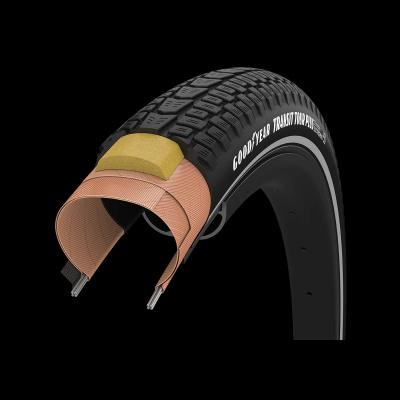
Goodyear commuter and hybrid tyres are built around one straightforward idea: keep you moving through whatever a British commute throws at you. Glass in the gutter near the roundabout, flint-studded towpaths, greasy tarmac after a November shower - the Transit range is engineered for exactly this kind of punishment. The Dynamic:Silica4 compound keeps the rubber supple and grippy in cold, wet conditions, while the Armor Protection sub-tread layer sits between your inner tube and the debris that litters most UK cycle paths. That combination means fewer roadside stops and more predictable braking when it counts.
Worth knowing: many models carry ECE-R75 certification, which means the casing is structurally rated for the extra weight and motor torque of modern e-bikes - a detail that matters more than most riders realise. Reflective sidewall strips are a quiet but practical addition for winter riding where visibility is genuinely poor. Whether you want maximum durability for a year-round slog or a faster-rolling option for a tarmac-only run into town, there's a Goodyear option worth comparing. Use the grid below to check current UK prices across retailers and find the right fit for your bike.
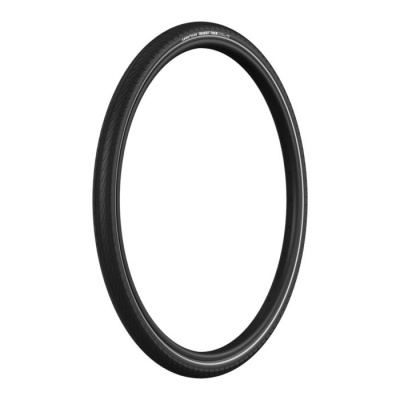
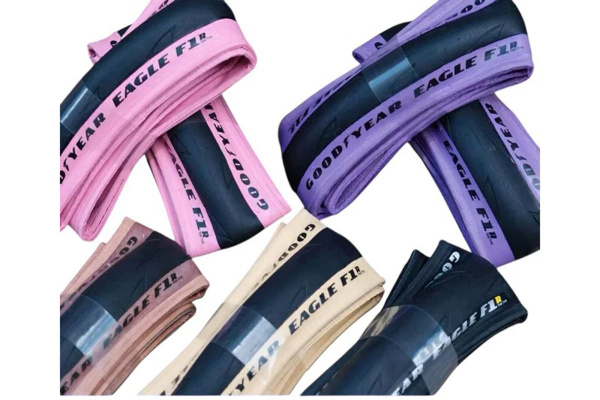
Prices and availability can change quickly. Delivery charges are not always included in listed prices.
Final price, stock status and delivery terms are set by retailer. We may receive a commission on purchases made.
Fitting Your Goodyear Tyres: Sizing, Clearance and Standards
Get the sizing right before anything else. Goodyear follows ETRTO conventions, so a tyre marked 700x35c corresponds to 37-622 in the international standard - the number that actually tells you whether it'll fit your rim. If you're unsure, check the sidewall of your current tyre for the ETRTO marking rather than guessing from the inch sizing alone. It takes thirty seconds and saves a wasted return.
Clearance matters too, especially if you're running mudguards - and in the UK, you really should be. Leave at least 4 - 5mm between the tyre and your guard or frame stay. Fit a 35c into a frame that only has room for a 32c with guards and you'll either crack the guard on a pothole or rub constantly. Check the spec sheet, not just the general size range.
The ECE-R75 certification question comes up a lot with e-bike owners, and it's worth explaining clearly. Standard hybrid tyres aren't designed for the sidewall flex and repeated high-torque loads that a mid-drive or rear-hub motor generates. Over time, an uncertified tyre can degrade faster than expected, particularly on heavier cargo or commuter e-bikes. Goodyear's ECE-R75 rated casings - found across much of the Transit range - use the S3:Shell reinforced construction to handle speeds up to 50km/h and the added stress of motor-assisted acceleration. If your bike has a motor, check the certification is listed before you buy.
On bead type: wire bead versions are heavier and stiffer to mount, but they're typically more affordable and fine for a tyre that stays fitted all season. Folding bead versions are easier to carry as a spare and seat onto the rim more cleanly. For most commuters leaving a tyre on the bike for months at a time, wire bead is perfectly practical.
Transit Tour vs Transit Speed: Choosing the Right Model
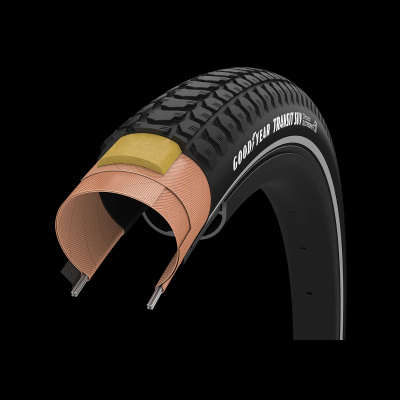
The Goodyear urban range splits broadly into two characters, and picking the wrong one for your commute is an easy mistake. The Transit Tour uses a directional tread pattern with more surface contact at the shoulders - better grip when you lean into a wet corner, more resistance to the glass and grit that collects in the gutter. It's the one to reach for if your route mixes tarmac with the odd towpath section, or if you're riding through autumn and winter when the roads are consistently greasy. Durability is the priority here.
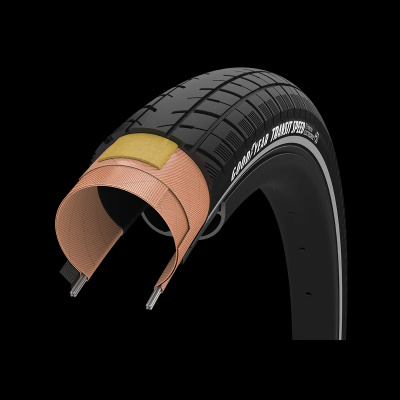
The Transit Speed takes a different approach. A smoother, lower-profile centre tread reduces rolling resistance on clean tarmac, which you'll feel on longer flat commutes - less effort for the same speed. The trade-off is that it's more at home on maintained surfaces than rougher paths. If your commute is mostly well-surfaced urban roads and you want to take a bit of work out of the ride, the Speed variant makes sense. Push it onto a gravel path regularly and you'll be asking more of it than it's designed for.
Both variants use Armor Protection as standard - a reinforced sub-tread layer that intercepts sharp debris before it reaches the tube. Some models step up to an enhanced protection tier for even more resistance, which is worth considering if your route is particularly debris-heavy. The Dynamic:Silica4 compound runs across the range, keeping rolling resistance low and wet grip reliable regardless of which model you pick.
If your riding regularly goes beyond urban paths into proper off-road sections, neither Transit model is the right tool. Have a look at Goodyear gravel and cyclocross tyres for mixed-surface work, or Goodyear MTB tyres if the trail proportion of your rides is significant. And if speed on tarmac is the priority and you're on a drop-bar bike, Goodyear road tyres are worth a look alongside the Transit Speed.
For riders comparing across brands, Continental commuter and hybrid tyres and Michelin commuter and hybrid tyres sit in a similar bracket - all solid options, each with slightly different compound priorities. Maxxis commuter and hybrid tyres tend to favour durability at a competitive price point if budget is the main driver.
Keeping Goodyear Commuter Tyres in Shape Through a UK Winter
The Dynamic:Silica4 compound resists hardening in freezing temperatures better than older high-carbon rubber formulations, which means it stays pliable and grippy on a cold January morning rather than going glassy when you need traction on a greasy roundabout. That's not a marketing claim - it's the practical reason high-silica compounds became standard on quality commuter rubber. You'll notice it most when braking in damp conditions rather than dry ones.
Pressure checks weekly, not monthly. This is the most commonly skipped maintenance step and one of the more costly mistakes, particularly on e-bikes and loaded hybrids where the weight penalty from a soft tyre is significant. Running too low increases the risk of pinch flats - where the tyre compresses fully on a pothole edge and the tube gets pinched against the rim. On a heavier e-bike hitting a Bristol or Manchester pothole at commuting speed, a soft tyre is particularly vulnerable. Check pressure before you roll, not when you notice the bike feels sluggish.
Every fortnight, give the tread a visual inspection and run your fingers slowly along the surface. Glass fragments and flints from UK cycle paths work their way in gradually rather than puncturing immediately - find them early and pick them out with a tyre lever or a fingernail before they migrate through the Armor Protection layer. It takes two minutes and it's worth doing. The reflective sidewall strips don't need maintenance beyond keeping them reasonably clean, but check they haven't been damaged if the tyre has taken any hard kerb strikes.
Goodyear Commuter And Hybrid Tyres FAQs
Are Goodyear bike tyres puncture proof?
No pneumatic tyre is entirely puncture-proof, and it's worth being straight about that. What Goodyear's commuter range does offer is Armor Protection - a reinforced sub-tread layer that intercepts glass, thorns, and the general debris that litters UK cycle paths before it reaches the tube. It significantly reduces puncture frequency rather than eliminating the risk entirely. Carry a spare tube regardless.
What tyre pressure should I run on a hybrid bike?
For most hybrid commuting, 50 - 70 PSI is a reasonable working range, adjusted for tyre width and rider weight. Narrower tyres and heavier riders sit toward the higher end; wider tyres and lighter riders can run lower for more comfort and grip. Lower pressures absorb road buzz better but increase pinch flat risk on potholed roads. Check the tyre's marked maximum and don't exceed it.
Are Goodyear commuter tyres e-bike compatible?
Many are, yes. Models across the Transit range carry ECE-R75 certification, which means the casing is engineered to handle the increased load, torque, and speeds - up to 50km/h - that e-bikes generate. The S3:Shell construction reinforces the casing specifically for this. Always confirm the ECE-R75 mark is listed on the specific model before fitting it to a motorised bike.