
Michelin Commuter And Hybrid Tyres
Michelin commuter and hybrid tyres are built around one core promise: you get to work without reaching for your patch kit. That might sound straightforward, but on Britain's glass-strewn cycle paths and potholed back streets, it's harder to deliver than most brands admit. Michelin's bicycle tyre division draws on serious rubber compounding knowledge to engineer protection layers and compounds that genuinely hold up to daily punishment, rather than just looking the part on a spec sheet.
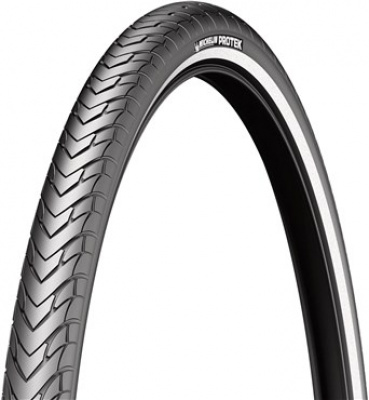
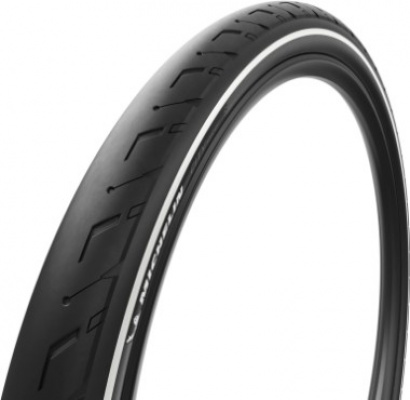
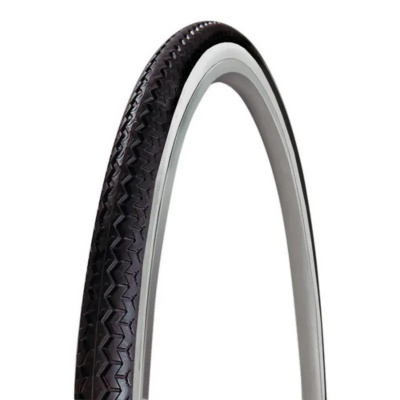
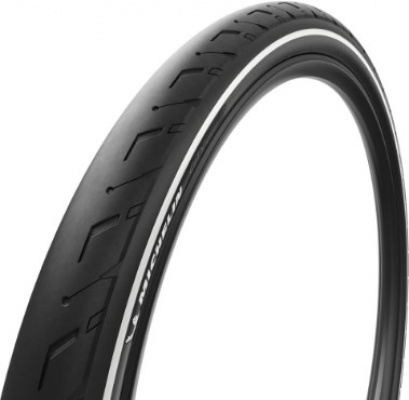
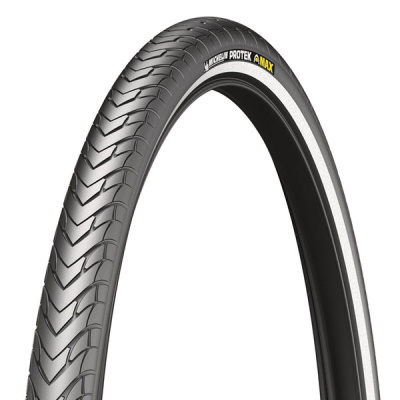
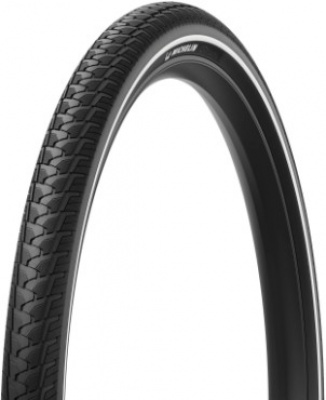
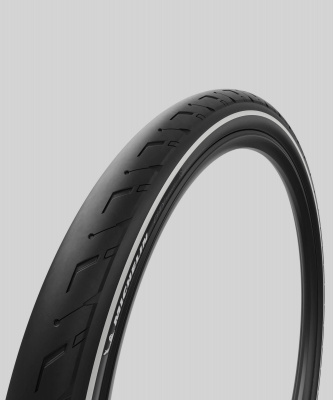
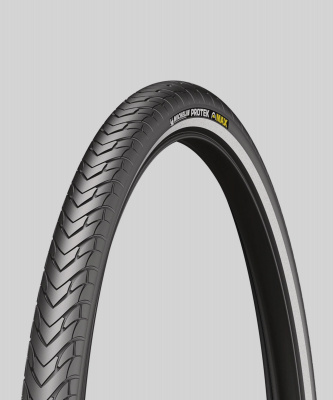
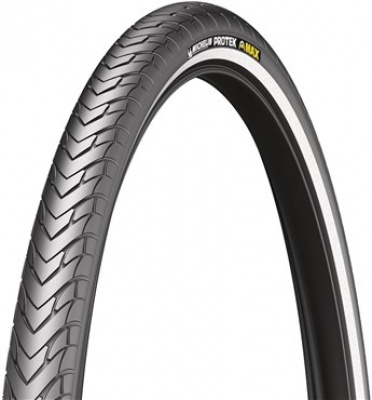
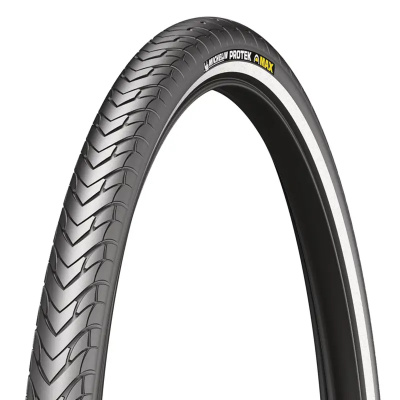
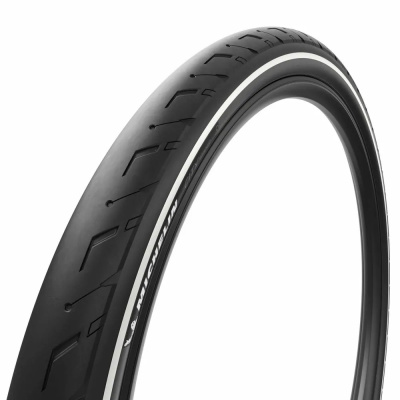
The range covers everything from the entry-level Protek - solid puncture protection for riders who want a reliable, no-fuss city tyre - right through to the Protek Max, which packs up to 5mm of internal Aramid shielding for the kind of commuter who'd rather never think about tyres again. Alongside these, the Energy line takes a different angle, prioritising low rolling resistance for e-bike riders who want every watt-hour to count. Reflective Reflex sidewall bands feature across the range too, which matters when you're riding home in November at 5pm with nothing but a set of dynamo lights between you and invisibility. Pair any of these with Michelin Inner Tubes and you've got a wheel setup that's genuinely fit-and-forget.
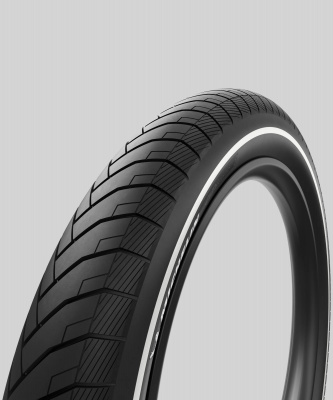
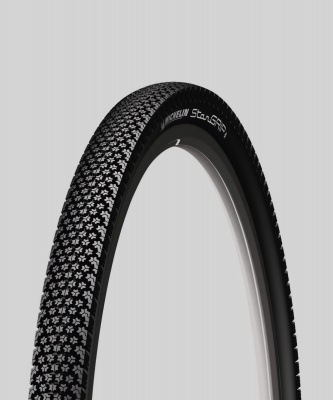
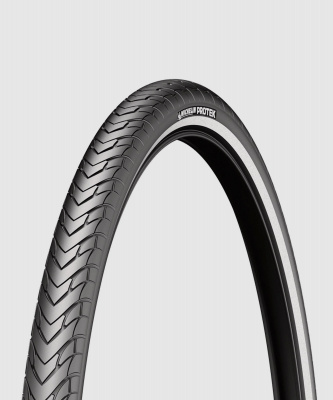
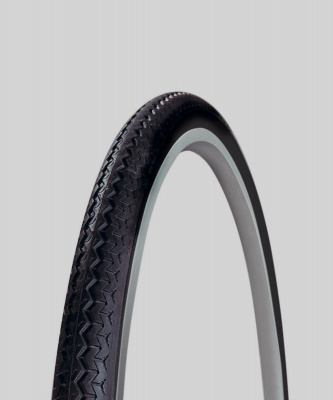
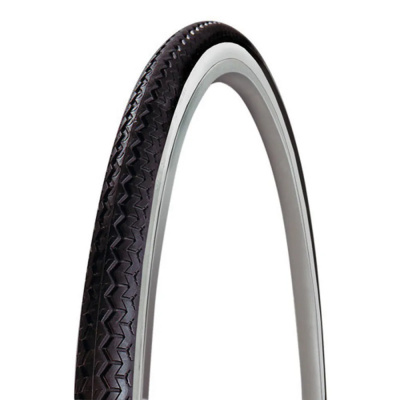
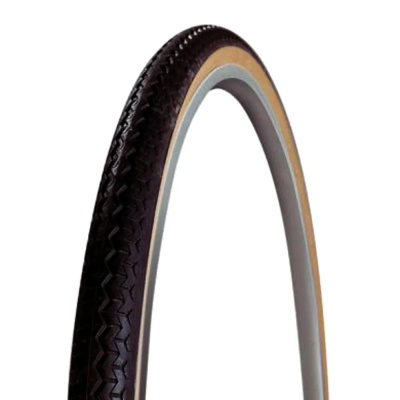
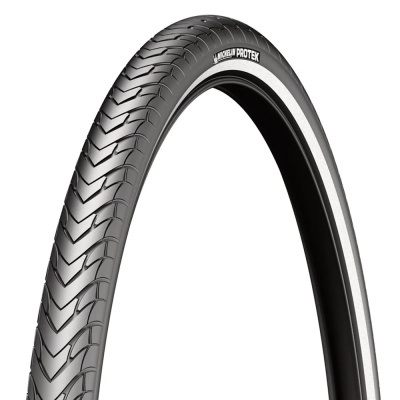
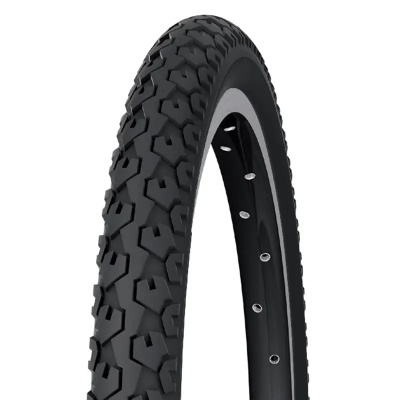
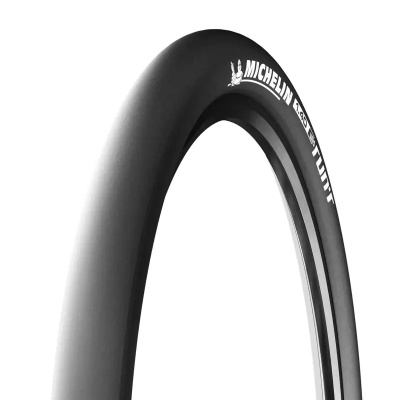
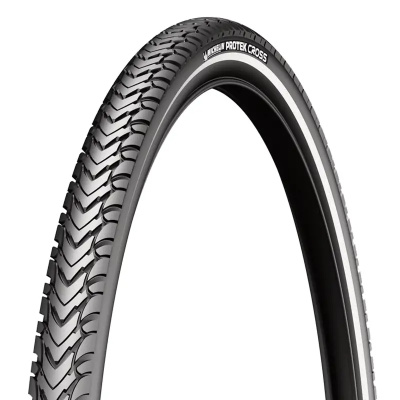
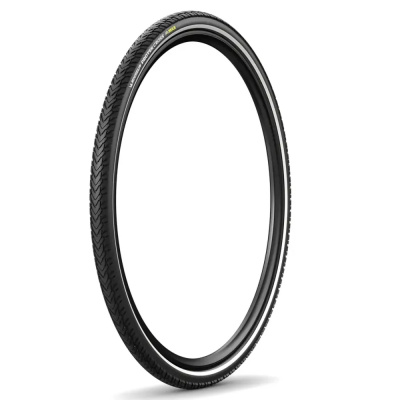
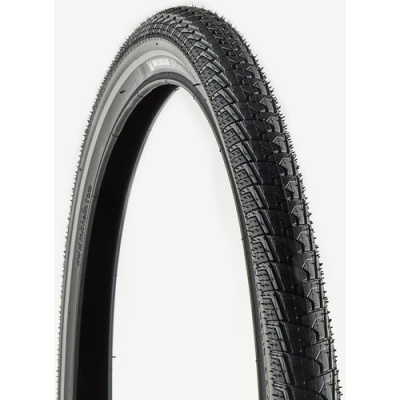
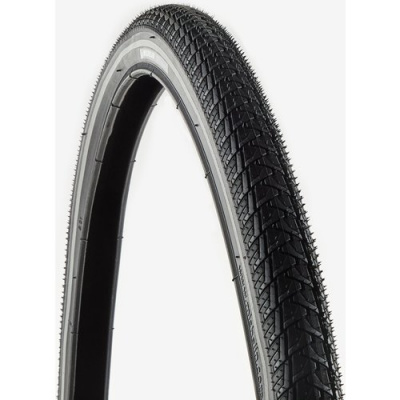
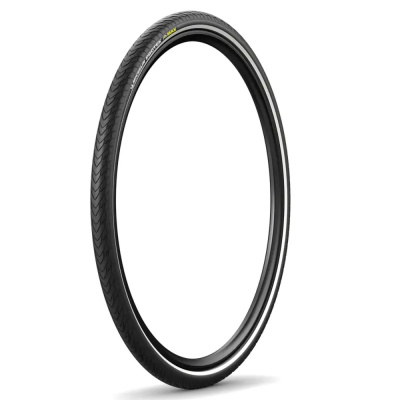
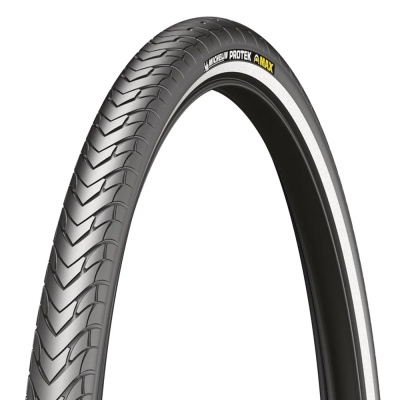
Prices and availability can change quickly. Delivery charges are not always included in listed prices.
Final price, stock status and delivery terms are set by retailer. We may receive a commission on purchases made.
Sizing, Standards and Mudguard Clearance
Get the fit wrong and none of the puncture protection matters. Most Michelin hybrid tyres come in 700c clincher format - the standard you'll find on the vast majority of hybrid and city bikes in the UK. Some models also come in 26-inch for older mountain-bike-derived hybrids, and 27.5-inch (650b) for a growing number of modern adventure-hybrid frames. Check your frame's stated tyre clearance before you order, not after.
Internal rim width is worth checking too. A tyre rated 700x35c will sit narrower and higher on a 17mm internal-width rim than on a 21mm one. Michelin generally recommends matching a 35 - 40c tyre to rims with at least 19mm internal width for the profile to develop correctly and grip the bead evenly. Most hybrid wheels fall comfortably in that range, but it's worth a quick measure if your rims look particularly narrow or wide.
The mudguard clearance point is one that catches riders out regularly. If you're upgrading from a 700x32c to a Protek Max in 700x40c - sensible move for winter commuting - you need at least 4 - 5mm of clearance between the tyre crown and the inside of your SKS-style full mudguards. Less than that and wet grit will pack into the gap and jam the wheel. Spin the wheel with the new tyre fitted before you ride, every time you change tyre width.
For e-bike riders, the ECE-R75 certification is the one to look for. This is the European standard that confirms a tyre is rated for the additional weight and sustained speeds - up to 50km/h - that a pedelec produces. Michelin's E-Bike Ready stamped models carry this certification. If your bike is a speed pedelec or a heavily loaded cargo-style e-bike, don't fit a tyre that isn't ECE-R75 rated. It's not pedantry; it's the difference between a tyre that's engineered for the load and one that isn't.
Breaking Down the Michelin Range: Protek, Protek Max, Protek Cross and Energy
Michelin's commuter lineup has a clear hierarchy, and understanding where each model sits saves you from either overspending or under-specifying.
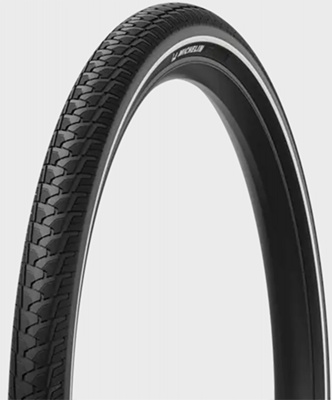
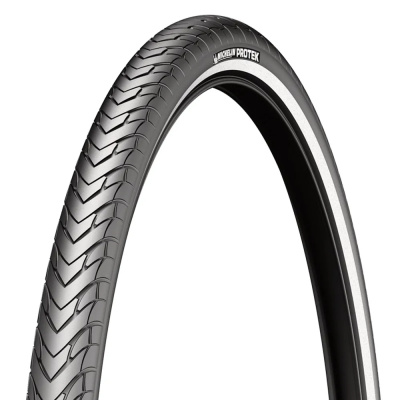
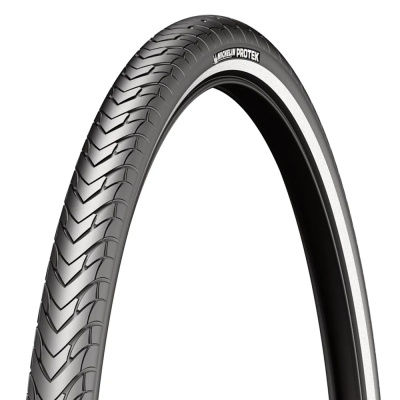
The base Protek uses a 1mm internal puncture protection layer across the central tread. It's a wire bead tyre - heavier than a folding bead, but perfectly practical for a commuter that lives on the bike rather than in a kit bag. The tread compound is balanced for both wet grip and durability, and it includes Reflex reflective sidewall bands. For riders doing two or three days a week on mostly decent tarmac, this is a sensible, cost-effective choice. Think of it as the tyre you fit and mostly forget about until it's genuinely worn out.
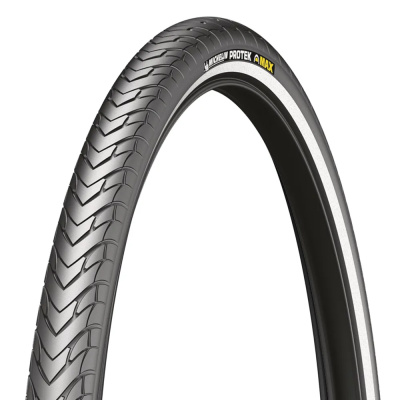
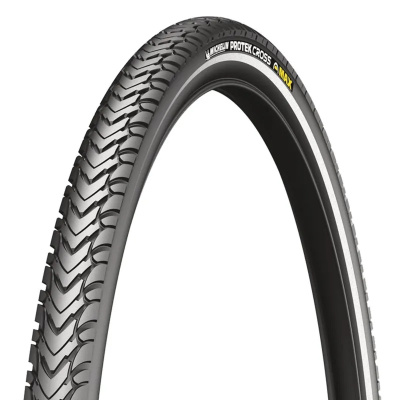
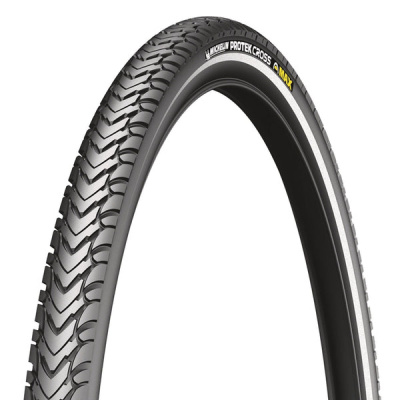
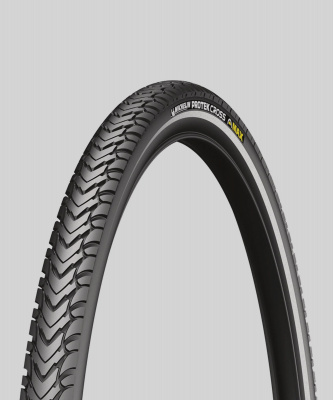
Step up to the Protek Max and the protection layer jumps to 5mm - a meaningful difference. Protek Max puncture protection uses a reinforced Aramid shield beneath the tread that resists penetration from flints, glass fragments and the general debris you find on London cycle superhighways or any well-used urban route in winter. The casing is also heavier, which adds a small amount of rolling resistance, but for a rider whose priority is never stopping roadside, that's an acceptable trade. If you commute five days a week regardless of weather, the Protek Max is the one. Continental's commuter range takes a similar approach with its Touring Plus models, though Michelin's Aramid construction sits in a slightly different place in the protection hierarchy.
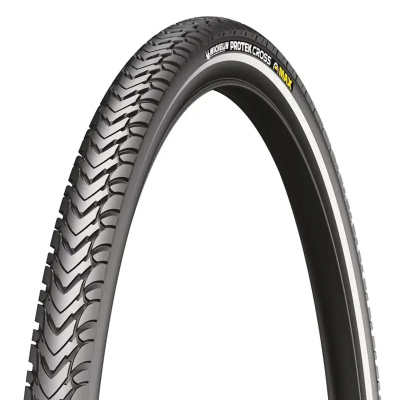
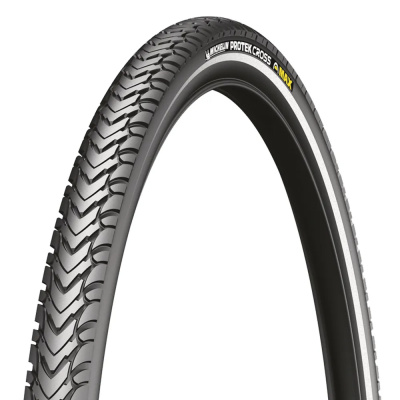
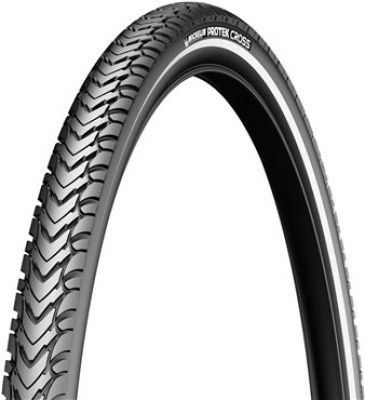
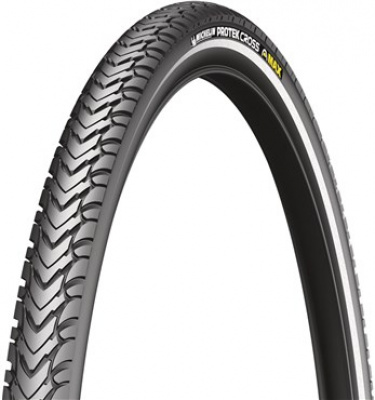
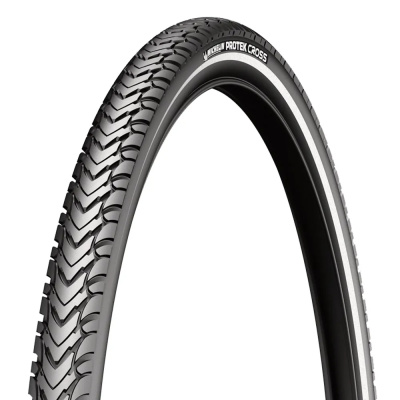
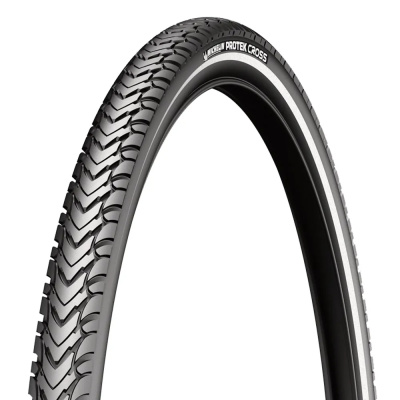
The Protek Cross adds a lightly knurled tread pattern, which brings it closer to a proper multi-surface tyre. The centre is still relatively smooth for tarmac efficiency, but the shoulder knobs give you something to work with on canal towpaths, compacted gravel or the kind of muddy shortcut you inevitably end up taking across a park in February. It's not an off-road tyre - don't take it on anything technical - but as a commuter that occasionally deviates from asphalt, it makes sense. Panaracer's Pasela range covers similar mixed-surface ground if you want an alternative reference point.
The Energy line is aimed squarely at e-bike commuters. The Energy Compound is a specialised rubber blend engineered to reduce rolling resistance, which on an e-bike translates directly into extended battery range. It's a different priority to the Protek's durability focus - you're trading some of the bulletproof protection for a faster-rolling tyre that works with the motor rather than against it. Most Energy models carry the E-Bike Ready ECE-R75 stamp. If range anxiety is your main concern rather than puncture frequency, the Energy is the logical pick. Specialized's Nimbus range competes in a similar efficiency-focused space for comparison.
Keeping Michelin Hybrid Tyres in Good Shape on UK Roads
British roads do specific things to tyres. Wet tarmac acts almost like a lubricant, helping sharp flints and fragments of bottle glass work their way into the rubber rather than bouncing off. The Aramid shield in the Protek Max resists this well, but no protection layer is impenetrable if debris gets enough time to work inward.
A quick wipe-down of the tread after every wet ride - a gloved hand run around the circumference while the wheel spins - picks out embedded glass before it migrates through the casing. It takes thirty seconds and it's the single most effective maintenance habit for commuter tyres. Worth doing with any puncture-resistant tyre, not just Michelin's.
On pressure: the right PSI for a 700c clincher hybrid tyre shifts with the season. In summer on dry tarmac, running close to the maximum marked pressure on a 35c tyre - typically around 65 - 70 PSI - keeps rolling resistance low. Drop that to 45 - 50 PSI in wet winter conditions and you increase the contact patch, which improves grip on greasy surfaces without going so low that you risk a pinch flat on a pothole edge. Heavier riders should add 5 - 10 PSI across those ranges. Check pressure weekly; even a well-seated wire bead tyre loses a few PSI between Monday and Friday.
Winter grit is abrasive on sidewalls over time. If you're riding through November to February, a wipe of the sidewalls with a damp cloth every couple of weeks slows that degradation. It won't make the tyre last forever, but it prevents grit from embedding into the reflective sidewall material and dulling the Reflex strips - which you want working properly when daylight is short.
If you're running puncture-resistant hybrid tyres for the first time, worth noting: they're stiffer to seat than a standard road tyre. Use tyre levers, take your time with the final bead section, and double-check the bead is seated evenly all the way around before inflating. The wire bead on most Protek models needs a firm, even push into the rim channel.
Michelin Commuter And Hybrid Tyres FAQs
Are Michelin Protek tyres good for commuting?
Yes. The Protek range is built specifically for daily urban riding. The standard Protek uses a 1mm internal protection layer, while the Protek Max steps that up to 5mm of Aramid shielding - serious resistance to glass and flint on city roads. Reflective Reflex sidewall bands add visibility in low light, which counts for a lot on winter commutes.
What pressure should I run in my Michelin hybrid tyres?
For a 700x35c tyre, 65 - 70 PSI works well on dry summer tarmac. In wet winter conditions, drop to around 45 - 50 PSI to widen the contact patch and improve grip. Heavier riders should add 5 - 10 PSI across both ranges. Check pressure weekly - wire bead tyres lose pressure gradually even without a puncture.
Are Michelin hybrid tyres e-bike compatible?
Most Michelin hybrid models - particularly the Protek and Energy lines - carry an E-Bike Ready stamp. Those with ECE-R75 certification are rated for the increased weight and sustained speeds of modern pedelecs, up to 50km/h. If you're running a speed pedelec or a loaded e-cargo bike, stick to ECE-R75 certified models specifically.