
Goodyear Gravel And Cyclocross Tyres
Goodyear gravel tyres sit at a genuinely interesting point in the market - a major automotive rubber brand that came back to cycling and actually got the details right. The headline is Tubeless Complete, Goodyear's proprietary tubeless system that uses a dual-angle bead and multi-compound layer to seat faster and hold air more consistently than most standard TLR options. For UK riders, that matters: cold mornings with sluggish sealant and a slow bead that won't pop are nobody's idea of a good start.
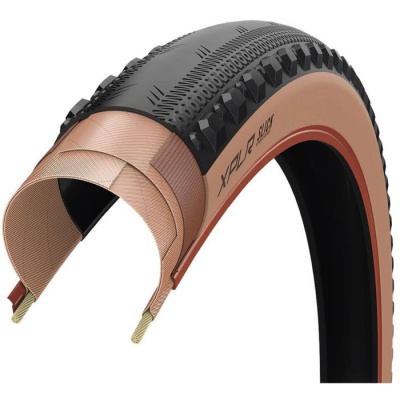
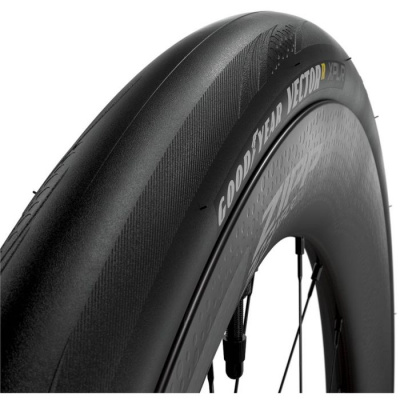
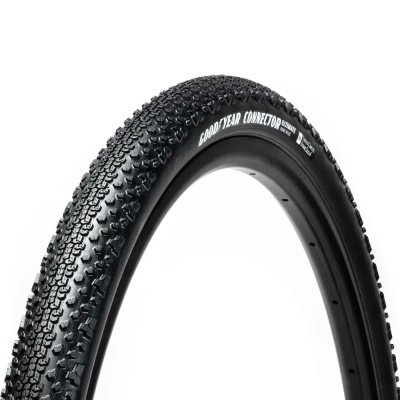
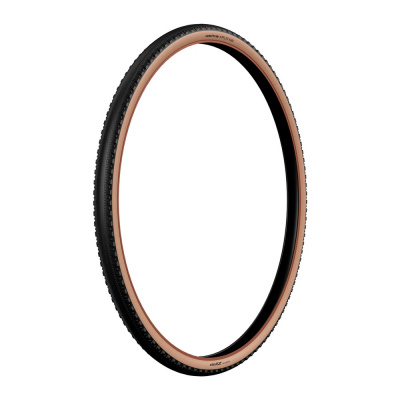
The range splits neatly by intent. The County rolls fast on packed bridleways and tarmac links, the Connector handles the kind of mixed, mucky riding that defines a British winter, and the Peak goes properly aggressive for cyclocross and deep-mud gravel. Across all three, Goodyear's Dynamic:Silica4 compound is doing real work - it's formulated to stay grippy on wet roots and slippery chalk without dragging your speed down on the flat. Casing choice runs from supple 120 TPI for race days to a tougher 60 TPI for long winter miles where durability beats outright feel. Whether you're eyeing a season of CX or just want reliable rubber for year-round gravel riding in the UK, there's a Goodyear that fits the brief.
Prices and availability can change quickly. Delivery charges are not always included in listed prices.
Final price, stock status and delivery terms are set by retailer. We may receive a commission on purchases made.
Fitting Goodyear Tyres: Rim Compatibility and ETRTO Standards
Getting the right tyre on the right rim starts with ETRTO sizing. Goodyear uses standard ETRTO designations - so a 40-622 tyre is a 700c x 40mm, and a 45-622 a 700c x 45mm. The actual mounted width will vary depending on your internal rim width, and Goodyear publish recommended rim pairings for each model. A 40mm tyre on a 21mm internal rim will sit noticeably narrower and rounder than the same tyre on a 25mm rim, which affects both cornering feel and mud clearance - worth checking before you buy if your frame runs tight tolerances.
On hookless (TSS - Tubeless Straight Side) rims, Goodyear's current Tubeless Complete gravel tyres are compatible, which matters as more gravel wheelsets shift to hookless construction. The non-negotiable is the pressure ceiling: 72 PSI (5 bar) maximum on hookless rims, full stop. Exceed that and you risk a blow-off, which is both dangerous and very difficult to explain to your riding mates. Most gravel riders run well below this anyway - typically 30 - 50 PSI depending on rider weight and conditions - so it's rarely a practical restriction, but always cross-reference with your rim manufacturer's own pressure limits too.
If you're running Continental gravel tyres or Maxxis gravel tyres alongside Goodyear options, the same ETRTO and hookless rules apply - the standard is rim-side, not tyre-brand-specific. Worth keeping that in mind if you're mixing rubber across a spare wheelset.
The Goodyear Gravel Range: Connector, County, and Peak Explained
Three models, three distinct briefs - and the differences are real enough to matter when you're choosing.
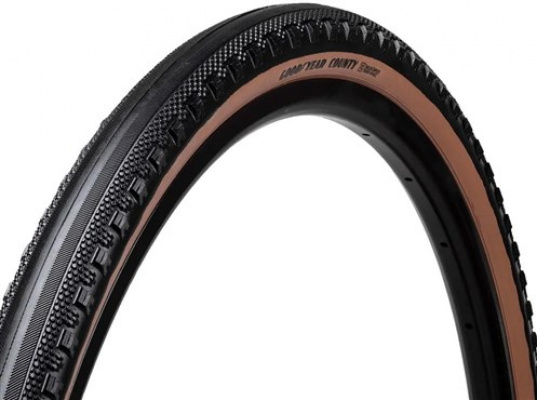
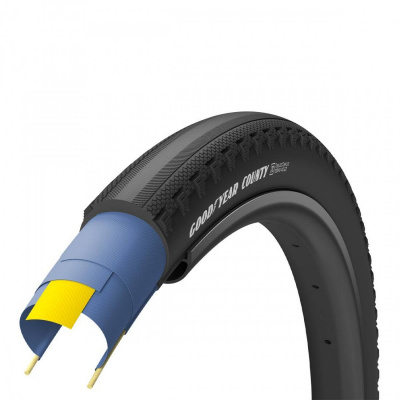
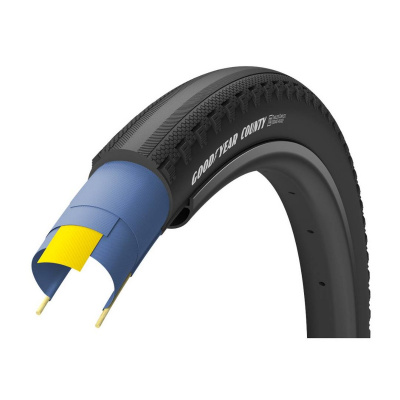
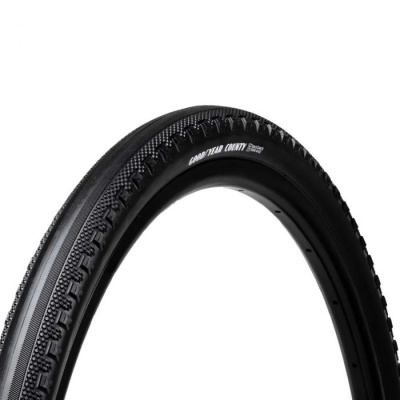
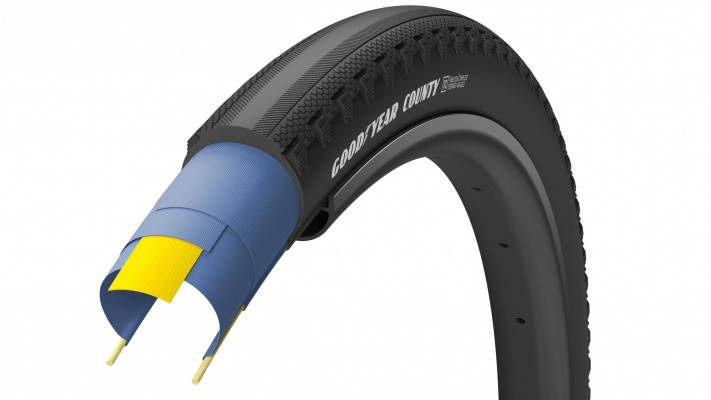
The County is the fast one. A smooth centre tread with minimal side knobs makes it genuinely quick on hard-packed gravel and tarmac connectors, and if your riding skews heavily towards packed bridleways or road-gravel mixes, it rolls with noticeably less resistance than a knobbier option. Think long South Downs Way days in summer - that kind of riding. It's not the tyre for a wet November cross race.
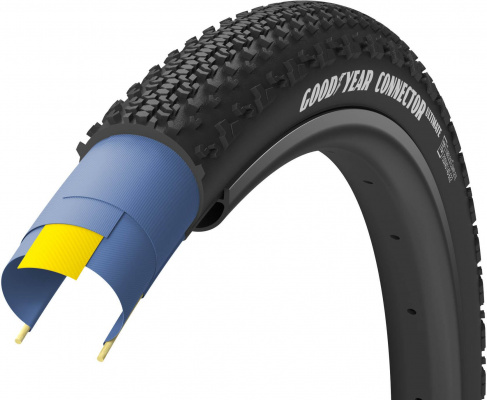
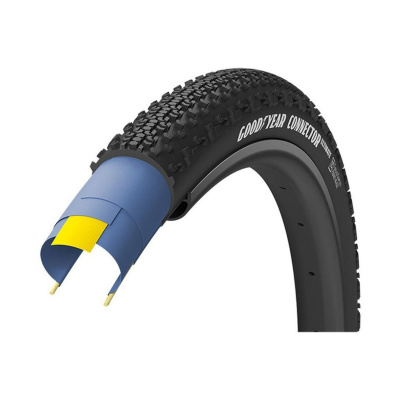
The Connector is the one most UK riders should probably start with. Tightly spaced centre knobs keep rolling resistance reasonable on firmer surfaces, while the shoulder lugs dig in when you tip the bike into a loose corner or hit a greasy descent. It handles the transition from tarmac lane to muddy bridleway without making you feel like you've made the wrong tyre choice, which in the UK happens about four times per ride. This is the tyre you fit in October and trust until March. If you're comparing options, WTB gravel tyres like the Riddler occupy similar ground - the Connector generally edges ahead in wet grip, while WTB can offer more width options.
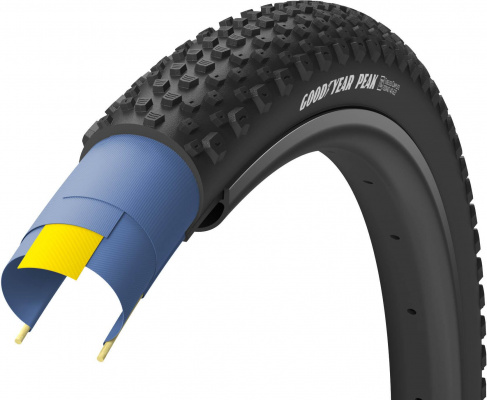
The Peak goes further - proper CX-style knobs with the spacing and height to shed thick mud rather than pack up with it. If you're racing cyclocross or doing gravel riding that regularly involves genuinely boggy ground, the Peak's tread does work that the Connector can't. It's louder and slower on hard surfaces, so it's a specific tool rather than an all-year option.
Casing choice cuts across all three models. The Ultimate casing runs 120 TPI - finer threads, more supple, lighter, and with a more responsive ride feel underfoot. It's the race-day or enthusiast choice. The Premium casing drops to 60 TPI, which means a slightly stiffer, heavier tyre but one that resists damage more stubbornly over rough miles. For regular winter training, the Premium casing often makes more sense - the ride quality difference is real but modest, and the durability gain is meaningful. Panaracer gravel tyres offer a similar casing-tier structure, so the logic translates if you're comparing across brands.
The Dynamic:Silica4 compound runs through the range and is the reason grip in the wet feels more planted than you might expect from a gravel tyre. Silica-loaded compounds grip cold, damp surfaces better than carbon-black alternatives - it's the same principle behind quality road rubber, applied to a knobbed tread. You'll feel it most on wet chalk paths and greasy tree roots, where other tyres start to feel vague.
Surviving UK Conditions: Durability, Sealant, and Sidewall Protection
British gravel riding is hard on tyres in specific ways. Flinty chalk on paths like the South Downs will slash sidewalls with no warning - it's not a puncture, it's a cut, and standard under-tread protection does nothing for it. Goodyear addresses this with two distinct systems: R:Shield is the under-tread puncture belt, positioned to stop thorns, glass, and sharp flint from pushing through the central tread. Armor goes further, providing bead-to-bead protection that extends up the sidewall - that's the one doing the work against lateral cuts. If you're riding chalk downland regularly, check which protection level is fitted to the specific model and casing you're buying; not every combination includes the full Armor spec.
On sealant: Tubeless Complete holds air better than a lot of TLR setups because the bead design reduces micro-seepage at the rim interface. In practice, you'll still need to top up sealant - UK winters chew through it faster than the packaging suggests. Every three to four months is a sensible interval if you're riding through winter grit and cold; less frequently in summer. Check the tyre when you're doing other maintenance rather than waiting until you hear it sloshing. Dried sealant crystals inside the tyre aren't a crisis, but a tyre running low on liquid sealant will fail to seal a small cut that it would otherwise handle in seconds.
If you're running Goodyear rubber on the road side too, the Goodyear road tyre range uses the same compound philosophy - useful context if you're deciding how far to trust the brand across your whole fleet. And for anyone who takes a gravel bike to work as well as the trails, the Goodyear commuter and hybrid tyres are worth a look for the second wheelset.
One practical note on fitting: Tubeless Complete beads are designed to seat with a standard track pump on a correctly prepped rim in most cases - you shouldn't need a compressor for a clean rim bed with tape and valve installed properly. If it won't seat, check the tape is sealed fully around the valve hole before reaching for the CO2.
Goodyear Gravel And Cyclocross Tyres FAQs
Are Goodyear gravel tyres tubeless ready?
Yes. Most Goodyear gravel tyres use their proprietary Tubeless Complete system, which combines a dual-angle bead with a multi-compound material layer. It retains air more effectively than standard TLR designs and seats more readily on the rim - a meaningful practical advantage over cheaper tubeless-ready options.
What is the difference between Goodyear Connector and County tyres?
The Connector runs tightly spaced centre knobs with aggressive shoulder lugs - it's built for mixed and muddy conditions and handles UK all-season riding well. The County uses a semi-slick centre tread for lower rolling resistance on hardpack and tarmac. Broadly: County for fast, dry miles; Connector for everything else.
Are Goodyear bicycle tyres hookless compatible?
Current Goodyear Tubeless Complete gravel tyres are compatible with TSS (Tubeless Straight Side) hookless rims. The firm maximum pressure limit is 72 PSI (5 bar) - this is a hard safety ceiling on hookless rims, not a guideline. Always cross-check with your rim manufacturer's own stated limits as well.