
Ere Road Tyres
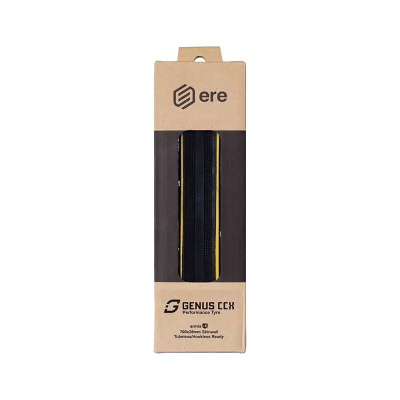
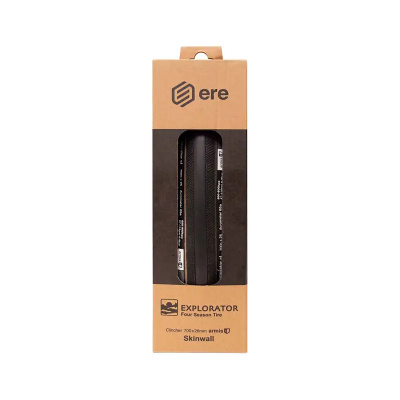
Ere Road Tyres bring Swiss precision engineering to your road bike, built around founder Piet van der Velde's 'no compromise' ethos that balances razor-sharp speed with genuine durability. The brand's two core ranges - Genus and Omnia - both lean hard into tubeless ready (TLR) construction, high TPI casings that breathe feedback through the bars, and the proprietary Armis puncture protection system that stops flints and glass without turning your rubber into a plank. You'll find widths from 26 mm through to 30 mm, all designed to work with modern rim standards including hookless setups, so you're not locked into legacy kit. Whether you're chasing Strava segments through the Chilterns or grinding out winter base miles on gritty Pennine lanes, Ere's HPC compound holds the road in wet and dry without haemorrhaging watts. It's a small lineup, deliberately focused, and every model punches well above its weight class when you line it up against the usual suspects from Continental or Vittoria. Proper race-day rubber that doesn't fall apart on the commute home.
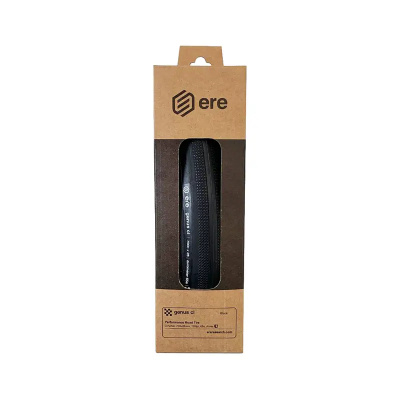
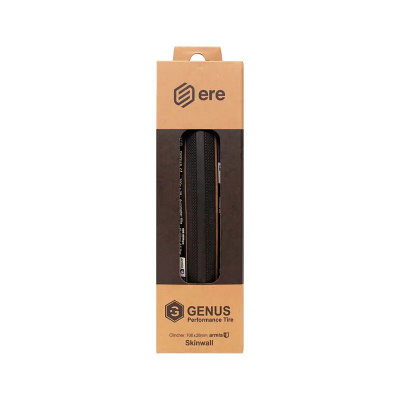
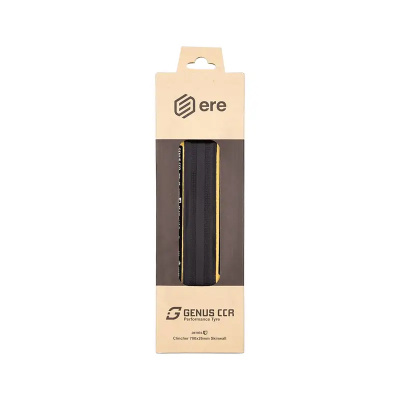
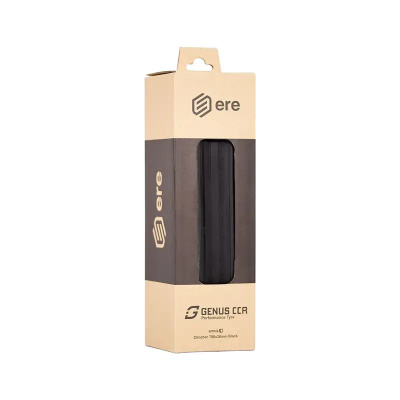
Prices and availability can change quickly. Delivery charges are not always included in listed prices.
Final price, stock status and delivery terms are set by retailer. We may receive a commission on purchases made.
Casing and Compound: The Numbers That Matter
Ere Research road bike tyres start with thread count, and they don't mess about. The Genus range runs from 120 TPI up to a supple 320 TPI on the top-tier models, while the Omnia sits at a robust 120 TPI across the board. Higher TPI means finer threads woven tighter, which translates to a casing that flexes over tarmac imperfections rather than skipping across them. You feel it immediately: smoother ride, better grip modulation, less chatter through fast descents. The trade-off? Thinner casings can be more vulnerable to sidewall cuts, which is where Armis puncture protection steps in - more on that shortly.
The HPC compound is Ere's answer to the grip-versus-speed puzzle. It's a single-compound formulation (no dual-density faff) tuned for consistent performance whether you're leaning into a wet roundabout in November or sprinting out of a dry corner in July. Low rolling resistance is baked in, but not at the expense of mechanical grip. On paper, that sounds like marketing waffle; in practice, trusted test coverage consistently notes confident cornering and predictable wear rates. The aramid bead keeps things light and ensures a secure lock onto the rim when you're running tubeless, even at the lower pressures that wider tyres permit.
Select Genus models feature handmade casing construction, a throwback to artisan methods that allows tighter quality control and more precise layup of the TPI layers. It's a detail that matters when you're chasing marginal gains or simply want tyres that feel alive under you rather than numb.
Tubeless Setup and Rim Standards
Are Ere Research tyres tubeless compatible? Yes, emphatically. Both the Genus and Omnia lines are tubeless ready, designed to seal with standard road sealant and hold pressure reliably across a wide range of rim widths. Hookless rim compatible variants are clearly marked in the range, which matters if you're running newer carbon hoops from brands that have ditched the bead hook for weight or aerodynamic reasons. If you're on traditional hooked rims, you're sorted either way.
Bead seating is generally straightforward: a decent track pump will pop most Ere tyres onto the rim with a satisfying snap, though a compressor or tubeless inflator speeds things up if you're impatient. Sealant volume depends on tyre width - 60 ml per tyre for 26 mm, up to 90 ml for 30 mm - and you'll want to top up every three to four months if you're riding year-round in damp UK conditions. The aramid bead grips firmly without being stubborn to remove, which is a blessing when you're roadside with frozen fingers trying to plug a slash that's too big for sealant alone.
Optimal tyre pressures vary by rider weight and rim internal width, but as a rough guide: 26 mm tyres sit happily around 70 - 80 psi, 28 mm around 65 - 75 psi, and 30 mm can drop to 60 - 70 psi on wider rims. Lower pressures maximise the contact patch, improving grip and comfort without a measurable speed penalty on real-world tarmac. Just watch for pinch flats if you're heavy-footed over potholes.
Genus or Omnia: Which Tyre for Your Riding?
What is the difference between Ere Genus and Omnia tyres? The Genus is your race-day weapon. Lighter casing, higher TPI options (up to 320 TPI on the flagship models), and a focus on outright speed and suppleness. It's the tyre you fit before a sportive, a crit, or any ride where every watt counts and the roads are relatively clean. The skinwall option saves a few grams and looks the business, though the blackwall variant offers a touch more sidewall protection if you're nervous about scuffing expensive rubber on kerbs.
The Omnia, by contrast, is built for the long haul. Slightly thicker casing, consistent 120 TPI construction, and a more robust tread layout designed to shrug off the daily grind of commuting, winter training, and rougher B-roads where the council's given up on repairs. It's not slow - far from it - but it prioritises durability and puncture resistance over the last few grams. If you're racking up 200-mile weeks through the Peaks or the Highlands, the Omnia will still be rolling smoothly when lighter tyres have been binned.
Both ranges use the same HPC compound and Armis protection, so you're not sacrificing grip or flat resistance by choosing one over the other. It's a question of priorities: marginal speed gains versus peace of mind on longer, rougher rides. Many riders keep a set of Genus tyres for events and swap to Omnia for everything else. Sensible.
Armis Protection and Real-World Durability
How good is the puncture protection on Ere road tyres? Armis is Ere's proprietary system, available in four levels depending on the model. Level 1 is a lightweight breaker strip under the tread, enough to deflect small shards without adding noticeable weight. Level 4 extends bead-to-bead protection with a thicker aramid layer, turning the tyre into a near-impervious barrier against thorns, glass, and the inevitable detritus of UK lanes in autumn.
The clever bit is that Armis doesn't make the tyre feel dead. Some heavily protected tyres ride like wooden hoops, all the suppleness strangled out by thick puncture belts. Ere keeps the protection localised and uses materials that flex rather than resist, so you still get road feel and cornering confidence. Tubeless sealant handles the small stuff - pinpricks and micro-cuts - while Armis stops the bigger threats from slicing through to the tube (if you're running one) or causing a catastrophic air loss.
In practice, riders report fewer roadside stops and longer tyre life, especially on the Omnia with its more robust casing. The Genus, being lighter, will show wear sooner if you're heavy on the brakes or riding gritty winter roads, but that's the trade-off for race-day speed. Rotate your tyres front-to-back every few hundred miles to even out wear, and you'll get the most from either model.
Ere Research: From Components to Cutting-Edge Rubber
Piet van der Velde founded Ere Research with a background in industrial design and ergonomics, initially focusing on saddles and cockpit components that challenged conventional thinking. The move into tyres was a natural extension: applying the same rigorous, no-nonsense approach to a category dominated by legacy brands. Swiss engineering runs through the DNA - precision, attention to detail, and a refusal to follow trends for their own sake.
The brand doesn't have the motocross pedigree or century-long history of some rivals, but that's an advantage. Ere builds tyres for modern rim standards, modern riding styles, and modern expectations around tubeless performance. There's no back-catalogue baggage or reluctance to innovate. If you're after something that sits alongside Pirelli or Specialized in terms of performance but offers a fresh take on construction and materials, Ere delivers. The range is tight - no sprawling lineup of marginal variants - which makes choosing straightforward and keeps quality control high.
Beyond road tyres, Ere also produces gravel and cyclocross tyres and a respected line of saddles, so if you're building a complete kit with a consistent design philosophy, the brand offers depth. It's the kind of outfit that appeals to riders who care about the details and aren't swayed by marketing hype or pro team endorsements alone.
Fitting Ere Tyres Into Your UK Riding
Surrey Hills singletrack? Wrong category, but if you're mixing road miles with the odd gravel detour, the wider Omnia models handle hardpack and smooth trails without complaint. Peak District grit and broken tarmac? The Omnia's thicker casing and Armis protection laugh off sharp stones and potholes. Scottish wet? The HPC compound grips painted road markings and greasy descents better than many cheaper alternatives, and tubeless means you can drop pressure for extra contact without risking pinch flats.
Winter commutes through London or Manchester demand durability and puncture resistance above all else, which makes the Omnia the obvious choice. Fit 28 mm or 30 mm widths for comfort over patched tarmac and tram tracks, and you'll arrive at work without the daily gamble of whether you'll need to fix a flat in the rain. For weekend club runs or summer sportives, swap to the Genus in 26 mm or 28 mm and enjoy the extra snap and speed without worrying that the tyres will let you down halfway round a 100-mile loop.
Maintenance is minimal: check pressure weekly, inspect for embedded glass or cuts after wet rides, and top up sealant every few months. Torque your valve cores snug (but not overtight) to avoid slow leaks, and carry a spare tube and tyre boot just in case you encounter a slash too big for sealant to seal. Ere tyres are easy to live with, which is half the point.
What You Gain and What You Trade
Pros: supple high TPI casings deliver excellent road feel and grip; Armis puncture protection is effective without deadening the ride; tubeless ready construction suits modern rim standards including hookless; HPC compound balances speed and durability across wet and dry conditions; skinwall and blackwall options let you match your bike's aesthetic.
Cons: the Genus range, while fast, wears quicker than burlier training tyres if you're riding year-round on rough roads - swap to Omnia for winter. Availability can be patchy compared to mainstream brands like Continental or Michelin, so it's worth ordering ahead if you've found a size and model you love.