
Apidura Rucksacks
Apidura rucksacks are built around a deceptively simple idea: carry nothing until you need to carry everything. The range centres on their Packable Backpack series - a set of bags that spend most of their time crumpled inside your jersey pocket, then deploy into a fully waterproof, expedition-capable pack when the ride demands it. That could mean a Scottish bothy overnighter where the weather turns, a commute that ends with a supermarket detour, or a multi-day bikepacking loop where your frame bags are already full.
Construction is the story here. Apidura uses their proprietary RS20D fabric - an ultralight material engineered for high tear resistance without the weight penalty you'd normally pay for durability. Pair that with fully welded seams (no stitching, no needle holes, no water ingress) and a roll-top closure, and you've got a waterproof cycling rucksack that takes UK winter conditions seriously. Road spray, driving rain on the Pennines, muddy bridleways - none of it gets through.
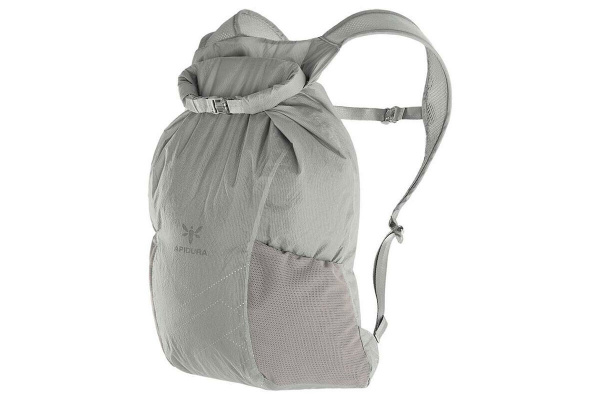
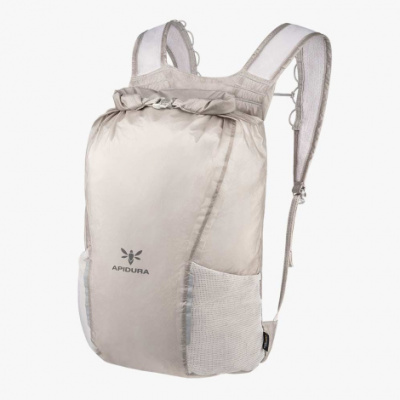
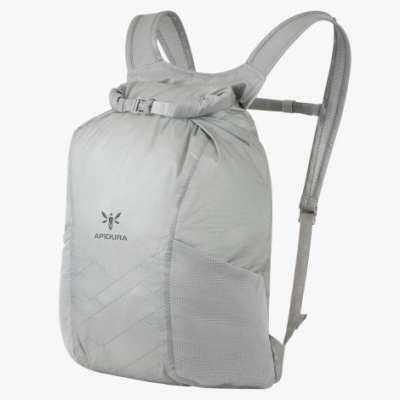
Two key options define the range. The Packable Backpack offers 13 litres of main-compartment space for days when you're genuinely hauling kit. The Packable Musette drops to 7 litres for lighter loads where a single-strap design suits better. Both fold down to roughly apple-sized. Both weigh next to nothing. The choice comes down to what you're carrying and how you prefer to carry it.
Prices and availability can change quickly. Delivery charges are not always included in listed prices.
Final price, stock status and delivery terms are set by retailer. We may receive a commission on purchases made.
Fabric, Closure, and What the Numbers Actually Mean
The RS20D designation isn't marketing shorthand - it refers to a bespoke woven fabric that Apidura developed specifically for this application. The denier count is low, which keeps weight minimal, but the weave structure and coating deliver tear resistance well above what you'd expect from something this light. Think of it as the difference between budget pack-a-mac fabric and a proper waterproof shell: similar appearance on the surface, very different behaviour under stress.
Welded seams are the other half of the waterproofing story. High-frequency welding fuses the fabric panels together rather than stitching through them, so there are no needle perforations for water to track along. On a hand-stitched bag, seam tape can peel and stitch holes can wick moisture inward over time. Welded construction removes that failure point entirely. Combined with the roll-top closure - which you roll down three times minimum before clipping, not just fold loosely - the result is a bag that'll keep a dry base layer and your phone genuinely dry through a full Lake District descent in November.
Packed dimensions matter too. The integrated stuff sack means the bag stows into itself, folding down to something you can tuck inside a jersey pocket, drop into an Apidura saddle bag, or wedge into a top tube bag without thinking about it. Deployed, the 13-litre Packable Backpack sits close to the back via mesh shoulder straps that breathe reasonably well and an adjustable sternum strap that stops the load swaying on rough ground. It's a minimalist harness - no frame, no hipbelt load transfer - which keeps the packable promise intact but means you'll feel heavier loads more acutely than on a structured pack.
Reflective graphics on the rear panel are a practical addition for winter commuting or early-morning starts. Not decorative - genuinely visible at distance under headlights, which matters when you're on unlit lanes.
Packable Backpack vs Packable Musette: Which One Do You Actually Need?
The 13-litre Packable Backpack is the default choice for most riders. Two shoulder straps distribute weight more evenly, the roll-top main compartment handles everything from a change of clothes to a day's worth of food, and the capacity is generous enough for overnight bikepacking trips where your frame bags and bar bags are doing the primary storage work but you need overflow capacity. It's the bag you stuff under a café table and forget about until the return leg.
The 7-litre Packable Musette is a different proposition. Single-strap, lighter, more compact when packed. It suits shorter rides where you're carrying minimal kit - a gilet, a snack, a small tool kit - and don't want the symmetrical load of a full backpack. The trade-off is obvious: a single-strap bag shifts weight to one side, which you'll notice on longer efforts. If you're riding more than two hours with it loaded, the Backpack is the more comfortable call.
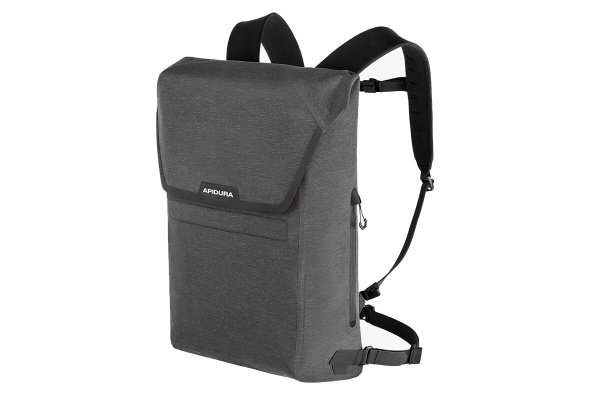
If hydration is your primary concern rather than storage, neither of these is the right tool. Apidura's hydration packs are purpose-built for water-carrying integration. And if you prefer a courier-style carry - slung across the body, quick-access - their messenger bags are worth a look. This page covers the dual-strap rucksack range specifically.
How does Apidura compare to the broader market? EVOC rucksacks typically offer more structured harness systems and back protector integration - useful for trail riding where impact protection matters, less so for road or gravel. CamelBak rucksacks are built around hydration reservoir compatibility first and packability second. Deuter rucksacks lean towards hiking-derived ergonomics with more frame and padding. Apidura's angle is narrower and more deliberate: minimum pack size when stowed, reliable waterproofing when deployed, nothing wasted in between.
Keeping It Clean and Making It Last
RS20D's non-porous surface sheds road muck well. A light rinse after a wet winter commute - think the kind of grit-and-spray combination you get on any A-road in February - will clear most contamination without any real effort. The fabric doesn't hold mud the way woven textiles do, which is one of the practical advantages of the coating over raw nylon.
When the bag does need a proper clean, hand washing is the only correct method. Use mild soap diluted in lukewarm water, work gently over the surface, rinse thoroughly, and leave it to air dry. That's it. Don't be tempted by the washing machine - the drum action and heat will delaminate the waterproof coating and stress the welded seams. Same goes for tumble drying. And keep bike degreasers well away from it; the solvents in most degreasers will attack the RS20D coating aggressively and permanently. If you've been using your pack near chain lube or workshop chemicals, wipe it down with a damp cloth promptly rather than leaving residue to soak in.
The welded seams are durable under normal use but aren't immune to sharp impacts or abrasion against rough surfaces over time. Store the bag loosely rather than compressed, and if you're stowing it inside another bag, keep it away from sharp tools or tyre levers that could score the fabric.
Altura rucksacks are another option worth noting for commuters who prioritise hi-vis and integrated lighting mounts over packability - a different set of priorities, but a legitimate one if your rides are primarily urban.
Apidura Rucksacks FAQs
Are Apidura rucksacks fully waterproof?
Yes. The combination of RS20D fabric, high-frequency welded seams, and a roll-top closure makes Apidura's packable rucksacks highly waterproof. There are no stitched seams for water to track through, and the roll-top - properly rolled down three times and clipped - seals the main compartment reliably in heavy UK downpours.
How small does the Apidura Packable Backpack fold?
It packs into its own integrated stuff sack and ends up roughly apple-sized. That's small enough to fit inside a standard cycling jersey pocket, tuck into a saddle bag, or drop into a frame bag without taking up meaningful space - genuinely useful when you don't want to carry a bag until you actually need one.
How do you clean an Apidura rucksack?
Hand wash only, using mild diluted soap and lukewarm water, then air dry. Machine washing, tumble drying, and bike degreasers will all damage the RS20D waterproof coating and degrade the welded seams. A quick wipe-down after muddy or wet rides is usually enough for day-to-day maintenance.