
Apidura Bar Bags
Apidura bar bags have become the cockpit luggage of choice for riders tackling everything from weekend gravel loops to multi-week ultra-endurance events like the Transcontinental and the Highland Trail 550. These aren't bags that simply bolt on and hope for the best - Apidura has spent years refining the details that actually matter when you're 300 miles from a dry bed and the sky's doing its worst.
The range centres on three distinct lines: Expedition, Racing, and Backcountry. Each uses proprietary materials and construction methods - most notably Apidura's own Hexalon laminated fabric and high-frequency welded seams - to keep your gear genuinely dry rather than merely damp-resistant. For UK riders dealing with persistent drizzle, abrasive bridleway grit, and temperatures that demand operable buckles with gloves on, that level of construction isn't a luxury.
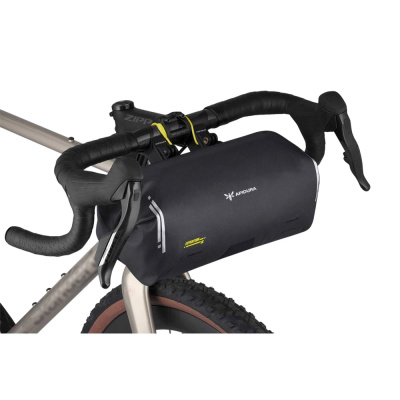
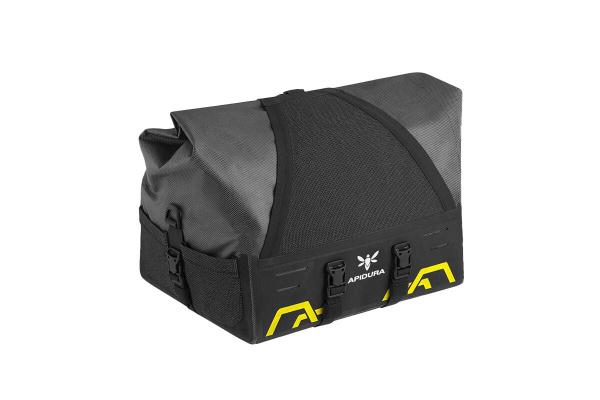
Capacity runs from compact aero-friendly options up to generous touring volumes, with attachment systems designed to work across drop bars, flat bars, and everything between. Steering precision matters, and Apidura's shaped profiles and head tube attachment points are built to keep bags from drooping or rotating mid-ride. Whether you're packing a sleeping kit for a Scottish overnighter or racing light with just a gilet and a few bars, there's a configuration here worth looking at.
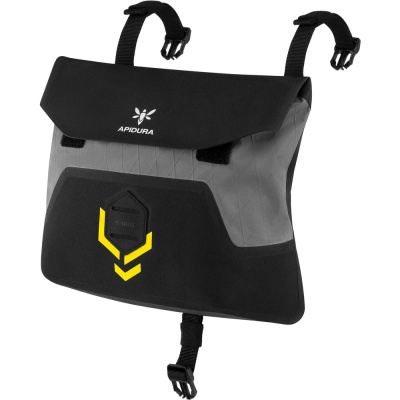
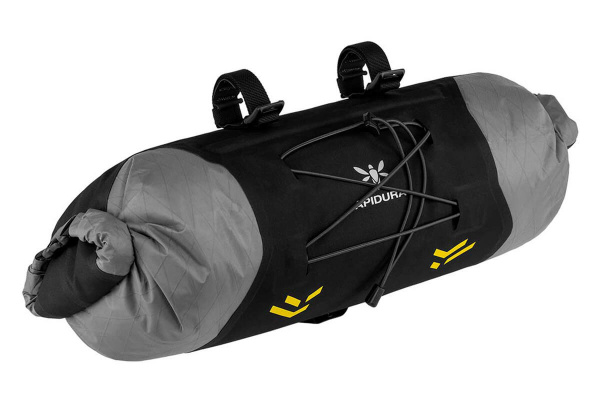
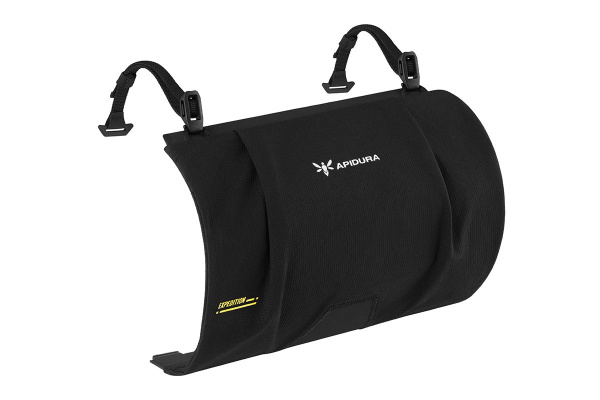
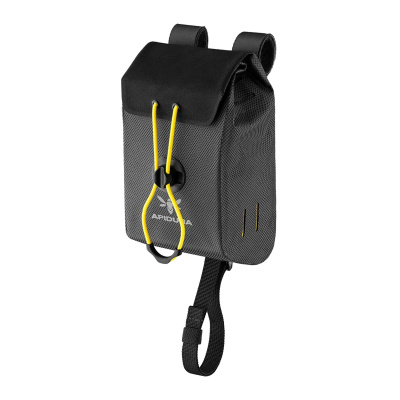
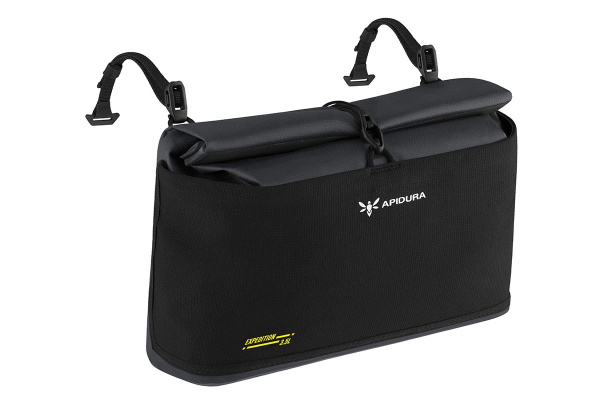
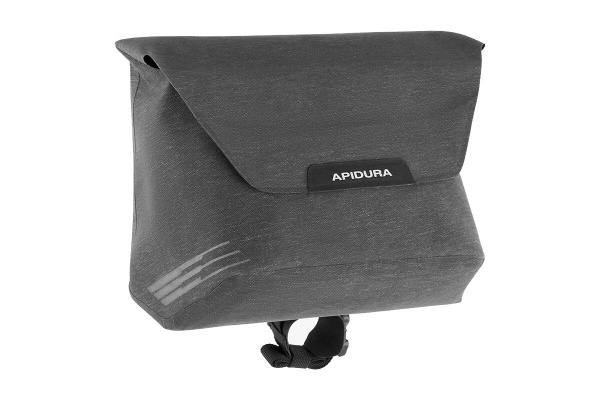
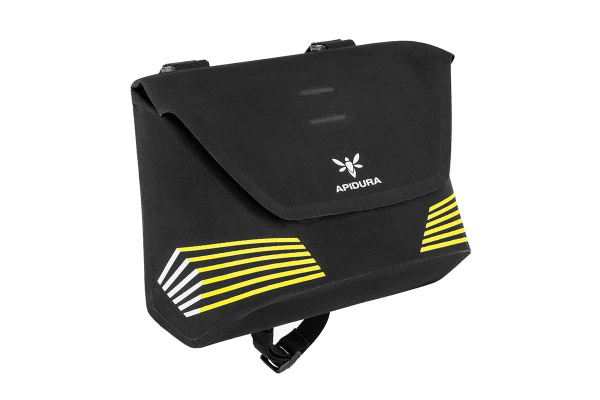
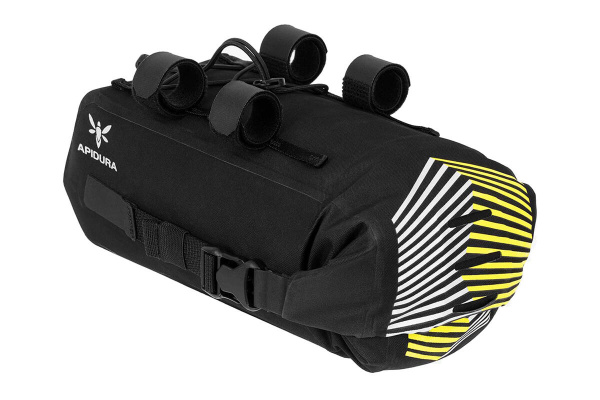
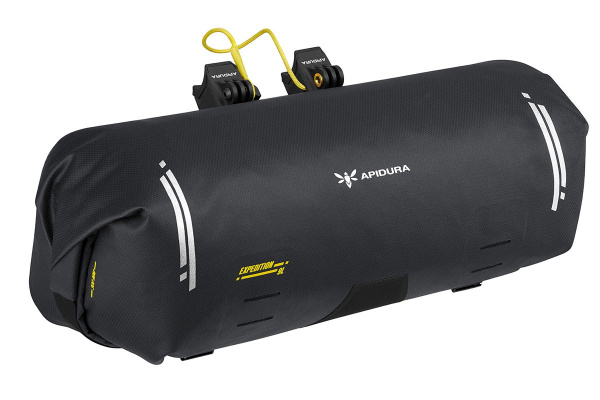
Prices and availability can change quickly. Delivery charges are not always included in listed prices.
Final price, stock status and delivery terms are set by retailer. We may receive a commission on purchases made.
Getting the Fit Right Before You Buy
Compatibility isn't something to figure out after delivery. Before you commit to any Apidura bar bag, grab a tape measure and spend two minutes at the cockpit. The critical number is the usable width between your bars - specifically the gap left once you account for your lever bodies and any inward sweep from drop bar STI or DoubleTap levers. A bag that looks fine in photos can foul your brake levers the moment you try to steer with any conviction.
Cable routing is the other common snag, particularly on bikes with older external cable setups. The straps that anchor the bag to the bars need a clear run, and on some frames you'll need foam spacers - often included or available separately - to bridge over cable housing and keep the bag sitting level. It's a five-minute fix, but worth knowing about before you're doing it in a car park at 5am.
Tyre clearance matters too, and 5 - 8cm between the bottom of the bag and your front tyre is the working minimum. Less than that and heavy braking or a loaded suspension fork bottoming out can bring bag and tyre into contact. Measure with the fork compressed if you're on a hardtail or gravel bike with suspension. Pack the bag as you would for a ride and check again - a soft, loosely packed bag droops more than a tightly rolled one. The head tube attachment strap exists precisely to stop downward rotation, so always use it.
Expedition, Racing, or Backcountry - Which Line Fits Your Riding?
Apidura's three series aren't just marketing tiers - they make genuinely different trade-offs, and picking the wrong one is an expensive mistake.
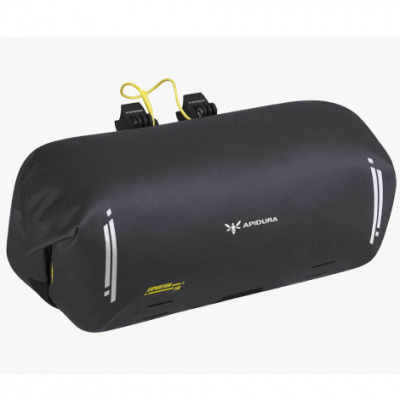
The Expedition series is the benchmark for loaded touring and multi-day bikepacking. Built from Apidura's proprietary Hexalon laminate with fully welded seams, it's as close to bombproof waterproofing as a soft bag gets. The roll-top closure adds an extra layer of security and lets you adjust capacity in litres depending on what you're carrying. If you're fitting a sleeping bag, a puffy, and a day's food into the cockpit for a Scottish highlands crossing, this is the line to look at. It's not the lightest option, but that's the honest trade-off for a bag you can trust in sustained bad weather.
The Racing series strips weight and prioritises aerodynamics. Shaped profiles reduce drag, and the structured form keeps the bag's silhouette consistent even when partially loaded - useful when you've eaten half your supplies and don't want the bag flopping around. Top-opening access on some models means quicker retrieval without unrolling the whole thing. This is the line that makes sense for ultra-endurance events where every gram and every second counts, and it's still built with welded seams and proper waterproofing. Paired with an Apidura frame bag and a well-chosen Apidura saddle bag, it gives you a cohesive, weight-optimised bikepacking setup.
The Backcountry series is built for mountain biking, where abrasion resistance matters as much as water resistance. It uses Dimension-Polyant VX21 - a tough, textured sailcloth-derived fabric that handles snags from branches and rocky scrapes far better than smoother laminates. The trade-off is that the Backcountry relies on water-resistant construction rather than fully welded waterproofing. For a dry Peak District trail day it's more than adequate, but if you're riding into a full Welsh winter downpour, the Expedition's welded seams are the safer call. If you're comparing options across brands, Ortlieb bar bags and Miss Grape bar bags are worth a look as alternatives at different price and volume points, while Altura bar bags sit at the more accessible end of the market for riders not yet ready to commit to premium pricing.
One detail worth noting across all three lines: the Woojin buckles used for strap tensioning are robust and - critically for UK winter riding - operable with thick gloves on. Small thing, but you'll appreciate it when your hands are wet and cold at a junction on the South Downs Way.
Looking After Your Bag - and Your Bike's Paintwork
Here's something the product listings rarely mention: the bag won't fail before your head tube paint does. UK riding conditions create a grinding paste of mud, grit, and road salt that gets worked under strap edges with every vibration. On carbon frames especially, that's a problem that compounds quietly until it isn't quiet any more.
Apply helicopter tape or a dedicated frame protection film to every surface the straps contact - the head tube, the bars themselves, and any area where the bag body might rest against the frame. It takes ten minutes before a trip and saves a frustrating repair bill later. Riders on alloy frames aren't immune; the corrosion that develops under strap friction in damp conditions is worth preventing too.
Cleaning Hexalon material is straightforward: warm water, mild soap, a soft cloth, and nothing more aggressive than that. Harsh degreasers or solvents will attack the laminate and accelerate wear at the welded seams - the very seams that are doing the waterproofing work. Rinse thoroughly and let the bag dry fully before rolling and storing. The bungee tie-downs used on some models for external gear retention should be checked periodically for UV degradation if the bag spends a lot of time in storage or strapped to a roof rack.
Keep the roll-top closure clear of grit before rolling it down - a few grains of trail debris in the fold won't ruin it immediately, but repeated contamination will accelerate wear on the seam. A quick wipe before closing adds months to the bag's working life.
Frequently Asked Questions
Do Apidura bar bags fit drop handlebars?
Yes, but measure carefully first. You need to account for the inward sweep of your shift levers - STI or DoubleTap - and the width between your drops at the lever clamp point. The Racing series and the smaller-capacity Expedition options are shaped with drop bar geometry in mind and are more likely to clear levers cleanly than the larger Expedition volumes.
Are Apidura bar bags completely waterproof?
The Expedition and Racing series are fully waterproof: Hexalon laminate with high-frequency welded seams throughout. The Backcountry series is highly water-resistant but uses abrasion-resistant Dimension-Polyant VX21 rather than welded construction, so it handles heavy rain less effectively. For sustained UK wet-weather riding, stick with Expedition or Racing.
How do you stop a handlebar bag rubbing the front tyre?
Keep at least 5 - 8cm of clearance between the bag's base and the tyre, measured with the fork loaded and the bag packed as you'd actually ride it. Always fit the head tube strap - it stops the bag rotating downward under load. Packing dense items close to the stem lowers the bag's centre of gravity and reduces bounce, which is the main cause of contact on rough surfaces.
Apidura Bar Bags FAQs
Do Apidura bar bags fit drop handlebars?
Yes, but measure the usable width between your drops with levers fitted before buying. The inward sweep of STI or DoubleTap levers eats into available space. The Racing series and smaller Expedition models are shaped to clear drop bar lever setups more reliably than the larger-volume Expedition bags.
Are Apidura bar bags completely waterproof?
Expedition and Racing bags are fully waterproof - Hexalon laminate with high-frequency welded seams. The Backcountry series uses Dimension-Polyant VX21 for superior abrasion resistance but isn't welded, so it's water-resistant rather than waterproof. For prolonged UK downpours, Expedition or Racing is the safer choice.
How do you stop a handlebar bag rubbing the front tyre?
Maintain 5 - 8cm of clearance between the bag base and tyre, checked with the fork compressed and the bag fully packed. Always use the head tube strap to prevent downward rotation. Packing heavier items close to the stem reduces bounce and keeps the bag stable on rough ground.