
EVOC Rucksacks
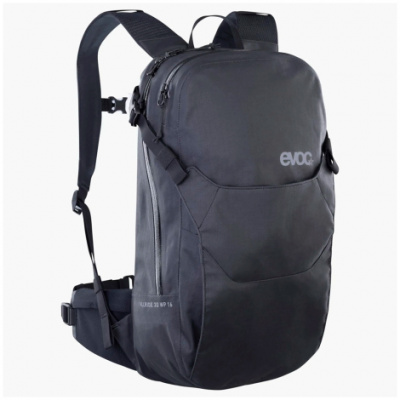
Evoc cycling rucksacks sit at the serious end of the market - these aren't fashion bags with a few bungee cords. They're purpose-built carrying systems with CE-certified spine protection at their core, and that's what separates them from most of the pack. The Liteshield and Liteshield Plus back protectors absorb impact energy in a crash, a detail that matters whether you're hitting technical enduro lines in the Tweed Valley or grinding through a grey Tuesday commute on wet tarmac.
Beyond the protection story, Evoc has thought hard about how a rucksack actually behaves on a moving rider. The Air Circulation System keeps your back breathing on steep, sweaty climbs. The Airo Flex hip belt distributes load without digging in. And the Brace Link adjusts the shoulder straps to your actual shoulder width, which sounds like a small thing until you've worn a bag that chafes your neck for three hours. Storage is genuinely well-considered too - hydration bladder compatible across the range, dedicated tool compartments, and helmet carry systems on the trail-focused models.
If you need a minimalist water carrier or something to clip round your waist, our Evoc hydration packs and Evoc hip packs pages are the better starting point. For everything else - capacity, protection, and kit organisation - read on.
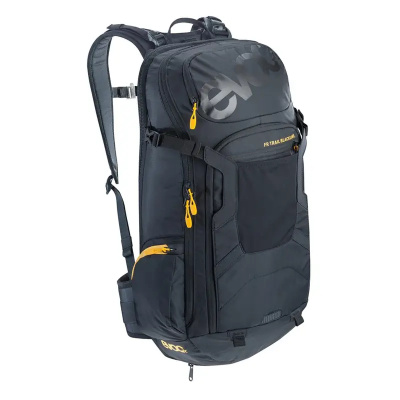
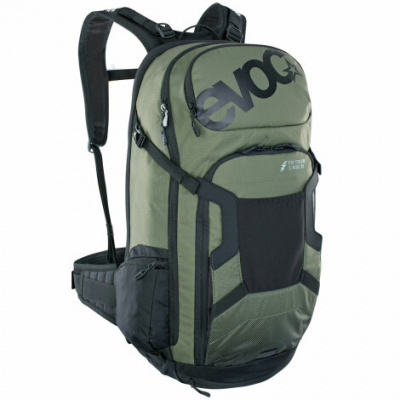
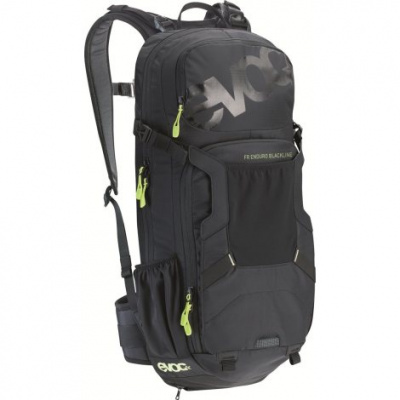
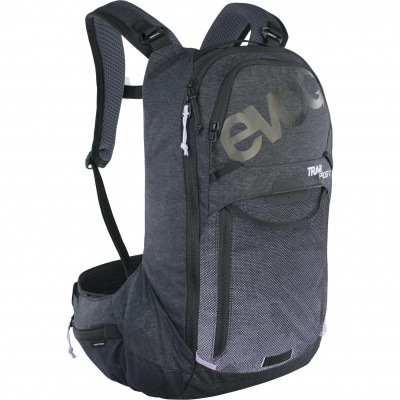
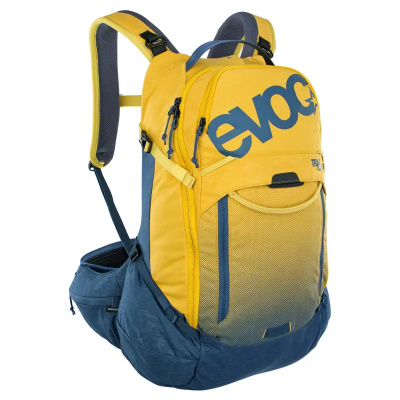
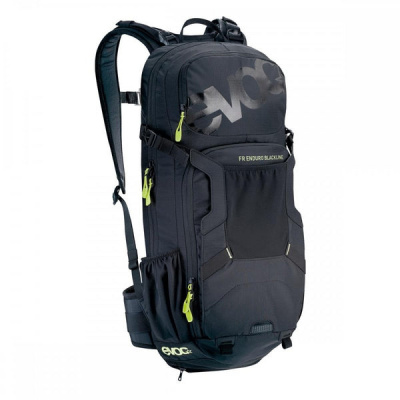
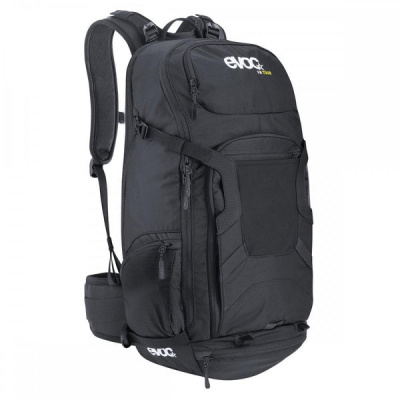
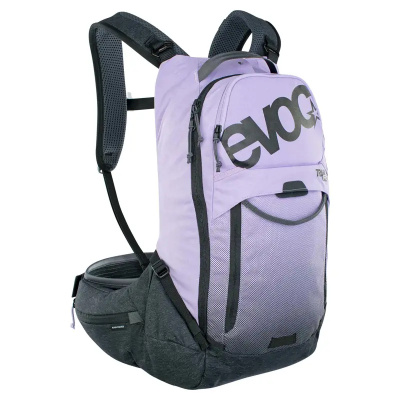
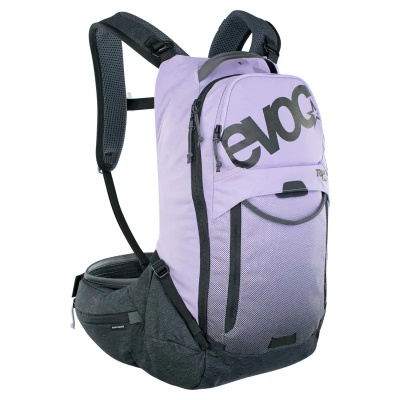
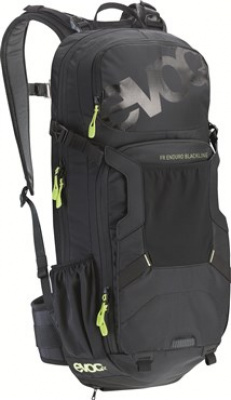
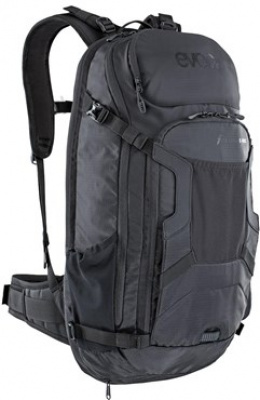
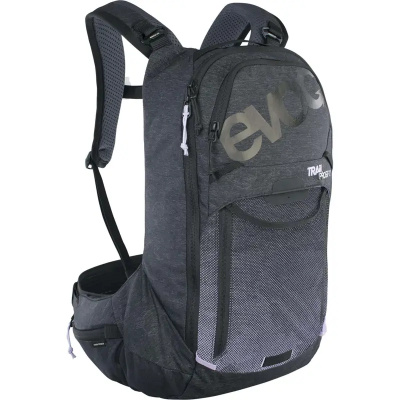
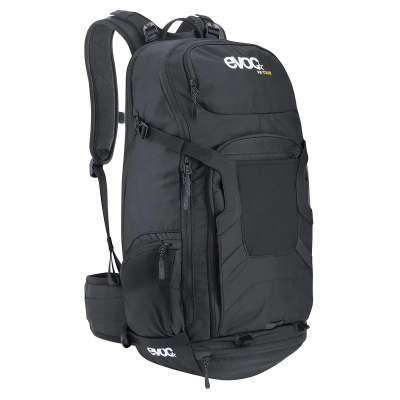
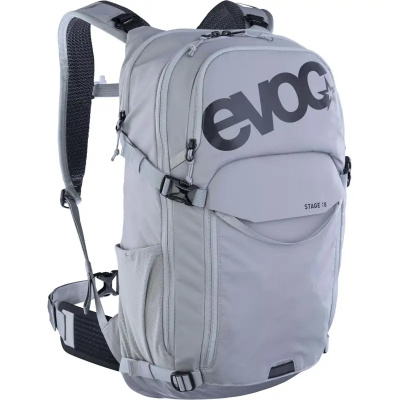
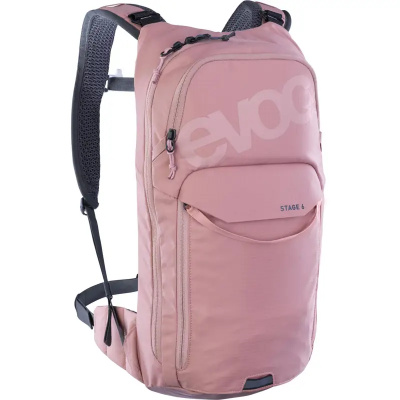
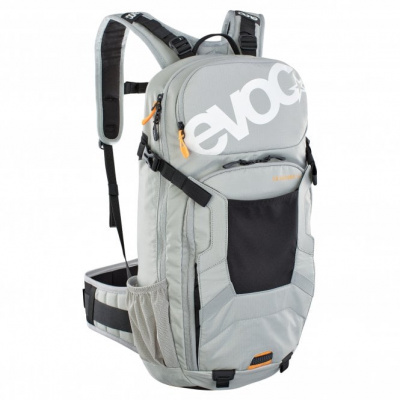
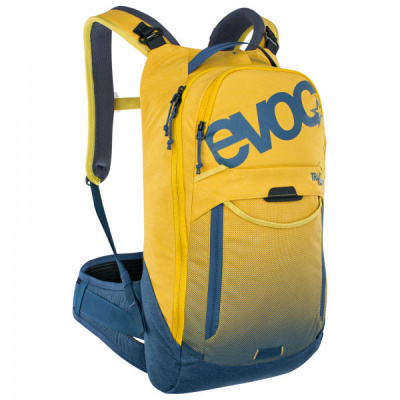
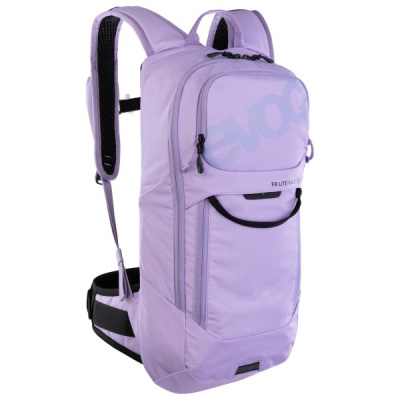
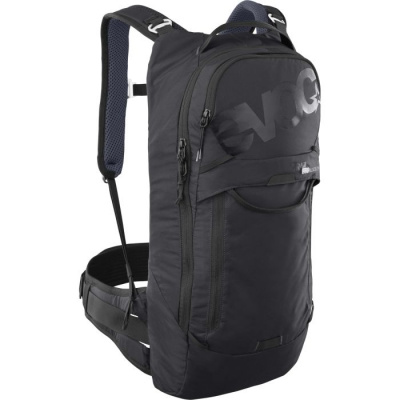
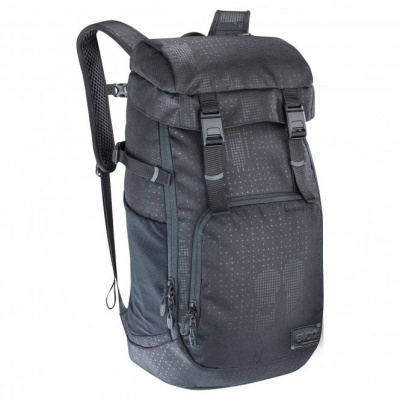
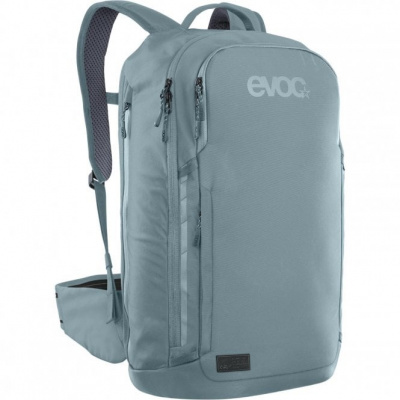
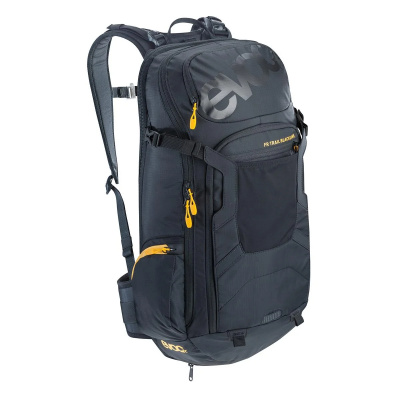
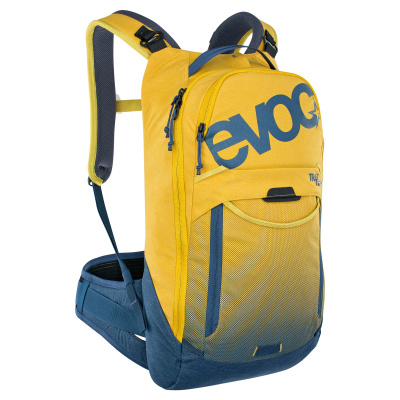
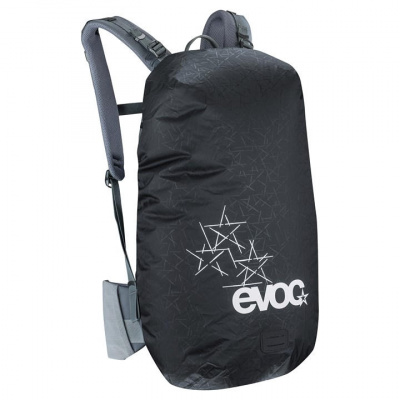
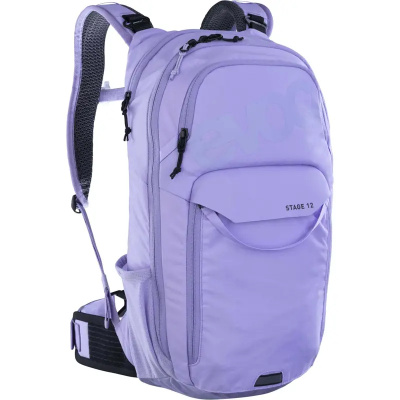
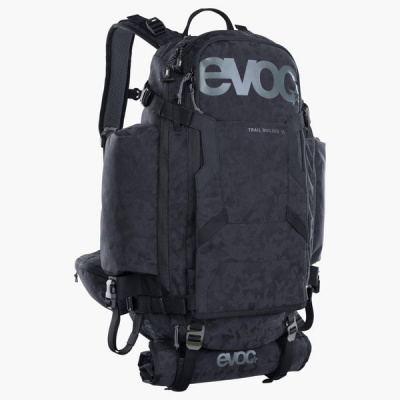
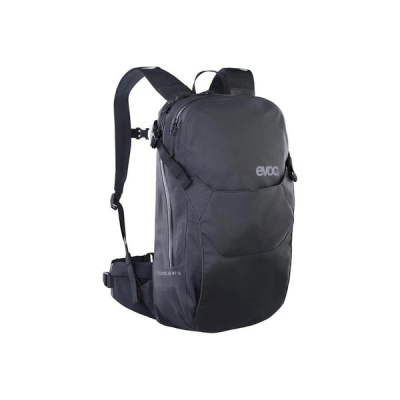
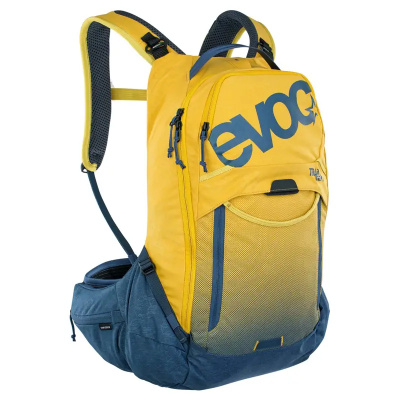
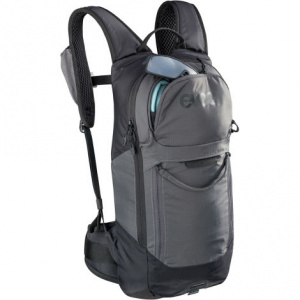
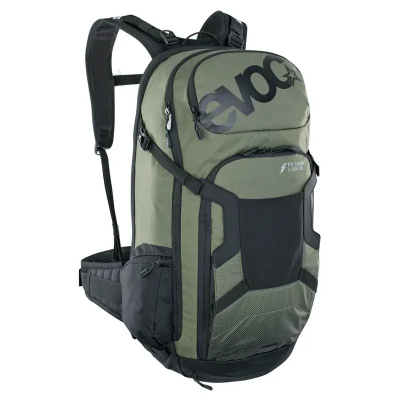
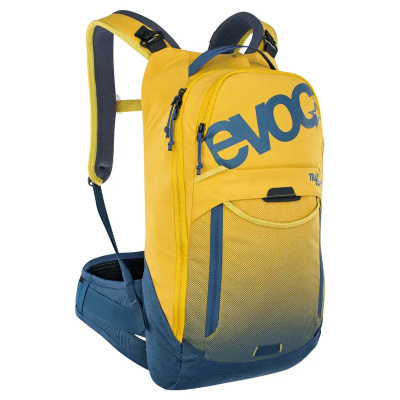
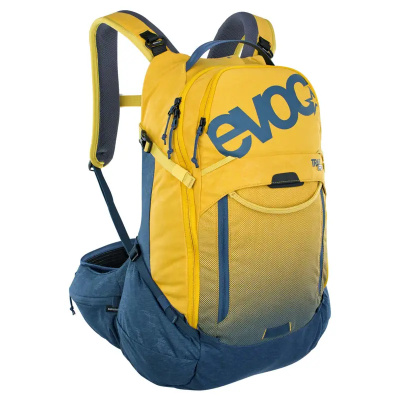
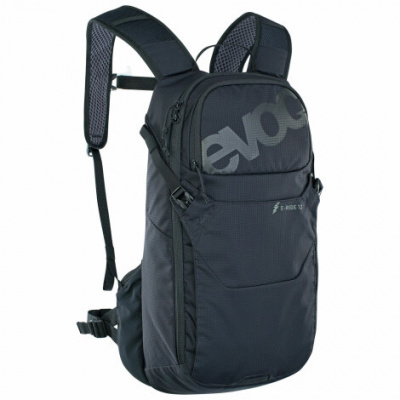
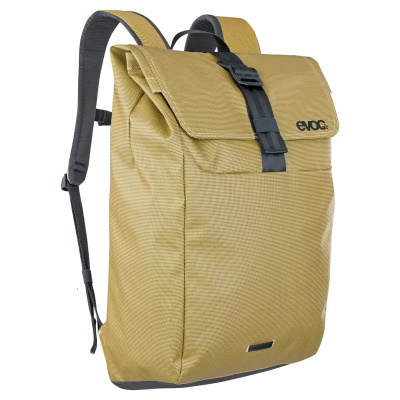
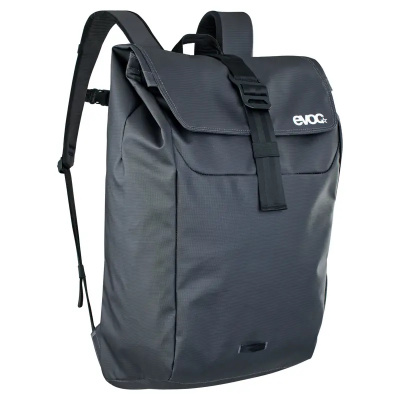
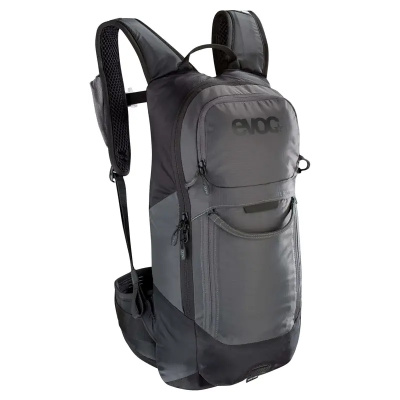
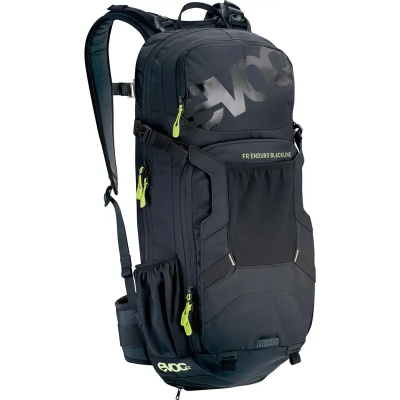
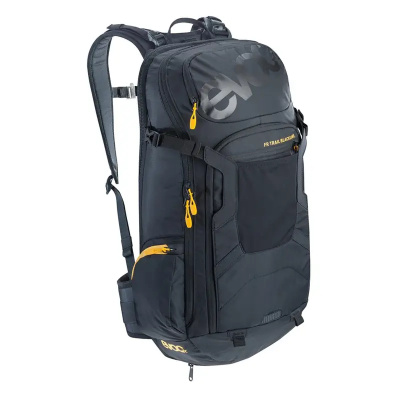
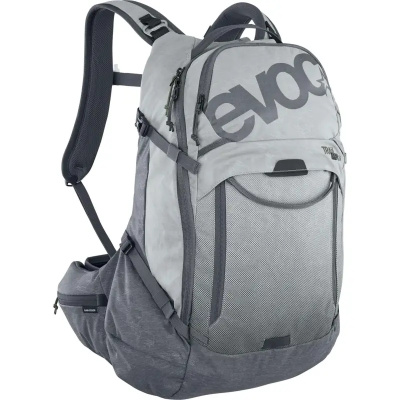
Prices and availability can change quickly. Delivery charges are not always included in listed prices.
Final price, stock status and delivery terms are set by retailer. We may receive a commission on purchases made.
Fit, Sizing and What the CE Rating Actually Means
Think of an Evoc protector backpack as safety gear that also carries your stuff, not the other way round. That framing matters because it changes how you size one. Forget your usual medium or large - Evoc sizes by torso length, measured from the top of your hip crest up to your shoulders. Get that wrong and the Liteshield Plus protector won't sit over the right section of your spine, which defeats the point entirely. The range covers S, M/L, and XL torso lengths, and Evoc publish a clear size chart. Measure twice, order once.
The Liteshield and Liteshield Plus inserts are certified to CE EN 1621-2, the same standard used for motorcycle back protectors. Level 1 certification means the insert transmits no more than 18kN of force on average during a standardised impact test; Liteshield Plus meets Level 2, pushing that threshold down to 9kN. In practical terms, Level 2 absorbs roughly twice the crash energy. If you're riding anything with consequence - enduro, DH, chunky all-mountain - the Plus insert is worth having. For mellow XC days or commuting, Level 1 is still meaningful protection rather than a token gesture.
The Brace Link system lets you dial in how the shoulder straps splay across your chest. It's a simple mechanism but it stops the straps migrating toward your neck on long days out, which is exactly the kind of thing that turns a good bag into an annoying one by the time you reach the car park. Worth spending two minutes on when you first set the bag up.
FR, Trail Pro, Ride: Picking the Right Tier
Evoc's rucksack range runs across three broad tiers, and the differences are meaningful rather than just cosmetic.
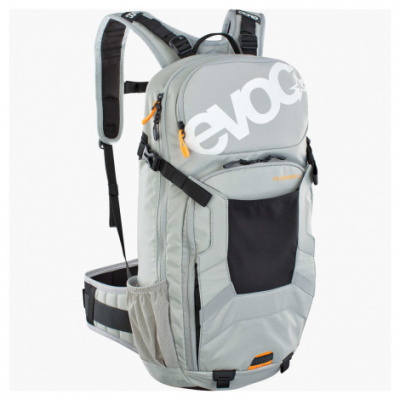
The FR (Freeride) series is the heaviest-duty option - built for enduro and downhill use where you're likely to be going fast, getting inverted, and occasionally testing the ground with your back. These bags carry the full Liteshield Plus protector, generous volume for pads and tools, and robust construction throughout. They're not the lightest thing you'll strap on, but lightness isn't the priority when you're sending it at a bike park. If you're cross-shopping at this end of the market, Dakine rucksacks offer a comparable gravity-focused range worth a look.
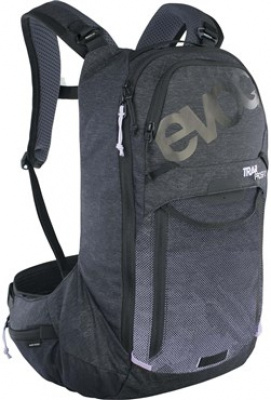
The Trail Pro series steps back slightly in volume and bulk, pairing the Liteshield Plus protector with a lighter overall build that suits all-mountain and trail riding better. You still get the Air Circulation System - a vertical channel running up the back panel with lateral cut-outs that pull warm air away from your spine - and the Airo Flex hip belt for load transfer on longer days. This is the range most UK trail riders will find themselves in. It balances protection and carry comfort without the bulk of the FR bags.
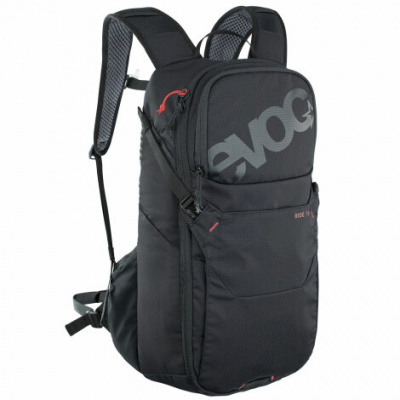
The Ride and commuter-adjacent bags drop the heavy spine protector (some retain a basic insert) and shift focus toward laptop sleeves, high-visibility detailing, and day-to-day practicality. They're hydration bladder compatible and well-organised inside, but they're not the choice if protection is a priority. Worth noting if a colleague asks why your bag looks different to theirs. Deuter rucksacks and CamelBak rucksacks cover similar everyday-carry ground if the commuter angle is your main focus.
As you move up through the range in both price and volume, you gain higher-grade ripstop nylon, heavier-duty YKK zips, more sophisticated tool compartment organisation, and the helmet carry system that lets you clip a full-face to the outside of the bag. That last feature is genuinely useful at trail centres where you're shuttling or mixing open-face and full-face sections in one day. Pair the bag with Evoc body armour if you want a joined-up protection setup.
Keeping Your Bag Alive Through a UK Winter
British riding does specific things to kit. Fine grit from winter trails works into zip teeth and, over time, grinds them to failure - it's slow, invisible damage until one day the zip just stops. A toothbrush and a drop of silicone spray along the zip teeth every few rides sorts this. Takes thirty seconds in the garage. Don't wait until the zip starts feeling stiff, by then you're already losing ground.
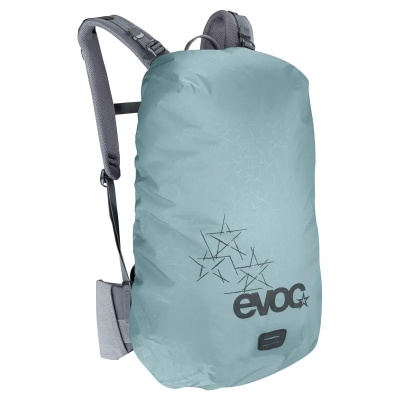
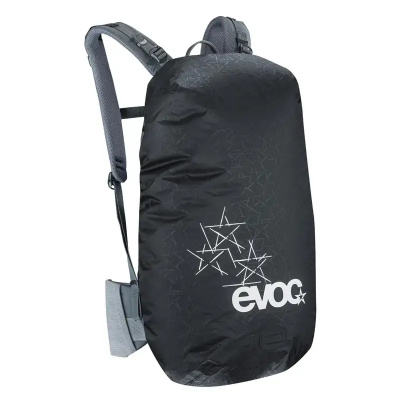
On waterproofing: Evoc bags use PU-coated ripstop nylon with a DWR finish that handles light rain and trail spray well. In a proper downpour - the kind the Peak District serves up with no warning - deploy the integrated rain cover. It lives in a dedicated base compartment and takes ten seconds to pull out. The DWR coating will refresh with a warm iron (no steam, over a cotton cloth) if you notice water starting to bead less aggressively after a season of use. High-humidity climbs are where the Air Circulation System earns its keep; the vertical channel genuinely reduces sweat pooling compared to a flat-backed bag.
Washing is straightforward but non-negotiable in its rules. Always pull the Liteshield protector out first - it lives in a dedicated sleeve and slides free easily. Hand wash the bag in warm water with mild soap, nothing with strong detergents. Machine washing degrades the PU coating and can distort the structural foams. Air dry only, away from direct heat. The protector itself just needs a wipe down. Store the bag uncompressed if you can; folding the back panel for months leaves creases that affect how it sits. Check the Evoc tools range while you're at it - keeping the tool compartment stocked means you're not borrowing a multitool off a stranger on the Roaches.
EVOC Rucksacks FAQs
Are Evoc backpacks waterproof?
They're highly water-resistant rather than fully waterproof. The PU-coated ripstop nylon and DWR treatment handle light rain and trail spray well. For heavy downpours, pull out the integrated rain cover from the base compartment - it's there specifically for UK weather and makes a real difference.
How do I choose the right size Evoc protector backpack?
Size by torso length, not your usual clothing size. Measure from the top of your hip crest to your shoulders, then check Evoc's size chart for S, M/L, or XL. Getting this right matters - it ensures the CE-certified Liteshield protector sits correctly over your spine rather than riding up or down.
Can you wash an Evoc rucksack in the washing machine?
No. Machine washing damages the PU waterproof coating and structural foams. Remove the Liteshield protector first, then hand wash the bag in warm water with a mild soap. Air dry away from direct heat. The protector just needs a wipe. It takes longer than bunging it in the machine, but the bag will last years longer for it.