
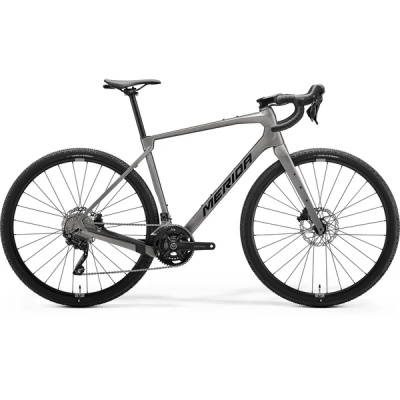
Merida SILEX 4000
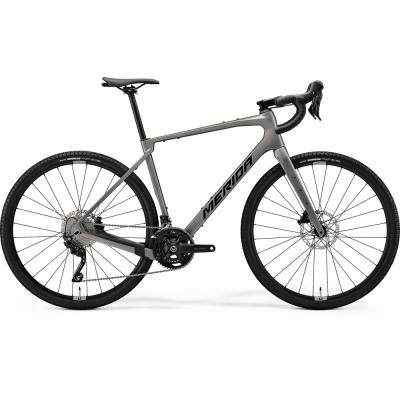
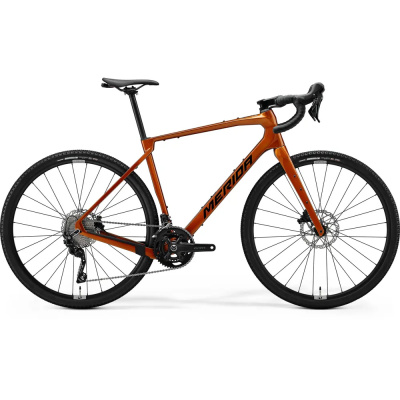
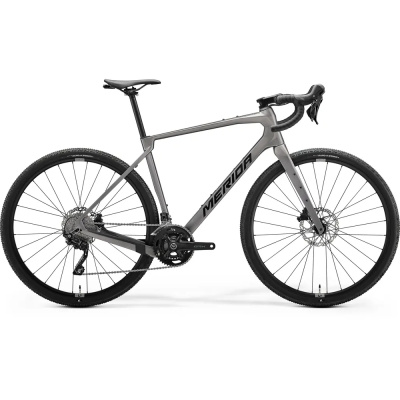
Stable, comfortable carbon gravel bike built for rough byways, loaded tours, and all-day exploration over pure speed.
- CF2 carbon frame balances stiffness with all-day comfort
- MTB-inspired geometry brings confidence on rough gravel
- Clearance for 700×45c tyres (47c maximum) swallows terrain
- Disc Cooler tech keeps brakes cool on loaded descents
- Five bottle mounts plus rack eyes for bikepacking
- Shimano GRX400 2×10 drivetrain: durable, wide-ranging
Merida SILEX 4000 Deals
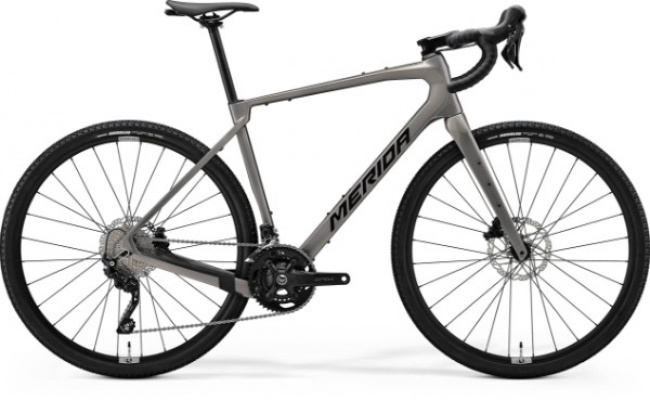
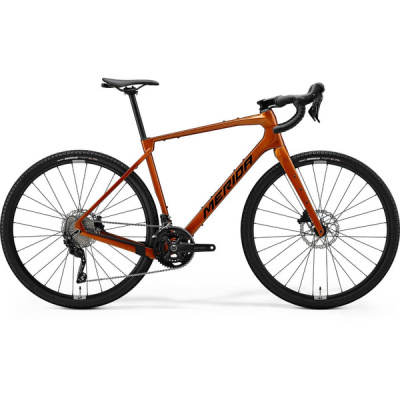
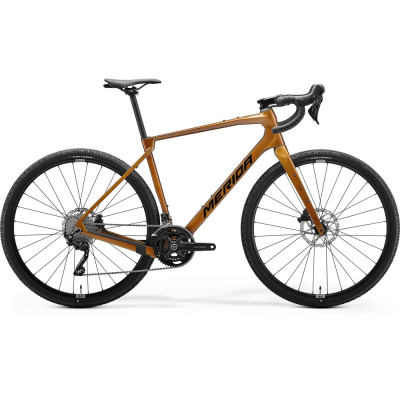



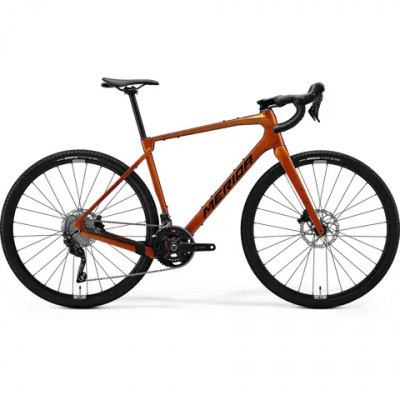
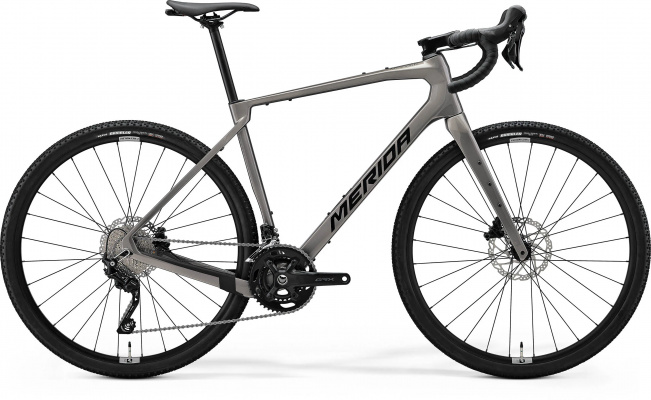
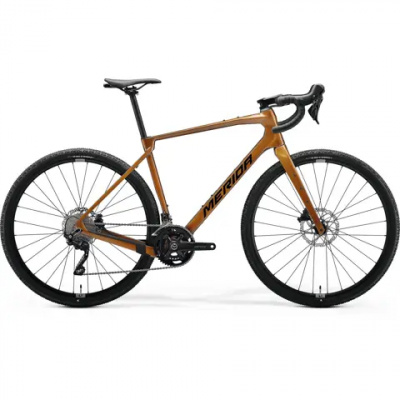
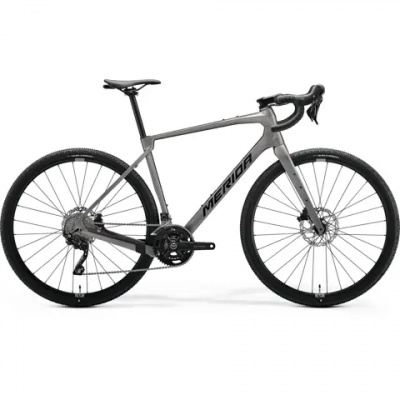
Prices and availability can change quickly. Delivery charges are not always included in listed prices.
Final price, stock status and delivery terms are set by retailer. We may receive a commission on purchases made.
Bikesy's Verdict
The Merida SILEX 4000 is a gravel bike that knows its lane and owns it. If your riding leans toward rough byways, multi-day tours, and mixed-surface exploration rather than chasing podiums on smooth gravel, this is a machine that'll reward you with composure, comfort, and genuine versatility. The CF2 carbon frame and MTB-inspired geometry deliver stability when the track gets technical, while the Shimano GRX400 groupset and generous tyre clearance give you the range and grip to tackle varied terrain without drama.
It's not the lightest or raciest option in its class, but that's not the point. The SILEX 4000 is built for riders who value practicality - multiple mounts, internal cable routing, Disc Cooler tech - and who want a single bike that can handle everything from loaded bikepacking trips to fast gravel loops without needing a second machine. The stock build is well-judged, and while lighter wheels would sharpen acceleration, the overall package offers strong value for a carbon gravel bike at this price point.
If you're after a bike that'll eat rough gravel with confidence, carry your gear without complaint, and keep you comfortable over long distances, the SILEX 4000 deserves serious attention. It's a bike that invites you to explore further, and it's got the capability to back that invitation up.
Pros
- Stable, confidence-inspiring geometry on rough gravel and loaded descents
- CF2 carbon frame balances compliance with responsive handling
- Generous tyre clearance (up to 700×47c) and multiple mounts for bikepacking
- Shimano GRX400 groupset is durable and wide-ranging for varied terrain
- Disc Cooler tech keeps brakes effective on long, loaded descents
Cons
- Heavier than some carbon rivals if you're chasing race weight
- Feels less snappy on smooth tarmac or fast group rides compared to road-focused bikes
- Stock wheels may need patience for tubeless setup; lighter hoops would sharpen acceleration
About the Merida SILEX 4000
Merida's second-generation SILEX 4000 lands squarely in the sweet spot where gravel ambition meets bikepacking practicality. Built around a CF2 carbon frame with dropped chainstays and a fork designed to accept suspension without wrecking the geometry, it's a bike that invites you to explore further - whether that's a weekend loop on rutted byways or a week-long tour across mixed surfaces. The 2026 iteration carries forward the refinements introduced in the previous redesign: slacker head angle, generous tyre clearance, and internal cable routing that keeps bags from snagging on exposed housing.
At its heart sits Shimano's GRX400 groupset - a 2×10 setup with a 46-30t crankset and 11-36t cassette that delivers enough range for steep climbs without sacrificing pace on the flat. Maxxis Rambler 700×45c tyres come fitted tubeless-ready, offering a supple ride and confident grip when the surface turns loose. The frame bristles with mounts: five bottle-cage positions, rack eyes, and mudguard clearance for 42c rubber. Merida's Disc Cooler technology - CNC-machined aluminium fins on the caliper mounts - helps dissipate heat on long descents, a detail that matters when you're carrying panniers down a mountain pass.
This isn't a bike chasing podiums on smooth gravel; it's built for riders who value stability over skittishness, comfort over razor-sharp responsiveness. The MTB-inspired geometry - longer reach, relaxed angles - plants you in a position that feels composed when the track gets rough, yet the carbon layup keeps things lively enough that you won't feel sluggish when the pace lifts. It's a machine that rewards curiosity, whether you're threading singletrack shortcuts or stringing together fire roads into an all-day adventure.
Merida SILEX 4000 geometry
The SILEX 4000's geometry borrows from mountain bike thinking: a slacker head angle than you'd find on a traditional road frame, paired with a longer reach that shifts your weight rearward and keeps the front wheel tracking true over ruts and roots. You sit more upright than on a race bike, which eases pressure on your hands during long days and gives you better sightlines when the trail narrows. The longer wheelbase adds stability at speed and when loaded, though it does mean you'll need to plan your line through tight switchbacks rather than flicking the bike around on instinct.
Chainstays are dropped to clear wider tyres without lengthening them excessively, so the bike doesn't feel ponderous when you need to accelerate out of a corner or hop over an obstacle. The bottom bracket sits low enough to keep the centre of gravity planted, which inspires confidence on loose descents but won't drag on reasonable obstacles. Stack is generous across the size range, so taller riders won't feel cramped and shorter riders can still achieve a comfortable, upright posture without a towering stack of spacers.
When you're threading through technical sections - rock gardens, washboard gravel, off-camber turns - the geometry keeps the bike predictable. It won't dart nervously under you, but neither does it feel like steering a barge. On fast, smooth gravel or tarmac sections, you'll notice it's not as eager to change direction as a pure road bike, but that's the trade-off for the composure it delivers when the surface deteriorates. If your rides mix long stretches of rough track with occasional sealed sections, the geometry strikes a sensible balance.
Component choices & upgrades
The stock build is well-judged for the bike's intended use. Shimano's GRX400 groupset is robust, shifts cleanly under load, and the hydraulic disc brakes offer plenty of modulation - important when you're descending steep gravel with a loaded bike. The 2×10 setup gives you a wide enough gear range for most terrain without the complexity or expense of a 1× system, and the 46-30t chainring pairing means you're not grinding up steep pitches or spinning out on descents.
Maxxis Rambler tyres are a sensible all-rounder: fast-rolling on hardpack, grippy enough on loose surfaces, and the EXO casing offers decent puncture protection without adding excessive weight. They're tubeless-ready, though some riders report the stock wheels require patience to seal properly. If you're planning serious off-road miles or bikepacking on rougher terrain, swapping to a burlier tyre - something with more aggressive tread or a tougher sidewall - will boost confidence without compromising the bike's character.
The Merida-branded cockpit components are functional rather than flashy. The carbon seatpost helps filter vibration, and the handlebar offers a comfortable shape with a modest flare. If you're chasing marginal gains or have specific fit needs, a wider bar or shorter stem might suit, but the stock setup works well for most riders. Wheels are the obvious upgrade path if you're serious about performance: lighter hoops with a wider internal width will improve tyre support and acceleration, though the stock rims are tubeless-ready and perfectly adequate for general use. A dropper post is worth considering if you're tackling varied terrain with steep descents - the frame is routed to accept one internally, so installation is straightforward.
Where the Merida SILEX 4000 excels
This bike is outstanding at eating rough gravel and dirt roads with composure. If your typical ride involves long stretches of washboard, loose corners, and the occasional rocky section, the SILEX 4000 will feel like it's in its element. The stable geometry, generous tyre clearance, and compliant carbon frame mean you can maintain pace over surfaces that would rattle a more aggressive bike into submission. It's equally strong as a bikepacking platform: the frame's multiple mounts, internal cable routing, and Disc Cooler tech make it practical for multi-day tours with loaded panniers.
It also handles mixed-surface rides well - those days when you're linking tarmac lanes, gravel byways, and the odd bridleway. The 2× drivetrain gives you enough range to keep a decent cadence on climbs and descents, and the tyres roll fast enough on sealed roads that you won't feel like you're dragging an anchor. Commuters who face varied urban terrain - potholed streets, canal towpaths, cobbled shortcuts - will appreciate the bike's ability to absorb punishment without complaint.
Where it's less ideal: pure road riding, especially in fast group settings. The relaxed geometry and wider tyres mean it won't snap through tight corners or respond to sudden accelerations with the same urgency as a dedicated road bike. If you're chasing KOMs on smooth tarmac or racing crits, you'll find the SILEX 4000 feels a touch sluggish. It's also not the lightest option in its class, so if you're counting grams for hillclimbs or ultra-distance racing, there are quicker-accelerating alternatives. But if your riding leans toward exploration, comfort, and capability over pure speed, those trade-offs won't matter.
Merida SILEX 4000 FAQs
What is the tyre clearance on a Merida SILEX 4000?
The frame clears 700×45c tyres as standard, with space for 700×47c at maximum. If you're fitting mudguards, you'll want to stick to 42c or narrower to avoid rub. The dropped chainstays and revised fork design give you plenty of room to experiment with different tread patterns and widths depending on the terrain you're tackling.
Is the Merida SILEX 4000 good for bikepacking?
Yes, it's one of the bike's core strengths. Five bottle-cage mounts, rack eyes, and internal cable routing mean you can load it up without cables snagging on bags. The stable geometry and Disc Cooler tech make it confident on long, loaded descents, and the carbon frame keeps overall weight reasonable even when you're carrying gear. The comfortable riding position also helps on multi-day trips.
What is the weight of the Merida SILEX 4000?
The complete bike weighs approximately 10.1 kg for the 2026 model. That's competitive for a carbon gravel bike at this price point, though not the lightest in class. The weight is well-distributed, so it doesn't feel sluggish when you're riding unladen, and the frame's stiffness means it doesn't feel flexy under load.
What kind of bottom bracket does the Merida SILEX 4000 have?
It uses a threaded bottom bracket, which is easier to service and less prone to creaking than press-fit designs. It's a practical choice for a bike that's likely to see wet, muddy conditions and long miles between maintenance intervals.
Can I fit suspension forks to a Merida SILEX 4000?
Yes, the second-generation SILEX frame and fork are designed to accept suspension forks without altering the bike's geometry. If you're planning to tackle rougher terrain or want the option of adding front suspension for bikepacking comfort, the frame accommodates it. You'll need to check axle-to-crown measurements to ensure compatibility, but the design allows for the upgrade.
What are the key differences between Merida SILEX generations?
The second-generation SILEX (introduced around 2023 - 2024) brought a slacker head angle, improved tyre clearance, and a revised fork design that allows suspension compatibility without changing geometry. Internal cable routing was refined, and the overall aesthetic was updated. The first generation was comfortable and versatile, but the second generation significantly enhanced off-road capability and handling confidence.
How does the Merida SILEX 4000 compare to its aluminium counterpart?
The SILEX 400 uses an aluminium frame instead of carbon, which adds weight but reduces cost. The carbon SILEX 4000 offers better vibration damping and a more compliant ride over long distances, which matters on rough gravel and multi-day tours. The aluminium version is still capable and shares the same geometry and versatility, so if budget is tight, it's a solid alternative.
What is the intended use of the Merida SILEX?
The SILEX is designed for versatile adventure riding: gravel exploration, bikepacking, long-distance mixed-surface rides, and even commuting on rough urban terrain. It's built for riders who want a single bike that can handle varied conditions without needing multiple machines, prioritising comfort, stability, and practicality over outright speed.
Key Features & Benefits
- MTB-inspired geometry with slacker head angle: Keeps the front wheel tracking confidently over ruts, rocks, and loose gravel, reducing fatigue on technical sections
- CF2 carbon frame with dropped chainstays: Delivers all-day comfort and vibration damping while clearing wide tyres for varied terrain
- Disc Cooler technology with CNC-machined fins: Dissipates brake heat on long descents, crucial when you're carrying loaded panniers
- Five bottle-cage mounts plus rack and mudguard eyes: Transforms the bike into a practical bikepacking platform without compromising handling
- Shimano GRX400 2×10 drivetrain with 46-30t / 11-36t gearing: Wide range for steep climbs and fast descents, with proven durability for rough conditions
Merida SILEX 4000 2025 & 2024 differences
The 2026 model carries forward the second-generation SILEX design introduced in 2024, with minimal changes. The 2025 iteration was essentially identical to the 2026 spec: CF2 carbon frame, Shimano GRX400 2×10 groupset, Maxxis Rambler 700×45c tyres, and the same geometry refinements (slacker head angle, dropped chainstays, suspension-fork compatibility). Weight remained around 10.1 kg.
The 2024 model marked the second-generation redesign, bringing significant improvements over the first-generation SILEX. Key changes included a slacker head angle for better off-road stability, improved tyre clearance (up to 700×47c), a revised fork design allowing suspension compatibility without altering geometry, and refined internal cable routing (WIRE PORT). The 2024 model also introduced the Disc Cooler technology and updated aesthetics. Some component variations existed: certain 2024 builds used VP CLK hubs and a Merida 8158 headset, while 2025/2026 models standardised on Shimano hubs and an Acros headset. The 2024 model was listed at 9.9 kg, slightly lighter than the 2025/2026 figure, though this may reflect measurement differences rather than actual spec changes.
Alternatives to Consider
Within Merida's own SILEX range, the SILEX 7000 steps up with a higher-spec carbon frame and Shimano GRX810 groupset, offering 11-speed precision and lighter components if you want more performance without leaving the family. The SILEX 400 drops to an aluminium frame with similar geometry and versatility, making it a budget-conscious choice if you're willing to trade some comfort and weight for lower cost.
Cross-brand, the Specialized Diverge Comp Carbon offers Future Shock suspension and a more road-biased geometry, so it's quicker on tarmac but less stable on truly rough gravel. The Trek Checkpoint ALR 5 uses aluminium with IsoSpeed compliance, sitting between the SILEX 400 and 4000 in character - comfortable and capable, but without the carbon refinement. The Cannondale Topstone Carbon 3 brings a similar adventure-ready ethos with a Kingpin rear suspension system, adding rear compliance at the cost of some efficiency on climbs. For a more aggressive off-road stance, the GT Grade Carbon Elite leans into rough terrain with a slacker geometry and burlier build, though it sacrifices some on-road manners. Finally, the Ribble CGR AL Sport offers a lighter, racier aluminium package with sharper handling, but it lacks the SILEX's bikepacking mounts and all-day comfort focus.
Reviews
Rough gravel and long days are where this bike earns its keep. The MTB-inspired geometry plants the front wheel with authority, so when the track turns loose or washboarded, you're not fighting the bike - it tracks through ruts and over rocks with a composure that lets you focus on the line ahead rather than wrestling the bars. The CF2 carbon frame filters vibration without feeling dead; there's enough feedback to read the surface, but your hands and shoulders aren't taking a pounding after four hours in the saddle.
Shimano's GRX400 groupset shifts cleanly under load, and the hydraulic brakes offer strong, progressive power - important when you're descending steep gravel with a loaded bike. The 2×10 drivetrain gives you enough range for steep pitches without spinning out on fast sections, and the 46-30t chainring pairing means you're not grinding up climbs or running out of gears on descents. Maxxis Rambler tyres roll fast on hardpack and grip well on loose surfaces, though the stock wheels can be a touch heavy and require patience to seal tubeless.
When you load the bike for bikepacking, the stable geometry and multiple mounts come into their own. The internal cable routing keeps bags from snagging, and the Disc Cooler tech prevents brake fade on long, loaded descents - a detail that matters when you're carrying panniers down a mountain pass. On mixed-surface rides, the bike handles tarmac sections competently, though it's not as eager to accelerate or corner as a pure road bike. That's the trade-off for the stability and comfort it delivers when the surface deteriorates.
Because the frame is designed to accept suspension forks without altering geometry, you've got upgrade options if you want to push further into rough terrain. The threaded bottom bracket is a practical touch, easier to service and less prone to creaking than press-fit designs. Overall, the SILEX 4000 is a bike that rewards exploration and long miles over outright speed, delivering confidence and comfort on the kind of terrain that would rattle a racier machine into submission.
Full Specification
| Spec | Value |
|---|---|
| Frame Material | CF2 Carbon |
| Frame Design | Second-generation SILEX with dropped chainstays, internal cable routing (WIRE PORT), Disc Cooler technology |
| Frame Features | Multiple mounting points for cages, bags, and fenders; threaded bottom bracket; optional internal routed dropper post compatibility |
| Tyre Clearance | 700x45c (standard); up to 700x47c (maximum); 42c with mudguards |
| Bottom Bracket | Threaded |
| Rear Axle | 142x12mm |
| Fork | Merida SILEX II CF2 Carbon, full carbon, tapered steerer |
| Drivetrain | 2x10 speed |
| Shifters | Shimano GRX400 |
| Rear Derailleur | Shimano GRX400 |
| Front Derailleur | Shimano GRX400 |
| Crankset | Shimano GRX600, 46-30 teeth |
| Crank Length | 170 mm (XS/S); 172.5 mm (M); 175 mm (L/XL) |
| Cassette | Shimano CS-HG50, 11-36 teeth, 10-speed |
| Chain | KMC X10 |
| Brakes | Hydraulic Disc |
| Brake Levers | Shimano GRX400 |
| Brake Calipers | Shimano GRX400 |
| Rotors (Front) | 180mm |
| Rotors (Rear) | 180mm |
| Rims | Merida EXPERT SL II, 23mm internal width, tubeless ready |
| Hubs (Front) | Shimano HB-TC500, 100x12mm, Centerlock |
| Hubs (Rear) | Shimano FH-TC500-HM, 142x12mm, Centerlock |
| Spokes | Black stainless |
| Tyres (Front) | Maxxis Rambler 700x45c, folding, tubeless ready, EXO protection |
| Tyres (Rear) | Maxxis Rambler 700x45c, folding, tubeless ready, EXO protection |
| Handlebar | Merida EXPERT GRII, 400mm (XS-S); 420mm (M); 440mm (L/XL) |
| Stem | Merida TEAM CC III, 80mm, 6° angle |
| Headset | Acros ICR MERIDA EXTERNAL with diecast splitring |
| Seatpost | Merida EXPERT CC, 27.2mm diameter, 15mm setback, carbon |
| Saddle | Merida COMP SL |
| Weight (Approx) | 10.1 kg |