
Vision Gravel Wheels
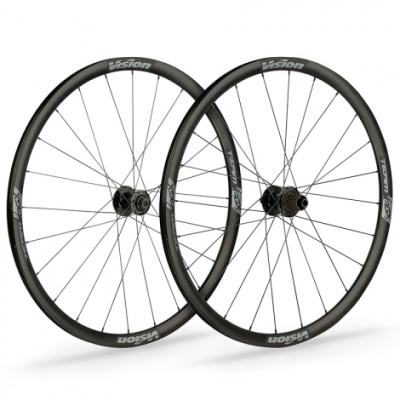
Vision Gravel Wheels take the brand's road racing pedigree and put it to work on bridleways, canal towpaths, and the kind of flint-scattered chalk tracks that'll test any rim. The AGX (Adventure, Gravel, Cyclocross) lineup is built around wide internal rim profiles that let high-volume tubeless tyres breathe and deform properly - which matters a lot when you're dropping pressure to find grip on wet Surrey roots or loose Peak District shale.
There are three tiers to choose from. Carbon tops the range, with the flagship Metron offering the lightest weight and the sharpest aerodynamics, while the SC (Service Course) sits just below it - still carbon, still race-capable, but pitched more accessibly. The alloy Team series rounds things out as a tough, dependable option for winter miles and bikepacking loads. Each tier uses the same AGX rim geometry and TLR (Tubeless Ready) bead seat retention, so the core setup principles carry across the range.
Vision's PRA (Preload Reduction Assembly) hub system is a quiet but genuinely useful feature - it lets you dial in bearing tension without pulling the wheel out of the frame, which becomes relevant quickly once a UK winter gets into things. Browse the range below and use the sections to find the build that fits your riding.
Prices and availability can change quickly. Delivery charges are not always included in listed prices.
Final price, stock status and delivery terms are set by retailer. We may receive a commission on purchases made.
Axle Standards, Rotor Mounts, and Freehub Options
All Vision AGX wheels are built around 12mm thru-axle spacing - 12x100mm up front and 12x142mm at the rear. That's the current gravel standard and it means compatibility with the vast majority of modern gravel framesets without adapters or fuss. Rotor attachment is predominantly Centerlock, which gives you consistent clamping force and quick rotor swaps - handy if you're running different rotor sizes across bikes or need to replace a warped disc after a hard season.
Freehub options cover the main drivetrains: Shimano HG, SRAM XDR, and Campagnolo N3W. Worth checking which body ships as standard on the specific wheel you're buying, particularly if you're running SRAM AXS or an older Campagnolo groupset. If you're changing drivetrains or need replacement setup parts, visit our dedicated Vision road wheels page for further Vision-specific fitment detail, and check our freehub bodies, skewers, and tubeless valves pages for setup consumables.
Internal width across the AGX range sits at 23mm or wider, which puts these wheels in the right bracket for 35c to 45c gravel tyres - the sweet spot for most mixed-surface riding in the UK. Running 50c rubber is possible on many frames, though clearance at the chainstay and fork crown is your limiting factor there, not the rim.
Metron, SC, and Team - What You Actually Get at Each Level
The Vision AGX hierarchy is cleaner than it looks once you break it down. At the top, the Metron carbon wheels are the ones you'd spec for gravel racing - deep enough rim profiles to hold speed on fire roads and smoother gravel sections, with hub internals and spoke counts tuned for low weight and fast freehub engagement. These are the wheels that reward riders who are genuinely trying to go quickly, not just comfortably.
Step down to the SC (Service Course) carbon tier and you're still getting a proper carbon rim with the same AGX profile optimisation - wide, tubeless-ready, and capable of handling the same tyre volume. The difference shows up in hub specification and spoke weight rather than rim quality. Engagement is slightly less immediate, and the overall build weighs a touch more. For most riders doing sportives, mixed-surface audax, or occasional competitive gravel events, the SC is the more considered choice - similar rim performance, lower outlay. Compared to Fulcrum gravel wheels at a similar carbon price point, the SC holds its own on rim stiffness and tubeless compatibility.
The Team alloy series is the one to look at if durability and repairability matter more than weight. Alloy rims handle rock strikes differently to carbon - they dent rather than crack, and a dented rim is often still rideable or truing-bench fixable where a cracked carbon rim is not. On flint-heavy North Downs bridleways or the rocky descent tracks above Dolgellau, that resilience is a real-world advantage. The Team is also the natural choice for bikepacking loads, where the combination of weight and vibration over long days is harder on components than a four-hour race effort. Hope gravel wheels occupy a similar space in the alloy category and are worth comparing if you prioritise UK-serviceable hubs.
To complete a Vision build, their Vision handlebars and Vision aero bars are worth a look - particularly if you're building a consistent cockpit setup for longer gravel events.
Keeping Vision Hubs Running Through a UK Winter
UK winters are genuinely hard on wheel bearings. Grit, standing water, and the chalk slurry you'll find on most southern bridleways from November through March work into bearing races faster than dry-condition riding does. This is where Vision's PRA (Preload Reduction Assembly) system earns its keep. Rather than needing to pull the wheel, remove the axle, and reset bearing preload with a cone spanner, PRA lets you adjust bearing tension via a threaded collar while the wheel sits in the frame. Loosen the 2mm pinch bolt, turn the collar by hand to remove any lateral play, tighten the bolt back. Two minutes in the garage versus twenty. If you're riding through winter, check preload every few weeks - a little lateral movement in the hub shell is your early warning sign.
Freehub pawls are a separate maintenance point that's easy to overlook. Mud ingress into the freehub body is a common cause of slipping under load - that disconcerting lurch when you put down power on a climb. A periodic clean with light degreaser and a fresh application of appropriate grease (check Vision's recommendation for their specific ratchet mechanism) keeps engagement crisp. Don't over-grease; a flooded pawl mechanism can be as sluggish as a dry one.
Rim tape integrity matters more in wet UK conditions than many riders expect. The TLR bead seat retention on AGX rims is designed to hold a tubeless bead securely, but if rim tape lifts at the valve hole or along a seam, sealant finds its way into the spoke bed and you lose pressure without an obvious puncture. Re-tape when the tape looks tired - it's a cheap fix. DT Swiss gravel wheels and Mavic gravel wheels handle the same conditions if you're comparing tubeless system reliability across brands. For wheel truing and crash replacements, check our spokes and nipples collection.
Vision Gravel Wheels FAQs
Are Vision gravel wheels tubeless ready?
Yes - every Vision AGX wheel ships Tubeless Ready (TLR) with a bead seat designed to hold a tubeless tyre securely. You'll still need compatible rim tape, tubeless valves, and sealant to complete the setup. The AGX rim profiles are specifically shaped to make seating beads more reliable, which matters when you're working with a track pump rather than a compressor.
What is the maximum tire size for Vision AGX wheels?
Vision AGX rims typically run a 23mm or wider internal width, making them well suited to 35c - 45c gravel tyres. Most riders will find 50c rubber fits the rim without issue - the real constraint is your frame's clearance at the chainstay and fork crown, not the wheel itself. Check your frame's stated maximum tyre width before sizing up.
How do I adjust the bearings on Vision PRA hubs?
Vision's PRA (Preload Reduction Assembly) system is designed to be adjusted with the wheel still in the frame. Loosen the 2mm pinch bolt on the hub collar, turn the collar by hand to remove any lateral play in the axle, then re-tighten the pinch bolt. No cone spanners, no axle removal. Check preload regularly through winter - it's your main defence against accelerated bearing wear.