
Vaude Overshoes
Frozen toes have ended more winter rides than punctures ever will - and that's exactly the problem Vaude overshoes are designed to solve. Built around the brand's proprietary Ceplex Active membrane, these Vaude cycling shoe covers form a genuine windproof and waterproof barrier, whether you're grinding through road spray on a January club run or picking through muddy bridleways on a gravel bike. The Eco Finish DWR treatment is fully PFC-free, so the protection is there without the environmental cost - a commitment backed by Vaude's Green Shape certification across the range. Road-specific models sit sleek and close over smooth-soled shoes, while MTB and commuter options like the Minsk add Kevlar-reinforced soles and open-bottom construction to handle aggressive treads and two-bolt cleats. UK winters don't follow a script: you get horizontal rain on the way out, biting crosswinds on the descent, and a brief dry spell that fools nobody. Vaude's range is broad enough to cover all of that, from lightweight windproof covers for autumn rides to fully insulated Vaude winter overshoes for the deep-cold months. Compare the full range below and find the pair that keeps your feet in the game.
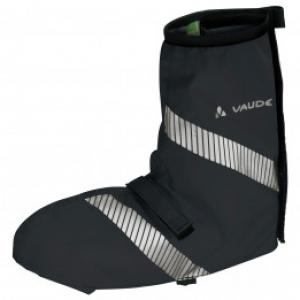
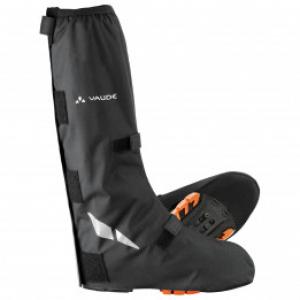
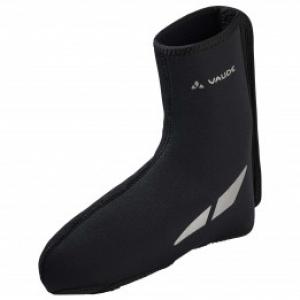
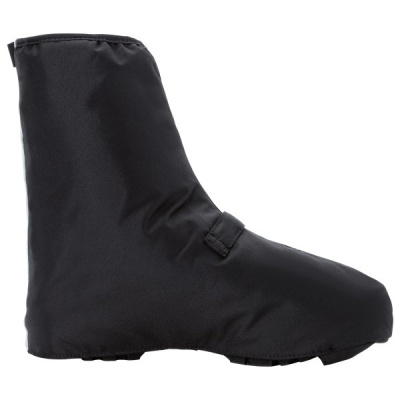
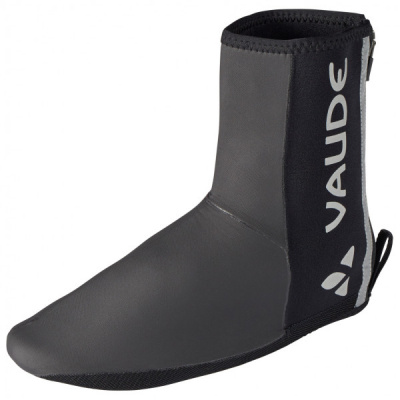
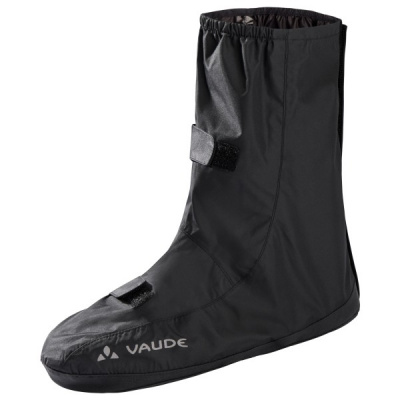
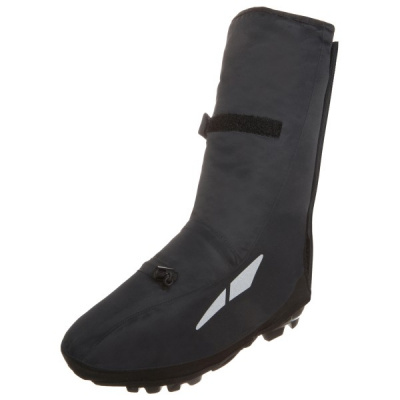
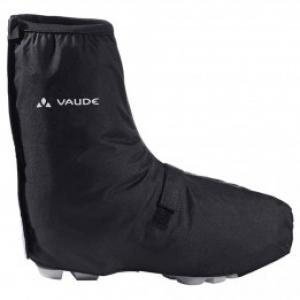
Prices and availability can change quickly. Delivery charges are not always included in listed prices.
Final price, stock status and delivery terms are set by retailer. We may receive a commission on purchases made.
Fabric Tech & Weather Performance: The Ceplex Active Advantage
The Ceplex Active membrane is the engine room of Vaude's waterproof overshoes. It works as a laminated barrier that blocks liquid water and wind from getting in, while still allowing sweat vapour to push outward. That breathability matters more than people give it credit for - trap enough heat and moisture inside a neoprene shell and your feet end up wet from the inside out, which is its own misery on a long winter road ride. Ceplex Active avoids that by keeping vapour moving in the right direction.
Sitting on top of the membrane is the Eco Finish coating, Vaude's PFC-free DWR treatment. It causes water to bead and roll off the outer fabric rather than saturating it, which keeps the shell light and the membrane functioning as intended. Crucially, it does this without the perfluorocarbon compounds that have long been the dirty secret of waterproof textiles. The Green Shape certification that appears across the Vaude range is the brand's own standard for sustainable manufacturing - it covers both material sourcing and production process, so you're not just taking a marketing claim at face value.
Thermal fleece linings appear in the more cold-weather-focused models, and they make a real difference when the temperature drops below five degrees and you're exposed on an open road. That lining traps a layer of warm air directly against your shoe, acting as insulation in the same way a baselayer works under a jersey. Combine that with the windproof outer and you've got something that genuinely extends your riding season rather than just taking the edge off the chill.
Understanding the Vaude Fit & Range: Road vs. MTB
Vaude's overshoe range splits broadly into two camps, and picking the wrong one is an easy mistake. Road-specific models are cut close and low-profile, designed to wrap tightly over smooth-soled shoes with three-bolt cleat systems. The snug fit reduces drag and keeps everything neat under bib tights, but it does mean they're unforgiving over chunkier footwear. If you're running gravel shoes or anything with a pronounced tread pattern, sizing up is the right call - don't try to force a road overshoe over a shoe it wasn't shaped for.
MTB and commuter models are a different animal. The Minsk is the obvious example: it features an open sole to accommodate two-bolt cleats and aggressive MTB treads, Velcro closures for a secure fit over varying shoe widths, and Kevlar reinforcements at the sole edges where abrasion from hike-a-bike sections and rocky ground would otherwise eat through standard fabric quickly. If you're riding the kind of routes where you end up pushing through a gate or scrambling over a wet rock step, those reinforcements earn their place. Cordura panels serve a similar purpose on some models - tough, tightly woven, and resistant to the scuffs and scrapes that off-road riding throws at gear.
Worth knowing on sizing: Vaude overshoes generally run true when matched with the shoe type they're designed for. Pair a road model with a road shoe and you're fine at your normal size. Go off-road, or layer over a thicker winter boot, and size up without hesitation. It's the one adjustment that makes the difference between a cover that works and one that splits at the seam after a month. For context on how this compares to the rest of the market, Endura overshoes and Gore Bike Wear overshoes take similar approaches to the road/off-road split, though Vaude's sustainability credentials set it apart at the construction level. GripGrab overshoes are another option worth comparing if you want a more minimalist windproof cover for shoulder-season riding.
If you're putting together a complete winter footwear setup, pairing Vaude overshoes with Vaude MTB and gravel shoes makes obvious sense - the fit is designed with the brand's own lasts in mind, so compatibility is straightforward.
Layering & Care for UK Riding
Overshoes don't work in isolation. The single most common mistake riders make is pulling on an overshoe correctly, then letting their bib tight or trouser leg sit inside the cuff. Water runs down your leg, hits the fabric, and channels straight into your shoe. The fix is simple: the leg of your tight or trouser always goes over the outside of the overshoe cuff. It's the same logic as overlapping roof tiles - water follows gravity, so stack your layers accordingly.
For longer winter road rides or exposed gravel loops in places like the Peak District or the Cairngorms foothills, pairing your overshoes with Vaude overtrousers gives you a continuous waterproof system from hip to shoe. Vaude bib tights with a water-resistant outer work well for conditions that are cold and damp rather than full-on wet - they're easier to move in and pack less bulk than full overtrousers when the rain stays light. For the top half, Vaude jackets carry the same Eco Finish treatment, so the DWR performance is consistent across your whole kit.
Care is straightforward but worth doing properly. Wash overshoes at 30 degrees with a technical fabric wash - standard detergent clogs the DWR coating and reduces water repellency over time. After washing, tumble dry on low or leave flat to air dry. Once or twice a season, apply a PFC-free DWR spray to the outer fabric and activate it with a warm iron or low tumble dry cycle. That's enough to keep the Eco Finish performing the way it should. Neoprene models can be hand-washed cold and left to dry naturally; they don't need the DWR reapplication, but avoid leaving them folded in a wet kit bag for days on end - the material degrades faster that way.
One practical note: check the sole reinforcements on your MTB models periodically if you're doing regular hike-a-bike. Kevlar and Cordura are tough, but they're not indestructible, and catching a wear spot early means a simple repair rather than a replacement.
Vaude Overshoes FAQs
Are Vaude overshoes fully waterproof?
Models built with the Ceplex Active membrane and Eco Finish DWR coating are fully waterproof and windproof in normal wet riding conditions. That said, in a sustained heavy downpour, water can find its way in from the top of the cuff if your leg isn't layered correctly over it, or seep upward through ventilation ports in your shoe's sole.
How do I choose the right size Vaude overshoes?
Road-specific models fit true to size over smooth-soled road shoes with three-bolt cleats. If you're fitting them over MTB, gravel, or chunky winter shoes with pronounced tread, size up. Forcing a close-cut road overshoe over a bulkier shoe puts stress on the seams and compromises the fit at the cuff.
Can I use Vaude overshoes for mountain biking?
Yes, but stick to MTB-specific models rather than road versions. Look for open-sole construction to clear two-bolt cleats and aggressive shoe treads, plus Kevlar or Cordura reinforcements along the sole edges. Models like the Minsk are built with exactly that in mind - they'll handle hike-a-bike sections and wet bridleways without falling apart.