
Vaude Overtrousers
Vaude cycling overtrousers sit at the sharper end of the waterproof legwear market - proper weather protection that doesn't treat breathability as an afterthought. A sudden downpour on the way into work, or a ridge-top squall halfway through a touring loop, shouldn't mean arriving soaked or stewing in your own heat. Vaude's range addresses both problems at once.
The foundation is their proprietary Ceplex Active membrane, which blocks rain and wind while allowing sweat vapour to escape - critical when you're grinding up a long drag and your core temperature is climbing. Every model in the range also uses Eco Finish, a PFC-free DWR coating that repels water without the fluorochemicals found in older treatments. That matters if you care about what runs off your kit and into the road drainage. Vaude's Green Shape label backs this up, certifying resource-conscious manufacturing throughout.
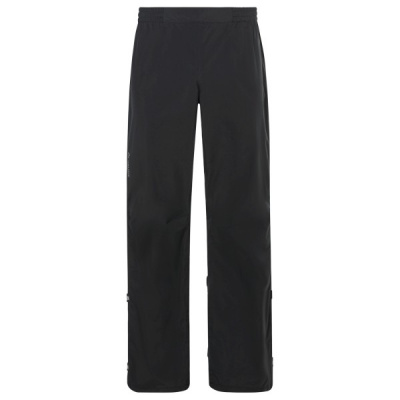
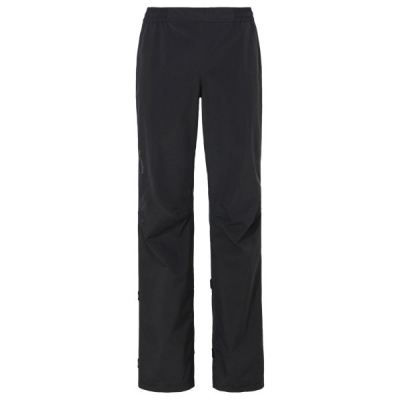
Practically speaking, these trousers are cut for cyclists. Articulated knees stop the fabric pulling on your pedal stroke, and adjustable leg cuffs keep the hem clear of your chainring - no flapping nylon in the drivetrain. Whether you want a featherweight layer stuffed into a jersey pocket or a lined trouser for daily winter commuting, there's a Vaude option worth serious consideration.
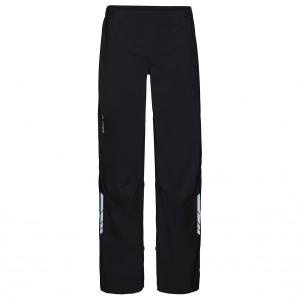
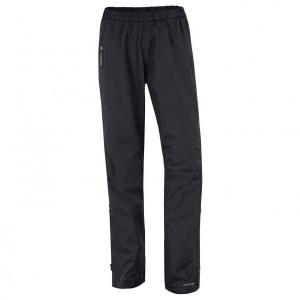
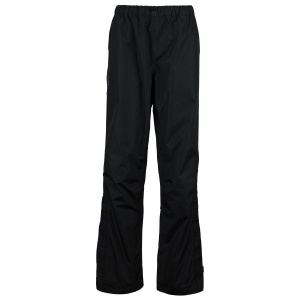
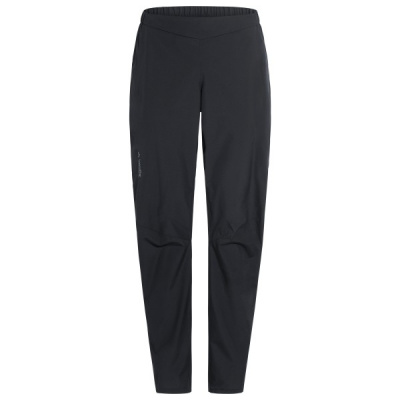
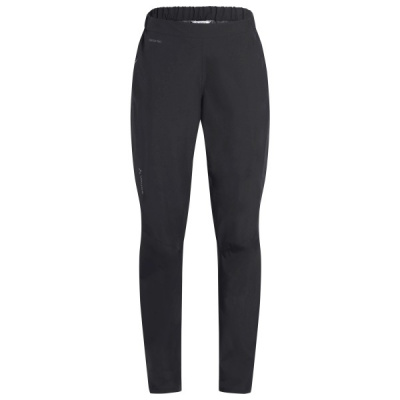
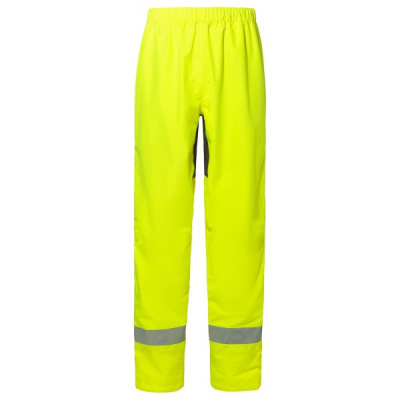
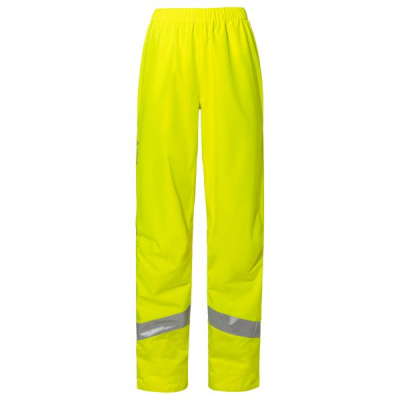
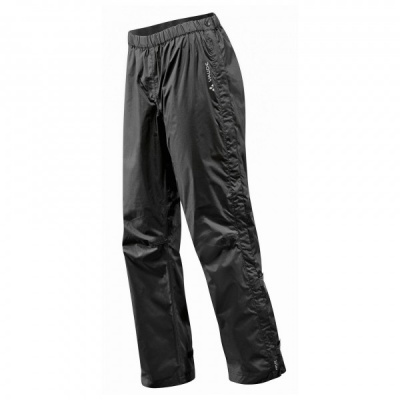
Prices and availability can change quickly. Delivery charges are not always included in listed prices.
Final price, stock status and delivery terms are set by retailer. We may receive a commission on purchases made.
How the Ceplex Active Membrane Handles British Weather
The Ceplex Active membrane is Vaude's own laminated fabric technology - waterproof, windproof, and breathable in a single layer. It's rated to a minimum 10,000mm hydrostatic head, which means sustained heavy rain isn't going to push through the fabric. That's the kind of number you need when a Welsh valley decides to tip it down for two hours straight.
Breathability is where a lot of cheaper waterproofs fall apart. Pack on the effort going uphill and a non-breathable shell turns into a mobile sauna. The Ceplex Active construction allows moisture vapour to move outward while keeping liquid water out - not magic, but genuine two-way performance that makes a real difference on anything more than a flat spin. Taped seams close the one obvious weak point: the stitching lines where needle holes would otherwise let water track through. On fully taped models, you get consistent protection across the whole garment, not just the outer fabric.
The Eco Finish PFC-free DWR treatment on the outer face does the first line of work - beading water off before it even reaches the membrane. Over time and with washing, this coating can lose effectiveness, but it's straightforward to restore (more on that below). Skipping PFCs is a meaningful choice; older fluorocarbon-based DWR treatments are persistent environmental pollutants, and Vaude's commitment here is consistent with their broader Green Shape manufacturing standards. It's not a marketing badge - it reflects how the product is actually built.
Reflective elements are stitched into the design on commuter-focused models, which is worth noting if you're riding in and out on dark winter mornings. UK roads in January aren't forgiving, and passive visibility counts.
Drop Pants vs Fluid Pants: Which One Fits Your Ride?
Vaude's overtrouser range splits into two clear directions, and getting this choice right makes a big difference to how you actually use them.
The Vaude Drop Pants are the minimalist option. Unlined, lightweight, and compressible enough to stuff into a jersey back pocket or the top of a Vaude pannier bag - they're designed as an emergency layer you barely notice you're carrying. Pull them on when the sky turns grey, peel them off when it clears. Because there's no lining, they're more breathable relative to their weight, which suits riders who run warm or push harder efforts. The trade-off is that pulling unlined nylon over bare skin or thin lycra isn't always the most comfortable experience on a long ride.
The Vaude Fluid Pants take a different approach. A split lining - mesh across the upper section, taffeta on the lower - adds comfort and makes them far easier to pull on over jeans, cargos, or work trousers. The extra layer does add some weight, but for a daily commuter who wants something that slides on quickly over normal clothes, that's a sensible trade. They sit more like a proper overtrouser and feel less clinical in use.
Both models share the same cycling-specific geometry: articulated knees that follow your pedal stroke without bunching, and adjustable Velcro or zip cuffs at the ankle to stop the hem catching on your chainring. That last detail matters more than it sounds - loose fabric and a spinning chainring is a combination that ends badly. If you're comparing Vaude to alternatives from Endura or Altura, the cuff system and membrane quality are the details worth examining side by side.
Need standalone legwear for drier days rather than a waterproof pull-over? That's a different product category. Check out the dedicated Vaude Trousers range for non-waterproof cycling trousers built for dry or lightly damp conditions.
Sizing, Layering, and Getting the Most Out of Them
Vaude overtrousers are designed to go over your existing clothing, so stick to your normal size. Don't size up assuming you'll need extra room - the cut already accounts for layering over jeans or thermal tights. Going a size larger usually just means excess fabric flapping around the knee, which undermines both the fit and the articulated knee benefit.
On colder rides, pairing these over a set of Vaude overshoes completes the lower-body weather barrier, since the ankle cuffs don't seal around a shoe. It's the obvious gap in any overtrouser system and worth plugging if you're riding through the winter properly.
Washing matters more with waterproof kit than most riders realise. Machine wash at 30°C using a technical apparel cleaner - something like Nikwax Tech Wash rather than your standard biological powder. Biological detergents and especially fabric softeners are the enemy here: they clog the breathable membrane and strip the DWR coating, turning a functional waterproof into a clammy shell. Rinse thoroughly. Then tumble dry on a low heat setting - this step actually reactivates the Eco Finish DWR, restoring the water-beading performance. If you don't have a tumble dryer, a warm iron through a cloth over the outer face achieves the same result. Do this after every few washes and the coating stays effective for much longer than most people expect.
If you're building out a full wet-weather kit, a Vaude cycling jacket from the same range uses the same Ceplex Active membrane and Eco Finish treatment, so the performance characteristics match. Consistent layering across compatible fabrics tends to work better than mixing membrane types from different brands. For riders comparing the broader overtrouser market, Madison also offer solid UK-priced options, though Vaude's eco credentials and membrane specification put them in a distinct position.
Vaude Overtrousers FAQs
Are Vaude overtrousers breathable enough for cycling?
Yes. The Ceplex Active membrane is specifically engineered to let sweat vapour escape while blocking rain and wind - so you're not just swapping wet-from-rain for wet-from-sweat. If you push hard on climbs or run warm, the unlined Drop Pants offer the most breathability in the range due to their minimal construction.
What is the difference between Vaude Fluid and Drop overtrousers?
The Drop Pants are unlined and ultra-packable - designed to live in your pocket until the sky opens. The Fluid Pants have a split mesh and taffeta lining, making them noticeably more comfortable to pull on over everyday clothes and better suited to regular commuting. The Drop is lighter; the Fluid is more refined in daily use.
How do I wash Vaude waterproof cycling trousers?
Machine wash at 30°C with a technical cleaner like Nikwax Tech Wash. Avoid biological detergents and never use fabric softener - both destroy the breathable membrane and strip the DWR. Tumble dry on low heat afterwards; this reactivates the PFC-free Eco Finish coating and restores water-repellency. Repeat every few washes to keep performance consistent.