
Van Rysel Road Wheels
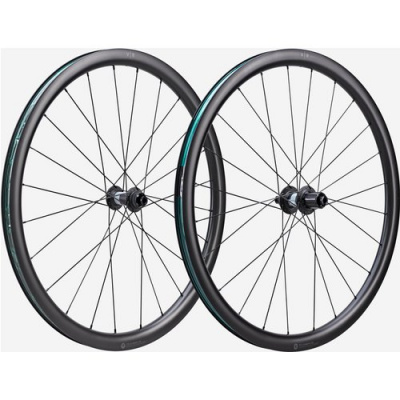
Van Rysel road wheels have carved out serious attention by delivering aerodynamic performance and low wheelset weight at prices that make the established names look nervous. Co-developed with aero specialists Swiss Side, the carbon lineup uses CFD-optimised rim profiles that translate directly into watt savings you can feel on a long drag or a crit circuit. That's not marketing copy - it's the result of genuine wind tunnel work and high-modulus carbon layups tuned for a stiffness-to-weight ratio that rivals options costing considerably more.
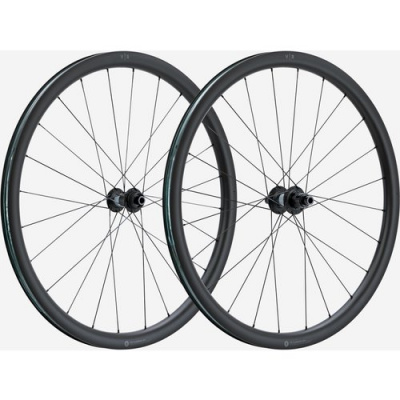
The range spans from robust alloy hoops that'll take a winter's worth of UK grit and questionable road surfaces without complaint, right through to deep-section carbon disc wheelsets built for riders chasing aerodynamic gains on fast sportives or criteriums. Most modern options arrive tubeless ready, so you're not locked into inner tubes if you'd rather run lower pressures and reduce puncture risk on British roads. Whether you're speccing up a Van Rysel road bike or upgrading a current build, the wheel range gives you a clear path from reliable training hoops to full race-day carbon. The value proposition is strong. But fit, spec, and intended use still matter - so here's how the range actually breaks down.
Prices and availability can change quickly. Delivery charges are not always included in listed prices.
Final price, stock status and delivery terms are set by retailer. We may receive a commission on purchases made.
Axle Standards, Rotor Mounts, and Getting the Fit Right
Before anything else, check your frame and fork axle standard - it's the kind of thing that catches people out in the car park on a Saturday morning. Van Rysel's disc brake wheelsets are built around thru-axle fitment: 12x100mm at the front and 12x142mm at the rear. These are now the norm on modern road disc frames, offering meaningfully stiffer wheel location than the older quick-release setup, which matters when you're putting power down out of a corner. If your bike runs a traditional rim brake caliper and quick-release dropouts, the alloy training wheels are your lane - they use standard QR axles and don't require any adapter work.
Van Rysel's disc-specific wheels use Centerlock rotor mounting as standard. It's a cleaner interface than six-bolt and makes rotor swaps straightforward, but you'll need a Centerlock-compatible rotor or a six-bolt adaptor ring if your existing rotors are six-bolt pattern. Worth sorting before the wheels arrive. For drivetrain compatibility across different freehub standards, and for axle or skewer replacements, head to the dedicated Freehub Bodies & Spares and Skewers pages - those cover the specifics in full rather than us duplicating it here.
How the Range Stacks Up - From Training Alloy to RCR Carbon
The Van Rysel wheel hierarchy is logical once you know what you're looking at. At the base, the alloy training wheelsets are exactly what a winter or wet-weather workhorse should be: solid spoke tension, reliable braking tracks, and the kind of durability that doesn't flinch at a pothole on the A road home. They're not exciting, but they'll be on your bike long after flashier options have needed attention. If you're putting in base miles from October to March, these are sensible.
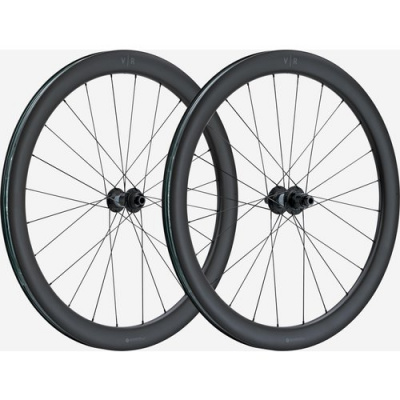
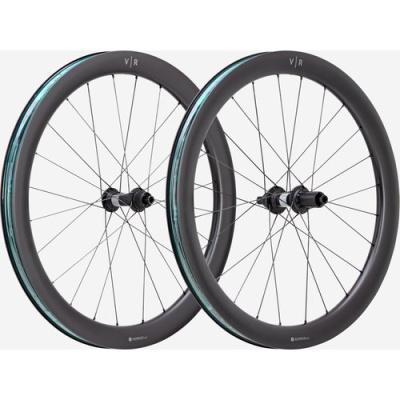
Step up and the RCR carbon line is where things get genuinely interesting. The rim profiles - available in 50mm and 65mm depths - are the direct product of Van Rysel's partnership with Swiss Side. That collaboration uses computational fluid dynamics to shape rims that reduce aerodynamic drag without creating the crosswind instability that makes deep-section wheels feel unpredictable. The 50mm depth is the more versatile of the two: fast enough to feel purposeful on a flat sportive, manageable enough when the Pennines send a sidewind across the road. The 65mm is for flat, fast days when you want every marginal gain working in your favour - think circuit races or time trials rather than lumpy audax routes.
The high-modulus carbon layup in the RCR line is worth understanding. Higher modulus means stiffer fibre orientation, which keeps flex out of the rim under hard acceleration and braking loads. That stiffness translates to more immediate power transfer - the wheel does what your legs tell it to, rather than absorbing energy in flex. It also contributes to wheelset weight that competes directly with options from Mavic and Fulcrum at significantly higher price points, and holds its own against mid-range offerings from DT Swiss.
Tubeless ready across most of the carbon range means you can run clincher tyres with a tube while you find your feet, then convert when you're ready - the rim bed and bead seat are already sorted for a proper tubeless seal. If you're building up a Van Rysel groupset at the same time, the compatibility between the two is seamless. Riders looking at mixed-surface or off-road options should check the Gravel Wheels and Other Wheels categories - this range is strictly road-focused.
Keeping Van Rysel Wheels Running Well on UK Roads
British roads are not kind to wheels. Salt, grit, standing water, and the kind of pothole that appears overnight on a B road - Van Rysel's sealed cartridge bearings are spec'd with this in mind, but they're not maintenance-free. Hub bearing seals will slow ingress of winter salt and road contamination, but a full bearing service once a season is still good practice if you're riding through November to February regularly. A rough grinding feeling when you spin the wheel by hand is your cue to get the bearings looked at before they score the hub shell.
If you're running tubeless ready tyres, keep an eye on sealant levels - latex sealant dries out over three to six months depending on conditions, and a dry tubeless setup is just a slow puncture waiting to happen. Top up or replace sealant at the start of each season as a minimum. Most riders do it at the same time as a cable check and bar tape refresh. Simple habit, saves a roadside headache.
Spoke tension is the other thing worth monitoring if you regularly encounter sharp-edged potholes - the kind of impact that sends a jolt through the bars. A single loose or broken spoke will pull a rim out of true quickly, and riding on a tacoed wheel does nobody any favours. A quick check with a spoke key or a visit to your local mechanic after a rough ride is good sense. Van Rysel's alloy wheels tend to be more forgiving of impact loads than ultra-light carbon options; the carbon RCR line is stiff and well-built but no carbon rim is indestructible. Pair them with Van Rysel road shoes and a benchmark carbon set if you're curious how the two compare at the pointy end of the market. Campagnolo remains a touchstone for hub quality and bearing longevity - Van Rysel's sealed internals are competitive, but Campy hubs have decades of refinement behind them if bearing life is your primary concern.
High-engagement freehub internals on the carbon hubs mean quick pickup when you restart pedalling out of a corner or after a descent - there's noticeably less dead travel before drive kicks in compared to budget hubs with fewer pawl points. It's a small thing until you notice it, then you don't want to go back.
Van Rysel Road Wheels FAQs
Are Van Rysel wheels tubeless ready?
Most current Van Rysel road wheels are tubeless ready straight out of the box. You'll need to add tubeless rim tape, valves, and your sealant of choice to complete the setup - the rim bed and bead profile are already designed for a reliable tubeless seal.
Who makes Van Rysel carbon wheels?
Van Rysel develops their high-end carbon wheels at Decathlon's Flanders facility, working in close partnership with aerodynamics specialists Swiss Side. That collaboration brings genuine wind tunnel testing and CFD-optimised rim shaping to the process, rather than off-the-shelf mould work.
What freehub body do Van Rysel wheels use?
Van Rysel wheels come fitted with a Shimano/SRAM HG-compatible freehub body as standard, covering 11 and 12-speed setups. Depending on the hub model, the freehub body can typically be swapped for SRAM XDR or Campagnolo-compatible versions - check the specific hub spec before ordering.