
Trek Suspension Forks
Sorting the right Trek suspension forks matters more than most riders realise - get it wrong and you're not just dealing with a bit of vague steering, you're potentially fighting your frame's geometry every time the trail turns nasty. Whether you're replacing a worn coil fork on a Trek Marlin or hunting down a Trek-tuned air fork for a Fuel EX, the fit has to be precise. Trek's mountain bikes aren't built around generic fork specs. Many models use a custom 51mm offset under their G2 geometry system, and a good chunk of the range runs the Knock Block headset, which demands specific crown clearance to stop the fork crown clouting the down tube. Drop a standard off-the-shelf fork in without checking those figures and you'll wonder why the bike feels nothing like it did. We've pulled together genuine OEM replacements and compatible upgrades so you can compare what's available in the UK, cut through the spec confusion, and get your front end tracking the way Trek's engineers actually intended.
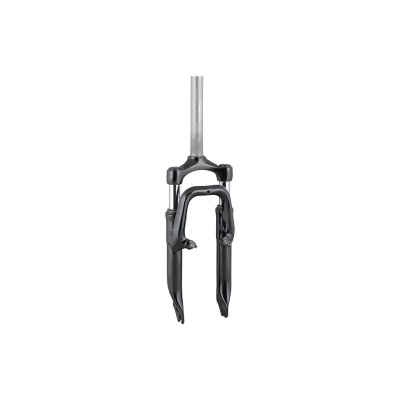
Prices and availability can change quickly. Delivery charges are not always included in listed prices.
Final price, stock status and delivery terms are set by retailer. We may receive a commission on purchases made.
Decoding the Trek Suspension Fork Lineup
Trek doesn't manufacture its own suspension forks in the traditional sense. What you get from the factory is a fork that's been custom-specified in partnership with RockShox, Fox, or SR Suntour - each one valved and set up to work with that specific frame's kinematics, not just bolted on as an afterthought. That distinction matters when you're replacing one, because a generic fork from the same brand won't necessarily replicate what Trek specced from the factory.
At the entry level, bikes like the Marlin and Roscoe typically run SR Suntour coil forks with basic preload adjustment. Functional, robust, and not difficult to replace - but worth upgrading if you're riding anything more demanding than dry bridleways. Step up to the Fuel EX or the Slash and you're into Trek-tuned air forks from RockShox or Fox, with custom damper valving dialled to suit the rear suspension kinematics. Swapping one of those for a generic catalogue fork can leave the handling feeling either nervous or woolly depending on what you've chosen.
If you're after something at the rigid end of things, our Trek frame protection and rigid fork pages are worth a look alongside this. But if suspension is what you need, matching the OEM spec as closely as possible - travel, offset, steerer taper - is the starting point before anything else.
The Trek Tech Philosophy: Offsets and Clearances
This is where Trek diverges from the crowd in a way that genuinely affects how you shop for a replacement. G2 geometry, Trek's name for their 51mm offset standard on 29er wheels, was introduced to sharpen the steering response that longer-travel 29ers were losing as head angles slackened. The physics is straightforward: a longer offset reduces trail, which lightens the steering. On a bike with a 64-degree head angle, that's the difference between a front end that turns and one that ploughs.
Fit a standard 44mm offset fork onto an older Trek 29er designed around G2 geometry and the steering goes heavy. Not dramatically, not dangerously - but noticeably, especially on tight switchbacks or technical corners where you want the bike to react quickly. It's the kind of thing that makes you think the tyres are wrong or the suspension needs setting up, when actually it's the geometry that's shifted. Check your frame's original spec before ordering, and cross-reference the offset figure carefully.
Then there's the Knock Block system. Trek introduced this to prevent the fork crown from striking the down tube during extreme steering inputs - a real risk on modern short-travel bikes with steep head angles and wide bars. The system works by limiting handlebar rotation mechanically at the headset. The catch is that not all fork crowns have the same shape or clearance profile. If your replacement fork's crown sits differently to the OEM part, you can end up with either reduced steering lock or, worse, crown-to-tube contact if the Knock Block ever gets bypassed or fails. Check the crown clearance against your specific Trek model before committing to any fork that wasn't specced for it from the factory.
Steerer tube taper is the other variable worth confirming. Most current Trek mountain bikes run a tapered steerer - 1.5-inch at the lower bearing, 1 1/8-inch at the top - but check your specific model year, particularly on older or entry-level bikes where straight steerers still appeared.
Living with Trek Suspension in the UK
Fork maintenance intervals that feel reasonable in Colorado become laughably optimistic once you've done a winter in Wales or the Scottish Borders. The grit up there is relentless, and it works into wiper seals fast. If you're riding regularly through the wet months, lower leg services every 50 hours of riding is a sensible ceiling rather than a maximum - go beyond that and you'll be chasing stanchion scratches rather than preventing them.
Keep a bottle of suspension-specific oil and a seal pick in the garage. Dropping the lowers, cleaning out the contaminated oil, and refreshing the bath oil takes less than an hour and buys the fork significantly more life. A scored stanchion on a Trek-specific OEM fork isn't cheap to sort, and it's almost always avoidable. Pair that with the right tools and it becomes a straightforward seasonal job rather than a workshop visit.
Winter tyre clearance is the other practical thing to sort before the mud arrives. If you're running 2.4-inch or wider rubber through the winter slop - and on UK trails that's not unusual - check the fork arch clearance before you fit them. Some OEM Trek forks have tighter arch tolerances than aftermarket options, and a packed tyre at the fork crown mid-ride is its own kind of miserable. Check the spec sheet, not just the sticker on the fork leg. Our Trek MTB tyres page lists tyre widths alongside compatibility notes if you're working out what fits. For winter riding specifically, Trek mudguards are worth fitting at the same time - they cut down the amount of grit reaching the lowers in the first place.
One final thing: if your Trek runs a Trek e-bike platform, fork compatibility gets more specific again. The added weight of the motor and battery changes the load on the fork, and Trek's OEM specs for those models reflect that. Don't assume a fork that fits a standard Fuel EX will be the right call for a Powerfly or Rail - check the e-bike-specific guidance before ordering.
Trek Suspension Forks FAQs
Does Trek make their own suspension forks?
Not in the traditional sense. Trek partners with RockShox, Fox, and SR Suntour to produce custom-tuned forks for their bikes - with specific damper valving and offsets to match each frame. Genuine OEM replacement forks are available and are the safest way to preserve the original handling characteristics.
How do I know which fork fits my Trek bike?
Start with four things: steerer tube taper (most current Trek MTBs use tapered), axle standard (Boost 110mm is common), travel, and fork offset. If your bike uses the Knock Block headset system, also verify that the replacement fork's crown profile won't foul the down tube. Your bike's geometry sheet is the most reliable reference.
Can I put a longer travel fork on my Trek mountain bike?
Trek's general guidance is a maximum of 10mm over the stock travel specification. Beyond that, you're putting stress on the head tube it wasn't designed to handle, the climbing geometry shifts noticeably, and you risk voiding your frame warranty. Stick within that window and you'll likely be fine.