
Syncros MTB Wheels
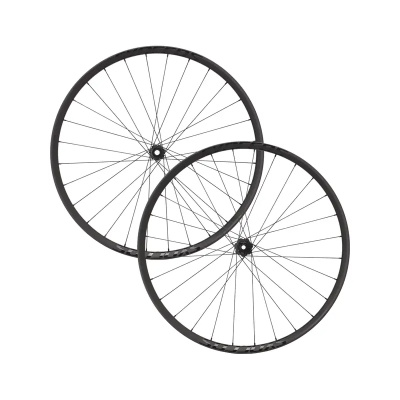
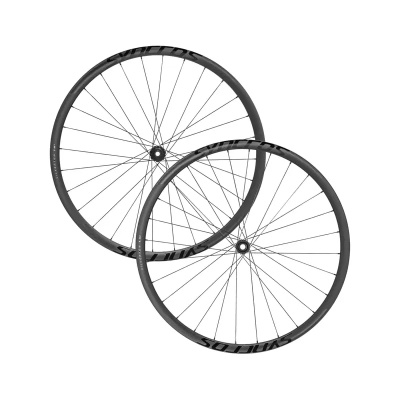
Syncros MTB wheels sit at the sharper end of what's available right now - engineered around Scott's race programme, with the kind of stiffness-to-weight ratios that make your front end feel nailed-in on loose, rooty descents. Whether you're chasing XC speed on moorland singletrack or battering through the chunkier stuff on a full-enduro rig, there's a Syncros wheelset calibrated for the job. The halo Silverton SL uses a one-piece carbon construction - rim, spokes, and hub flange moulded as a single unit - which is a fundamentally different approach to stiffness compared to conventionally laced carbon wheels. Step down the range and you'll find hookless carbon rim profiles across the Silverton and Revelstoke lines, pairing impact resistance with better tyre profile support at the lower pressures UK riding often demands. Premium models run DT Swiss hub internals, so servicing after a winter in the grit is genuinely straightforward. Boost spacing (15x110mm front, 12x148mm rear) is standard throughout, keeping things compatible with the vast majority of modern frames. Browse the live comparison below to match the right wheelset to your frame spacing, freehub standard, and riding style.
Prices and availability can change quickly. Delivery charges are not always included in listed prices.
Final price, stock status and delivery terms are set by retailer. We may receive a commission on purchases made.
Will They Fit Your Frame? Spacing, Rotors, and Freehub Bodies
Syncros MTB wheels are built around Boost spacing as standard - 15x110mm up front, 12x148mm at the rear - which covers virtually every trail and enduro frame made in the last several years. If you're running an older non-Boost frame, check your axle spec carefully before ordering; a straight swap won't work without conversion hardware, and it's rarely worth the compromise on a performance wheelset.
Brake rotor mounts are predominantly Centerlock across the range. That's the better standard for secure rotor retention, but if your callipers are set up for six-bolt rotors, you'll need a lockring adapter - a cheap fix, but worth factoring in. On the freehub side, Syncros covers the main bases: Shimano Micro Spline for 12-speed Shimano drivetrains, SRAM XD driver for SRAM's cassette range, and standard HG bodies for older nine and ten-speed setups. Check the specific model listing, because not every wheel ships with every freehub option - some are available as ordered variants.
If you need to swap or replace freehub bodies down the line, or you're sourcing rim tape for a retape job, those are specific spares with their own fitment considerations. Head to our Freehub Bodies and Spares pages and our Rim Tape section for the right parts by brand and standard - it's easier to filter there than to cross-reference here.
Silverton vs. Revelstoke: Reading the Range
Syncros keeps the naming logical once you know the code. Silverton is the cross-country and downcountry line - lighter builds, internal rim widths typically running 26mm to 30mm, optimised for pace and acceleration over rough but not gnarly ground. Revelstoke is where things get beefier: trail and enduro focus, internal widths of 30mm and above, and reinforced carbon layups that absorb the kind of lateral load you generate hitting a square-edged rock at speed. Pick your line based on what you actually ride, not what sounds good in the car park.
The tier numbers within each line give you the material and spec level. A 1.0 suffix means premium carbon with DT Swiss internals. A 1.5 typically signals high-end alloy or entry-level carbon construction. The 2.0 tier is reliable alloy - a sensible workhorse option if you're not ready to commit to carbon or you ride somewhere that eats wheels for breakfast. At the very top sits the Silverton SL, Syncros's one-piece carbon spoke technology - rim, spokes, and hub flange are all moulded together in a single carbon structure. The weight saving is real, but more importantly the lateral stiffness is exceptional in a way that conventionally built wheels simply can't match at the same weight. It's the kind of wheel you feel in the first corner, not just on the scales.
For context, ENVE MTB wheels occupy a similar halo carbon position, while Hope MTB wheels come in as a strong alloy alternative with arguably the best domestic serviceability story in the UK market. The Syncros range sits competitively between those two worlds - particularly strong on the carbon side for riders already in the Scott/Syncros ecosystem. DT Swiss MTB wheels are worth comparing directly at the 1.0 carbon tier, given the shared hub architecture.
Wider internal rim widths in the Revelstoke range aren't just a spec-sheet flex. Running a 2.4-inch tyre on a 30mm-plus internal width gives the casing genuine sidewall support at lower pressures - the kind of pressures you'll end up running on wet, off-camber roots in the Lakes or the Tweed Valley, where grip matters more than rolling resistance. Narrow rims and low pressure is a combination that ends in squirm and burps. Wider rims and the right pressure is just confidence.
Lasting Through UK Winters: Hub Servicing and Rock Strike Resistance
British riding conditions are specific in ways that matter for wheel choice. Winter grit from Peak District and Scottish trails works into hub bearings faster than most riders expect - poorly sealed systems that feel fine in September can feel rough and draggy by February. The Ratchet EXP internals used in Syncros 1.0 carbon models are a known quantity here: mechanics like them because the star ratchet system strips down without proprietary tooling, cleans quickly, and re-greases in under twenty minutes. That's not a minor point when you're looking at a wet winter's worth of rides. Compare that to some sealed black-box hub systems where a full service requires either sending away or buying a specific tool kit, and the DT Swiss architecture starts to look like a very sensible choice on a premium wheelset.
The hookless carbon rim profiles on the Silverton and Revelstoke carbon models also handle rock strikes better than traditional hooked rims. Without the bead hook, the rim wall is a uniform thickness, so the impact energy from clipping a sharp edge in North Wales or on a chunky Lakeland descent distributes more evenly rather than concentrating at a stress point. It doesn't make them indestructible, but it does make them meaningfully more resistant to the kind of square-edged impacts UK trails serve up regularly. One thing to note: hookless rims require tubeless-compatible tyres run tubeless - inner tubes and hookless rims are not a safe combination, so double-check your tyre is rated for hookless use before fitting.
Cold weather also affects tubeless sealant performance - viscosity drops, beads can seat reluctantly, and old sealant dries up faster than you'd like. Top up your sealant before the clocks change and again mid-winter. For the right product, check our Syncros road wheels page if you're also running a road or gravel setup, and head to our Sealant section for winter-proofing your tubeless build - the brand and formulation choices there are worth reading before you commit.
If you're building a full Syncros cockpit to match the wheels, Syncros handlebars and Syncros stems share the same integration philosophy and are worth pairing for a cleaner build. Reserve MTB wheels are another carbon option worth a look if you want to compare rim profiles and hub choices at a similar price point.
Syncros MTB Wheels FAQs
Are Syncros MTB wheels tubeless ready?
Yes. All current Syncros MTB wheels are tubeless ready from the box - they come pre-taped and include tubeless valves. You just need to fit your chosen tyres and add sealant. Bear in mind that hookless carbon models require tyres specifically rated for hookless rims; standard tyres run with inner tubes are not compatible.
What hubs do Syncros mountain bike wheels use?
Premium 1.0 and SL carbon models use DT Swiss internals - either the Ratchet System or Ratchet EXP, depending on the specific wheel. Both are easy to service without proprietary tools, which matters a lot after a UK winter. Alloy 2.0-tier wheels use Syncros-branded pawl-based hubs with sealed cartridge bearings.
How do I choose between Syncros Silverton and Revelstoke?
If you ride cross-country or downcountry and weight is a priority, go Silverton - lighter builds, narrower internal widths, fast rolling. If you're on trail or enduro ground and you're descending hard, go Revelstoke - reinforced layups, wider internals for better tyre support at lower pressures, and built to take repeated punishment.