
ENVE MTB Wheels
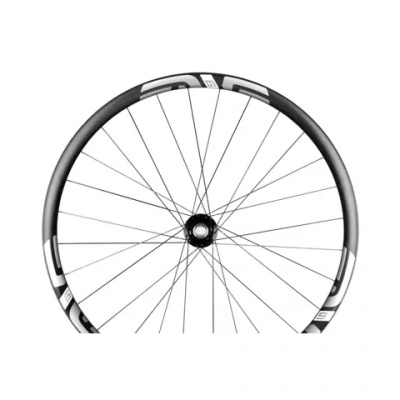
Few wheelsets command the kind of respect that Enve MTB wheels do, and there are solid engineering reasons for that. Built by hand in Ogden, Utah, Enve's carbon rims are constructed using molded spoke holes rather than drilled ones - meaning the carbon fibres run continuously through each spoke hole, staying intact and allowing for significantly higher spoke tension. The result is a wheel that's stiffer, stronger, and less likely to go out of true after a proper battering on rocky ground.
The range splits into two clear families: the Foundation AM30 series, which brings Enve carbon to riders who want the material's benefits without the top-tier price, and the M-Series, which runs from the XC-focused M5 through to the gravity-oriented M9. Each model is tuned for a specific job, with the rim profile, carbon layup, and impact-protection approach all dialled accordingly.
For UK riders, that matters more than it might sound. A set of wheels that can handle the square-edged gritstone of the Peak District on a Tuesday and stay true through a wet Tweed Valley enduro stage on the weekend is genuinely useful kit. Backed by Enve's Lifetime Incident Protection programme, these are wheels you buy once and keep.
Prices and availability can change quickly. Delivery charges are not always included in listed prices.
Final price, stock status and delivery terms are set by retailer. We may receive a commission on purchases made.
What Fits What: Axle Standards, Freehubs, and Rotor Mounts
Sorting compatibility before you buy saves a trip back to the car park with the wrong parts. Enve MTB wheels are available in Boost 148mm rear spacing as standard across most of the M-Series, with Super Boost 157mm options on the M7 and M9 for bikes that use wider rear ends - common on longer-travel enduro and downhill frames. Front axles run 110mm Boost across the board. Check your frame's dropout spec before ordering; it's a straightforward detail that's easy to overlook.
Freehub body compatibility covers the three main standards: SRAM XD, Shimano HG, and Shimano Micro Spline, so whether you're running a 12-speed Eagle or the latest XT groupset, there's an option. Brake rotor mounts are available in both Centerlock and 6-bolt configurations depending on hub choice, so it's worth cross-referencing with your callipers. If you're building up from components rather than buying a complete wheelset, our dedicated pages for Enve hubs, Enve rims, and Enve skewers cover the individual parts in detail. For tubeless setup, see our Enve tubeless kits and Enve rim tape pages.
Breaking Down the Range: Foundation to M9
The Foundation AM30 is where Enve carbon becomes accessible. It uses a proven layup and a more straightforward construction process to bring the weight and stiffness advantages of carbon fibre rims to riders who don't need the full M-Series specification. It's a sensible starting point if you're moving up from alloy and want to understand what the material actually does for your riding before committing to the higher tiers.
Step into the M-Series and the differences become functional rather than incremental. The M5 is built around XC and marathon racing - low weight, fast rolling, tuned for efficiency over raw strength. The M6 is the trail wheel: it uses Enve's Wide Hookless Bead design, which spreads impact force across a broader rim surface to reduce the chance of a pinch flat. On a typical trail ride - think rooty, rocky singletrack like you'd find in the Quantocks or on a wet Welsh trail centre red - that wider bead profile also gives the tyre a more supported, planted feel through corners.
The M7 is where the approach shifts. Aimed at enduro riding and the kind of aggressive descending where rock strikes are routine, it introduces Enve's Protective Rim Strip - a moulded bumper that sits inside the rim and absorbs direct impacts before they can crack or deform the carbon. It's a meaningful bit of engineering rather than a marketing footnote. The M9 takes that same protective philosophy further still, built specifically for downhill and bike park use where sustained, heavy impacts are part of the job. Throughout the M-Series, those molded spoke holes keep carbon fibres continuous and uncut, which directly translates to higher achievable spoke tension and a wheel that holds its build integrity longer than drilled alternatives.
Comparing across the premium carbon bracket, Reserve MTB wheels and DT Swiss MTB wheels are the most common points of reference. DT Swiss in particular offers broad compatibility and a well-established service network in the UK, which is worth factoring in. If you're after a carbon-rimmed option with a more accessible price point and domestic support, Hope MTB wheels with carbon rims are worth a look - though the rim construction philosophy differs from Enve's approach.
Keeping Enve Wheels Running Through UK Winters
Carbon rims handle wet, angular rock strikes better than many riders expect, largely because carbon's failure mode tends to be more localised than the denting or cracking you'd see on aluminium. That said, the hub is where UK conditions do the real damage. Abrasive winter mud - the kind that coats everything after a November blast through the Pennines - works its way into bearing races and freehub bodies with surprising efficiency. It's essentially grinding paste, and it shortens service intervals noticeably.
Enve wheels are commonly laced to three hub options: Enve's own alloy hubs, Industry Nine Hydra hubs, or Chris King hubs. All three are quality choices with good bearing seals, but none of them are fully immune to UK winter grime. Pull the rear wheel every few rides during the wet season, check for play in the bearings, and regrease the freehub body before it starts to sound like a crisp packet. It takes ten minutes and extends hub life considerably. The Industry Nine Hydra's 690-point engagement is genuinely useful on steep, technical climbs where a dead spot in the drivetrain costs you a pedal stroke at the worst moment - just be aware the pawl spring system benefits from a clean and light regrease more often than most.
For getting wheels to the trailhead without dinging them in the boot, it's worth checking out Enve wheel bags for transit protection - particularly if you're heading to trail centres or loading up for a trip to the Tweed Valley. And if you're speccing out the rest of the cockpit to match, Enve handlebars and Enve stems use the same carbon construction philosophy and pair well with the wheelsets from a weight and stiffness standpoint.
ENVE MTB Wheels FAQs
Are Enve MTB wheels worth the money?
For riders who spend serious time on technical trails, yes. The molded spoke holes allow higher spoke tension than drilled alternatives, which means a stronger, truer wheel over time. The Lifetime Incident Protection programme adds genuine long-term value - if you break a rim riding, Enve will replace it. That's not a small thing when you're buying at this price point.
What is the difference between Enve M6 and M7 wheels?
The M6 is a trail wheel built around the Wide Hookless Bead, which disperses impact force to reduce pinch flats and gives tyres a more supported profile. The M7 is built for enduro and harder use - it swaps the hookless bead approach for a Protective Rim Strip, a moulded internal bumper that takes the force of direct rock strikes before the carbon does.
Do Enve wheels come with a lifetime warranty?
Enve offers a Lifetime Incident Protection programme for the original owner, covering damage sustained while riding, racing, or in transit. That includes free rim replacements if you crack or break a rim out on the trail. It's transferable in some cases, but the full terms are worth checking directly with Enve before purchase.