
Syncros Road Wheels
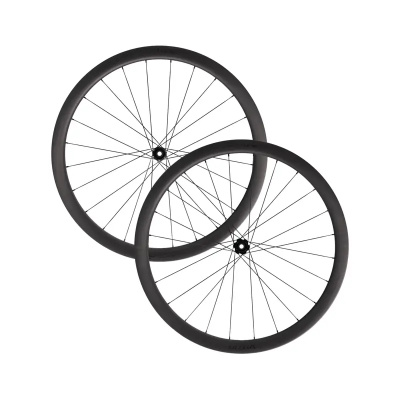
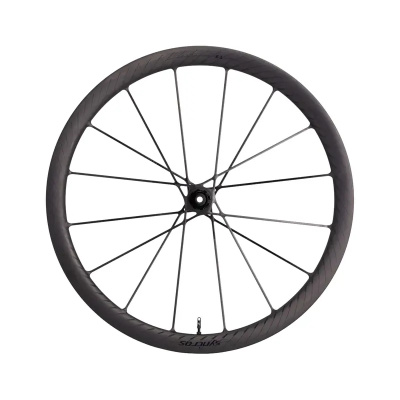
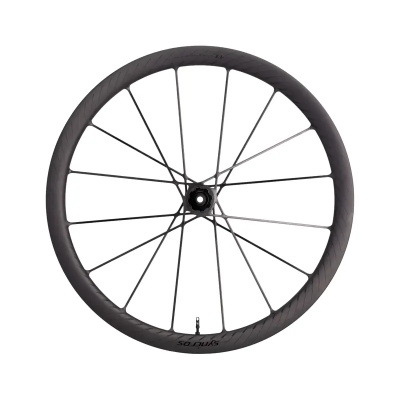
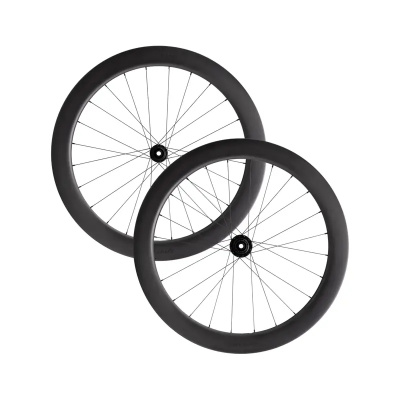
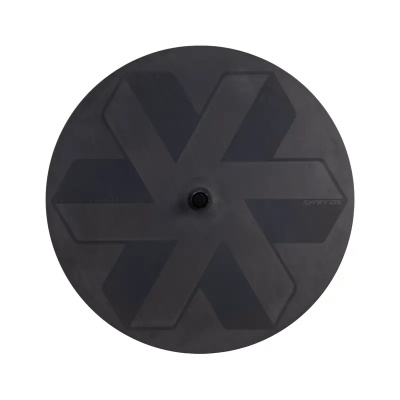
Syncros road wheels have quietly built a reputation that goes well beyond their natural home on Scott bikes - and the Capital carbon series is the clearest proof of that. These are proper performance wheelsets engineered for aerodynamic efficiency, crosswind stability, and the kind of low rotational weight that makes a real difference the moment the road tilts upward or you're chasing speed on an exposed dual carriageway run.
The range spans lightweight climbing hoops through to deep-section aero rims, so there's a clear fit whether you're clipping along the South Downs or holding a wheel in a fast sportive bunch. Carbon fiber monocoque construction on the top-tier models keeps weight low without sacrificing stiffness, and Syncros have paired that with DT Swiss hub internals on most mid-to-high-end options - giving you reliable engagement and simple servicing. Tubeless ready as standard across the Capital series, with hookless rim profiles on newer models that demand attention at the tyre selection stage. If you're weighing up a wheel upgrade, Syncros sit in genuinely competitive company alongside DT Swiss and ENVE - but often at a sharper price point for the spec on offer.
Prices and availability can change quickly. Delivery charges are not always included in listed prices.
Final price, stock status and delivery terms are set by retailer. We may receive a commission on purchases made.
Fitment Standards and What to Check Before You Buy
Modern Syncros road wheels are built around 12mm thru-axle standards front and rear - no surprises there, as the industry has firmly moved on from quick-release for anything performance-focused. Rotor mounts are Centerlock across the Capital disc range, so if your frame and fork run a six-bolt interface you'll need a Centerlock-to-six-bolt adapter. Worth confirming before checkout rather than after the box arrives.
The bigger compatibility point - and the one that catches people out - is the hookless rim profile on newer Capital models. Hookless construction trims weight and smooths the aero transition between tyre and rim, but it comes with a non-negotiable requirement: you must run tubeless-compatible (TLR) tyres. That applies even if you plan to use an inner tube inside them. Standard clincher tyres lack the stiff bead needed to seat safely on a hookless profile, and this isn't a grey area - it's a safety matter. Check the tyre compatibility list Syncros publish for each model before you commit to a rubber pairing.
Most Capital wheelsets also have a stated maximum inflation pressure for hookless rims, typically around 72.5 psi (5 bar). For UK riders used to running 25c tyres at high pressure, that's a prompt to consider moving to 28c or 32c at lower pressures instead - which, on British roads, is rarely a sacrifice. On freehub body swaps between Shimano HG and SRAM XDR standards, the DT Swiss internals make that process straightforward, but we've covered the detail separately - head to our Freehub Bodies & Spares page for the full rundown on compatibility and installation.
Breaking Down the Capital Series: What Each Tier Actually Gets You
Syncros organise their road wheel range around the Capital name, with the numbering doing the heavy lifting in terms of signalling where you sit in the hierarchy. The Capital 1.0 is the entry point into the carbon line - still a proper carbon wheelset, with decent layup quality and a noticeable step up from alloy in terms of feel and weight. It's a solid upgrade for a rider moving off stock wheels for the first time.
Step up to the Capital 1.0s and you're into lighter overall builds and a more refined carbon layup that starts to make the weight difference tangible on climbs. The rim profiles are optimised more deliberately for aero performance, and the hub internals begin to reflect the DT Swiss Ratchet EXP system - 36 points of engagement, a simple star ratchet mechanism, and bearing replacement that any home mechanic with basic tools can handle in under twenty minutes. That's not a small thing. Compared to some proprietary hub designs from brands like Mavic, the serviceability of DT Swiss internals is a genuine long-term advantage.
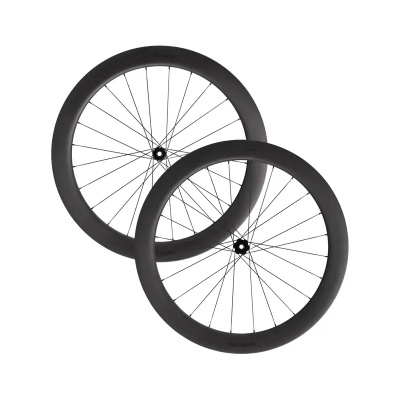
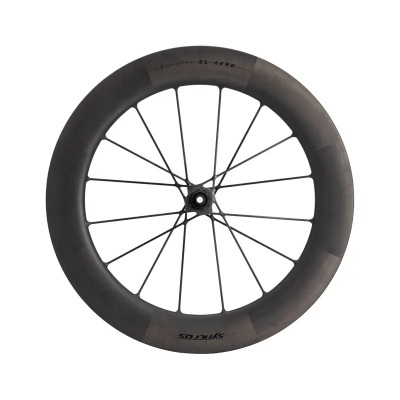
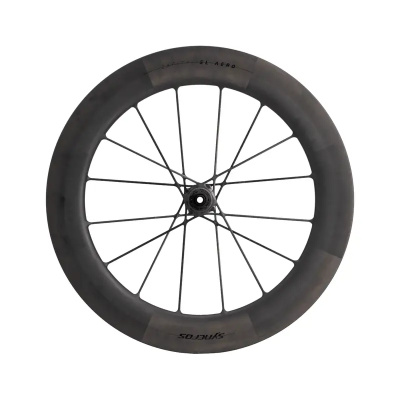
At the top of the Capital range, the Aero models bring in full carbon fiber monocoque construction - a one-piece carbon design rather than bonded sections - which delivers better stiffness-to-weight and a cleaner stress distribution through the rim. Rim depths push into the 50 - 60mm territory for meaningful aerodynamic return on flat and rolling roads. The Ratchet EXP system is standard here, and the overall build quality reflects the price step. If you're comparing against ENVE or top-tier DT Swiss options, the Capital Aero competes credibly on spec while typically undercutting on price. The trade-off at deeper rim depths is crosswind sensitivity - a 60mm rim in a stiff easterly on an exposed moorland road demands more attention than a 40mm option. Worth thinking about your regular routes before going deepest.
Across the range, tubeless ready construction is consistent. Internal rim widths on current models run at 23mm or wider, which is where you want to be for running 28c to 32c tyres without the tyre profile being squeezed into an unnatural shape.
Keeping Syncros Wheels Rolling Through UK Conditions
British roads are not kind to wheels. Potholes that appear overnight, gritty winter surfaces, and the kind of damp that never fully dries - it all adds up. The good news is that Syncros carbon layups on the Capital series are built with a robustness that reflects real-world use, not just wind-tunnel optimisation. Wider internal rim widths (23mm and above) let you run 28c or 32c tyres at lower pressures - somewhere in the 60 - 70 psi range for a 28c - which absorbs surface shock far more effectively than a narrow rim and high-pressure 25c setup. That's particularly relevant if your regular rides include exposed lanes across the Peaks or the kind of cracked B-roads that make up much of rural cycling in the UK.
After a wet winter, hub bearings deserve attention. DT Swiss internals make this less of an ordeal than most - the Ratchet EXP system can be accessed, cleaned, and regreased without specialist tools, and replacement star ratchets and bearings are widely available. Make it a seasonal job rather than waiting for the tell-tale grinding. Wipe the rim braking surfaces down after muddy rides even on disc-only wheelsets, as grit can work into the hub seals if left to sit.
For tubeless setup, the Capital series is ready to go with compatible valves and sealant - but getting the rim tape right and the sealant volume correct are the details that determine whether your setup holds. We've put together dedicated guidance in our Rim Tape and sealant categories if you want the specifics without the guesswork. Pairing your wheels with the right Syncros saddle and seatpost is worth considering too, particularly if you're building a full Syncros cockpit setup for weight and aesthetic consistency.
Syncros Road Wheels FAQs
Are Syncros road wheels tubeless ready?
Yes - the entire Capital series comes tubeless ready as standard. You'll need tubeless-compatible tyres, valves, and sealant to complete the setup, but the rims themselves are sealed and taped from the factory on most models. It's a straightforward conversion rather than a workaround.
Do Syncros wheels use DT Swiss hubs?
Mid-to-high-end Syncros wheelsets use DT Swiss hub internals, including the Ratchet EXP system on the upper Capital tiers. That means 36-point engagement, easy star ratchet servicing, and widely available replacement parts - a genuine advantage for home mechanics who want to keep things running without specialist tools or proprietary components.
Can I run standard clinchers on Syncros hookless rims?
No. If your Syncros wheels have a hookless rim profile - which applies to several current Capital models - you must use tubeless-specific (TLR) tyres. Even if you intend to run a tube inside, the tyre itself needs a TLR-rated stiff bead to seat safely. Standard clincher tyres don't meet that requirement and shouldn't be used.