
Sweet Protection Full Face Helmets
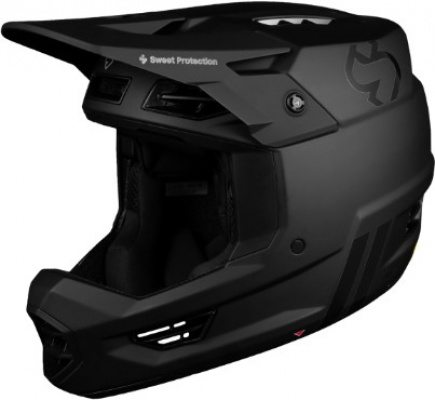
Sweet Protection full face helmets sit at the sharp end of gravity protection - Norwegian-engineered lids that take DH certification seriously without making you suffer on the climb up. The range spans dedicated downhill shells through to convertible enduro designs, all built around pre-preg carbon fibre, MIPS rotational-force management, and ventilation that actually works when you're grinding up a humid Welsh trail centre in August. That last point matters more than people give it credit for. A full face you're happy to keep on all day is one you'll actually wear properly.
What separates Sweet Protection from the crowd is the attention to protection depth. The dual-density EPS and EPP foam liners aren't just filler - they're tuned to absorb impact energy differently at different speeds, which is exactly what you need when a run can mix slow, technical rock gardens with flat-out open faces. Add the Occigrip dial-fit system - rare on full face lids - and you've got a helmet that locks down precisely rather than just sitting vaguely on your head. Whether you're planning uplift days at Fort William or mixed-discipline riding across Scottish and Welsh trail networks, there's a Sweet Protection full face built for how you actually ride.
Prices and availability can change quickly. Delivery charges are not always included in listed prices.
Final price, stock status and delivery terms are set by retailer. We may receive a commission on purchases made.
Impact Tech and Shell Performance
The foundation of every Sweet Protection full face lid is a pre-preg carbon fibre shell. Pre-preg means the carbon fibres are pre-impregnated with resin before layering, giving you a shell that's both lighter and more consistent in strength than wet-lay alternatives. In practical terms, you get meaningful weight savings without the shell flexing where you don't want it to - critical when you're hitting high-speed impacts on a DH track where every gram on your head matters after a long day of runs.
Beneath that shell, Sweet Protection uses dual-density EPS and EPP foam liners working together. EPS absorbs the sharp, high-energy peak of an impact; EPP handles the slower, more compressive forces you get in a low-speed tumble. Most impacts aren't clean - they involve both. Having both foam types in the liner means the helmet is doing useful work across a wider range of crashes, not just the ones the certification test was designed around.
MIPS - the Multi-directional Impact Protection System - is integrated across the key models. It adds a low-friction layer inside the helmet that allows the shell to rotate slightly relative to your head on angled impacts, reducing the rotational forces transmitted to the brain. Angled impacts are far more common than straight-on ones, so this isn't a theoretical benefit. Compared to lids from Fox or Troy Lee Designs at similar price points, Sweet Protection's carbon construction keeps overall weight impressively low while maintaining DH-certified protection standards.
Fit, Range, and Picking the Right Lid
The Occigrip turn-dial retention system is worth calling out because it's genuinely uncommon in full face helmets. Most full face lids at this level rely on fixed or basic adjustable cradles - fine until you're three hours into an enduro stage and the helmet has shifted. The Occigrip dial lets you micro-adjust the rear cradle fit on the go, which sounds like a small thing until you've done a long day with a lid that's sitting fractionally wrong. Snug but not clamped. That's what you're after.
On sizing: Sweet Protection helmets run true to size for most riders, but head shapes vary enough that you should always measure your circumference and check the brand's own size chart before buying. The Occigrip dial gives you a useful adjustment range, so if you're between sizes, it can bridge that gap - but it's not a substitute for starting in the right shell size.
The Sweet Protection Arbitrator is the headline convertible model - its chin bar detaches cleanly, letting you run it as a DH-certified full face on descents and drop it to a trail configuration for the climbs. That versatility is genuinely useful for UK enduro racing where you're self-propelled on the ups. Dedicated downhill helmets in the range prioritise maximum protection depth and goggle integration for the likes of muddy Scottish and Welsh DH tracks, where you want a locked-in fit and zero risk of a goggle gap letting in grit at speed. Think about how you're actually going to use it: if you're mainly doing uplift-only days, a dedicated DH lid makes sense. If you're racing or riding mixed-format days, the Sweet Protection Arbitrator earns its place.
Looking for open-face trail protection or youth sizing? Explore our Sweet Protection Helmets or Sweet Protection Kids Helmets collections.
Ventilation, Goggle Fit, and Keeping Your Lid in Good Shape
STACC - Superficial Temporal Artery Cooling Channel - is Sweet Protection's ventilation approach, and the name tells you exactly what it's doing. The channels are routed to cool the temporal artery, which runs along the side of your head and plays a meaningful role in overall thermal regulation. The clever part is that this is achieved without leaving the temples exposed. You get real airflow benefit without cutting into the side-impact protection. On a humid summer climb in the Brecon Beacons or the Lake District, that makes a noticeable difference to how long you can keep a full face on comfortably.
Goggle compatibility is well thought through on the DH-focused models. The brow is shaped to accept most standard MX-style goggle frames without creating a gap at the nose, and the chin bar geometry doesn't foul the strap routing. Muddy conditions are a fact of life on UK DH tracks - if you're riding Fort William or Cwmcarn in anything other than a drought, your goggle-to-helmet seal is what stands between you and a face full of wet Scottish loam at speed. Worth checking your specific goggle brand fits before committing if you run something unusual.
For cleaning, a soft brush and warm water handles most mud without risk to the carbon finish - avoid jet washing directly at the shell, which can force water into liner seams and degrade adhesion over time. The cheek pads on Sweet Protection full face helmets are removable and machine-washable on a gentle cycle; doing this regularly prevents the bacterial build-up that makes even premium lids smell unpleasant within a season. Pair your lid with Sweet Protection MTB baggy shorts and Sweet Protection sunglasses for a complete gravity kit setup that's coherent in both protection and fit philosophy. And if you want a matching base layer on warmer days, Sweet Protection tees and shirts complete the picture without overthinking it.
One honest limitation worth flagging: the carbon shell construction and MIPS integration push these helmets toward the premium end of the market. If budget is the primary constraint, Bell offers DH-certified options at lower price points. But if you're doing regular DH or enduro racing and protection quality is the priority, the weight and impact-tech spec of Sweet Protection's range justifies the investment.
Sweet Protection Full Face Helmets FAQs
Are Sweet Protection full face helmets true to size?
Generally, yes - Sweet Protection full face helmets run true to size, and the Occigrip dial-fit system gives you enough micro-adjustment range to fine-tune the fit once you're in the right shell. Always measure your head circumference and cross-reference with Sweet Protection's size chart before ordering, as head shapes vary enough to make that step worthwhile.
Can you remove the chin bar on Sweet Protection helmets?
On convertible models like the Sweet Protection Arbitrator, yes - the chin bar detaches fully, letting you switch between a DH-certified full face for descents and a lighter open configuration for climbing. Not all Sweet Protection full face helmets are convertible, so check the specific model spec before buying if removability is a priority for you.
Are Sweet Protection full face helmets well ventilated for climbing?
The STACC ventilation system routes airflow across the temporal artery to actively cool your head without opening up the temple protection - so you get meaningful breathability without a protection compromise. For self-propelled enduro riding or long mixed-format days on UK trail centres, the enduro-focused models in the range are genuinely comfortable to climb in.