
Sweet Protection Aero TT Helmets
When the clock is your only opponent, Sweet Protection Aero TT Helmets are built around one idea: cut the drag, protect your head, and give you nothing to think about except pushing watts. Engineered in Norway and wind-tunnel tested to reduce drag coefficient across a range of yaw angles, these lids are designed for riders who need every marginal gain to stack up - from a club-run 10-mile TT on a exposed dual carriageway to a full-distance triathlon. The aerodynamic profiles are aggressive without being compromised by sloppy crosswind behaviour, which matters more than people admit on the kind of breezy, open courses you'll find all over the UK.
Safety isn't an afterthought either. MIPS brain protection system and proprietary 4-Piece Shell technology sit underneath the aero shell doing serious work, so you're not trading protection for speed. Add a magnetic snap-on visor, the STACC ventilation system for genuine cooling, and a precise retention dial, and you've got a package that covers time trialists, triathletes, and breakaway riders who want performance they can actually trust. If you're exploring the wider range, Sweet Protection helmets cover road and MTB disciplines too.
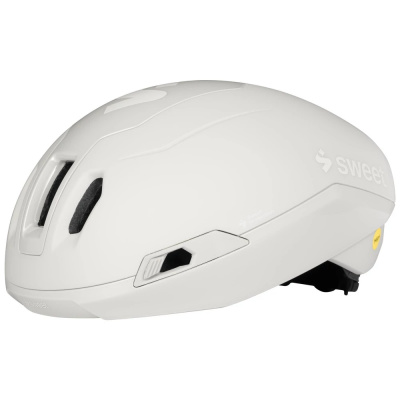
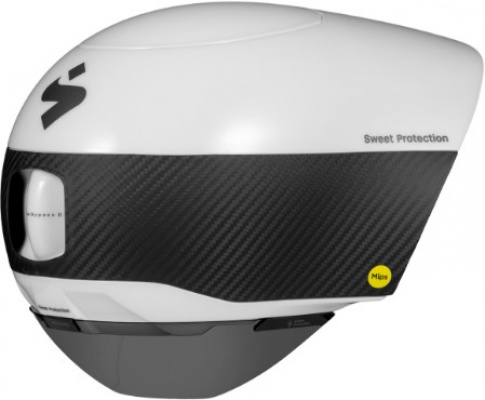
Prices and availability can change quickly. Delivery charges are not always included in listed prices.
Final price, stock status and delivery terms are set by retailer. We may receive a commission on purchases made.
Aerodynamics and Ventilation: Cutting Drag Without Cooking
The core of any credible aero helmet is what happens in the wind tunnel, and Sweet Protection's drag reduction profiles are shaped around real yaw-angle data - not just a clean zero-degree shot that looks good in a brochure. In practice, that means the shell holds its aero advantage when a crosswind catches you mid-effort, rather than becoming a sail at the worst possible moment. That crosswind stability is something riders on exposed UK courses, think long dual carriageway stretches in Cheshire or the Fens, will notice straight away.
The bigger talking point is STACC - Super Cooling Articulating Channel technology. Traditional aero helmets have a reputation for turning your head into an oven, and it's largely deserved. STACC works by channelling airflow directly over the temporal artery, which is one of the most effective points on the skull for cooling the blood. Crucially, it does this without punching holes through the aero shell in a way that adds drag back in. The result is a helmet that manages heat on a humid August 25-mile TT without the rider having to choose between speed and comfort. It's a genuine engineering trade-off solved, not just a marketing claim about ventilation ports.
The magnetic visor deserves a mention here too. Snap-on fitment means the seal against the shell is tight and consistent, which keeps airflow smooth across the transition from forehead to tail. It also means swapping visors between a clear lens for dawn starts and a tinted one for midday race conditions takes seconds rather than faff. If you're pairing your helmet with optics, Sweet Protection sunglasses are designed to integrate cleanly with the visor system.
Fit, Retention, and the Safety Underneath the Shell
An aero helmet only delivers its wind-tunnel numbers if it sits correctly on your head. The tail needs to run flush against your back when you're in an aggressive tuck - any gap between helmet and body creates turbulence that wipes out the gains you paid for. Sweet Protection's fit profile is designed for a low, forward-sitting position, so if you're riding more upright or haven't dialled in your TT position yet, it's worth getting that sorted before worrying about the lid.
The Occigrip retention dial gives you fine adjustment at the rear cradle, locking the helmet in place without pressure points. Get it snug enough that there's zero movement when you shake your head, but not so tight you're building a headache into the second hour of a triathlon. Most riders land in the right place quickly - it's an intuitive system.
Underneath all that, the 4-Piece Shell technology is what separates a properly engineered helmet from something that just looks fast. The multi-piece construction manages impact energy across the shell more effectively than a single moulded unit, distributing force rather than concentrating it. Combined with the MIPS brain protection system - which allows the inner liner to rotate independently on oblique impacts, reducing rotational force transferred to the brain - you're getting safety architecture that's legitimate rather than box-ticking. For riders who want to compare safety-focused alternatives, POC aero TT helmets take a similarly rigorous approach to protection. For a broader look at the aero helmet market, Giro aero TT helmets and Kask aero TT helmets are worth a look across different fit profiles and price points.
One practical note: if you're buying a Sweet Protection aero helmet primarily for standard road rides rather than racing, it's worth asking whether a vented road lid makes more sense day-to-day. The aero profile is optimised for a specific position and purpose - for everything outside of that, the wider Sweet Protection helmet range covers more versatile options.
Racing in British Conditions: What Actually Matters
UK time trial courses are not forgiving test beds. You're often on dual carriageways with lorries creating pressure waves, exposed crossings over ridges where the wind changes direction without warning, and early morning starts in damp air that fogs visors and chills fingers before you've even hit your target power. Sweet Protection's aero helmets are shaped with these realities in mind, even if the wind tunnel is technically set to ideal conditions.
Crosswind stability comes back to the helmet's yaw-angle testing. A lid that's been optimised purely for zero-degree airflow will feel skittish and draggy the moment the wind shifts, which is a real problem on an out-and-back course on an exposed plateau. The drag reduction profile on Sweet Protection's shells maintains efficiency across a wider range of angles, which translates to more consistent handling and less energy spent fighting the lid.
The anti-fog visor capability is genuinely useful for British race starts. A damp, cool morning - which is most race mornings from March through to October, frankly - creates condensation on cold visor surfaces fast. The magnetic visor system lets you pull the visor cleanly if it fogs badly, rather than squinting through it or wrestling with a stiff clip mid-race. If you're racing full triathlon distances and want to complete your kit, Sweet Protection jerseys are worth looking at alongside the helmet.
For summer TTs when humidity climbs and effort levels mean your core temperature is already high, the STACC cooling system earns its keep. It won't replace proper pacing and hydration, but it does take the edge off the thermal load in a way that standard closed-shell helmets simply can't match. Worth knowing if you've ever finished a 25-mile TT feeling like your head specifically cooked - this is the engineering aimed at fixing that. Riders considering other options in this space might also look at MET aero TT helmets for an alternative approach to ventilated aero design.
Sweet Protection Aero TT Helmets FAQs
Are aero helmets worth it for time trials?
Once you're holding over 20mph, aerodynamic drag is the dominant resistance you're fighting. An aero helmet is one of the most cost-effective upgrades available - the watt savings and time reductions are well documented in wind-tunnel testing. For serious TT or triathlon racing, it's hard to argue against one.
How should a Sweet Protection aero helmet fit?
It should sit low on the forehead with no pressure points and, critically, the tail should run flush against your back when you're in your race tuck. Use the Occigrip dial to dial in the retention until there's zero wobble. If the tail is lifting away from your back in position, the aero benefit is largely lost.
Do aero helmets make you overheat?
Older closed-shell TT helmets can run hot, yes. Sweet Protection addresses this directly with STACC ventilation, which routes airflow over the temporal artery to cool the blood efficiently without opening up the shell in ways that add drag back in. It's a meaningful difference on long efforts in warm conditions.