
Smith Optics Aero TT Helmets
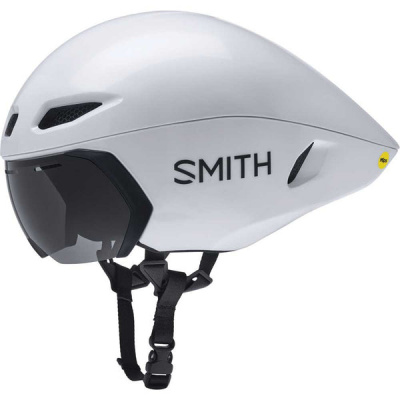
Smith Optics Aero TT Helmets are built around one idea: getting you to the finish line faster without turning your head into a radiator or leaving safety as an afterthought. When you're locked onto the tribars and every watt counts, drag is the enemy - and Smith approaches it with wind-tunnel-tested profiles that smooth airflow over your head and down your back. The bob-tail shape of the Jetstream TT is the clearest expression of that thinking, designed so the tail integrates with your shoulder line rather than sitting above it like a rudder.
What separates Smith from helmets that just look fast is what's underneath the shell. Zonal Koroyd® technology replaces dense foam in key areas with a honeycomb tube structure that absorbs impact energy more efficiently at lower weight, and crucially, lets heat escape during hard efforts. Add MIPS® rotational protection for those off-axis impacts and a magnetic ChromaPop™ visor system that genuinely handles Britain's flat, grey morning light rather than ignoring it, and you've got a helmet that's earned its speed claims. For UK riders tackling exposed dual carriageways in crosswinds or sweating through a humid August ten-mile, that combination of aerodynamic drag reduction, breathability, and optical clarity matters more than the brochure ever admits.
Prices and availability can change quickly. Delivery charges are not always included in listed prices.
Final price, stock status and delivery terms are set by retailer. We may receive a commission on purchases made.
How the Shell and Koroyd Work Together at Speed
The outer polycarbonate shell on Smith's aero helmets isn't just cosmetic armour - it's the first layer in a three-part impact system that also includes EPS foam and Zonal Koroyd® coverage. Koroyd's open-cell tube structure sits where energy absorption matters most, and because each tube is hollow, heat generated during a hard 25-mile effort can actually move through the material rather than building up against your scalp. Older aero helmets often felt like a slow cooker at threshold - solid foam trapping heat with no real exit route. The Koroyd integration changes that equation. You get lighter protection, better ventilation, and no meaningful compromise in the aerodynamic outer profile.
The Smith Jetstream TT helmet is the clearest example of how this plays out in practice. Its teardrop profile is wind-tunnel tested, with a tail length calibrated to sit flush against most riders' backs when the head is in a natural TT position. That detail matters on exposed UK dual carriageways where crosswinds can catch a tail that's too long and generate neck fatigue over the back half of a 40km effort. The shape isn't aggressive for its own sake - it's been refined so the aerodynamic drag reduction is real rather than theoretical. Compared to a standard vented road helmet, the drop in drag is measurable, and that's before you factor in how much smoother the back profile runs when the tail actually aligns with your posture.
If you're weighing up alternatives, Kask Aero TT Helmets and Giro Aero TT Helmets both compete in this space, but Smith's material stack - polycarbonate over EPS over Koroyd - offers a specific combination of low weight and heat management that's worth comparing directly if you run hot on summer race days.
Fit, Adjustability, and Getting the Position Right
An aero helmet that moves around when your head drops into position is worse than useless - it creates drag and kills your focus. Smith's VaporFit™ dial system addresses this with 270-degree adjustability, meaning the retention cradle wraps further around the back and sides of your head than a standard rear-dial setup. The practical result is a fit that locks in when you're on the tribars without pressure points developing over the course of an hour. Get it snug but not tight; the dial gives you enough resolution to find that line.
Sizing on Smith aero helmets tends to run fairly true, though riders with rounder head shapes sometimes find the fit more accommodating than those with very narrow profiles. If you're between sizes, the VaporFit™ system has enough range to compensate in most cases, but it's worth checking the specific size guide for each model rather than assuming your road helmet size carries straight across. The internal padding is antimicrobial and removable - worth noting if you're doing back-to-back indoor trainer sessions where salt build-up becomes a real issue. Pull the pads, hand-wash them in cool water with mild soap, and let them air dry rather than forcing them back in damp.
If pure time trial speed isn't what you're after and you want something more versatile for road riding or audax, take a look at the broader Smith Optics Helmets range - there's a lot more going on beyond the TT category.
Visor Swaps, Lens Care, and Riding in British Light
The magnetic visor system on Smith TT helmets is one of those features that sounds like a marginal detail until you're standing in a car park at 6am trying to decide whether the sky is bright enough for a mirrored lens. The magnets give you a clean, one-handed swap in seconds - no fumbling with clips or levers. That matters in the UK where the light can shift from flat grey to sharp low sun between the start ramp and the first roundabout.
ChromaPop™ lens technology is the other half of that story. Rather than just tinting the world darker, ChromaPop filters specific wavelengths to improve contrast and colour differentiation - particularly useful on wet UK roads where the difference between tarmac and a pothole can be hard to read in overcast conditions. The Smith Jetstream TT helmet visor swap is quick enough that swapping from a mirrored lens to a low-light rose or clear ChromaPop lens before a grey morning triathlon is genuinely practical rather than aspirational. Keep a spare lens in your kit bag; it weighs nothing and solves a real problem.
On lens care: clean ChromaPop visors with the soft cloth provided or a clean microfibre - never a dry paper towel. The anti-fog coating is durable but not indestructible. Rinse road grime off with cool water before wiping, and store lenses in a pouch rather than loose in a bag with your tools. For a deeper look at compatible eyewear and spare lens options, Smith Optics Sunglasses and Smith Optics Sunglasses and Goggle Spares are worth browsing alongside your helmet choice.
It's also worth knowing that MIPS® sits inside the shell independently of the visor system - so swapping lenses doesn't affect the rotational protection layer. The two systems operate completely separately, which is reassuring if you're doing visor changes in a hurry before a mass-start triathlon.
For riders who want to cross-shop before committing, MET Aero TT Helmets and Oakley Aero TT Helmets are solid alternatives at similar price points, each with different approaches to ventilation and visor integration that may suit different head shapes or racing disciplines.
Smith Optics Aero TT Helmets FAQs
How much time does an aero TT helmet save?
Over a 40km time trial, an aero TT helmet can save roughly 30 to 60 seconds compared to a standard vented road helmet. The actual figure depends heavily on your riding position - specifically how well the helmet's tail aligns with your back when you're on the tribars. A well-fitted aero helmet in a good position saves more time than a faster helmet on a poor one.
Are Smith Aero TT helmets well ventilated?
Better than most in the category. The Jetstream TT uses strategically placed vents alongside Koroyd technology, which allows heat to move through the material rather than trapping it against your head. For muggy UK summer time trials where you're pushing threshold for 45-plus minutes, that makes a noticeable difference compared to older solid-shell aero designs.
Can I swap the visor on a Smith TT helmet?
Yes, and it's straightforward. The magnetic visor system lets you change lenses one-handed in a matter of seconds - no tools, no fiddly clips. Swapping to a clear or low-light ChromaPop lens for overcast British mornings or early-start triathlons is quick enough to do at the start line if you need to. Keep a spare lens in your race bag and you're covered for most conditions.