
Rudy Project Aero TT Helmets
Rudy Project Aero TT Helmets are built around one idea: get you to the finish line faster. These are the helmets you see splitting crosswinds on exposed CTT dual-carriageways and tearing through Ironman bike legs - wind tunnel tested, biomechanically considered, and refined across years of WorldTour and triathlon racing. The drag reduction figures are real, the geometry is deliberate, and the details - magnetic optical shields, removable vent covers, a fit system that actually holds position - are there because seconds matter in a time trial.
Rudy Project's range covers everything from focused 10-mile efforts to full-distance triathlon, with helmet shapes optimised for multiple yaw angles so crosswinds don't punish you mid-effort. The magnetic visor integration smooths airflow across your face rather than leaving it to turbulence. Adaptable ventilation means you're not cooking on a warm September morning or fogging out on a cold April start. Whether you're pinning on a number for the first time or chasing a course record, these helmets give you genuine aerodynamic tools - not marketing noise.
Prices and availability can change quickly. Delivery charges are not always included in listed prices.
Final price, stock status and delivery terms are set by retailer. We may receive a commission on purchases made.
Aerodynamic Tech and Weather Performance
The headline figure for Rudy Project's TT range is drag reduction across a spread of yaw angles - not just straight-line tunnel numbers that flatter a helmet at zero degrees. That matters enormously on exposed UK courses. A dual-carriageway 25 in a gusting crosswind sees you riding at anything from five to twenty-five degrees of yaw for most of the effort, and a helmet optimised only for head-on airflow becomes a liability. The Wing geometry addresses this directly, with a profile shaped to manage airflow consistently as the wind moves around you rather than spiking in drag the moment you're not perfectly sheltered.
The In-Mold EPS liner construction keeps weight low without sacrificing the shell rigidity needed to maintain that aero shape under load. It's a manufacturing process that fuses the outer shell and foam liner together, which means no flex, no rattle, and a cleaner external surface for air to travel across.
Ventilation is where most pure aero helmets compromise, and Rudy Project's answer here is the removable magnetic vent covers. Seal them shut on a cold March morning in the Fens and you get maximum aerodynamic closure - the helmet behaves like a smooth pod. Pull them off for a humid August sportive or a hard training effort and the exhaust ports open up enough to keep your core temperature from spiking. It's a genuinely practical system rather than a cosmetic one, and swapping the covers takes seconds at the start line. If you're weighing this kind of adaptability against competitors, it's worth comparing what Kask Aero TT Helmets and Giro Aero TT Helmets offer in the same space - both take different approaches to the ventilation trade-off.
Getting the Fit Right Across the Range
An aero TT helmet only saves you watts if it sits correctly in your specific riding position. That's not a small caveat - it's the whole game. A helmet that looks fast on a mannequin but lifts away from your back when you drop into your tuck is actively slowing you down. Before you commit to any model, get into your actual aero position and check the tail sits flush with your shoulders and back. If it sticks up, the shape becomes a brake rather than a blade.
The RSR 10 M retention system is Rudy Project's mechanism for dialling in that fit with precision. It's a micro-adjustable dial-and-band setup at the rear of the helmet that lets you tighten or loosen the fit incrementally - useful both for getting the helmet stable during an effort and for accommodating different head shapes without the helmet rocking. The fit needs to be snug enough that the helmet doesn't shift when you move between positions, but not so tight that pressure builds across a 40-kilometre effort. Spend a few minutes with the dial before race day rather than adjusting it cold on the start line.
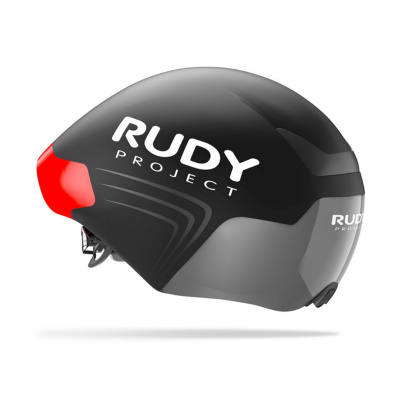
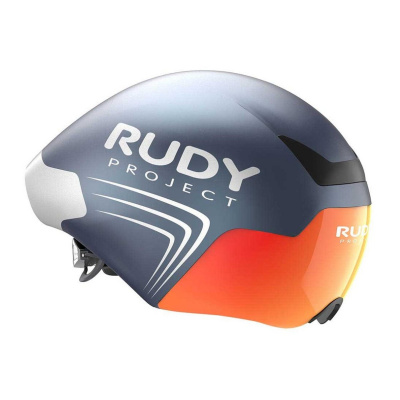
The flagship model in the range is The Wing, which has been refined through multiple iterations and carries the full suite of tech - magnetic visor, RSR retention, removable vent covers - in a shape that works across triathlon and road TT disciplines. It's the option for riders who want the complete system. If you're comparing it specifically against The Wing57 - a variant with a shorter tail designed for riders who struggle to hold a deep tuck position or find the standard tail catches air at their neck angle - the choice comes down to your body geometry and how consistent your aero position is. The Wing57's abbreviated profile is more forgiving if your position isn't locked down.
It's worth being clear: these are purpose-built race helmets. If you're after well-ventilated protection for everyday road riding, training rides, or sportives, they're not the right tool. Take a look at the broader Rudy Project Helmets range for options built around airflow and all-day comfort rather than aerodynamic closure.
For riders considering alternatives at a similar level, Specialized Aero TT Helmets and MET Aero TT Helmets are both strong options with their own fit philosophies - worth a look if Rudy Project's sizing doesn't work for your head shape.
Visor Use, Fogging, and Keeping the Kit Clean
The magnetic RP Optics shield does two things: it smooths airflow across the upper face - eliminating the turbulence and drag that standard sunglasses frames create - and it protects your eyes from debris, insects, and wind tear at race speeds. The magnetic attachment means removal is genuinely quick, no fumbling with clips mid-transition or on the start line. Whether to run it is mostly a question of conditions and effort level. At race pace on a flat TT course, it stays on. On steep, slow climbs where ventilation drops and heat builds, pulling it gives you more airflow across your face. Hot day, slow pace - visor off is reasonable.
Fogging is the specific UK problem. Early CTT starts in April or May, ambient temperature around eight degrees, and you're generating significant heat from the first pedal stroke - that's a recipe for a fogged shield inside two minutes. The exhaust port geometry is designed to draw warm air away from the inner surface of the visor, and the anti-fog coating does its job under normal conditions, but you can help it along. A thin application of anti-fog spray on the inner lens surface before the start adds meaningful protection. Don't use standard glass cleaner on it - the coating is delicate and solvent-based products degrade it quickly. Warm water and a soft cloth is the right approach for the visor; the same goes for the EPS liner interior. Let both dry away from direct heat.
Replacement visors and interior pads are available through Rudy Project Helmet Spares - worth keeping a spare optical shield if you're racing regularly, since scratches accumulate fast. For riders who prefer to run standard eyewear during warm-ups or training rides rather than the integrated shield, the Rudy Project Sunglasses range includes options built with the same optical standards as the helmet shields.
Rudy Project Aero TT Helmets FAQs
How many watts does an aero helmet save?
Switching from a standard vented road helmet to a dedicated TT helmet can save roughly 10 to 15 watts at 40km/h - a meaningful number over any distance. Across a 25-mile time trial, that typically translates to somewhere between 30 and 60 seconds, depending on course profile and conditions. It's one of the most cost-effective aero gains available to a time trialist.
Should I use the visor on my Rudy Project TT helmet?
Yes, in most race conditions. The magnetic optical shield smooths airflow across your face and reduces drag compared to open eyewear or bare skin. The exception is extended climbing at low speed or very high ambient temperatures, where removing it improves ventilation noticeably. For standard flat or rolling TT courses, keep it on.
How should a time trial helmet fit in the aero tuck?
It should sit snug with no pressure points, and - critically - the tail must lie flush against your back when you're actually in your aero position. If the tail lifts away, it catches air and costs you drag rather than saving it. Always check the fit in your full tuck, not just standing upright, and use the RSR retention dial to lock the position before race day.