
Pinarello Track Pumps
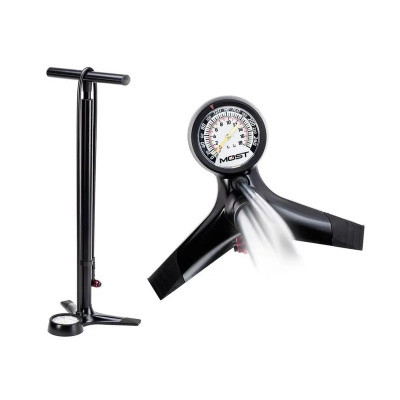
Sorting your tyre pressure is the cheapest performance gain on the board, and Pinarello track pumps - many developed alongside the brand's premium MOST component line - are built to make that job precise, repeatable, and genuinely fuss-free. These are not supermarket-aisle pumps. CNC alloy barrels, oversized high-contrast pressure gauges, and smart chuck heads place them firmly in the workshop-grade bracket, whether you're running high-pressure road clinchers at 100 PSI or trying to seat a stubborn tubeless tyre before a damp Sunday morning ride.
The range suits riders running Pinarello road bikes and Pinarello gravel bikes alike - anything where getting the Bar reading right actually changes how the ride feels. Precision matters more than most riders admit, and a pump that over-reads by 10 PSI isn't saving you anything. Compare the best UK prices on Pinarello floor pumps below and find the one that earns its place in your garage long-term.
Prices and availability can change quickly. Delivery charges are not always included in listed prices.
Final price, stock status and delivery terms are set by retailer. We may receive a commission on purchases made.
Valve Compatibility and Chuck Mechanics
Most Pinarello and MOST pump heads use a smart-head design - a reversible or auto-sensing chuck head that handles both Presta and Schrader valves without adapters rattling around in your kit bag. That matters more than it sounds. Swapping between a road bike with Presta valves and a car or commuter with Schrader becomes a non-issue. Just check the chuck orientation, lock it on firmly, and pump.
At pressures above 100 PSI, a loose chuck will blow off the valve and send the tyre pressure gauge needle spinning uselessly. The lock-on mechanism on the better MOST heads is positive and tight - no half-measures. Many models also include a bleed valve on the chuck body, which lets you release tiny increments of pressure without disconnecting. That's genuinely useful when you're dialling in tubeless pressures to the nearest 0.2 Bar before a ride on mixed surfaces. If you want the same valve flexibility from an alternative brand, Lezyne track pumps and Silca track pumps take a similar approach to chuck engineering, each with their own take on seal quality and locking force.
How the Pinarello and MOST Pump Range Stacks Up
There's a clear split in what Pinarello and MOST offer here. Entry-level models use composite and steel construction - functional, perfectly adequate for road bikes, and reasonably priced. Step up to the premium tier and you're getting CNC machined alloy barrel construction, which is stiffer under load, more accurate stroke-to-stroke, and far more resistant to the flex that makes cheap pumps feel vague at high pressure.
The gauge is where you really feel the difference. Budget models use small-dial analogue gauges that are honest enough, but the higher-end MOST pumps run oversized, high-contrast analogue or digital displays - easier to read in a dim garage, easier to read with cold hands in January. Digital readouts remove the parallax error you get squinting at an analogue needle from an awkward angle.
High-volume chamber design is the other meaningful upgrade on the top-tier models. A larger chamber moves more air per stroke, which sounds irrelevant on a narrow 25mm road tyre but becomes very relevant when you're trying to seat a 40mm tubeless gravel tyre. Getting that initial bead to pop into place needs a fast burst of volume, not just sustained pressure. The premium pumps deliver that. Rebuildable pump heads are also part of the proposition at this level - replace the O-rings rather than the whole pump when wear eventually shows. That's a better long-term investment. For comparison, Topeak track pumps and Park Tool track pumps occupy similar tiers in terms of build quality and gauge accuracy, so it's worth comparing spec-for-spec when you're deciding where to spend.
Surviving a UK Garage: Durability and Basic Upkeep
A steel-barrel pump stored in an unheated shed in Manchester or Edinburgh from October to March will rust. Not maybe - will. The damp gets in, the finish degrades, and within a couple of winters you're working around surface corrosion on the barrel and a stiff, gritty plunger. This is exactly why the alloy barrel construction on the MOST pumps is worth paying attention to: aluminium doesn't rust. It oxidises slightly on the surface, but that's cosmetic. The pump still works.
Winter grit is the other problem, specifically in the chuck head. Fine road grit and dried mud work into the chuck mechanism and wear down the rubber O-rings that create the seal against the valve. When those O-rings go, you get air escaping around the chuck rather than into the tyre. The fix is straightforward: pull the chuck apart twice a year, clean out any debris, and replace the O-rings - they're cheap and most manufacturers supply spares. Give the main plunger shaft a wipe-down and a light application of silicone spray (not WD-40, which degrades rubber) every few months to keep the stroke smooth. It takes five minutes and adds years to the pump's life.
Keep the gauge face clean too. Grime on an analogue gauge face makes it harder to read accurately, which defeats the whole point of a precise instrument. A damp cloth is enough. For broader workshop maintenance, Pinarello tools cover the wider range of workshop kit worth keeping alongside your pump. SKS track pumps are another solid option if you want a durable everyday pump at a lower price point while keeping the good stuff for race prep.
Pinarello Track Pumps FAQs
Do Pinarello track pumps work with both Presta and Schrader valves?
Yes. Most Pinarello and MOST track pumps use a smart-head or reversible chuck that handles both Presta and Schrader valves without needing a separate adapter. Lock the chuck on firmly before you start pumping - especially important above 100 PSI where a loose fit will blow straight off the valve.
What is the maximum PSI for a Pinarello floor pump?
Premium Pinarello and MOST floor pumps typically reach up to 160 PSI (11 Bar). That covers everything from high-pressure track and road clinchers through to lower-volume tubeless gravel setups, with plenty of headroom across the range.
How do I maintain my track pump in a damp UK garage?
Wipe down the plunger shaft and apply silicone spray every few months to keep it running freely - avoid WD-40 as it degrades rubber seals. Clean grit out of the chuck head seasonally and replace the O-rings when you notice air escaping around the valve connection. An alloy-barrel model is the first line of defence against garage damp.