
Pinarello Road Bikes
Pinarello road bikes have spent decades at the sharp end of Grand Tour racing, and the current lineup carries that weight without feeling museum-like. The frames are immediately recognisable - asymmetric geometry, sculpted tubes, and that distinctive Onda fork silhouette - but the engineering underneath is what separates them from bikes that merely look the part. Whether you're hunting KOMs on the North Yorkshire Moors or grinding out a century across the Cotswolds, Pinarello's range gives you a clear choice of intent. The F-Series - headlined by the Dogma F and stepping down through the F9, F7, and F5 - is built around race geometry, aero tube profiles, and stiffness you can feel the moment you push out of the saddle. The X-Series takes a different line: endurance geometry, broader tyre clearance, and a more forgiving ride quality for days when the road surface has other ideas. Both families use Pinarello's asymmetric frame design, which counteracts the uneven pull of your drivetrain rather than ignoring it. Compare the latest models and find the best UK prices on complete Pinarello road bikes below.
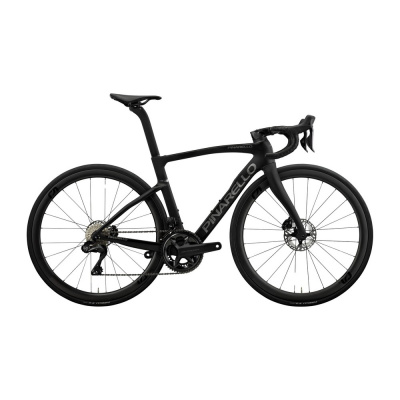
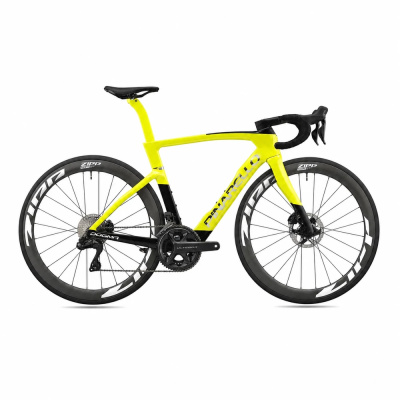
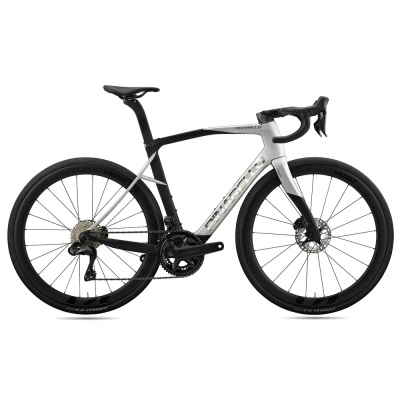
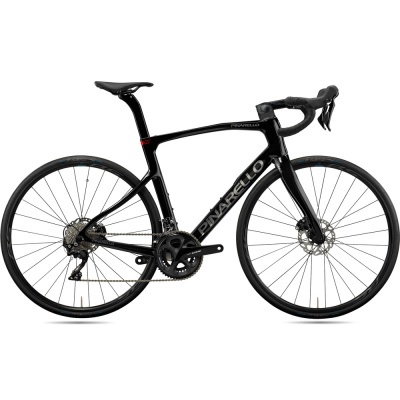
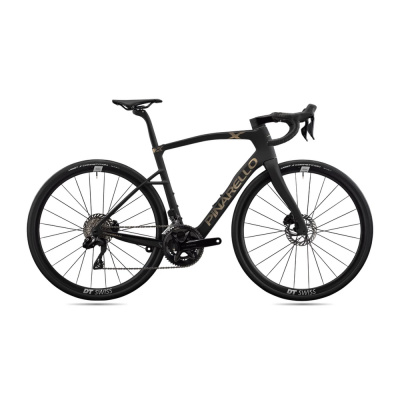
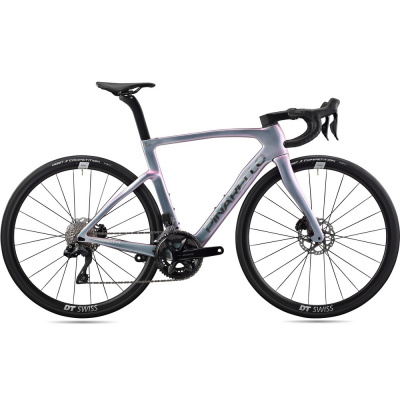
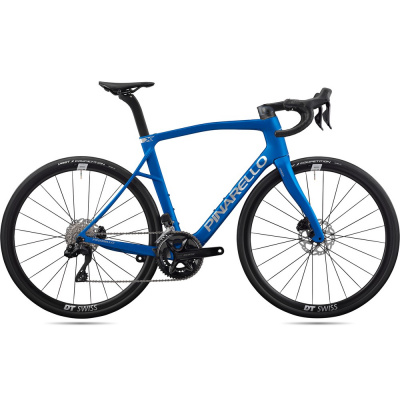
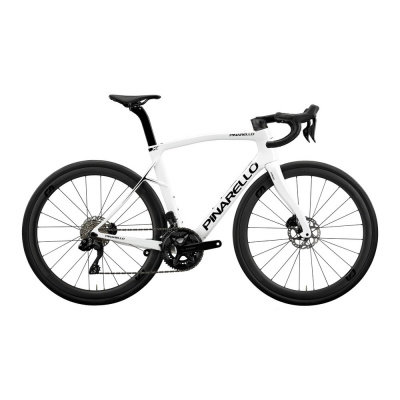
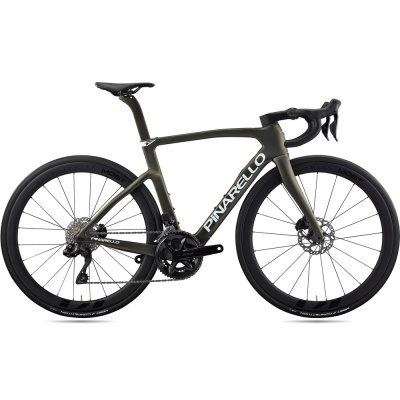
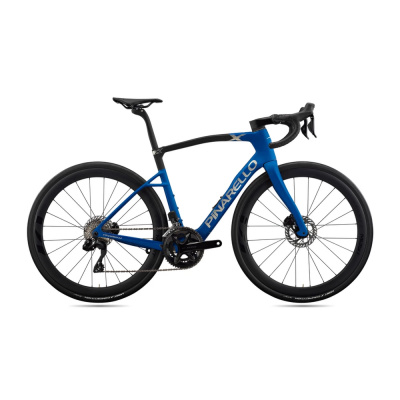
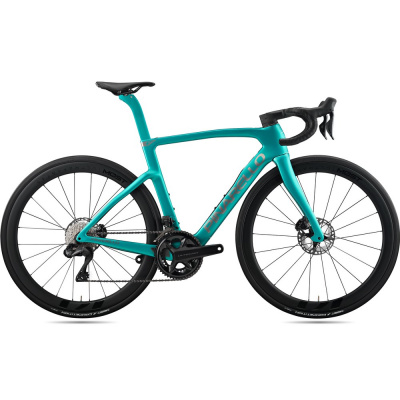
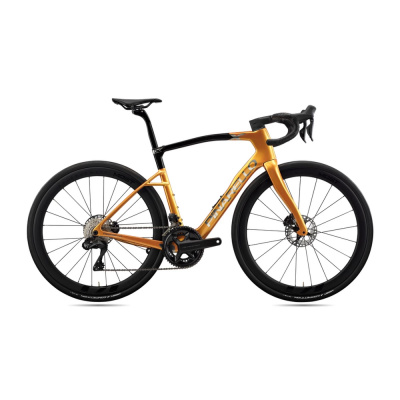
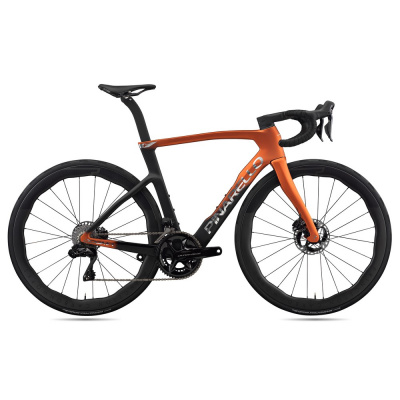
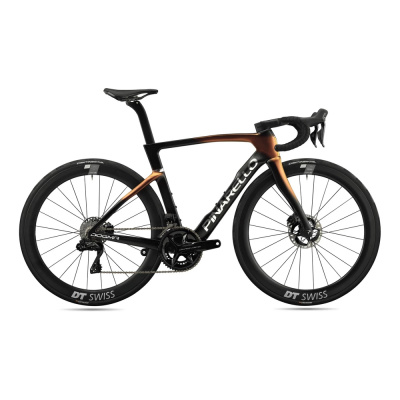
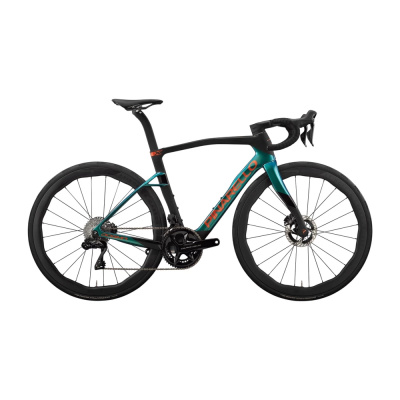
Prices and availability can change quickly. Delivery charges are not always included in listed prices.
Final price, stock status and delivery terms are set by retailer. We may receive a commission on purchases made.
Decoding the Pinarello Road Bike Lineup
At the top sits the Dogma F - Pinarello's flagship and the bike that's crossed more Tour de France finish lines than any other frame in the modern era. It's the reference point the rest of the range is measured against: maximum stiffness, wind-tunnel-refined tube shapes, and a ride feel that rewards riders who push hard. Below it, the Pinarello F-Series road bikes follow the same race geometry but use progressively more accessible carbon layups. The F9 sits closest to the Dogma F in feel and specification; the F7 and F5 bring that aggressive riding position to a wider audience without diluting the handling character. If you want to go fast and you're happy sitting fairly low and long, the F-Series is your corner of the range.
The Pinarello X-Series endurance bikes tell a different story. The X9, X7, X5, X3, and X1 use a higher stack and shorter reach, so you're sitting more upright - less tunnel, more visibility, and far less lower-back protest on a four-hour ride. Tyre clearance runs to 32mm across the X-Series, which matters considerably on British roads (more on that shortly). The X1 makes Pinarello's geometry and asymmetric design accessible at a realistic entry price, while the X9 brings the material quality close to F-Series territory with the more relaxed position. If you're torn between the two families, the question is simple: do you race or do you ride? Both are valid. Pinarello just asks you to be honest about which one you are.
Looking to build your own dream bike from scratch? Browse our Pinarello Frames. If you want to take your Italian pedigree off-road or need a motorised boost, check out our Pinarello Gravel Bikes and Pinarello E-Bikes.
The Pinarello Tech Philosophy
Start with the asymmetric frame design, because it's the thing that looks odd until someone explains it - and then you can't unsee the logic. Your drivetrain only lives on the right side of the bike. The chain tension, the pedalling forces, the lateral flex - all of it pulls the frame unevenly. Pinarello's solution is to build the right side of the frame stiffer than the left, so the whole thing deflects symmetrically under load rather than twisting. It's the kind of detail that rivals quietly noted and struggled to argue with.
The Onda fork gets the most attention visually - those curved blades look theatrical, but the function is real. The S-shaped profile acts as a controlled flex zone, absorbing the kind of sharp road chatter that a purely stiff carbon fork transmits straight into your hands and shoulders. Critically, it does this without going vague in corners or during hard braking. On a long descending road, the fork feels planted rather than nervous. Think of it as compliance that doesn't cost you confidence.
Pinarello's partnership with Torayca carbon underpins the material differences across the range. The Dogma F uses T1100 1K - the stiffest, lightest weave Torayca produces, with fibres so fine the surface finish is almost glassy. The F-Series mid-range and X-Series rely on T900 and T700 layups, which are meaningfully more compliant and more forgiving to manufacture consistently. In practical terms: T1100 1K is a precision instrument; T700 is a very good road bike that happens to be more comfortable. Neither is a compromise - they're just aimed at different things.
Then there's TiCR (Total Internal Cable Routing), Pinarello's fully integrated cable management system. Every cable and hose disappears into the frame at the stem, leaving a clean front end that also reduces drag in crosswinds. It looks extraordinary. Keep it in mind for maintenance, though - swapping headset bearings after a gritty British winter is a job that needs care and patience, ideally from a mechanic who knows the system. It's not a reason to avoid the bike; just factor it into ownership.
Living with a Pinarello in the UK
The X-Series' 32mm tyre clearance is genuinely useful here. British B-roads - particularly anything off the main routes in Wales, the Peak District, or rural Scotland - can be rough enough to rattle fillings. Running 30mm or 32mm tyres at sensible pressures transforms a road bike from something you're fighting to something you're steering. The F-Series clears less, which is the honest trade-off for the more aggressive race geometry; if your regular routes include patched tarmac and the odd farm track crossing, the X-Series will reward you more often.
Sizing needs a mention, because Pinarello measures frames centre-to-centre, which can catch people out. A 53cm Pinarello isn't the same as a 53cm from Colnago or a Cervélo - the number alone tells you very little. Use the stack and reach figures instead. Pinarello publishes detailed geometry charts, and cross-referencing those against your current fit data is the most reliable way to land on the right size. If you're between sizes, consider whether you'll be fitting a shorter or longer seatpost or adjusting reach via the handlebar stack - both are worth factoring in before you commit.
The TiCR system deserves a practical note in a UK context. The integrated routing keeps water and grit out of the frame's internals better than exposed cables, which is a genuine advantage through autumn and winter. The headset interface is the weak point - road grit from wet rides works into the bearing seats over time. A clean and re-grease before the season ends isn't optional if you want the system to work smoothly. It's a small overhead for a bike that otherwise handles British weather with composure.
Are Pinarello bikes worth the money? That depends entirely on which end of the range you're looking at. The X-Series entry models represent genuinely competitive value for asymmetric carbon with proper endurance geometry. At the Dogma F end, you're paying for T1100 1K carbon, race-calibrated handling, and a bike that's been developed with input from professional teams - that costs money and it shows. If you want Italian racing heritage without the flagship price, the F-Series mid-range is where most riders will find the balance that makes sense.
Pinarello Road Bikes FAQs
Are Pinarello bikes worth the money?
For most riders, yes - but it depends where in the range you're looking. The X-Series and mid-F-Series offer asymmetric carbon frames and proper Italian geometry at competitive prices. The Dogma F is a different category of expenditure, justified by T1100 1K carbon and Grand Tour-level development. Buy at the level that matches how you actually ride.
What is the difference between Pinarello F and X series?
The F-Series uses race geometry - lower stack, longer reach, built for speed and aerodynamics. The X-Series runs endurance geometry with a higher stack and shorter reach, making it noticeably more comfortable on long days and rough roads. The X-Series also clears 32mm tyres, which the F-Series doesn't. Same asymmetric DNA, different intended use.
Why do Pinarello bikes have wavy forks?
The Onda fork's curved blades are engineered to flex in a controlled way, absorbing road vibration that a straight carbon fork would transmit directly to your hands. The shape doesn't compromise lateral stiffness - cornering and braking remain precise. It's a structural solution to a real comfort problem, not a styling exercise.