
Silca Track Pumps
Silca track pumps sit at the top of the floor pump world for a reason: CNC-machined aluminium barrels, brass fittings, and a rebuild-it-forever philosophy that puts them in a different category to the plastic pumps collecting dust in most garages. The Italian brand has been making precision inflation tools since 1917, but what matters to you now is what you get for the money - and with Silca, that's a genuinely lifetime piece of workshop kit.
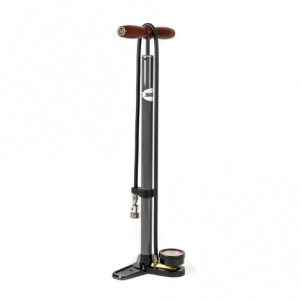
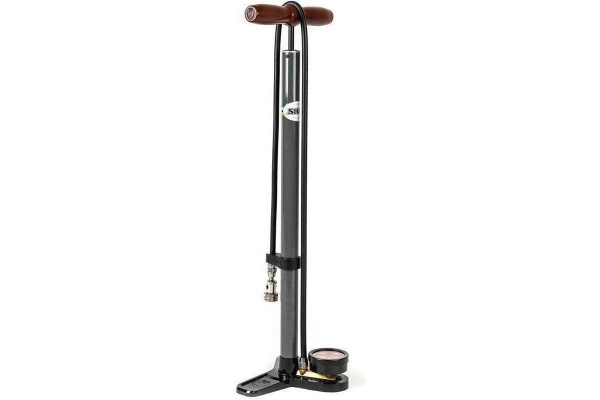
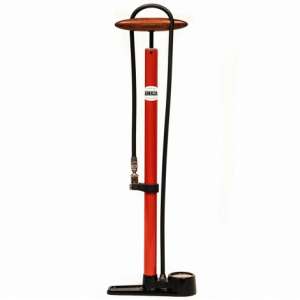
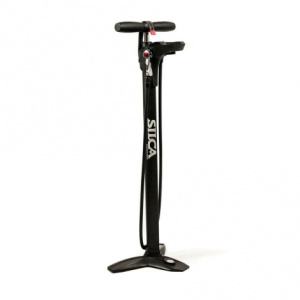
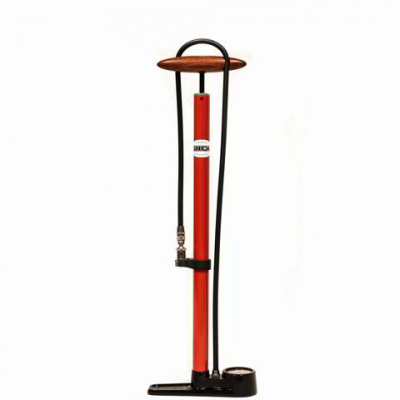
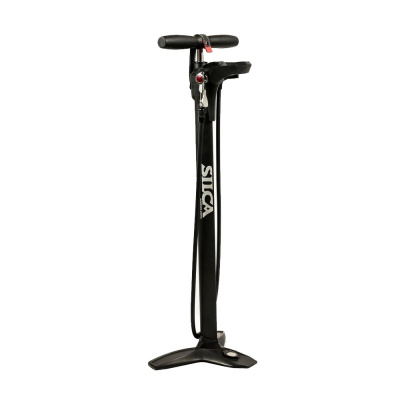
The range spans from the compact Pista, which travels well and handles everything from road tyres to gravel tubeless, up to the workshop-grade SuperPista Ultimate with its linear-bearing shaft and magnetic chuck docking. Every model uses 1% accuracy laboratory-grade gauges - that's the kind of precision that actually matters when you're dialling in tubeless pressures for a wet Welsh bridleway or setting up tubulars for a cyclocross race. UK riders also get a practical advantage here: Silca's 731 leather plunger washers hold up far better than rubber O-rings in cold, damp British sheds, where standard seals tend to perish over a winter or two. If you've ever had a cheap pump lose its seal mid-session, you'll understand why that matters. Compare the best UK prices on Silca track pumps below.
Prices and availability can change quickly. Delivery charges are not always included in listed prices.
Final price, stock status and delivery terms are set by retailer. We may receive a commission on purchases made.
Valve Compatibility and the Hiro Chuck Explained
All current Silca floor pumps handle Presta and Schrader valves as standard, covering road, MTB, gravel, and most urban bikes without an adaptor faff. Dunlop compatibility varies by model, so check the spec if you're running older Dutch-style valves.
The headline piece of tech here is the Hiro locking Presta chuck. Where most pump heads rely on a rubber-gripper that you push straight on and hope stays put, the Hiro uses a low-profile side-lever locking mechanism. That design means it seats properly on the valve with a firm click and doesn't blow off under high pressure - useful on a wet, muddy valve after a Peak District ride when you're trying to hit 90 PSI in a hurry. It's also engineered specifically for the tight valve cutouts on aerodynamic disc wheels, which are notoriously awkward for bulkier pump heads. So yes, the Hiro chuck works cleanly with disc wheels - the compact profile clears the rim bed without the usual wrestling match.
Looking for on-the-bike inflation or suspension tuning? View our ranges of Silca Mini Pumps, Silca Frame Pumps, Silca Electric Pumps, and Silca Shock Pumps. For replacement hoses and chucks, visit our Silca accessories pages.
Pista, SuperPista, and SuperPista Ultimate: What You Actually Get at Each Level
Silca's floor pump lineup has a clear hierarchy, and knowing where each model sits saves you from either overspending or underbuying for your actual needs.
The Pista is the entry point - though entry point is relative with Silca. It's compact, lighter than the bigger models, and built around a flat-profile base that makes it easier to store or pack for travel. The barrel is smaller, which means slightly more strokes to fill a big-volume tyre, but the gauge accuracy and leather washer construction are shared across the range. If you're a road or gravel rider with one bike and a tidy garage, the Pista does everything you need without taking up half the floor space.
Step up to the SuperPista and you get a noticeably larger barrel - fewer strokes to seat a tubeless tyre, which is a genuine quality-of-life improvement if you're doing multiple bikes or running higher-volume rubber. The base is heavier and wider, so it stays planted when you're leaning into the stroke, and the gauge is larger and easier to read at a glance. It's the one most home mechanics with a small collection of bikes tend to gravitate towards once they've used it.
The SuperPista Ultimate is the pro-tier option, and the key differentiator is the linear bearings in the pump shaft. On a standard pump, friction in the barrel builds up over time - you can feel it as that slight stiffness mid-stroke. Linear bearings eliminate that almost entirely, giving you a smooth, consistent pull and push from the first stroke to the last. Add in magnetic chuck docking (so the head parks neatly on the pump body rather than dangling on the hose) and a co-branded laboratory-grade gauge, and you've got something that genuinely behaves like professional workshop equipment. If you're a mechanic running a small service set-up, or simply someone who appreciates tools that work perfectly every time, the Ultimate earns its place.
For a sense of where the competition sits, Lezyne track pumps offer strong build quality at a lower price point, and Topeak floor pumps cover a wide range of mid-market options - but neither matches Silca's full rebuildability or the leather washer construction. Park Tool track pumps are a workshop staple for good reason, though Silca's gauge accuracy edges ahead on precision.
Keeping Your Silca Running: UK Shed Conditions and Servicing
Cold, damp British garages are genuinely hard on pump seals. Standard rubber O-rings go brittle and lose their grip over a winter - you'll notice it as a pump that feels strong in September and limp by March. Silca's 731 leather plunger washers handle this differently. Leather is naturally oil-retaining and more dimensionally stable across temperature swings, which means a well-maintained Silca pump keeps its barrel seal through years of cold storage that would finish off a cheaper pump.
The maintenance involved is minimal but worth doing. Every six to twelve months, add a few drops of Silca NFS Pump Blood or a quality synthetic oil directly to the leather washer. That keeps the leather supple and ensures a proper high-pressure seal inside the barrel - a dry leather washer will start to slip and you'll feel the pump losing efficiency on the upstroke. It takes about thirty seconds and it's the only regular maintenance the pump needs.
The broader point about rebuildability is worth spelling out: every wearing component on a Silca pump - the leather washer, the chuck, the hose, the gauge - is available as a separate replacement part. That's not common in this category. Most pumps, even good ones, are effectively disposable when something fails. A Silca pump is closer in philosophy to a quality hand tool: repair it, don't replace it. That's part of why the lifetime warranty carries real weight rather than being marketing copy.
If you're building out a proper home workshop alongside your pump, Silca's tool range and tubeless sealant are worth a look - the attention to detail carries through everything they make.
Silca Track Pumps FAQs
Are Silca track pumps worth the premium price?
If you're comparing on upfront cost alone, there are cheaper options - Lezyne and SKS both make solid pumps for less. But a Silca is fully rebuildable with replacement parts that are genuinely available. You're not buying a pump for five years; you're buying one for twenty. When you frame it that way, the maths shift considerably in Silca's favour.
How do I maintain the leather washer on a Silca pump?
Every six to twelve months, put a few drops of Silca NFS Pump Blood or a decent synthetic oil onto the leather washer. That's it. The oil keeps the leather from drying out and cracking, which maintains the seal inside the barrel. A dry washer loses efficiency fast - you'll feel it as slippage on the upstroke before it becomes a proper problem.
Does the Silca Hiro chuck work with disc wheels?
Yes. The Hiro locking Presta chuck uses a side-lever design with a low-profile head that's specifically sized to fit through the narrow valve cutouts on aerodynamic disc rims. Where a standard push-on chuck can clash with the rim bed, the Hiro seats cleanly and locks without the usual clearance issues.