
Pinarello E-Bikes
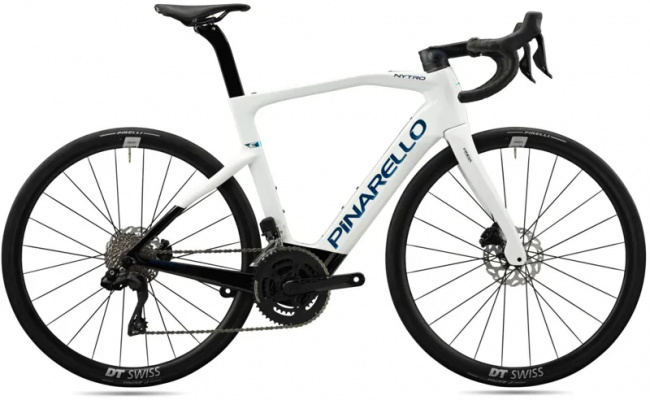
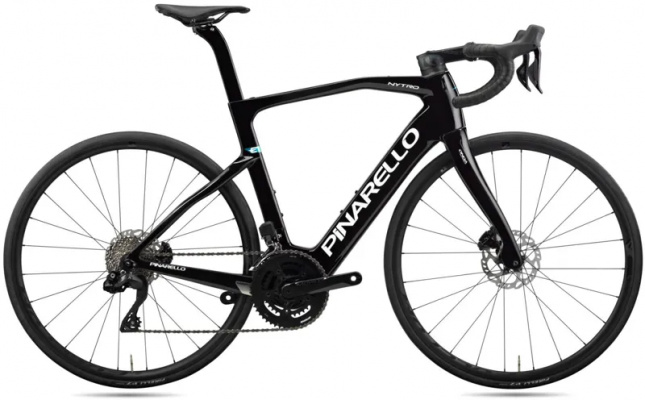
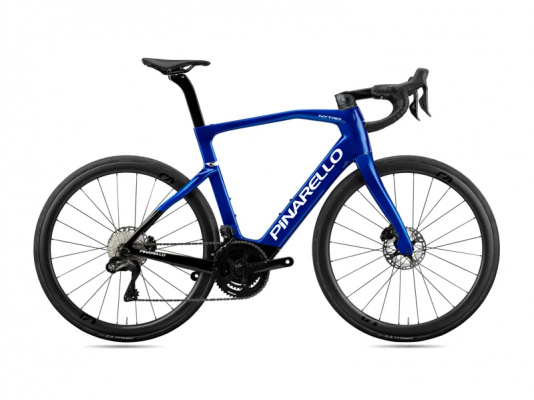
Pinarello E-Bikes don't ask you to compromise on the things that made the brand famous in the first place. The Nytro lineup carries the same Torayca carbon construction, asymmetric frame geometry, and Onda fork DNA as the road bikes that have won multiple Grand Tours - only now there's a near-silent motor tucked inside. We're talking about a stealthy tailwind, not a motorbike. The TQ-HPR50 motor system delivers 50Nm of torque with a harmonic pin ring transmission that's acoustically closer to a conventional drivetrain than anything you'd expect from an e-bike. Once you push past the UK's 15.5mph assist limit, it disengages completely with zero drag, so the bike simply rides like a very good road or gravel machine. That matters whether you're chasing the fast group on a Sunday club run through the Yorkshire Dales or grinding up a steep Peak District lane in February. The Nytro E-Road and Nytro E-Gravel cover both scenarios with a level of finish and handling precision that most electric bikes don't get close to. If you've been waiting for a Pinarello electric bike that doesn't look or feel like a compromise, the Nytro range is worth your serious attention.
Prices and availability can change quickly. Delivery charges are not always included in listed prices.
Final price, stock status and delivery terms are set by retailer. We may receive a commission on purchases made.
Decoding the Pinarello E-Bike Lineup
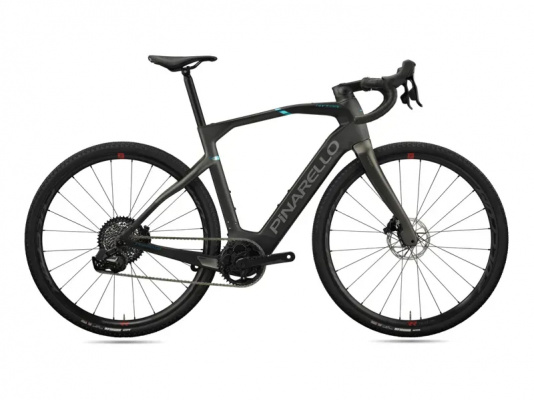
The Nytro family splits into two distinct models: the Nytro E-Road and the Nytro E-Gravel. The road version sits on a geometry that mirrors conventional e-road proportions - relatively aggressive stack and reach numbers, narrow tyre clearance suited to 28 - 32mm road rubber, and a build spec that'll feel immediately familiar if you've ever spent time on a Pinarello road bike. The gravel variant opens things up, accepting tyres up to 700x50c, which changes the whole conversation for UK riders who want to mix tarmac with bridleways or farm tracks.
Within each model, Pinarello runs three trim levels. The E9 is the flagship - Torayca T900 carbon layup, top-tier groupset options, and the lightest build weights in the range. The E7 sits in the high-performance bracket, still seriously capable but with a slightly different carbon specification. The E5 uses T700 carbon fibre and represents the entry point into the range; it's still a premium build by any reasonable measure, just without the marginal gains obsession of the E9. Practically speaking: if you're primarily riding sportives and club routes, the E7 hits a strong balance of performance and value. The E9 is for riders who want the closest possible experience to a non-assisted Pinarello. The E5 makes sense if you're new to this segment and want to assess whether an e-road bike fits your riding before going all-in.
The Nytro E-Gravel deserves a separate mention for UK buyers specifically. If your rides regularly involve gated roads, canal towpaths, or the kind of loose Pennine bridleways that destroy a standard road bike's confidence, the extra tyre volume and slightly more relaxed geometry make a meaningful difference. Think of it as the Nytro that'll do a wet Saturday morning gravel loop without you second-guessing every puddle. For a broader look at what Pinarello offers off the electric range, the Pinarello gravel bike lineup gives useful context on geometry philosophy.
The Tech That Sets These Apart
Pinarello's asymmetric frame design is one of those details that sounds like marketing until you understand what it's actually doing. On a standard bike, the drivetrain side of the frame handles far more stress than the non-drive side - so Pinarello builds each side with different carbon layup thicknesses and tube profiles to balance that load. On an e-bike, the motor adds its own torque forces into the bottom bracket area, which makes this asymmetric approach even more structurally relevant. The result is a frame that manages both drivetrain pull and motor torque without the lateral flex that can blunt handling precision.
The Onda fork is Pinarello's signature wave-shaped front end, and it's carried across into the Nytro range. It's not just aesthetic - the specific curve geometry is designed to offer a measurable degree of vertical compliance at the front without sacrificing steering accuracy. On rough UK roads, that translates to a front end that absorbs chip-seal buzz without going vague in corners. It's a fine line, and Pinarello have been refining it for years across the wider frame range.
The TQ-HPR50 motor is where the Nytro genuinely separates itself from most of the e-road market. The harmonic pin ring transmission system replaces the conventional gear-and-chain arrangement inside the motor with a mechanism that runs with barely any mechanical noise. Older e-bike motors - including earlier Fazua Evation-equipped versions of the Nytro - had a characteristic hum that announced your presence on every climb. The TQ system doesn't. It's integrated into the bottom bracket area so cleanly that the battery and motor housing are essentially invisible within the frame. The 360Wh integrated battery sits inside the down tube, keeping the centre of gravity low and the silhouette clean.
Compared to Italian rivals like Bianchi e-bikes or broader alternatives such as Cannondale e-bikes, the Nytro's TQ-powered builds are noticeably quieter and lighter - a meaningful difference if weight and discretion matter to you more than raw motor output.
Running a Nytro Through a UK Winter
One question worth asking before you buy any e-bike for year-round UK use is how much faff is involved in keeping it clean and functional. The Nytro's motor casing and charging port are well-sealed, but UK road salt is corrosive and persistent. Rinse the bottom bracket area and charging port housing after any wet ride, dry the port before plugging in, and don't leave salt residue sitting on the motor casing through a week of non-use. It's the same discipline you'd apply to any quality groupset - just worth being deliberate about it.
Tyre clearance on the Nytro E-Gravel (up to 700x50c) means you can run a proper winter tyre with enough volume to deal with muddy lanes without the bike squirming around. The road variant's clearance is tighter, so if winter base miles on mixed surfaces are your priority, the gravel model is the more sensible call. Fitting Pinarello mudguards will save your drivetrain and your riding kit on those grey November mornings when the road is more grit than tarmac.
One genuinely practical upside of the Nytro's weight - E9 models come in around 11.4kg - is that it'll go on a standard two-bike car rack without drama. That's not a given with heavier full-power e-bikes, which can push 22 - 25kg and require dedicated heavy-duty rack systems. Keep a track pump in the boot too - higher-volume gravel tyres in particular benefit from a proper check before you head out rather than relying on a mini pump.
Pinarello E-Bikes FAQs
How much does a Pinarello Nytro weigh?
Top-spec E9 models come in at around 11.4kg, which makes the Nytro one of the lightest e-road bikes available. That low weight is down to the combination of Torayca T900 carbon fibre in the frame and the compact TQ-HPR50 motor system, which adds far less bulk than a full-power mid-drive unit.
What motor does the Pinarello Nytro use?
Current Nytro models use the TQ-HPR50 motor, which produces 50Nm of torque and runs with near-silent operation thanks to its harmonic pin ring transmission. Earlier Nytro versions used the Fazua Evation drive system - worth checking the spec sheet if you're looking at older stock or pre-owned examples.
Can you ride a Pinarello e-bike without the battery?
Yes. The TQ-HPR50 motor is designed to produce zero drag when disengaged, so once you're above the UK's 15.5mph assist limit - or riding with the system off entirely - the bike behaves like a standard road or gravel machine. There's no resistance or mechanical heaviness from the motor unit.