
Patagonia Rucksacks
Patagonia rucksacks sit in a different category to most cycling packs - not because of brand cachet, but because the materials and construction genuinely hold up where cheaper alternatives don't. The flagship Black Hole® fabric uses a TPU-film laminate that sheds water aggressively, and the PFC-free DWR finish means you're not relying on chemistry that degrades after a couple of washes. That matters on a January commute through Bristol or a sodden autumn loop in the Cairngorms.
Across the range you get cycling-relevant features - hydration routing, breathable back panels, sternum straps that actually keep the load from swinging mid-descent - without the pack feeling over-engineered for a Tuesday morning. Patagonia also builds with NetPlus® 100% postconsumer recycled nylon on several models, so durability and environmental credentials aren't mutually exclusive here.
The range splits broadly between commuter-focused packs built around weather resistance and laptop protection, and trail-oriented options that prioritise ventilation and hydration capacity. Getting that choice right for your riding is what we'll walk you through below. Compare the current Patagonia lineup to find the right capacity, weatherproofing level, and fit for how and where you ride.
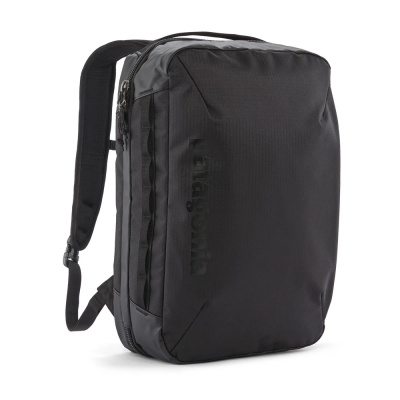
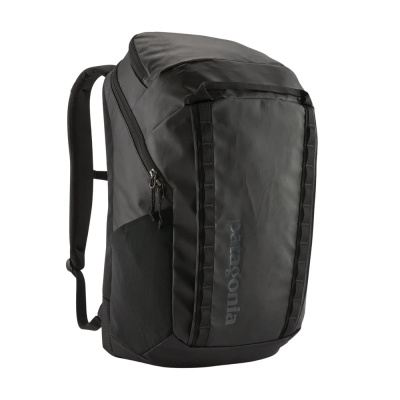
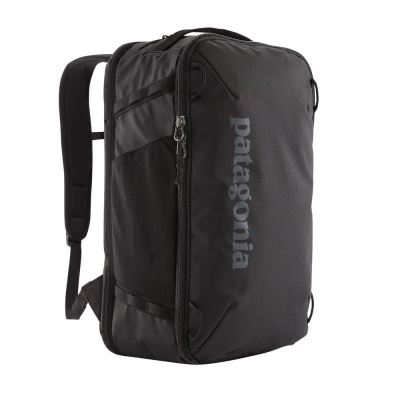
Prices and availability can change quickly. Delivery charges are not always included in listed prices.
Final price, stock status and delivery terms are set by retailer. We may receive a commission on purchases made.
Fit, Capacity and Cycling Compatibility
A rucksack that fits badly on a bike is a liability. Too long in the torso and the base digs into your lower back the moment you adopt an aggressive position; too short and the shoulder straps ride up and restrict your neck movement. Patagonia sizes most of its technical packs by torso length rather than just volume, which is worth paying attention to before you buy. Measure from the C7 vertebra at the base of your neck to the top of your hip crest - that number maps directly to the harness sizing on models like the Altvia series.
The sternum strap does more work than people give it credit for. On a road commute it's a minor convenience; on a rooty descent in the Quantocks it's what stops the pack from lurching sideways under braking. Look for a strap with a whistle buckle and some vertical adjustment - Patagonia fits this across the trail range as standard. Waist belts on the more voluminous packs add meaningful stability when you're loaded up with tools, a spare layer, and a full 3-litre hydration bladder.
Speaking of which - most of Patagonia's technical trail packs are hydration compatible, with a dedicated internal sleeve and a routed hose port. Capacity typically runs from 2L to 3L bladder compatibility. If you're doing long gravel days or remote MTB routes, check the specific model listing for bladder volume and whether the sleeve sits high enough to drain properly when you're bent over the bars. Helmet carry loops appear on the trail-focused models; the commuter-oriented Black Hole packs tend to skip this in favour of laptop sleeves and organisation pockets.
Patagonia Pack Hierarchy: Commute vs. Trail
The Black Hole series is Patagonia's workhorse commuter and travel range. The TPU-film laminate construction is the headline - it's not just water-resistant fabric, it's a structural material that resists abrasion from rack straps, lock loops, and the general abuse of daily riding. You get padded laptop sleeves, a clamshell opening that makes packing and unpacking fast, and enough organisation to keep a change of clothes separate from cables and keys. If your ride involves tarmac, year-round weather, and a need to look presentable at the other end, the Black Hole range is where to start. Brands like Chrome offer a similar commuter-first approach, but the Black Hole's weather resistance through the TPU laminate is noticeably more robust than most messenger-style alternatives.
The Altvia and Dirt Roamer series shift priorities toward the trail. Suspended mesh back panels create an air gap between the pack and your back - on a two-hour climb in the Brecon Beacons that gap is the difference between damp-from-sweat and actually functional ventilation. These packs are cut slightly shorter to clear a helmet when you're tucked, and the harness geometry is built around a more forward-leaning riding position. Hydration is front-of-mind here: the internal organisation is stripped back and the bladder sleeve is generously sized. If you're running technical singletrack or multi-hour gravel loops, this is your tier.
For riders who genuinely split time between commuting and weekend trail riding, the mid-range Black Hole packs with a hydration port offer a reasonable compromise - though you will sacrifice some back ventilation compared to the dedicated trail options. Worth knowing before you commit. Evoc and Deuter both offer trail-specific packs with strong ventilation systems if back breathability is your absolute priority, but neither matches Patagonia's weather resistance on the commuter side.
Surviving UK Weather: DWR, Zips and Maintenance
UK riding chews through gear in specific ways. Road salt in winter works into zip coils and corrodes the sliders - it's a slow puncture for your zippers. Trail grit is faster; fine particles act like grinding paste on every zip cycle. The fix is boring but effective: brush the zips clean after muddy rides before the grit dries and sets, and run a light silicone spray along the coil every few months. Not lubricant spray - silicone. It won't attract more dirt and it keeps the action smooth without degrading the zip tape.
The PFC-free DWR finish on Patagonia packs is genuinely effective for the kind of persistent drizzle that defines a November ride in the Peak District. Where it has limits is sustained, heavy rain over several hours. The Black Hole's TPU-film laminate compensates here by being inherently water-resistant at the fabric level, but the seams aren't fully taped on most models. In a proper downpour, a pack rain cover is still worth carrying - something compact that clips to the outside is fine. Think of the DWR as your first line and the cover as backup, not the other way around.
Washing without wrecking the DWR is straightforward. Let mud dry fully first, then brush it off the fabric and especially around the zip coils - wet mud pushed into a brush stroke just embeds it further. Wipe the shell down with a damp cloth and a small amount of mild soap, rinse clean, and air dry away from direct heat. Machine washing strips the DWR coating faster than almost anything else, so avoid it even on a gentle cycle. If the DWR starts to bead poorly after extended use, a low-heat tumble dry (15 - 20 minutes, no heat setting) can reactivate it - the heat re-bonds the finish to the ripstop nylon fibres. That's a Patagonia-recommended approach and it works.
If you're riding in low light - winter commutes, early morning trail starts - worth noting that the Black Hole packs don't carry reflective panels as standard. A clip-on rear light through one of the lash points sorts that quickly. For broader outdoor kit that pairs with your pack, our Patagonia Outdoor Equipment page covers bags and camp gear, and if you're building out a full wet-weather kit, the Patagonia Jackets range and Patagonia Base Layers are worth a look alongside your pack choice. For hydration system options that drop straight into a compatible pack, CamelBak bladders are widely available and sized to fit most Patagonia hydration sleeves.
Patagonia Rucksacks FAQs
Are Patagonia rucksacks waterproof enough for UK cycling?
The Black Hole® models with TPU-film laminate handle heavy showers well - the fabric is inherently weather-resistant rather than just coated. That said, the seams aren't fully taped, so in sustained, all-day downpours a rain cover is sensible backup. For typical UK drizzle and short sharp showers, the PFC-free DWR finish does the job without extra help.
Can you fit a hydration bladder in a Patagonia daypack?
Most of Patagonia's trail-oriented packs - the Altvia and Dirt Roamer series in particular - include a dedicated hydration sleeve and hose routing port, typically accommodating 2L to 3L bladders. The commuter-focused Black Hole packs vary by model, so check the spec listing for your chosen size before assuming compatibility.
How do you clean mud off a Patagonia cycling backpack?
Let the mud dry completely before touching it - wet mud spreads further. Brush off the dried grit, paying close attention to zip coils where particles embed. Wipe down with a damp cloth and mild soap, then air dry. Avoid machine washing; it degrades the DWR coating faster than regular field use. A short low-heat tumble dry can reactivate the DWR if it starts to underperform.