
Most Pannier Racks
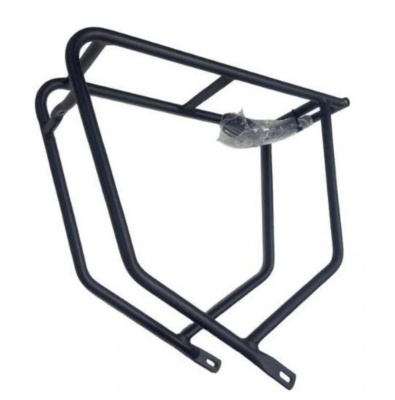
Most pannier racks are the kind of kit that only makes sense when you understand what Most actually is - Pinarello's own in-house component label, designing parts that slot directly into the geometry of specific Pinarello frames rather than taking a one-size-fits-all approach. That tight design brief is exactly why these racks feel so considered. Lightweight tubular alloy construction keeps the added weight sensible, while the mounting geometry is drawn up to suit the rear triangles of Pinarello's gravel and commuter models without the flex or rattle you get from generic aftermarket options. The aerodynamic profiling isn't just visual tidiness either - it reduces drag on longer commutes and loaded gravel days where every watt counts. Whether you're loading up for a daily run across town or packing for a weekend away, the rack needs to sit flush, stay put, and not turn your bike into a shopping trolley on wheels. These do that job well on the right bike. Browse the full Most rear bike racks range below, check frame compatibility carefully before you buy, and use the sections beneath the grid to make sure you're getting the right rack for how you actually ride.
Prices and availability can change quickly. Delivery charges are not always included in listed prices.
Final price, stock status and delivery terms are set by retailer. We may receive a commission on purchases made.
Fitting Most Racks: What You Need to Check First
Most pannier racks are built around Pinarello-specific geometry integration, which means compatibility isn't a box-ticking exercise - it's the whole conversation. These racks are designed for Pinarello frames that carry dedicated mounting eyelets on the rear triangle and seatstay. If your frame doesn't have those eyelets machined in, the rack simply won't fit safely. Full stop. Models like the Pinarello Grevil and Paris are built with rack mounts as standard; pure race bikes in the Dogma line are not, and no amount of adaptor clamping will change that reliably.
Before you order, measure your rear triangle clearance with a pannier-loaded tyre in mind. Wider gravel tyres eat into that space quickly, and the last thing you want is a rack strut sitting millimetres from a spinning tyre. On disc brake compatible setups, check that your frame's outboard eyelets allow the struts to route cleanly around the caliper - interference here isn't just annoying, it's a safety issue. Use the correct bolt lengths specified for your frame too; on carbon rear ends, an over-length bolt bottoming out in a blind thread can crack the layup from the inside without showing a mark on the surface. If your Pinarello frame lacks rack mounts entirely, Most frame bags are worth a look as a mount-free alternative for carrying kit.
For riders on non-Pinarello bikes seeking a more universal fit, Ortlieb pannier racks and SKS pannier racks are engineered to broader compatibility standards and worth comparing.
Commuting Load vs. Touring Load: Which Most Rack Do You Need?
Not all Most rear bike racks are built for the same job, and payload capacity is where the range splits clearly. Lighter, minimalist designs sit at the commuter end - typically rated to around 15 - 18 kg - and they're built for the kind of load that fits in a single pannier: laptop, lunch, a change of kit. The tubing on these is trimmed back, the platform is narrower, and there's no redundant structure. Neat, efficient, and fine for daily use on smooth tarmac or well-maintained cycle paths.
Step up to the touring-oriented models and the construction shifts noticeably. Additional strut supports triangulate the platform, stiffening the rack under asymmetric loads - the kind you get when one pannier is packed and the other isn't, which is most of the time in real use. Some models also incorporate integrated mudguard mounts, useful if you're running full-length guards on a gravel or commuter build. Payload ratings push toward 25 kg on the heavier-duty options. That's meaningful headroom for multi-day touring with camping kit, but it's worth noting that the lightweight tubular alloy construction across the range means Most racks aren't competing with steel expedition racks for sheer brute-force capacity - the trade-off is a noticeably lower overall weight penalty on the bike.
If you're undecided between a dedicated rack and a lighter soft-luggage setup, Most saddles designed for the same Pinarello platform pair well with a saddlebag arrangement for minimal-load days. And if you're comparing rack options across brands, Blackburn pannier racks offer a well-regarded mid-range touring option, while Cube pannier racks are worth a look if you're running a Cube frame alongside.
Keeping Most Racks Solid Through a UK Winter
Road salt is genuinely destructive on rack hardware. UK winters - particularly from November through to March on salted commuter routes - will seize aluminium bolts into alloy eyelets faster than most people expect. The fix is simple and takes two minutes at installation: coat every thread, every bolt shank, and every contact surface with copper-based anti-seize compound or marine-grade grease before it goes in. Don't skip this. A seized bolt in a carbon rear eyelet means a drill, a helicoil insert, and a workshop bill you didn't budget for.
The aerodynamic profiling on Most's tubular alloy rails looks clean but creates a specific problem at the pannier hook contact points. Abrasive mud paste - the thick, gritty stuff you pick up on winter lanes or unsurfaced cycle routes - works like sandpaper against the anodised finish wherever a hook rocks or vibrates against the rail. Over a season, that wears through to bare alloy, which then oxidises and eventually pits. A strip of clear helicopter tape - the 3M stuff, or similar urethane film - applied to the rail sections where your panniers hook on will protect the finish without adding meaningful weight or altering the fit. Check it every few months and replace when it starts to lift at the edges.
Drop the rack off the bike for a proper clean every few weeks through winter rather than leaving it on and hosing around it. Bolt heads trap grit under their flanges, and that grit holds moisture against the frame eyelet even after the bike dries. It's a small habit that adds years to both the rack and the frame hardware.
Most Pannier Racks FAQs
Do Most pannier racks fit all Pinarello bikes?
No. Most racks need dedicated mounting eyelets on the frame, which Pinarello only includes on specific gravel, touring, and commuter models - the Grevil and Paris being the main examples. Race-focused bikes like the Dogma series don't carry those mounting points, so the rack has no safe attachment option regardless of how it's configured.
What is the weight limit for a Most rear rack?
Payload capacity varies by model, typically ranging from around 15 kg on lighter commuter racks up to 25 kg on the more heavily braced touring versions. The stamped weight limit on the rack itself is the figure to follow - exceeding it puts stress on the mounting eyelets and risks frame damage, particularly on carbon rear triangles.
Can I fit a Most pannier rack on a bike with disc brakes?
Yes, provided your frame has the correct outboard eyelets to route the struts clear of the disc caliper. Most's current rack designs account for disc brake clearance, but you still need to check the strut path on your specific frame before fitting. Caliper interference isn't something you want to discover mid-ride.