
KMC 10 Speed Cassettes
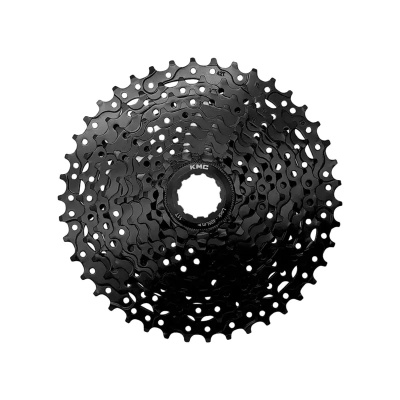
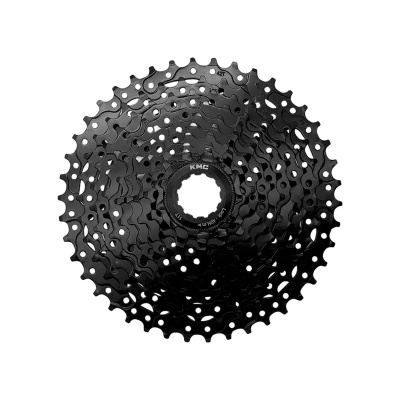
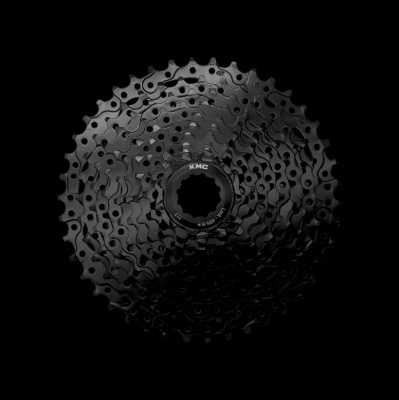
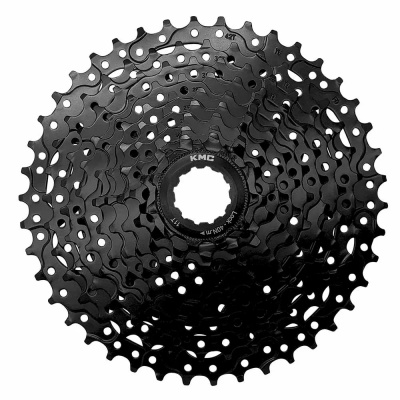
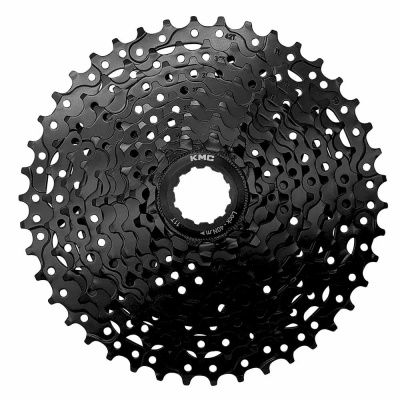
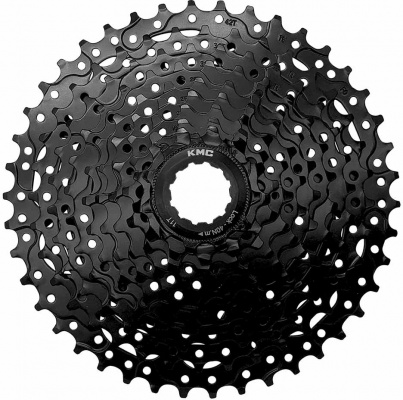
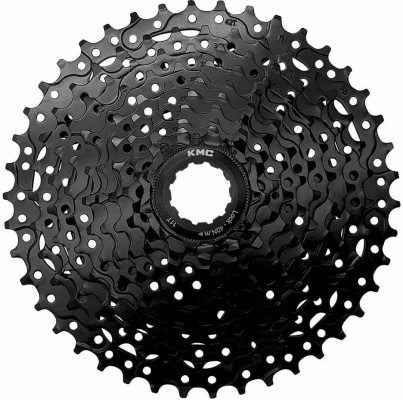
A KMC 10 speed cassette brings the same engineering rigour that's made KMC chains a workshop staple to the rest of your drivetrain. High-tensile steel cogs, optimised tooth profiles, and carefully machined shifting ramps combine to give you gear changes that stay crisp even when you're grinding up a wet moorland drag with your legs screaming. That's not a small thing on a grey November morning.
Whether you're swapping out a worn block on a winter commuter, refreshing a hardtail MTB that's seen a few too many muddy seasons, or sourcing a cassette tough enough to handle the torque of a mid-drive e-bike motor, KMC covers the range. Their cassettes slot straight onto any standard Shimano HG freehub body - no adapters, no faff - making them a direct, cost-effective replacement for OEM parts that have quietly given up the ghost.
Compared with Shimano 10-speed cassettes, KMC often lands at a sharper price point without sacrificing the steel construction you need for longevity. If your drivetrain has been neglected through winter, a fresh KMC cassette paired with a new chain is one of the fastest ways to make an old bike feel sorted again.
Prices and availability can change quickly. Delivery charges are not always included in listed prices.
Final price, stock status and delivery terms are set by retailer. We may receive a commission on purchases made.
Will a KMC Cassette Fit Your Bike?
KMC 10-speed cassettes use the standard Shimano Hyperglide (HG) spline pattern - the same interface used across Shimano's 8, 9, and 10-speed groupsets and mirrored by SRAM's HG-compatible freehubs. In practice, that means they slide straight onto the vast majority of freehub bodies you'll find on UK bikes built over the last fifteen years. Road bikes, hardtails, hybrids, commuters - if it runs 10-speed HG, you're good.
The one check worth doing before you order is your rear derailleur's maximum sprocket capacity. Moving from a close-ratio 11-28T block to an 11-42T wide-range cassette demands a long-cage derailleur. Short or medium cages won't take up the extra chain slack, and you'll end up with a drivetrain that shifts like it's arguing with itself. Check the cage spec in your derailleur's documentation before committing to a bigger range. SRAM 10-speed cassettes follow the same HG spline convention, so the same rule applies there.
One more thing: always fit a new chain alongside a new cassette. Worn chain links have stretched into the gaps between your old cogs - drop them onto fresh steel and they'll skip under load almost immediately. Pair your new cassette with a KMC 10-speed chain, and you get the additional benefit of tooth profiles and shifting ramps that are engineered to work together. It's not marketing - the geometry genuinely aligns more precisely when both parts come from the same design team.
Picking the Right Gear Range
KMC's 10-speed cassette range covers the spread from tight road ratios through to wide-range off-road blocks, so knowing what you actually need saves you fitting the wrong thing.
An 11-36T cassette sits in the middle ground - comfortable on gravel bikes, well-matched to older 2x10 MTB drivetrains, and a sensible pick for touring setups where you want a reasonable bail-out gear without the mechanical complexity of a massive jump between sprockets. The steps between gears stay manageable, which matters when you're trying to hold a rhythm on a long drag rather than hunting for the one gear that doesn't feel wrong.
Step up to an 11-42T and you're looking at 1x10 MTB conversions or e-bike applications. The range is wide enough to replace a front derailleur entirely on most trail builds, and the big sprocket gives you something genuinely useful on steep, loose climbs - the kind you find in the Welsh valleys or on north-facing Scottish hillsides where the gradient suddenly bites. For e-bikes specifically, KMC's high-tensile steel construction is the key spec. Mid-drive motors apply torque loads that chew through softer alloy cogs quickly; the harder steel resists that deformation and keeps shifting ramps functional for far longer. Yes, full-steel cassettes carry a small weight penalty against alloy-spider designs, but on a bike that already weighs 22kg, that's a trade-off most riders will take without hesitation.
KMC's Fluid Shift Technology shapes the ramps and tooth profiles to smooth out gear changes under load - the kind of shift you're making halfway up a climb when you've left it a fraction too late. It won't disguise a badly indexed derailleur, but with a well-set-up drivetrain it makes those borderline shifts noticeably cleaner. Sunrace 10-speed cassettes compete in a similar price bracket and are worth comparing if you're after wide-range options, though KMC's integration with their own chain profiles gives them a measurable edge on shifting consistency.
Keeping Your KMC Cassette Alive Through a UK Winter
British winters are brutal on drivetrains. What builds up on your cassette between October and March isn't just mud - it's a mix of silica grit, road salt, and fine particles that acts like grinding paste between your chain rollers and cog faces. Even quality steel wears faster than it should if you ignore it.
KMC's high-tensile steel construction handles this environment better than the softer alloys used on some budget cassettes, but maintenance still matters. Degrease the cassette properly every few rides during winter - not just a spray-and-wipe, but a proper soak with a brush worked between the sprockets. Road salt accelerates corrosion on exposed steel, so getting the salt off promptly makes a real difference to how long the cogs stay sharp.
The single biggest thing you can do to protect a new cassette is monitor chain wear. A chain wear indicator is a cheap tool that takes ten seconds to use. Replace your chain at 0.75% wear rather than waiting until it's visibly stretched - by 1% the chain has been filing grooves into your cog teeth, and no amount of cleaning recovers that. Catching it at 0.75% typically means you'll get two or three chain replacements before the cassette itself needs changing. That's a meaningful saving over a season.
When you're fitting the cassette, torque the lockring to 40Nm. Under-torquing it is a common error - it feels tight by hand, but it isn't. A loose lockring creaks under hard pedalling and can work free on rough ground. You'll need a cassette lockring tool and a chain whip to do the job properly; the KMC tools range covers both. MicroShift 10-speed cassettes are another durable option worth a look if you're comparing steel-construction alternatives at a similar price.
KMC 10 Speed Cassettes FAQs
Are KMC 10-speed cassettes compatible with Shimano drivetrains?
Yes. KMC 10-speed cassettes use the standard Shimano Hyperglide (HG) spline pattern, so they fit directly onto any HG-compatible freehub body and work with Shimano 10-speed derailleurs and shifters without modification. SRAM HG-compatible freehubs are equally straightforward.
Can I use a KMC 10-speed cassette on an e-bike?
Yes, and KMC's high-tensile steel construction makes them a particularly sensible choice here. Mid-drive motors generate torque loads that wear softer alloy cogs quickly. The harder steel resists that deformation, keeping the tooth profile and shifting ramps intact for longer under the sustained load an e-bike drivetrain produces.
Do I need a new chain when installing a new cassette?
Always fit a new chain with a new cassette. A worn chain has stretched to match the spacing of your old cogs - put it on fresh sprockets and it'll skip under load almost immediately. Pairing a KMC cassette with a KMC 10-speed chain also ensures the tooth profiles and shifting ramps are aligned as designed.