
Kenda Commuter And Hybrid Tyres
Kenda commuter and hybrid tyres sit in a practical, no-nonsense corner of the market - decent rubber at a price that won't make you wince when you're replacing a tyre that got chewed up by a glass-strewn cycle lane. That's the reality of riding in most UK cities, and Kenda's urban range is built with exactly that in mind.
The lineup covers fast-rolling 700c slicks for daily tarmac work, mixed-surface options for canal towpath regulars, and E-bike certified casings rated to 50km/h under the ECE-R75 standard. Across those options, you'll find Kenda's proprietary K-Shield puncture protection - an aramid and ceramic particle layer bonded under the tread - doing the heavy lifting against flint, glass, and the general grime urban roads throw at you.
Worth noting: if your riding tips heavily off-road, the Kenda MTB Tyres range is worth a look instead. And when you're upgrading your rubber, it makes sense to grab a fresh set of Kenda Inner Tubes at the same time - saves a return trip to the workshop when you're sorting the whole wheel out.
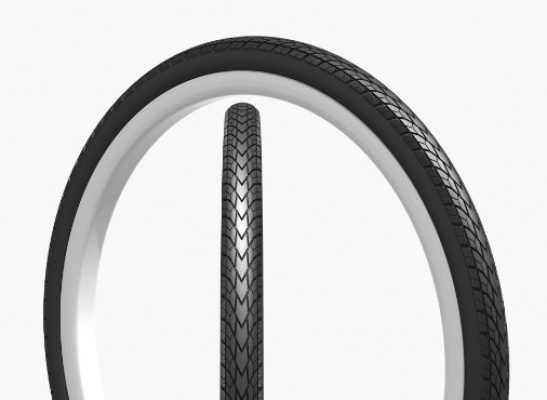
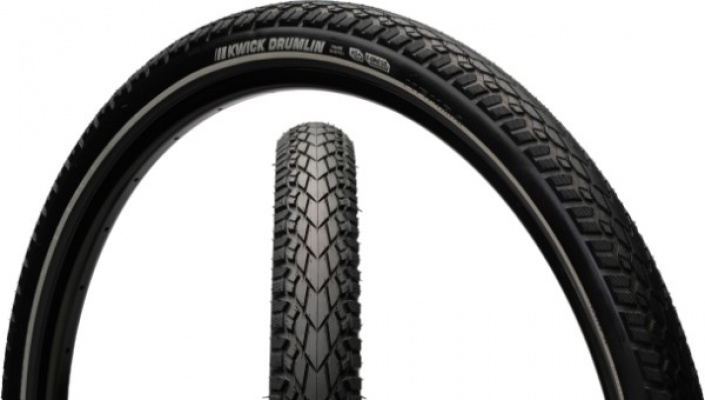
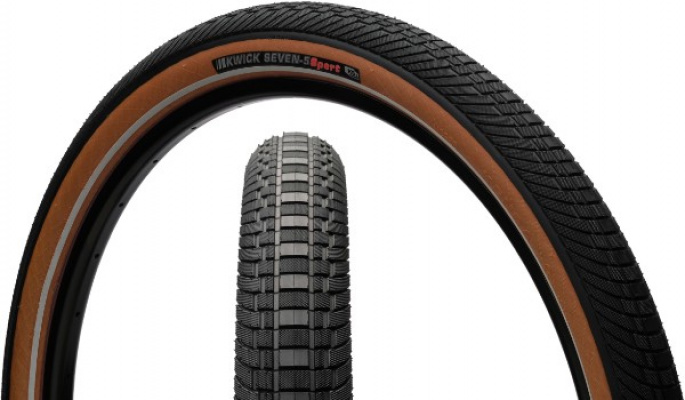
Prices and availability can change quickly. Delivery charges are not always included in listed prices.
Final price, stock status and delivery terms are set by retailer. We may receive a commission on purchases made.
Getting the Right Fit: Sizes, Standards and Frame Clearance
Tyre sizing trips up more riders than it should. The ETRTO system is the one to trust: a tyre marked 37-622 is a 700x35c in old money - 622 is the bead seat diameter in millimetres, 37 is the casing width. The 700c designation covers the vast majority of hybrid and commuter bikes in the UK, so most Kenda commuter options will slot straight in. Where it gets trickier is mudguard clearance. A 700x38c tyre sounds like a modest step up from a 35c, but on a frame with tight fork crown clearance it can rub badly once you factor in a full mudguard. Check your frame's stated tyre clearance and leave at least 5mm each side.
Rim width matters too. A 37mm casing on a narrow 17mm internal rim will balloon into a slightly rounded profile and change how the tyre feels in corners - it's not dangerous, but it's not ideal either. Current hybrid rims tend to run 19 - 21mm internally, which suits Kenda's 35 - 47mm commuter widths well.
If you're running an e-bike, pay attention to the E-Bike Ready designation. Kenda's ECE-R75 certified casings are rated for sustained 50km/h use - the E-50 rating - and use a reinforced carcass to handle the additional load and torque that heavier e-bikes generate. A standard commuter tyre isn't built for that stress. Running one on a speed pedelec is a false economy that can end with sidewall failure. If your bike tops out at 25km/h, an E-25 rated tyre covers you fine and will typically weigh a little less.
Kwick or Khan: Choosing Between Kenda's Urban Models
Kenda's commuter range splits into two reasonably distinct families. The Kwick series - covering models like the Kwick Journey and Kwick Roller - is aimed squarely at fast urban rolling. Tread patterns are minimal, centre lines are close to slick, and rolling resistance is kept low. These are the tyres you want if your commute is mostly tarmac, maybe some shared path, and you want to feel like you're not dragging an anchor on the flat. The Kwick Roller in particular suits faster riders who prioritise speed over outright puncture defence.
The Khan II is a different animal. A more pronounced tread pattern with shoulder knobs makes it comfortable on towpaths, light gravel and compacted mud - the sort of mixed-surface routing that a lot of UK riders use to avoid main roads. The centre tread stays relatively smooth to keep rolling resistance manageable on tarmac sections, but those shoulder knobs give you genuine confidence when the path turns greasy. If your commute involves any of the major canal networks, the Khan II handles that transition without you having to think about it.
Then there's the casing question. Standard Kenda commuter casings are fine for low-debris routes, but most urban UK riders will want to step up. K-Shield - a layer of aramid fibres and ceramic particles bonded beneath the tread - cuts through the puncture rate noticeably on glass-heavy city streets. K-Shield Plus adds extra thickness to that layer for maximum urban protection; it costs a touch more and adds a few grams, but if you're commuting through areas with heavy road debris or you're simply fed up fixing flats before work, it's worth it. The SRC compound (Standard Rubber Compound) runs across most of the range and prioritises longevity over outright grip - sensible for high-mileage commuting where you need a tyre to last a season, not just a few weeks.
If you want to compare how Kenda's value positioning stacks up, Continental commuter tyres sit at the premium end of urban rubber, while Panaracer commuter tyres occupy a similar mid-range space to Kenda with a slightly different approach to puncture protection. Specialized commuter tyres are another option if you want integrated reflective features as standard across more of the range.
Pressures, Wear Checks and Surviving the UK Winter
Tyre pressure is one of those things riders set once and forget about for months. Don't. For most Kenda 700c commuter tyres in the 35 - 42mm width range, a working pressure somewhere between 50 and 70 PSI is appropriate - but that's a range, not a fixed answer. Your weight, load (panniers make a difference), and road surface all shift the optimum point.
In wet UK winters, dropping a few PSI from your summer setting gives the tread more contact patch and noticeably improves grip on greasy tarmac. The water-siping cut into Kenda's tread patterns needs that slight deformation to work properly - run the tyre too hard and the siping can't flex and disperse water effectively. Conversely, on a dry August commute you can push closer to the upper limit to cut rolling resistance. Check your tyre's sidewall for its stated max PSI and work down from there rather than up from zero.
Inspecting the SRC compound for wear is straightforward once you know what to look for. A squared-off centre profile - where the tyre looks flat across the top rather than rounded - means the rubber is worn and grip in corners will drop off. Run your finger along the sidewall too; small cuts from kerb strikes or debris are normal, but anything that shows casing threads through the rubber needs attention before it becomes a blowout. Puncture-resistant Kenda tyres with K-Shield still need this check - the protection layer covers the tread, not the sidewalls.
Reflective sidewall strips, fitted to several models in the Kenda commuter range, are worth factoring in if you're riding in low light. They're not a substitute for lights, but the extra visibility on dark winter mornings is a practical bonus rather than a marketing tick. If you're weighing up options and want a broader look at the category, Maxxis commuter tyres are another brand worth comparing for urban puncture protection at a similar price point.
Kenda Commuter And Hybrid Tyres FAQs
Are Kenda tyres good for commuting?
Yes, straightforwardly. The Kwick and Khan series are built for daily mileage on rough UK roads, with the SRC compound prioritising longevity over outright performance. K-Shield puncture protection keeps flat rates down, and the range covers everything from fast tarmac rolling to mixed-surface towpath use. Good value, solid durability.
What pressure should Kenda hybrid tyres be?
For most 700c Kenda hybrid tyres in the 35 - 42mm range, 50 - 70 PSI is a sensible working window. Drop toward the lower end on wet winter roads for better grip - the tread siping works best with a little give in the carcass. Push closer to the upper limit on dry summer tarmac to reduce rolling resistance. Always check the sidewall max and work from there.
Do Kenda commuter tyres have puncture protection?
Most do. K-Shield uses a layer of aramid fibres and ceramic particles under the tread to stop glass, flint and thorns before they reach the inner tube. K-Shield Plus adds extra thickness for heavier debris environments. Standard casing models exist at lower prices, but for UK city commuting the K-Shield versions are worth the small step up.