
Gusset Pedals
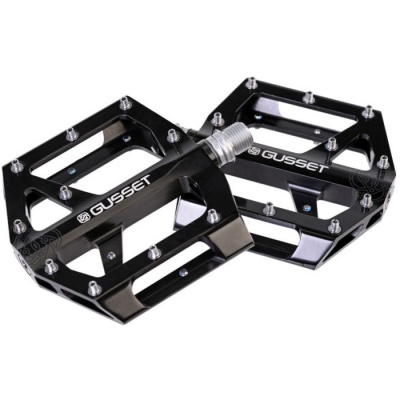
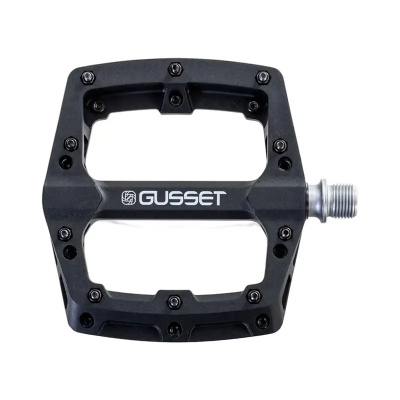
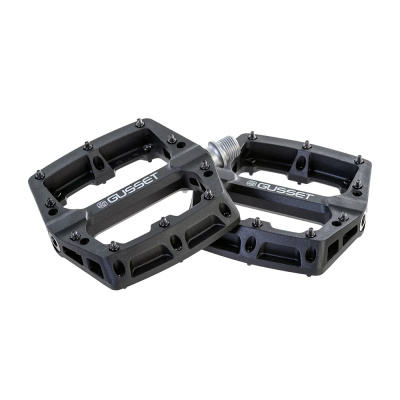
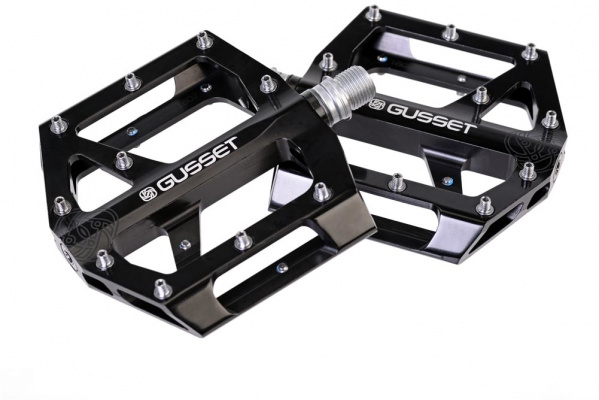
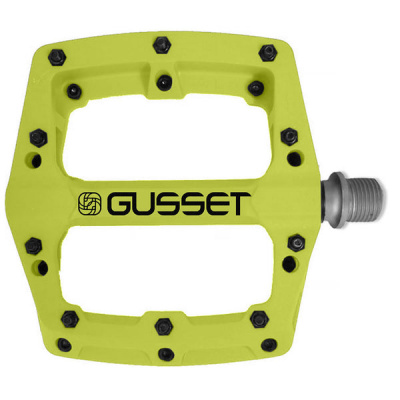
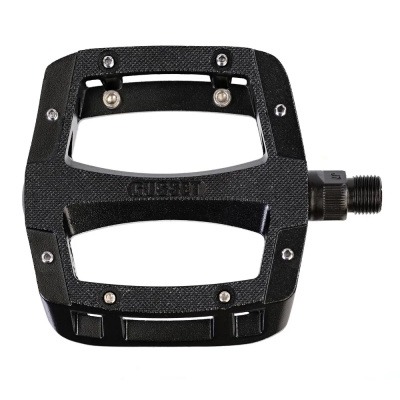
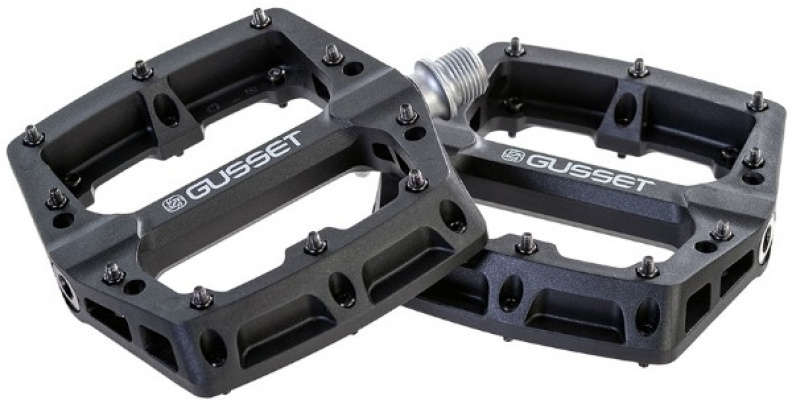
Gusset Pedals have been a fixture on UK dirt jumps and downhill tracks long enough that plenty of riders have never known a season without them. The lineup centres on two platforms: the Slim Jim, a no-nonsense classic that's kept pub bikes and park sleds rolling for years, and the S2, a wider, more refined pedal aimed squarely at modern trail and enduro riding. Both run chromoly axles, concave platforms, and replaceable traction pins - the kind of spec that makes sense when you're grinding through Peak District grit or trying to keep your feet planted on wet roots in the Tweed Valley.
Grip is the point. A flat pedal is only as good as its pin layout and platform shape, and Gusset put genuine thought into both. The S2's larger footprint holds your shoe across the whole sole; the Slim Jim keeps things compact for tighter, more responsive feel. Neither asks you to compromise on durability. Whether you're building up a dedicated trail bike or refreshing a winter hack, there's a Gusset flat pedal that fits the brief. Browse the range below and compare UK prices across retailers.
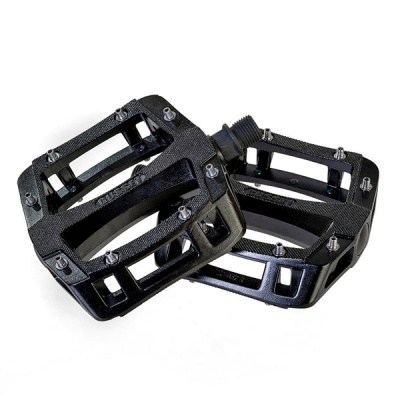
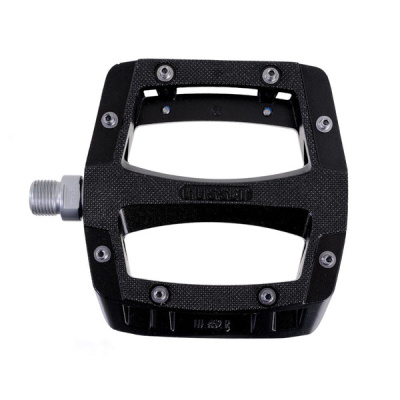
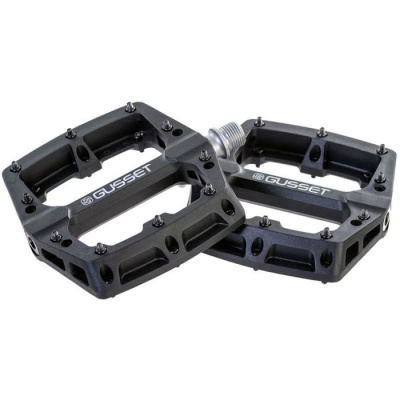
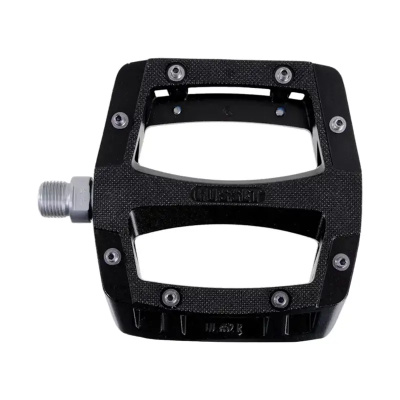
Prices and availability can change quickly. Delivery charges are not always included in listed prices.
Final price, stock status and delivery terms are set by retailer. We may receive a commission on purchases made.
Thread Standards and Crank Compatibility
Every adult Gusset MTB and BMX pedal uses a standard 9/16" thread - the same fitment you'll find on virtually all modern cranksets from two-piece and three-piece designs through to most BMX cranks. That covers the vast majority of what you're likely to be running. The one exception worth knowing: older one-piece crank designs (common on entry-level BMX bikes) use a 1/2" thread, which is incompatible, so check before you order if you're working on something vintage or budget.
Q-factor is worth a thought, particularly with the S2. Its wider 100x100mm platform pushes your foot slightly further out from the crank centreline compared to a narrower pedal. For most riders that's a non-issue - often it's actually more comfortable - but if you're sensitive to stance width or running a narrow Q-factor crankset, it's worth being aware of. More practically: if you're running carbon cranks with a pronounced boot around the pedal eye, double-check clearance before you start torquing things down. A small gap between the crank boot and the pedal body can become a rattling headache if ignored. Use anti-seize compound or grease on the threads every single time you install - aluminium crank arms and steel axles gall badly without it, and seized pedals are miserable to extract.
S2 vs Slim Jim: Picking the Right Platform
The Slim Jim is the older design, and its longevity says something. It's a die-cast aluminium body with a relatively slim profile - narrower underfoot than the S2 - which gives it a more precise, direct feel that dirt jump and street riders often prefer. It's available in two bearing configurations: a standard loose-ball version that keeps costs down and suits budget builds or bikes that get thrashed and rarely serviced, and a CNC-machined version with sealed cartridge bearings for meaningfully better longevity in wet conditions. If you're commuting through winter or riding regularly in Welsh trail centres where the mud never fully dries, pay the small premium for the sealed version.
The S2 is the current flagship. The body is extruded CNC aluminium with a concave platform profile - that dish shape isn't just aesthetic, it cups the sole of your flat pedal shoe and resists the kind of lateral foot movement that costs you confidence on loose descents. At 100x100mm it's a genuinely large platform, which suits enduro and trail riders who want maximum shoe-to-pedal contact. Inside, Gusset pairs an LSL (Lightweight Self-Lubricating) bushing at the inboard end with a sealed cartridge bearing at the outboard end. That combination handles the mixed load a pedal sees in use - the bushing absorbs the bulk of the pedalling force while the cartridge bearing manages rotation smoothly. It's a durable setup that outperforms cheap all-bushing designs. The custom hex-head replaceable traction pins are a proper feature too - when pins wear or snap (and they will, eventually), you replace just the pin rather than the whole platform. Keep a set of spares in your pack.
If you're weighing Gusset against alternatives, DMR pedals and Burgtec pedals occupy similar ground - DMR with its Vault being the benchmark wide-platform option for many UK trail riders, Burgtec leaning into a more polished, high-spec finish. Gusset's advantage is value density: you get solid bearing systems and replaceable pins without the premium price tag of Hope pedals or Nukeproof pedals.
Keeping Them Running Through a UK Winter
British riding conditions are genuinely hard on pedal internals. Peak District grit works into unsealed bearings like grinding paste; chalky southern mud packs around axles and accelerates wear; and anything with loose-ball bearings will need attention before the season's out. That's the reality, so build servicing into your routine rather than waiting for the wobble.
Servicing the S2 is straightforward. Remove the outer end cap - it unscrews with a hex key - then unbolt the axle nut to slide the pedal body off the axle. Clean the axle, inspect the LSL bushing for wear, and check the cartridge bearing for roughness. Gusset sells rebuild kits; press the new bearing in, reassemble, and you're done. It takes twenty minutes on a Sunday evening. The LSL bushing is self-lubricating by design, but a wipe-down and light regrease at service intervals will extend its life in particularly mucky conditions. For the Slim Jim loose-ball version, the process is similar but you'll be repacking with fresh grease and checking ball condition - not complicated, just a bit more hands-on.
Snapped traction pins happen. Particularly if you're clipping rocks or grinding concrete edges, the pins take the hit before the platform does - which is the point. A snapped pin usually leaves a stub in the threaded insert. Work it out with a pair of needle-nose pliers if there's enough purchase, or use a reverse-out screw extractor if it's flush. Apply a drop of thread-lock when you fit the replacement and it'll stay put. Worth pairing your pedal refresh with a look at your other contact points - Gusset grips and a Gusset saddle complete a consistent, sensibly-priced contact-point setup. And if you're already pulling the cranks off, it's a logical moment to check your Gusset bottom bracket while everything's apart.
Gusset Pedals FAQs
What size thread are Gusset pedals?
All adult Gusset pedals use a standard 9/16" thread, which is compatible with the vast majority of modern MTB, BMX, and hybrid cranksets. The only exception is old-style one-piece cranks, which need a 1/2" thread. Always grease or use anti-seize on the threads before fitting - it prevents the axle from galling into the crank arm and saves you a world of pain later.
How do you service Gusset S2 pedals?
Remove the outer end cap with a hex key, unbolt the axle nut, and slide the pedal body off the axle. Clean everything down, inspect the LSL bushing for wear, and check the sealed cartridge bearing for roughness. Gusset produces rebuild kits - press the new bearing in, reassemble, and grease the axle lightly. It's a 20-minute job and worth doing once a season if you ride in grim conditions.
Are Gusset Slim Jim pedals sealed bearings or loose ball?
Both, depending on which version you buy. The standard Slim Jim uses loose-ball bearings, which keeps the price low and suits occasional or dry-weather use. The CNC Slim Jim upgrades to sealed cartridge bearings, which hold up far better in wet UK riding. If you're riding through autumn and winter regularly, the sealed version is the sensible choice - the longevity difference is significant.