
Fox Rucksacks
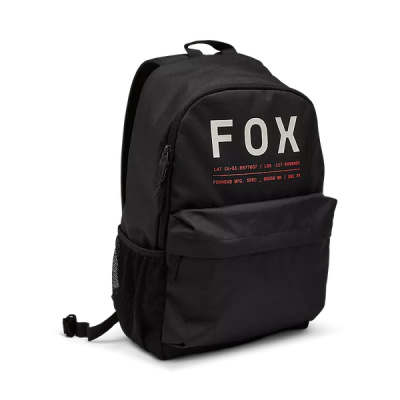
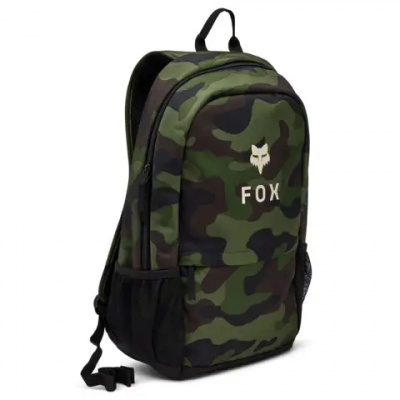
Fox Rucksacks take the brand's moto-grade toughness and put it on your back - whether you're shuttling a bike park or grinding a winter commute through south London traffic. These bags are built from PU-coated ripstop nylon and 600D polyester, which means abrasive trail grit and repeated wet-weather abuse don't quietly destroy the fabric over a season. Fox uses YKK zippers throughout, and if you've ever fought a cheap coil zip caked in Peak District clay, you'll know exactly why that matters.
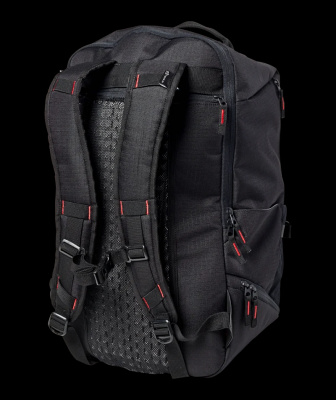
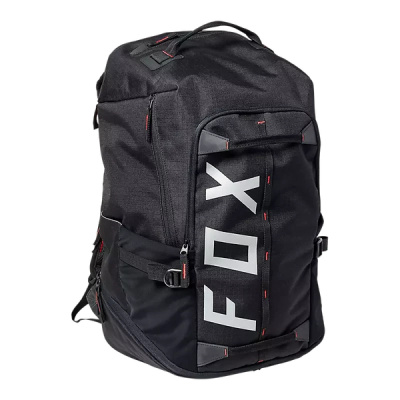
The range splits broadly between trail-utility bags - helmet carry, external lash points, tool organisation - and cleaner commuter-leaning options with laptop sleeves and slimmer profiles. Both lines feature EVA moulded back panels with airflow channels, so there's at least some separation between your back and the bag on a long climb. A chest strap harness keeps the load from swinging mid-descent, which makes a real difference on technical singletrack. Most bags are also hydration compatible, with internal sleeves and hose ports. Fox isn't the only name worth considering - CamelBak and EVOC both offer strong alternatives - but for riders who already run Fox kit, these bags slot neatly into the ecosystem.

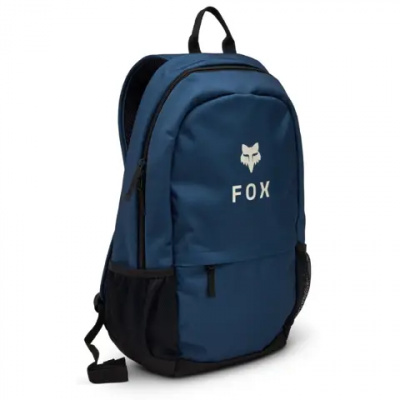
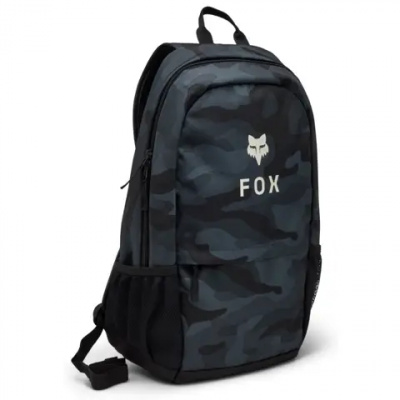
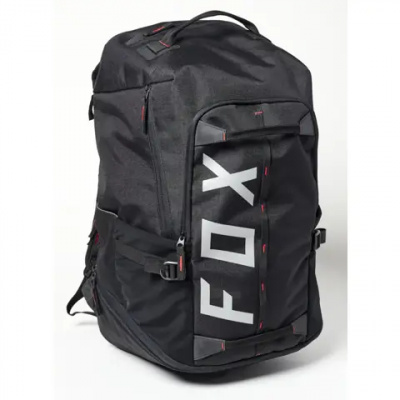
Prices and availability can change quickly. Delivery charges are not always included in listed prices.
Final price, stock status and delivery terms are set by retailer. We may receive a commission on purchases made.
How Fox Bags Carry, Fit and Organise Your Kit
The backbone of any Fox rucksack is the EVA moulded back panel. It's not just padding - the channelled foam creates a gap between the panel and your jersey, moving air across your back and reducing the sweaty-slab feeling you get from flat-backed bags on long climbs. Pair that with a proper chest strap harness and the load stays anchored high and tight rather than drifting outward on rough ground. It's the difference between a bag that feels part of you and one that feels like it's trying to escape.
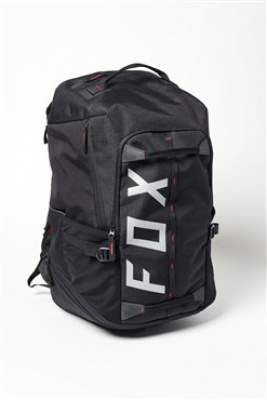
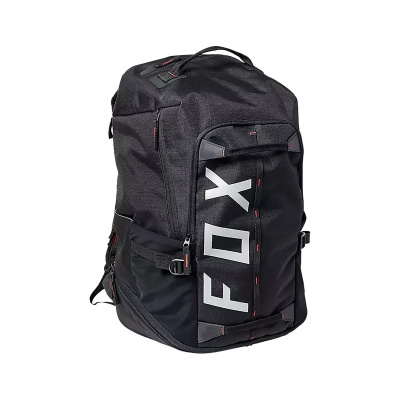
Inside, dedicated tool organisation dividers keep multi-tools, tyre levers and valves from rattling around loose. Most models have a main compartment large enough for a spare layer and a packable Fox jacket, plus a front zip pocket for the small stuff you want without stopping. The integrated stretch-mesh helmet carry system on the utility-focused bags clips a full-face or trail helmet externally without destabilising the pack - genuinely useful at trail centres where you're walking uplift queues.
Looking for water-specific trail bags? Check out our Fox Hydration Packs. Prefer riding without a backpack? Browse Fox Hip Packs. Need high-capacity gear transit? See our Fox Holdalls.
Utility or Transition: Picking the Right Fox Rucksack
Fox's rucksack line roughly divides into two camps, and getting the distinction right saves you buying the wrong bag. The Utility tier is the trail-first option - heavier-duty shell fabrics, external lash points with MOLLE webbing for attaching pumps or pads, a prominent helmet carry system, and enough structure to handle a long day at somewhere like Glentress or the Dyfi trails. These bags prioritise function over form. They're not elegant, but they're hard to break.
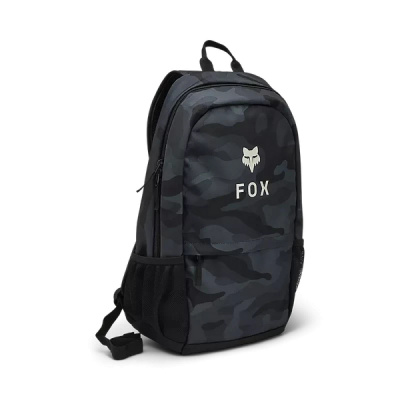
The Transition-style bags sit at the other end. Sleeker profiles, internal laptop sleeves, lighter materials, and a silhouette that doesn't scream trail centre when you're locking up outside the office. The DWR coating is still there, the YKK zips still run smooth, but the emphasis shifts toward versatility. You lose some carrying capacity and the external helmet attachment usually goes too. If you're doing both - trail riding at weekends and a commute through the week - this is probably your bag. If you're spending three days straight in the Scottish Borders with a full toolkit, you want the Utility.
As you move up the price points within each line, you typically gain denser ripstop weaves, longer-lasting DWR treatments, better-padded shoulder straps and more considered internal organisation. The entry bags are capable; the top-tier options are noticeably more refined in hand. If you're comparing across brands, Deuter and Dakine offer comparable split-line thinking - worth a look if you want to see how Fox stacks up on features per pound.
Keeping Your Fox Rucksack Working Through a UK Winter
British trail riding is hard on bags. It's not just rain - it's that specific combination of liquid mud, grit and repeated soaking that works into zips, degrades fabric coatings and slowly destroys anything not built for it. Fox uses YKK zippers across the range precisely because cheaper alternatives jam under trail paste and eventually fail. Rinse the zip pulls and runs after muddy rides; a blocked zip is almost always a maintenance failure, not a product failure.
The PU-coated ripstop shell and DWR coating handle light rain and trail spray well. In a proper Welsh downpour, though, they'll eventually let moisture through at seams and zip backs. For anything beyond drizzle, a packable rain cover or a dry bag liner for your electronics is sensible insurance - not a criticism of the bag, just an honest read of what DWR treatments can and can't do. Think of DWR as a first line, not a last one.
When it comes to washing, the rule is simple: don't machine wash. Detergent strips the DWR and the agitation damages EVA foam panels. Instead, hose off heavy mud, then work over the mesh back panel and fabric with a soft bristle brush and mild soap. The mesh back panel is worth particular attention - compacted grit there accelerates fabric wear. Hang the bag open to air dry, never in direct heat. If you're running Fox tools on the same ride, the same care principle applies - clean kit lasts. You can browse Fox tools alongside the bags if you're building out a trail kit.
One practical note on mudguards: if you commute and find your bag getting repeatedly plastered from road spray, a decent Fox mudguard cuts down on how often you're cleaning the bag in the first place. Marginal, but it adds up over a winter.
Fox Rucksacks FAQs
Are Fox backpacks waterproof?
Fox rucksacks use PU-coated fabrics and DWR treatments that handle light rain and trail spray well - you won't open the bag to find a sodden mess after a typical UK shower. For sustained heavy rain, add a rain cover or dry bag liner for electronics, as no DWR coating holds up indefinitely against a full British downpour.
How do you wash a Fox rucksack?
Keep it out of the washing machine - detergent strips the DWR coating and the drum damages the EVA foam panels. Hose off the bulk of the mud, scrub gently with a soft brush and mild soap (pay attention to the mesh back panel where grit collects), then hang it open to air dry away from direct heat.
Can you fit a hydration bladder in a standard Fox backpack?
Most standard Fox rucksacks have an internal sleeve and a hose routing port that take a hydration bladder without issue. If water carrying is the main job, though, a dedicated <a href="https://bikesy.co.uk/b/fox/hydration+packs/">Fox Hydration Pack</a> includes the bladder and purpose-built hose clips - a cleaner setup for longer rides.