
ENVE Saddles
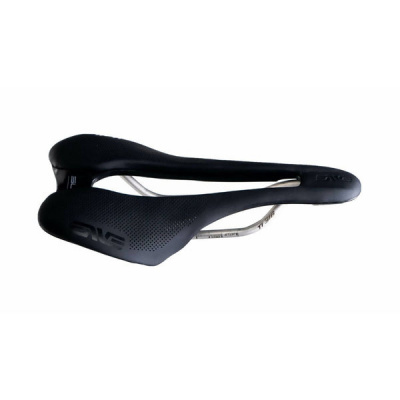
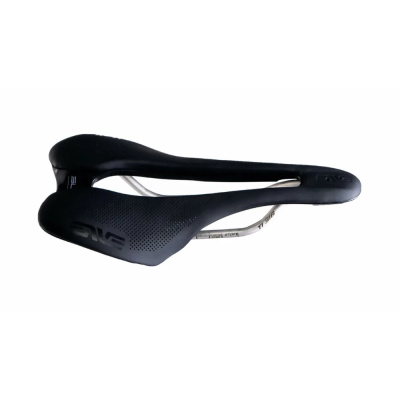
ENVE saddles represent one of the more considered collaborations in road cycling - a partnership between ENVE's carbon fibre expertise and Selle Italia's decades of ergonomic know-how, built around the acclaimed SLR Boost platform. The result is a range of lightweight carbon road saddles that takes a proven anatomical foundation and strips it back to something genuinely race-worthy without turning into a punishment device on longer rides.
At the core of each saddle is a custom ENVE carbon shell and a set of oversized 7x9mm oval carbon rails - not the standard round steel or alloy rails you'll find on most production saddles. That oval profile stiffens the structure where it matters while shaving meaningful grams. The Soft-Tek polyurethane cover handles vibration damping, which counts for a lot when you're grinding through rough winter tarmac on the way to the Surrey Hills or putting in long base miles on broken B-roads.
The Superflow central cutout addresses perineal pressure during aggressive riding positions - useful whether you're time-trialling, racing crits, or just spending too long in the drops. Width options cover most riders, and sit bone measurement takes the guesswork out of choosing. If you're building a focused road or climbing setup, these saddles sit at the sharper end of what's available. Compare current UK prices across available models below.
Prices and availability can change quickly. Delivery charges are not always included in listed prices.
Final price, stock status and delivery terms are set by retailer. We may receive a commission on purchases made.
Fitting ENVE Carbon Rails: What Your Seatpost Actually Needs
Before you get drawn in by the weight figures, check your seatpost clamp. ENVE saddles run oversized 7x9mm oval carbon rails - a wider, taller cross-section than the 7x7mm round rails that most seatpost clamps are designed around. Get this wrong and you're either crushing the rails or running a saddle that isn't properly secured. Neither outcome is worth it.
Most modern top-down clamping seatposts - where the clamp bolt pulls down across the rail from above - will accept the oval rail profile without modification. The issue arises with older or brand-specific side-clamping designs, including some Trek and Specialized posts, where the rail sits in a fixed channel sized for round rails. If you're running one of those, you'll need replacement 7x9mm adapter ears before you even think about fitting the saddle. Check the clamp spec before you order. If you're building fresh or need a compatible post to pair with the saddle, ENVE's own seatposts are designed around this rail standard and remove the compatibility question entirely.
Carbon rails also change the installation rules. You cannot treat these the way you'd treat steel. Over-tightening the clamp is the primary cause of rail failure - and when carbon goes, it goes without warning. Use carbon assembly paste on the rails to allow a lower torque setting to do the same gripping job as a higher torque on bare metal. Then use a calibrated torque wrench and stick to the manufacturer's stated Nm limit. That limit exists for a reason.
The SLR Boost Collaboration: Widths, Cutouts, and Who Each Version Suits
The ENVE saddle range is built on the Selle Italia SLR Boost platform - a shell geometry that's been refined over years of road and race use. ENVE's contribution is the custom carbon shell integration and the proprietary rail construction; Selle Italia brings the ergonomic shaping, the padding calibration, and the Soft-Tek polyurethane cover. It's a clean division of expertise, and the result doesn't feel like a badge-engineering exercise.
Width options typically sit at 130mm and 145mm. The 130mm suits narrower sit bone widths and riders who spend most of their time in an aggressive, forward-rotated position - think road racing, sportives where you're in the drops for long stretches, or ENVE road bike builds where every gram is deliberate. The 145mm is the better call for riders with wider sit bones or those who alternate between a flatter back position and something more upright on longer days. The practical way to choose: measure your sit bone width (ischial tuberosities, if you want to be precise), then add around 20mm. That sum points you toward the right shell width. Most decent bike shops have a gel pad or pressure mat to help with this - worth doing once properly rather than guessing and returning.
The Superflow central cutout runs the length of the central channel and fully relieves pressure on soft tissue during aggressive riding positions. If you've experienced numbness on long rides or during time-trial efforts, that cutout makes a tangible difference. It's particularly relevant for riders who run a pronounced saddle-to-bar drop or who race in a position that tips the pelvis forward significantly. Compared to saddles with partial relief channels - like some options from Fizik - the full-length cutout removes any guesswork about pressure distribution when you're really stretched out.
If you're weighing up alternatives at a similar level, Cadex saddles offer comparable carbon rail construction with a different shell geometry, and Ergon brings a more biomechanics-led approach that suits riders who prioritise long-distance comfort over outright weight. The ENVE sits firmly in the performance-first bracket - it's not trying to be the most forgiving saddle in the range, but it doesn't feel brutal either.
Keeping a Carbon Saddle Clean Through a UK Winter
Soft-Tek polyurethane is more resistant to water absorption than leather or traditional foam-and-fabric covers, which matters when you're riding wet lanes in the Peaks or the Mendips from October through March. It won't soak up road spray, and it wipes down cleanly. That said, the abrasive grit that comes off UK roads in wet conditions will wear the cover surface and degrade stitching over time if you just leave it. After a dirty ride, rinse the saddle off with clean water and dry it - don't leave wet road grit sitting against the cover while the bike hangs in the garage.
Avoid aggressive degreasers or solvent-based cleaners on the polyurethane surface. Warm water and a soft cloth does the job. The same grit that attacks the cover will also work on your shorts' chamois if you're riding with accumulated road debris between them - another reason to clean the saddle rather than skip it.
On the rail and clamp side: inspect the rail-to-clamp interface periodically, particularly if the bike gets knocked or transported regularly. Look for any marks, stress lines, or discolouration around the clamp contact points. Carbon damage isn't always visible, but obvious deformation or cracking at the clamp zone means the saddle needs to come off and be assessed before the next ride. Pair this saddle properly with ENVE's broader component range and you're building a system where the torque specs and materials are all designed to work together.
ENVE Saddles FAQs
Are ENVE saddles made by Selle Italia?
Yes - ENVE partnered with Selle Italia to develop their saddle range, using Selle Italia's SLR Boost platform as the ergonomic foundation. ENVE supplies the custom carbon shell and proprietary rail construction, while Selle Italia handles the shaping, padding calibration, and Soft-Tek polyurethane cover. It's a genuine collaboration rather than a simple rebadge.
Do I need a special seatpost for carbon saddle rails?
ENVE saddles use oversized 7x9mm oval carbon rails, which don't fit standard 7x7mm round-rail clamps without modification. Most top-down clamping seatposts accept the oval profile, but side-clamping designs will need specific 7x9mm replacement ears. Always check your post's clamp spec first - running an incompatible clamp risks crushing the rail.
How do I choose the right ENVE saddle width?
Measure the distance between your sit bones (ischial tuberosities) and add roughly 20mm. ENVE saddles typically come in 130mm and 145mm widths - 130mm suits narrower sit bones and aggressive riding positions, while 145mm works better for wider sit bones or riders who vary their position across long rides. A pressure pad test at a bike shop gives you the most reliable measurement.