
Cadex Saddles
Cadex saddles sit at the sharp end of what carbon componentry can do - engineered from the ground up for riders who won't accept dead weight or pressure points eating into their power output. Built around Advanced Forged Composite Technology, the carbon shell is stiff where it needs to be and shaped with genuine precision, not just marketed as such. The Integrated Rail Design shifts the mounting points away from where your sit bones actually land, which sounds like a small detail until you've spent three hours on a saddle that got it wrong.
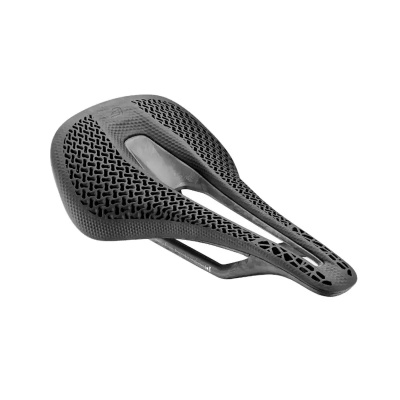
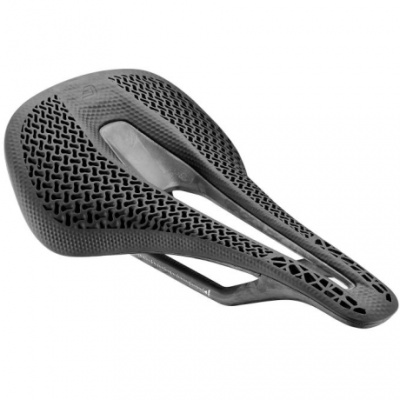
Then there's Particle Flow Technology - free-moving ETPU particles inside the shell that redistribute under load and mould to your pelvic contact points. It's a genuinely different approach to padding, and one that scales well from a 60-minute blast to a full sportive day out. Whether you're locked into an aero tuck for a crit or grinding up a long drag in the Peaks, the saddle adapts rather than fights you.
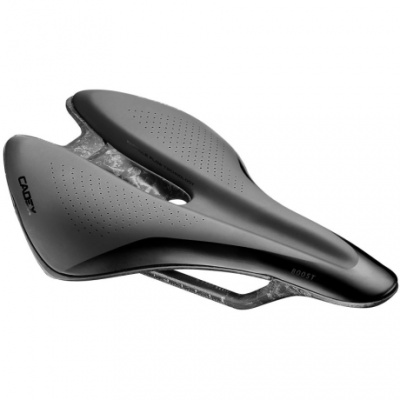
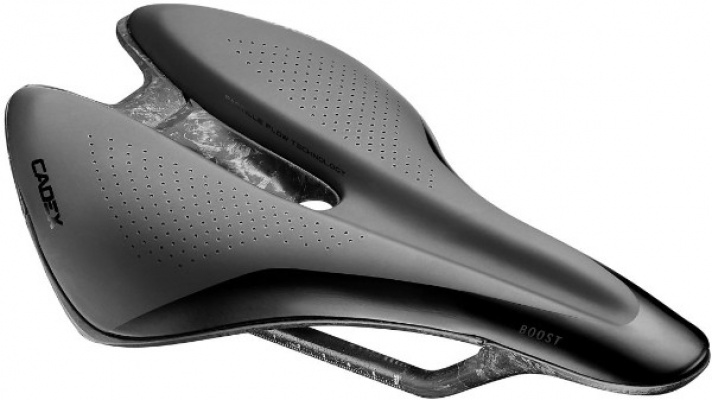
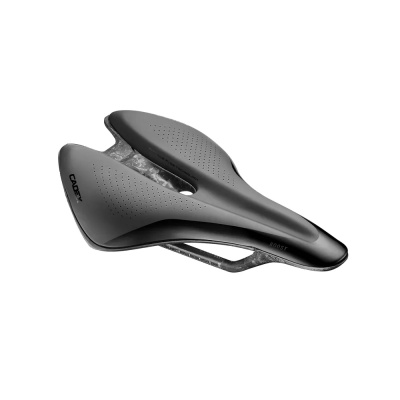
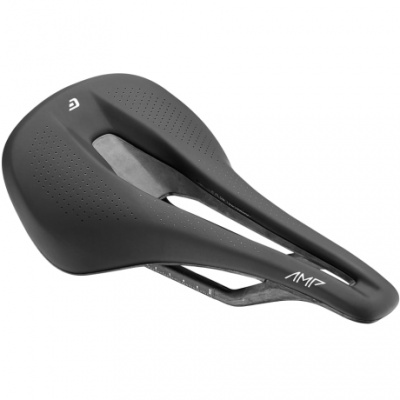
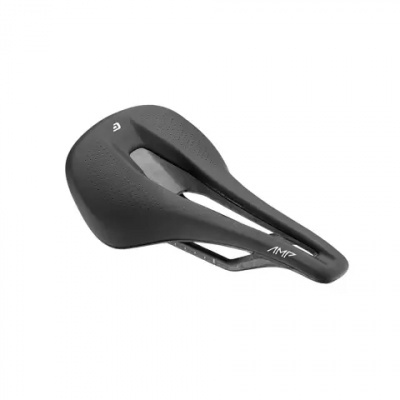
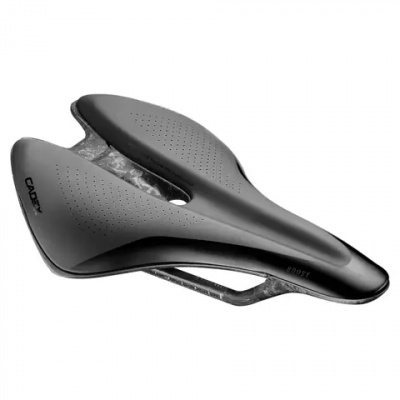
Cadex offers three distinct profiles - the short-nose Boost, the classic-curved Amp, and the gravel-ready GX - so there's a specific answer to most riding positions rather than one compromise. Browse the full range below and compare UK prices across retailers.
Prices and availability can change quickly. Delivery charges are not always included in listed prices.
Final price, stock status and delivery terms are set by retailer. We may receive a commission on purchases made.
Fitting Cadex Carbon Rails: What to Check Before You Buy
This is the bit worth sorting before you click anything. Cadex saddles use 7x9mm oval carbon rails - not the round 7mm rails that most seatposts are designed around. If your seatpost clamps from the side (common on older Trek and some Specialized posts), you'll need specific 7x9mm replacement ears or adapter hardware before the saddle will sit correctly. Check your post's documentation or the manufacturer's website; it's a five-minute job to confirm, and it saves you a frustrating return.
Top-down clamping mechanisms - the style found on most modern aero posts - generally accept oval rails without any additional parts. That said, the torque setting is non-negotiable. Cadex specifies a tight window, typically 5 - 7Nm, and carbon rails won't forgive you for going beyond it. A crack in a carbon rail doesn't always announce itself visibly, so get a proper torque wrench on it rather than guessing by feel. Carbon assembly paste on the rails is also worth doing - it lets you clamp at lower torque without the saddle rotating underload, which is exactly the trade-off you want. If you need compatible hardware, Cadex seat clamps and seatpost spares are worth a look before you reach for generic alternatives.
Boost, Amp, and GX: Which Profile Suits Your Riding?
The Cadex range isn't a single saddle in multiple colourways - each model is built around a meaningfully different riding position, and picking the wrong one will cost you in comfort regardless of how good the tech underneath is.
The Cadex Boost is the one for the best Cadex saddle for road racing conversation. It's a short-nose design with a flat profile, built specifically for aggressive, forward-rotated positions where your pelvis is tipped and you're not going anywhere near the nose anyway. The shortened nose keeps soft tissue clearance high and gives you more pelvic freedom when you're really committed to an aero tuck. If you spend most of your time on a road bike in a race-oriented setup - think criteriums, time trials, or fast club rides where you're rarely sitting up - the Boost is the logical choice. It's also the one most often paired with aero frames where the seatpost geometry already pushes you forward.
The Cadex Amp takes a more traditional approach. The profile is curved rather than flat, which allows fore-aft movement as your position shifts - particularly useful on climbs where you naturally slide back or forward depending on gradient and fatigue. If you're comparing Cadex Boost vs Amp saddle options and you spend a lot of time on varied roads rather than flat-out efforts, the Amp gives you that bit more usable range. It works well for endurance road riders and anyone who finds flat saddles lock them into one position uncomfortably. Riders on Fizik saddles with a curved spine profile will find the Amp the more natural crossover.
The Cadex GX is the Cadex gravel saddle in the lineup. It runs slightly wider in the sit bone support area than the road models, and the Particle Flow padding layer is more generous - deliberately so, because high-frequency vibration from rough road surfaces and gravel tracks demands a different response than smooth tarmac. The ETPU particles still do their moulding job, but there's more material doing it. Worth considering if you're running mixed-surface routes or long unpaved days where the Boost's aggressive profile would wear you out. Riders coming from Giant saddles in the contact series will find the GX sits in a comparable comfort bracket but with noticeably less weight.
Keeping Cadex Saddles in Good Shape Through UK Winters
UK riding conditions are hard on kit. Potholed B-roads, standing water, and a fine mist of road grit from November through March - none of it is kind to high-end components. The good news is that Cadex's seamless microfibre covers handle wet weather well; there are no stitched seams to wick water in or delaminate under persistent rain, and the surface cleans up quickly without needing anything aggressive.
On the cleaning front, avoid solvent-based degreasers on the cover. Warm water and a soft cloth is genuinely all it needs. The cover's microfibre surface can absorb harsh chemicals over time and lose its texture, which then affects grip in the wet - the one moment you actually need it. Lightweight carbon road saddles UK riders tend to underestimate how much grit gets into the rail clamp area, particularly after a winter lane session. Pull the saddle off every few months, clean around the rail/clamp junction, and inspect the carbon rail surface for any scoring or compression marks. A small creak that appears after a muddy ride is often just grit in the clamp, not a structural issue - but it's worth checking either way rather than ignoring it.
Pair the saddle with quality Cadex bar tape if you're building a full Cadex cockpit, and keep the whole contact point system consistent - it makes diagnosing any comfort or fit issues considerably easier. For those comparing options at a similar weight and price point, Enve saddles are a reasonable benchmark, though the Particle Flow approach is specific to Cadex and doesn't have a direct equivalent in the Enve range.
Cadex Saddles FAQs
Do I need a special seatpost for Cadex carbon saddle rails?
Cadex saddles use 7x9mm oval carbon rails, so your seatpost clamp needs to be compatible. Side-clamping posts often need specific 7x9mm adapter ears; most top-down clamps accept oval rails natively. Always confirm before buying, and use a torque wrench - carbon rails have no tolerance for over-tightening.
What is the difference between Cadex Boost and Amp saddles?
The Boost is a short-nose saddle with a flat profile, built for aggressive aero positions where pelvic clearance and a locked-in feel matter most. The Amp has a traditional curved profile that allows more fore-aft movement - better suited to climbers or endurance riders who shift position frequently throughout a ride.
Are Cadex saddles comfortable for long rides?
Despite the rigid carbon base, Particle Flow Technology uses free-moving ETPU particles that redistribute under load and mould to your sit bones. This reduces localised pressure meaningfully, and many riders find them genuinely comfortable over long distances once correctly positioned - saddle height and tilt make a significant difference with this style of shell.