
ENVE Road Tyres
ENVE road tyres are built around one idea: that your rubber should work with your wheelset, not against it. The Smart ENVE System (SES) aerodynamic profile means each tyre width is engineered to integrate with specific rim profiles, reducing drag in a way that tyre choice alone rarely achieves. That matters whether you're punching into a crosswind on an exposed Pennine lane or chasing watts on a club run.
Under the tread, a Vectran™ puncture protection barrier handles the flint-strewn reality of UK B-roads, while the SPC silica compound keeps rolling resistance low without surrendering wet-weather grip when the tarmac turns greasy. Tubeless-ready beads seat cleanly on both hooked and hookless rims, so setup is straightforward rather than a Sunday-morning wrestling match.
The range spans 25c through to 31c, covering everything from pure aero road use to endurance riding on rougher surfaces. Check frame and fork clearance before you buy - wider tyres on wide internal rims inflate noticeably beyond their stated size. Browse the comparison grid below to match width to your setup and compare prices across the UK.
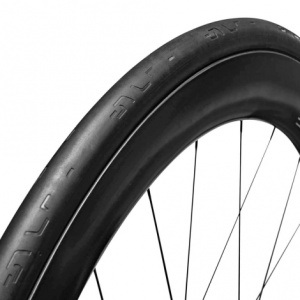
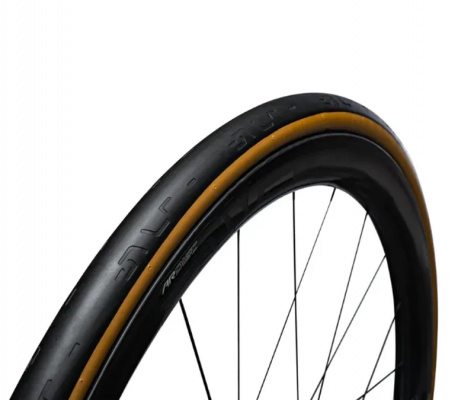
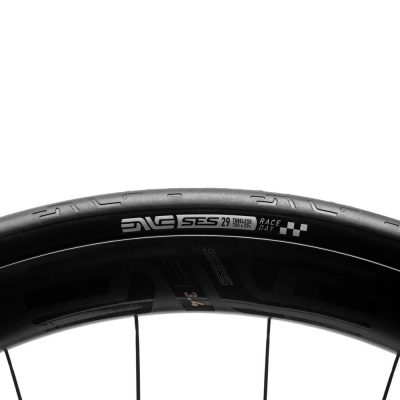
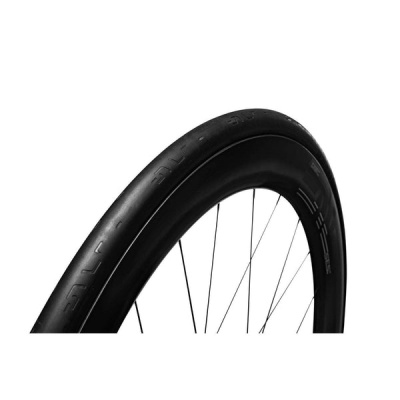
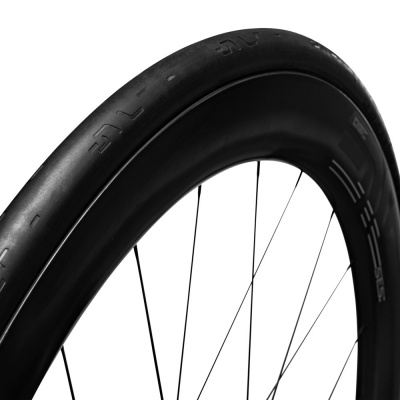
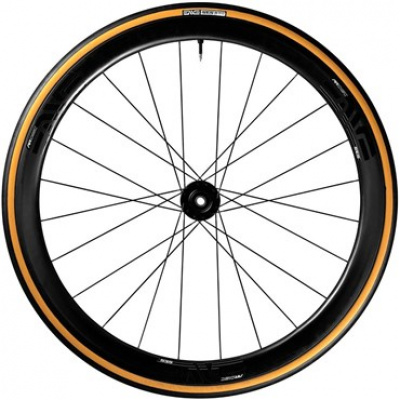
Prices and availability can change quickly. Delivery charges are not always included in listed prices.
Final price, stock status and delivery terms are set by retailer. We may receive a commission on purchases made.
Compatibility, Standards, and What to Check Before You Buy
ENVE road tyres are designed and tested for both hooked and hookless rim profiles, which covers the vast majority of modern aero wheelsets - including ENVE's own road wheels. If you're running hookless rims, the key number to know is 73psi (5 bar). That's the ETRTO maximum pressure limit for hookless setups, and it's a hard ceiling - not a suggestion. ENVE's tubeless-ready bead construction is stiff enough to seat securely on hookless profiles without the bead retention that a hooked rim provides, but only within that pressure window.
On hooked rims the pressure ceiling is higher, and the bead seats in the traditional way, so there's more flexibility. Either way, take your time with bead seating. A track pump with a gauge, a clean rim bed, and fresh tubeless tape will do more for a reliable seal than any amount of tyre wriggling. If the bead won't pop home with a pump alone, a burst from a CO2 inflator or a compressor will usually seat it cleanly.
Clearance is worth checking twice. ENVE SES road tyres inflate wider than their stated size when mounted on rims with a 25mm internal width - a 29c can measure closer to 31 - 32mm inflated. That's good for compliance and rolling resistance, but it can catch you out on older frames with tight chainstay or fork crown clearances. Measure your current clearance with a calliper before ordering anything wider than 27c. ETRTO mounting standards apply throughout the range, so if your rim and frame are spec'd correctly, fitment is reliable and repeatable.
SES Tyre Widths: Matching Rubber to Your Riding
The SES range runs from 25c to 31c, and the width you choose shapes the character of the tyre more than any other single decision. The aerodynamic case for narrower options comes down to what's sometimes called the Rule of 105 - the principle that a tyre should be no wider than 105% of the rim's external width for the airflow to attach cleanly to the rim profile. Run a 25c or 27c on a rim with a compatible external width and the tyre-to-rim transition becomes near-seamless, cutting aerodynamic drag meaningfully at race pace.
The 29c and 31c options shift priorities. More air volume means the tyre can run at lower pressure without pinch-flat risk in a tubeless setup, which translates to better vibration absorption on chip-and-spray A-roads or the rougher surfaces you'll find across much of the North and West. Rolling resistance actually drops on imperfect tarmac at lower pressures - the tyre conforms to small surface irregularities rather than bouncing over them. If your riding is mixed between fast club rides and longer days on variable roads, the 29c is a sensible middle ground. The 31c is for riders who prioritise compliance and spend time on roads that have seen better days.
For pure aero road and race use, 25c paired with ENVE aero bars and a wide-external-width rim is the configuration that delivers the most from the SES system. If you're weighing ENVE against alternatives like Continental road tyres or Vittoria road tyres, the differentiator here is that the SES profile optimisation is specific to rim geometry - it's not a generic aero claim.
Looking to take your ENVE setup off the tarmac? Head over to our dedicated ENVE Gravel and Cyclocross Tyres page for treaded options designed for dirt and mud.
UK Durability and Keeping Things Rolling Through Winter
The SPC (Silica Polymer Compound) is doing two jobs at once: keeping rolling resistance low while maintaining grip when the temperature drops. Silica-based compounds stay more pliable in the cold compared to carbon-black rubber, which matters on a frosty October morning in the Peaks or a damp February lane in the Weald. The trade-off is that silica compounds can wear slightly faster under hard braking loads - but for most road riding that's a non-issue.
The Vectran™ puncture protection belt sits between the casing and tread to intercept flint shards and glass - the two things most likely to end a UK ride early. Vectran is a synthetic aramid fibre that offers a good balance between flexibility and cut resistance without adding the dead weight of a thicker rubber sub-tread. It won't stop every piece of flint, nothing will, but it significantly reduces the frequency of punctures on typical UK winter roads.
Tubeless maintenance matters more in winter than riders often expect. Sealant viscosity drops in cold weather, and if the bike sits unused through a cold snap the sealant can dry out or separate, leaving you with a tyre that looks fine until you hit the first pothole. Top up sealant every three to four months as a minimum through the colder months - more often if the bike is stored in an unheated garage. After wet rides on gritty roads, it's worth running a finger around the tread to feel for micro-cuts. Small embedded flints that haven't caused a puncture yet can work deeper over subsequent rides. Catch them early and a touch of sealant usually sorts it. Brands like Pirelli and Cadex offer strong competition in the premium tubeless road tyre space, but ENVE's system-level integration with their own wheelsets gives the SES tyres a coherence that standalone options can't quite replicate.
ENVE Road Tyres FAQs
Are ENVE road tyres compatible with hookless rims?
Yes. ENVE SES road tyres are designed and tested for both hookless and hooked rim profiles. On hookless setups, keep tyre pressure at or below 73psi (5 bar) - that's the ETRTO standard limit for hookless rims and a firm maximum, not a guideline.
Do I need to run ENVE tyres tubeless?
They're optimised for tubeless use, where you get the full benefit of lower rolling resistance and the Vectran puncture belt working alongside sealant. You can run inner tubes, but you'll still need tubeless-compatible rim tape to protect the tube from spoke holes. Tubeless is the better setup if your rims support it.
What width ENVE tyre should I choose for my wheels?
Match tyre width to your rim's external width for the best aerodynamic result. A 25c or 27c suits rims optimised for aero performance. Go 29c or 31c if you're prioritising comfort and compliance on rougher roads. Remember that wider tyres inflate beyond their stated size on rims with 25mm or greater internal width - check your frame clearance first.