
Decathlon Locks
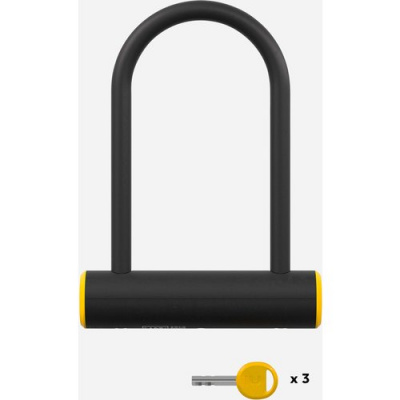
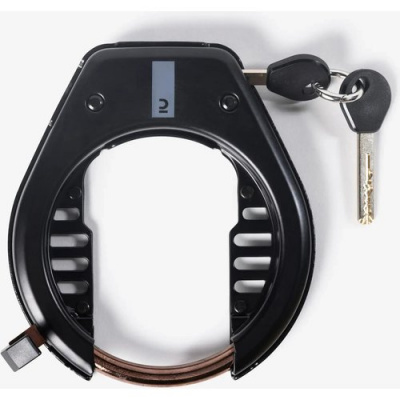
Decathlon bike locks blend accessible pricing with serious security engineering, making them a smart choice for UK commuters and casual riders alike. The range spans Elops city locks, Btwin D-locks, and a handful of Abus collaborations, each designed to match your risk profile and locking scenario. You'll find everything from 13 mm hardened steel shackles with Sold Secure Gold badges down to lightweight cable options for quick café stops.
Decathlon uses a proprietary 1-to-10 security scale printed on the packaging - higher numbers suit longer dwell times in high-theft postcodes - but many premium models also carry independent Sold Secure Silver or Gold certification for UK insurance peace of mind. D-locks deliver maximum defence in tight spaces; chain locks wrap awkwardly shaped street furniture; folding locks split the difference on weight and flexibility. It's a practical ladder: pick the rung that fits your parking habits, then lock smart.
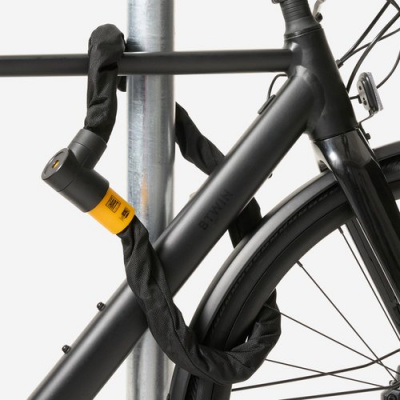
Prices and availability can change quickly. Delivery charges are not always included in listed prices.
Final price, stock status and delivery terms are set by retailer. We may receive a commission on purchases made.
Security Ratings Decoded: Decathlon's Scale Meets Sold Secure
Decathlon's internal 1-to-10 rating gives you a quick steer in-store, but it's worth cross-referencing with Sold Secure and ART certification when your bike's worth more than a month's rent. A rating of 8 or above typically signals case-hardened steel construction, a shackle diameter of at least 13 mm, and an anti-pick cylinder - often a disc-detainer design that resists bumping and drilling. The Elops 900 and 920 models, for instance, carry Sold Secure Gold accreditation, meaning they've survived sustained attack testing by independent labs.
Shackle metallurgy matters. Look for phrases like "double-hardened" or "boron alloy" in the spec sheet; softer steel folds under bolt croppers in seconds. The locking mechanism is the other choke point: cheaper cable locks use wafer tumblers that pick in under a minute, while higher-tier D-locks employ disc-detainer or dimple-key cylinders with rotating discs that frustrate lock-sport tools. Some Elops locks feature a double locking mechanism - pins engage both ends of the shackle - so even if one side is compromised, the lock stays shut.
For UK insurance purposes, many policies stipulate Sold Secure Silver as a minimum. Gold is the benchmark for urban hotspots. If you're locking overnight in Manchester, Bristol, or London, don't gamble on a rating below 8 or a lock without that kite-mark sticker.
Mounting, Carry Weight, and Frame Fit
Most Elops and Btwin D-locks ship with a frame mount bracket - a simple plastic or rubberised cradle that bolts to bottle-cage bosses or seat-tube eyelets. It's a small detail that transforms daily usability: no more rucksack rattle or jersey pocket bulge. Check your frame geometry before you buy, though. E-bikes with downtube batteries often lack the clearance for a bracket, and some carbon road frames limit torque on accessory mounts.
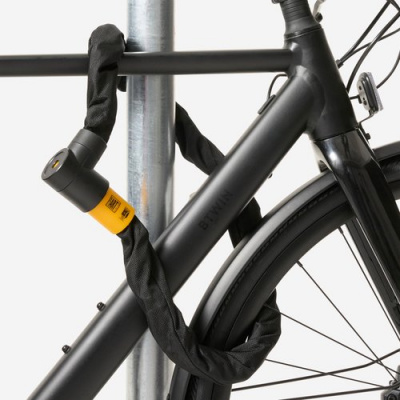
Weight is the perennial trade-off. A Sold Secure Gold D-lock with a 16 mm shackle can nudge 1.5 kg; that's fine for a five-mile commute but less appealing on a 100 km sportive. Chain locks offer more locking versatility - you can loop through both wheels and the frame, or tether to a lamppost with odd spacing - but they're heavier still and need a pannier or frame bag to carry comfortably. Folding locks sit in the middle: compact when stowed, reasonably light, and flexible enough to secure your bike to a signpost, though they rarely achieve the same attack resistance as a chunky D-lock.
If you're pairing a lock with Decathlon commuter tyres or a new saddle, consider the cumulative weight and where everything mounts. A tidy cockpit and balanced load make the difference between a bike you ride every day and one that gathers dust.
Choosing the Right Lock for Your Parking Habits
Dwell time and location dictate your lock choice more than any other factor. Popping into Tesco for ten minutes? A mid-range cable or a lightweight Decathlon chain lock will deter opportunists without adding much faff. Leaving your bike at a train station all day? You need a high security cycle lock - ideally a D-lock rated 9 or 10 on Decathlon's scale, or Sold Secure Gold, plus a secondary cable to snare your front wheel.
Winter introduces new wrinkles. Freezing rain can ice up keyways; a squirt of PTFE lubricant or a graphite pencil keeps the anti-pick cylinder turning smoothly. Stainless or coated shackles resist corrosion better than bare steel, which matters if your bike lives outside a Scottish tenement or a Welsh hillside cottage. Some riders keep a small bottle of lock de-icer in their coat pocket from November onward - it's cheaper than a locksmith call-out.
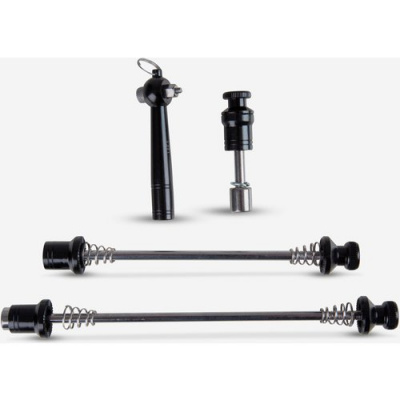
Locking strategy is as important as the lock itself. Always pass the shackle through the rear triangle and around a fixed object; the rear wheel is harder to remove than the front, and the frame is your biggest investment. Use a secondary cable or a second lock for the front wheel, or invest in locking skewers. Thieves work fast; make your bike the hardest target on the rack and they'll move on.
From Lille to Your Local Bike Shed: Decathlon's Design Process
Decathlon designs and tests its locks at the B'Twin Village in Lille, a sprawling R&D campus where prototypes face destruction testing that would make a medieval torturer wince. Engineers cycle through angle grinders, hydraulic cutters, and freeze-spray attacks, logging failure points and iterating the design until it meets internal benchmarks. The Elops brand emerged from this process as Decathlon's city-cycling specialist, distinct from the sportier Btwin label but sharing the same rigorous development protocols.
One practical quirk: many Elops locks sold in twin packs use a shared key system, so you can unlock both with a single key. Handy if you're securing a bike and a trailer, or if your partner rides the same brand. It's a small touch that reflects Decathlon's focus on everyday usability rather than niche performance.
The brand's vertical integration - designing, testing, and manufacturing in-house or with closely managed partners - keeps costs down without sacrificing the fundamentals. You won't find exotic materials or boutique finishes, but you will find locks that survive real-world abuse and come with a straightforward warranty. For comparison, Kryptonite and Hiplok occupy similar security tiers but often at a higher price point; Litelok offers innovative materials if weight is your priority. Decathlon sits in the sweet overlap of security, convenience, and value - ideal if you're kitting out a household of riders or replacing a lock that's seen better days.