
BTWIN Locks
BTWIN bike locks sit in a genuinely useful space: serious enough for everyday urban use, priced so you're not spending half the bike's value on keeping it safe. Sold under both the BTWIN and Elops names at Decathlon, these locks cover everything from lightweight cable deterrents for café stops to heavy-duty hardened steel D-locks built to satisfy UK insurance requirements. The anchor point of the range is BTWIN's own 1-10 security rating scale, printed clearly on every product - a quick, honest way to match the lock to the actual risk level you're parking in, rather than guessing from packaging graphics. Higher-rated models carry independently verified Sold Secure ratings, which matter the moment you try to claim on a policy after theft. The locks themselves are built with anti-pick cylinders and rubberised shackle coatings that protect your frame's paintwork - a small detail, but one you'll appreciate the first time you're wrestling a heavy D-lock against a chainstay. If you're locking up daily in a city centre, or just want a reliable secondary lock for touring, there's a sensible option here. What follows breaks down which tier suits your situation, how to keep them working through a British winter, and what to check before you buy.
Prices and availability can change quickly. Delivery charges are not always included in listed prices.
Final price, stock status and delivery terms are set by retailer. We may receive a commission on purchases made.
Insurance Standards, Sold Secure Ratings, and Frame Mounting
Not all locks are equal in the eyes of your insurer. UK home and specialist cycle policies typically specify a minimum Sold Secure rating - Bronze, Silver, Gold, or Diamond - and using anything below that threshold can void a claim outright. Bronze is the entry point, covering basic deterrence against opportunist thieves with minimal tools. Silver steps up the resistance to more determined attacks with bolt cutters or basic angle grinders. Gold is the standard most specialist cycle insurers require for unattended street parking, and Diamond is the top tier, rated to withstand sustained power-tool attacks. Check your exact policy wording before you buy - some specify Gold as a minimum for bikes above a certain value, others accept Silver. Don't assume.
Many BTWIN and Elops D-locks and heavier chains carry Silver or Gold ratings, so they're worth cross-referencing against your documents. If your insurer wants Gold and you're looking at alternatives, Abus locks and Kryptonite locks also offer Gold and Diamond-rated options across a wider price spread, worth comparing on Bikesy if the BTWIN range doesn't quite reach your required tier.
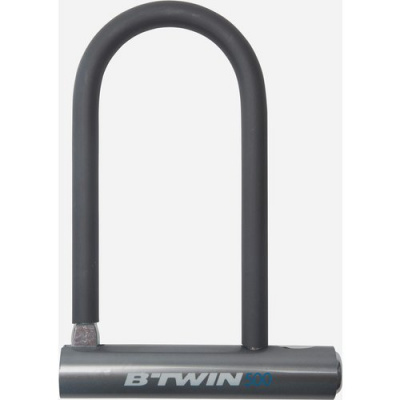
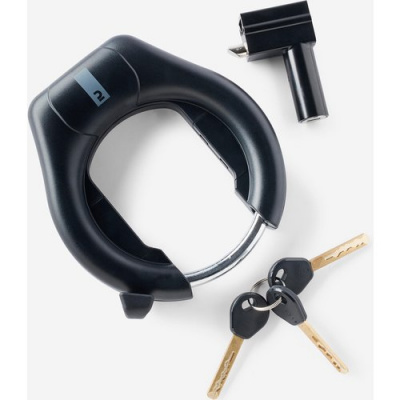
On mounting: most BTWIN D-locks ship with a universal mounting bracket that clips to standard round frame tubes. That works fine on most hybrid and commuter frames, but smaller frames with a compact front triangle can run out of room quickly, especially if you're already running two bottle cages. Full-suspension mountain bikes are another challenge - shock placement in the front triangle often blocks the obvious mounting spot entirely. Measure your tube diameter and check clearance before assuming the bracket will fit. If home security is what you're after rather than on-bike storage, BTWIN's anchor range is the right place to look - that's a separate category covering ground and wall anchors designed for garage and shed use.
Reading the BTWIN Security Scale: Which Lock for Which Situation
Decathlon's 1-10 security scale is the most transparent system in this price bracket. No marketing blur - just a number that tells you what the lock was designed to resist. It's worth understanding what each band actually means in practice.
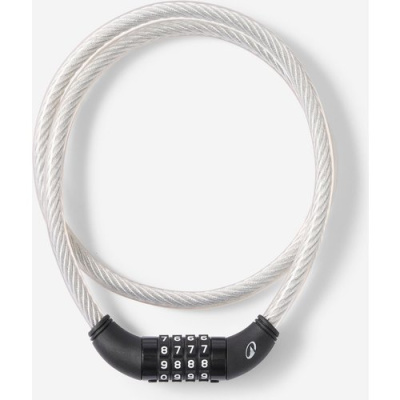
Levels 1 to 4 cover cable locks and combination locks. These are visual deterrents. Full stop. A determined thief with a decent pair of snips can be through a standard cable in seconds. That doesn't make them useless - they're fine for locking a helmet to your bike outside a café, or as a secondary loop through your wheels when a solid lock already secures the frame. Don't rely on them alone anywhere your bike is out of sight.
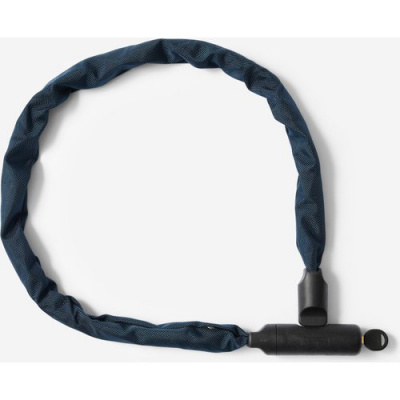
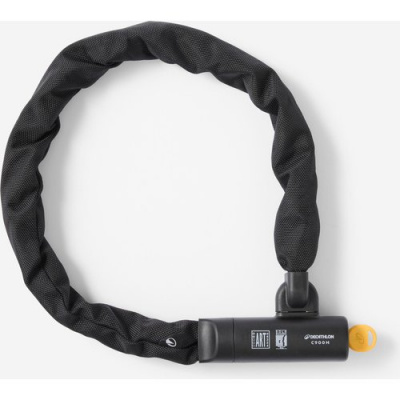
Levels 5 to 7 are where the range starts to earn commuter credentials. Mid-weight chains with a chain sleeve and smaller D-locks sit here, with hardened steel construction and more robust cylinder mechanisms. For suburban commuting - a train station car park, a workplace bike shed with CCTV - this tier is a reasonable fit. The weight is manageable on a daily basis, and the resistance level is meaningfully higher than a cable.
Levels 8 to 10 are non-negotiable for high-risk urban parking. These are the heavy D-locks and thick chains with shackle thickness typically 14mm or above, tested against angle grinder and hydraulic attack. If you're locking up in central London, Manchester city centre, or anywhere with a known high theft rate, this is the band you need. The Elops co-branding appears frequently across BTWIN's urban security products at this end of the scale - same engineering, slightly different aesthetic packaging aimed at the commuter audience. Don't let the branding difference confuse you; it's the same product ecosystem.
For riders comparing options across brands, Hiplok locks and Litelok UK locks are worth a look at the heavier end - both offer wearable and high-rated formats that suit different carrying preferences if the BTWIN bracket mount doesn't suit your setup.
A BTWIN combination bike lock is a practical choice if you hate carrying keys, but keep them to the lower end of the risk scale - combination mechanisms are harder to make genuinely pick-resistant than a keyed anti-pick cylinder, so use them where the threat level matches.
Keeping Your Lock Working Through a British Winter
UK winters are unkind to lock internals. Road salt, standing water, and freezing rain get into the keyhole and strip away the factory grease that keeps the pin stack moving freely. Leave it long enough and you're standing in the rain with a key that won't turn - or worse, one that snaps off inside the barrel.
The fix is straightforward but most people never bother until something jams. If your lock has been soaked - a wet commute, a bike wash, a week of rain - flush the keyhole with a water-displacing spray like GT85. That shifts the moisture before it can sit and corrode. Follow it up with a dry lubricant: PTFE spray or powdered graphite, both applied directly into the cylinder. Do this every three to four months and the mechanism will keep turning cleanly.
One thing to avoid: heavy wet chain lubes or oil inside the cylinder. They feel logical but they're not - wet lubes attract grit and road dust, and over time that mixture acts like grinding paste against the pin tumblers. You'll feel it as a notchy, stiff key action before the lock eventually seizes. Dry lube only in the keyhole. Keep the wet stuff for your drivetrain.
The rubberised coating on BTWIN's higher-rated shackles also benefits from a wipe-down occasionally - it keeps the material supple and stops the coating cracking in prolonged cold, which can expose the steel underneath to the kind of surface rust that spreads faster than you'd expect through a winter in the Peak District or up in Scotland.
If you're building out a full commuter setup, it's worth thinking about how you carry the lock too. A well-fitted BTWIN pannier bag takes the weight off your body and keeps a heavy D-lock stable - much better than strapping it to your frame where it rattles and potentially marks the paintwork. And if you're putting together a commuter or hybrid build from scratch, the BTWIN hybrid bikes and BTWIN e-bikes ranges are worth browsing alongside - matching your lock tier to the bike's value is just sensible. A level-9 D-lock on a £200 hybrid is overkill; the same lock on a £1,500 e-bike is simply correct. Tyre choice matters too for year-round commuting - BTWIN commuter and hybrid tyres pair well with the urban focus of the security range if you're refreshing the whole setup.
BTWIN Locks FAQs
Are BTWIN bike locks Sold Secure approved?
Several BTWIN and Elops D-locks and heavy-duty chains carry Sold Secure Silver or Gold ratings. Always check the specific model's rating before buying - your insurer's policy documents will state the minimum tier required, and assuming Silver is enough when they want Gold can leave a claim void.
How do I stop my BTWIN lock cylinder from seizing?
UK road spray and rain wash factory grease out of the keyhole faster than you'd expect. Flush with a water displacer like GT85 after wet weather, then apply a dry PTFE or graphite lubricant directly into the cylinder every three to four months. Keep wet lubes out of the barrel - they trap grit and grind the pins.
Can I mount a BTWIN D-lock to my bike frame?
Most BTWIN D-locks include a universal mounting bracket for standard round frame tubes. Check your front triangle has enough clearance, particularly on compact frames or full-suspension bikes where the shock eats into the available space. Running two bottle cages can also make it a tight squeeze.