
BTWIN Hybrid Bikes
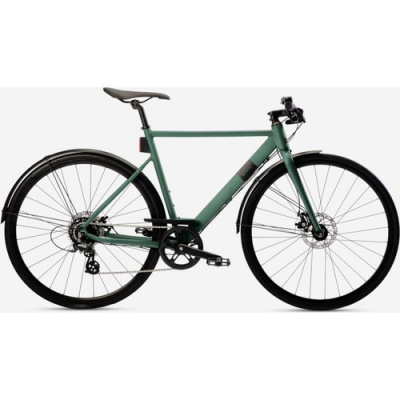
BTWIN hybrid bikes are among the most practical, honest-value cycles you can buy in the UK right now. Designed in-house by Decathlon, they're aimed squarely at riders who want a dependable bike for daily commuting, weekend canal-path pottering, or family leisure rides - without spending a fortune or sacrificing durability. The frames are built from either 6061 alloy or hi-ten steel depending on the tier, and the geometry is deliberately upright, keeping you comfortable and aware of traffic rather than stretched out chasing aerodynamics. That relaxed, commuter geometry makes them genuinely easy to live with day to day. What sets BTWIN apart from cheaper alternatives is the substance behind the badge. Pannier mounts, rack-ready eyelets, and clearance for wider tyres come as standard across most of the range - not as paid extras. Crucially, BTWIN backs the core chassis on many models with a lifetime warranty on frames, rigid forks, handlebars, and stems. That's a serious commitment on a budget-friendly bike. Whether you're dodging potholes on a rain-soaked Manchester commute or exploring a Cotswolds towpath at the weekend, there's a BTWIN hybrid that fits the brief without drama.
Prices and availability can change quickly. Delivery charges are not always included in listed prices.
Final price, stock status and delivery terms are set by retailer. We may receive a commission on purchases made.
Decoding the BTWIN Hybrid Lineup
BTWIN's hybrid range splits into two clear families. The BTWIN Riverside hybrid bike series is the trekking-oriented arm - typically featuring front suspension on mid-range models, knobbier 700c wheels, and geometry that handles light gravel paths as confidently as it does tarmac. Think weekend rides that might drift off the towpath onto a bridleway. The Hoprider (and older Original series) takes a different angle: rigid forks, pre-fitted racks, and often integrated dynamo lighting. These are committed urban machines, set up for the school run or the office commute without any aftermarket faff required.
The numbering system is worth understanding before you buy. Entry-level models - the 100s - use hi-ten steel frames, V-brakes, and basic 6 or 7-speed gearing. Practical and tough, but heavier. Move into the 500 series and you're into 6061 alloy frames, mechanical disc brakes, and mid-range Shimano groupsets that shift crisply even when the cables get gritty. The 900-tier models push further still - lighter builds, hydraulic discs on some, and Shimano or Microshift drivetrains that wouldn't look out of place on a more expensive bike. The jump between tiers is meaningful, not marginal. If you're commuting five days a week in British weather, stepping up to a disc-equipped 500 or 700 model is worth it.
It's also worth knowing that BTWIN produces electrified and compact commuter options alongside these hybrids. If you're considering a power-assisted ride, take a look at BTWIN e-bikes. Prefer something you can fold and take on the train? BTWIN folding bikes are worth a look too.
What BTWIN Actually Builds Into Their Bikes
BTWIN isn't just reboxing generic components. There are a few deliberate design decisions baked into the range that matter for UK riders specifically. Start with the B'Twin Lifetime Warranty. Frames, rigid forks, handlebars, and stems are all covered - which is genuinely rare at this price point and tells you something about how confident they are in the core build quality. It also means less anxiety about buying a lower-tier model: the bones of the bike are covered.
The Ergofit Trekking Saddles fitted across the range are shaped for an upright riding position rather than a forward aggressive one. They're wider through the sit bones, with a pressure-relief channel running the length. They won't suit everyone straight out of the box - saddle fit is personal - but they're a more considered starting point than the flat, narrow perches you'd typically find on a similarly priced bike.
The step-through frame geometry, or trapeze frame as BTWIN sometimes labels it, deserves a mention too. Available across both the BTWIN hybrid bike mens and BTWIN hybrid bike womens ranges, this low standover design makes stop-start city riding far less awkward. If you're clipping a foot down every hundred metres in traffic, you'll appreciate it fast. It's not just a style choice - it's a practical one. The transition from V-brakes on entry models to mechanical disc brakes from the mid-tier upward also reflects sensible thinking: rim brakes work fine in dry conditions but lose feel quickly in wet British autumn. Discs give consistent, modulated stopping power regardless of what the weather's doing, and given UK winters, that's a real benefit rather than a spec-sheet boast.
Compared to something like a Carrera hybrid or a Boardman hybrid, BTWIN models tend to arrive better equipped out of the box - particularly for commuting - though the component quality at equivalent price points is broadly comparable.
Running a BTWIN Through a British Winter
UK roads are not kind to bikes. The combination of frost-cracked tarmac, standing water, and grit-salt residue will expose weaknesses in any drivetrain quickly. BTWIN hybrids arrive with double-walled rims and 38c or wider tyres as standard on most models, which absorbs road shock meaningfully better than narrow tyres on single-wall rims. Not glamorous, but you feel the difference on a potholed commute.
The entry-level drivetrains - particularly on steel-frame models - are cost-effective but need attention. Clean and lube the chain every two weeks through winter, not every month. Grit gets into cables and housing faster than you'd expect, and indexed shifting degrades quietly before it fails loudly. A tyre upgrade to a puncture-resistant option like a Schwalbe Marathon is one of the best early investments on any entry-tier BTWIN - the stock rubber is fine for dry use but can feel nervous on wet urban roads.
The mounting point situation is genuinely good. Most BTWIN hybrids come with rack eyelets front and rear, and the clearances are designed to accept full-length mudguards without modification - a detail that matters when you're arriving at work without a brown stripe up your back. Fitting a pannier rack is straightforward on most models, and the low-key aesthetics of BTWIN bikes work in your favour in city environments. Paired with a solid D-lock from BTWIN's lock range, these are bikes that don't advertise themselves as worth stealing. That's quietly useful. For riders choosing between the BTWIN Riverside and the city-focused Elops range, it's worth being honest about where you'll actually ride - Elops bikes are dialled purely for smooth urban surfaces, while the Riverside handles a rougher mix more comfortably.
BTWIN Hybrid Bikes FAQs
Are BTWIN hybrid bikes good for long distances?
For commutes and leisure rides up to around 30 miles, BTWIN hybrids are well suited - the upright geometry and Ergofit saddles keep things comfortable at a steady pace. Push into longer touring distances and you'd benefit from swapping the saddle for something more tailored to your sit bones, and adding bar ends to give your hands more positions.
What is the difference between BTWIN Riverside and Elops?
The Riverside range is built for mixed-surface riding - front suspension, wider tyres, and geometry that handles light gravel as well as tarmac. Elops is a separate Decathlon sister brand focused purely on Dutch-style upright city bikes for smooth, paved urban roads. If you're staying on tarmac, Elops; if you want flexibility, Riverside.
What size BTWIN hybrid bike do I need?
BTWIN's sizing typically spans Small (1.50m - 1.65m) through to Extra Large (1.85m - 2.00m). The relaxed commuter geometry is forgiving between sizes - if you're on the boundary, go smaller for more nimble handling around traffic, or larger if you prefer a more stretched and stable riding position.