
Compass Saddles
Compass saddles sit in a part of the market that doesn't get enough credit - genuinely comfortable, properly weather-resistant, and priced so you won't wince when you swap one out. If your current saddle is worn, creaking, or just making every commute a chore, replacing it is the single most cost-effective comfort upgrade you can make to a bike. No new wheels, no fitting session required. Just a few minutes with an Allen key.
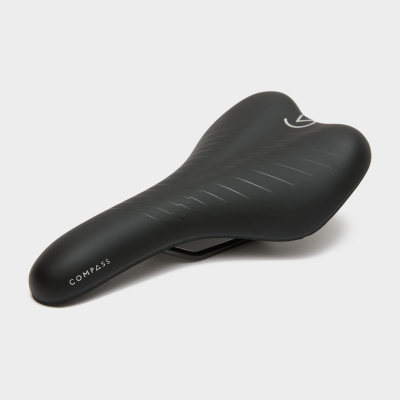
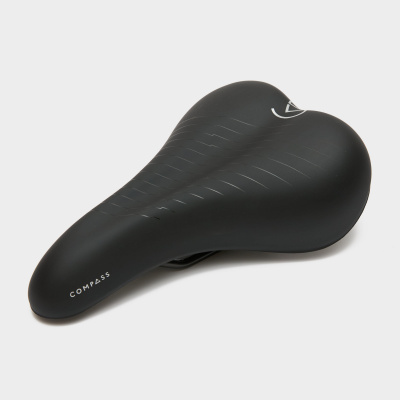
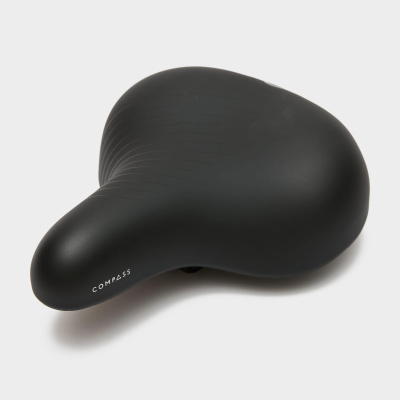
Compass builds its saddles around high-density memory foam that distributes pressure across your sit bones rather than concentrating it in all the wrong places. Leisure models add elastomer shock absorbers to take the edge off rough surfaces - handy if your route involves poorly patched tarmac or canal towpaths. All models are finished with a synthetic weather-resistant cover designed to shrug nothing - designed, rather, to wipe clean in seconds and resist the kind of persistent drizzle that defines a British Tuesday morning commute.
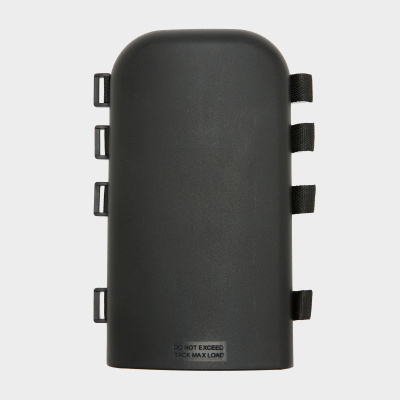
They suit commuters, hybrid riders, and anyone who wants a dependable, no-fuss seat without paying for technology they'll never use. Looking to protect your seat or carry spares? Check out our dedicated ranges of Compass Saddle Covers and Compass Saddle Bags.
Prices and availability can change quickly. Delivery charges are not always included in listed prices.
Final price, stock status and delivery terms are set by retailer. We may receive a commission on purchases made.
Rail Standards and What Fits What
The first question most people ask before buying a replacement saddle is whether it'll actually bolt on. With Compass, the answer is almost always yes. Every saddle in the range uses 7x7mm steel rails - the standard that virtually every micro-adjust seatpost on the market is designed to grip. If your bike was bought in the last twenty years and came with a two-bolt seatpost clamp, you're good to go straight out of the box.
Older bikes are a slightly different story. Pre-2000 frames sometimes used a plain, non-slotted straight seatpost with no built-in clamp - what mechanics often call a guts clamp or bolt-on saddle clamp. You'll need a separate saddle clamp adapter that wraps around the rails and pinches onto the post. These are cheap, widely available, and take five minutes to fit. Don't let an older frame put you off a sensible upgrade.
Steel rails do carry one known vulnerability in UK conditions. Road grit and winter salt thrown up from the rear wheel can work into the contact point where the rails meet the seatpost clamp jaws, and corrosion follows surprisingly quickly. A thin smear of copper grease or a few squirts of water-displacing spray at that junction before you fit the saddle costs nothing and extends the rail life considerably. Worth doing once, then forgetting about it.
Choosing the Right Compass Saddle for Your Riding Position
Compass produces two fairly distinct profiles, and picking the wrong one is the most common mistake buyers make. Measure your sit bone width first - you can do this at home by sitting on a piece of corrugated cardboard, then measuring the distance between the two indentations. That number guides everything else.
If you ride upright - city bike, Dutch-style hybrid, or a leisure bike where the handlebars sit level with or above the saddle - you want the wider leisure or city profile. These saddles have a broad, flat platform with generous padding and, on most models, elastomer suspension built into the rails or undercarriage. The elastomer absorbs the kind of short, sharp jolts that come from frost-cracked urban tarmac without asking you to spend money on a suspension seatpost. The trade-off is that the extra width can cause inner-thigh chafing if you're pedalling fast or covering longer distances in a more aggressive position.
Commuter and hybrid saddles in the Compass range are narrower, cut for a slight forward lean where your weight shifts fractionally onto the pedals and bars. These feature a perineal relief channel - a longitudinal groove down the centre - that reduces pressure on soft tissue during longer efforts. If you're doing anything over thirty minutes at a moderate pace, this matters more than most people realise. Worth noting that Bioflex saddles and Madison saddles occupy a similar commuter-friendly space if you want to compare profiles before deciding, and Fabric saddles are worth a look if you're willing to spend more for a performance-oriented shape.
A flat saddle is almost always the safer starting point. Nose-up tips your weight back onto the spine of the saddle; nose-down loads your arms and can cause hand numbness on longer rides. Level is neutral, and you adjust from there based on feel - small increments, one ride at a time.
Keeping a Compass Saddle in Good Shape on UK Roads
The synthetic weather-resistant cover on Compass saddles handles British conditions well, but it's not indestructible. The vinyl or polyurethane surface can be wiped clean with a damp cloth after muddy rides - avoid abrasive sponges or solvent-based cleaners, which will dull and eventually crack the coating. If you store your bike outside or in a damp shed, check the cover periodically for small splits or lifted seams. A cracked cover exposes the high-density foam underneath, and wet foam that can't dry out will develop mould and lose its structure over a single winter. A saddle cover is cheap insurance against this.
Clamp torque is the other thing that catches people out. Most seatpost manufacturers specify 12 - 15Nm for the saddle clamp bolts. Under-torque and the saddle rotates or tilts forward the first time you hit a pothole - and UK B-roads will find the limit quickly. Over-torque and you risk crushing the rails or cracking a carbon seatpost collar if you've upgraded the post. A basic torque wrench takes the guesswork out entirely and is worth owning if you're regularly adjusting your setup. Check the torque after the first couple of rides on a new saddle; the rails can settle slightly in the clamp jaws as everything beds in.
If you're building out your Compass setup, the brand also produces Compass pedals and Compass handlebars that follow the same value-driven brief - practical components that work without asking you to think too hard about them. And if you're starting from scratch, their Compass hybrid bikes come factory-fitted with saddles matched to the frame geometry. Alternatively, BBB saddles are a solid comparison point if you want to see how a similarly priced European brand approaches the same brief.
Compass Saddles FAQs
How do I know if a Compass saddle will fit my bike?
Compass saddles use standard 7x7mm steel rails, which clip directly into virtually any modern micro-adjust seatpost - no adapters needed. If your bike has an older straight seatpost without a built-in clamp, you'll need a separate saddle clamp adapter to bridge the two. These are inexpensive and widely available at any bike shop.
Are Compass saddles waterproof for UK weather?
The synthetic vinyl covers used across the Compass range repel rain and road spray effectively - water beads off rather than soaking in. Give the surface a quick wipe before you sit down on a wet day and you won't end up with a damp patch on your commute. Avoid cover tears, which expose the foam to prolonged moisture.
How do I adjust the angle of my Compass saddle?
Loosen the clamp bolt under your seatpost head, set the saddle level using a spirit level or a phone app, then re-torque to the seatpost manufacturer's spec - typically 12 - 15Nm. A level saddle puts your weight through your sit bones where it belongs, rather than pushing it forward onto your hands or back onto your tailbone.