
BBB Saddles
Getting the right saddle is the single most impactful change you can make to your bike, and BBB saddles bring genuinely ergonomic engineering to a price bracket where you'd normally compromise. Whether you're grinding out winter base miles on wet roads, picking lines through muddy Peak District singletrack, or commuting through Bristol on a daily basis, BBB builds saddles around specific sit bone widths and riding postures rather than offering a one-size-fits-nobody solution.
Across the range you'll find proprietary ComfortLite geometry, designed to support your pelvis efficiently without forcing an awkward tilt, alongside anatomic pressure relief channels that reduce soft-tissue pressure on longer efforts. The commuter and touring models bring Memory Foam layering into the mix, which works well if you're not in padded shorts. Performance-oriented saddles lean on Superlight high-density foam and stiffer shells for better power transfer when you're pushing hard.
Rail options run from steel through CrMo to titanium depending on the model, and most saddles use standard 7x7mm round rails that slot straight into virtually any seatpost clamp without drama. Browse the full range below and use our filters to match saddle width, rail type, and riding style to what you actually need.
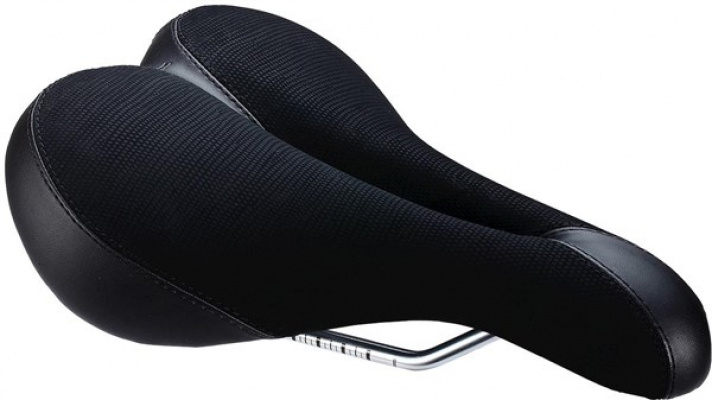
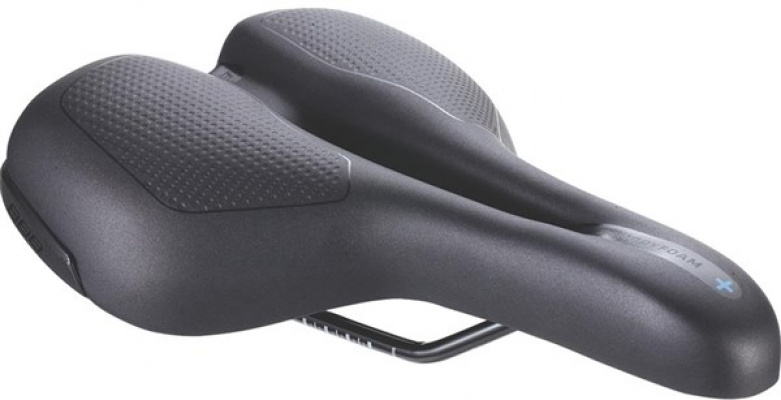
Prices and availability can change quickly. Delivery charges are not always included in listed prices.
Final price, stock status and delivery terms are set by retailer. We may receive a commission on purchases made.
Will a BBB Saddle Fit Your Seatpost?
Short answer: almost certainly yes. The vast majority of BBB saddles use standard 7x7mm round rails in either CrMo or steel, which are universally compatible with top-and-bottom clamp seatposts and side-clamp designs alike. If you're replacing a worn saddle on a road bike, an MTB, or a commuter, you're extremely unlikely to run into a fitment issue with a standard-rail BBB model.
Where it gets more specific is if you're looking at higher-end BBB saddles specced with 7x9mm oval carbon rails. These aren't compatible with every seatpost clamp out of the box. Side-clamping posts in particular often need specific adapter ears or a clamp designed for ovalized rails, so check your seatpost's spec sheet before you buy. It's a five-minute job to confirm, and it saves a frustrating return.
On the question of saddle width - and this genuinely matters more than most riders realise - the practical method is to press a piece of corrugated cardboard onto a firm chair, sit on it for a minute, then measure the distance between the two dents left by your sit bones. Add roughly 20mm to that figure for an aggressive, forward-leaning road position, or up to 30mm if you sit more upright. BBB's range typically spans 130mm to 165mm, covering most skeletal structures. Get this wrong and no amount of good foam or clever geometry will make a saddle comfortable. Narrow saddles on wide sit bones cause pressure on soft tissue; saddles that are too wide chafe the inner thigh on every pedal stroke.
On seatpost clamp compatibility more broadly: BBB's standard-rail saddles fit almost any post using a conventional two-bolt or single-bolt clamp. Double-check the clamp's rail diameter spec if you're running an older or unusual post, but for 99% of riders this is a non-issue.
Breaking Down the BBB Range by Riding Style
BBB road bike saddles in the performance tier - typified by the Echelon series - are built around firmer Superlight high-density foam, carbon-reinforced shells, and prominent Plus channel anatomic cutouts that run the length of the saddle to relieve pressure on the perineal area during sustained efforts. These are saddles designed for riders in padded shorts, tucked into a relatively aggressive position, covering real distance. The stiffer base means you lose less energy through flex, which matters when you're putting power through the pedals on a long climb.
Spend more within the performance range and you get lighter rail materials - titanium CrMo rails instead of steel, saving meaningful grams if you're weight-conscious - plus more durable and abrasion-resistant synthetic covers that hold up better to repeated contact with bib shorts. If you're comparing at this level, Fizik saddles and Fabric saddles are the natural reference points; BBB typically undercuts them on price for comparable rail specs.
BBB mountain bike saddles UK riders tend to reach for sit slightly differently - you're often off the saddle entirely, so the focus shifts to a narrow nose that doesn't interfere with movement and a durable cover that doesn't tear on rough dismounts. The short-nose variants in the BBB lineup address this, and the pressure relief channel still earns its keep on longer XC or trail rides where you're seated for extended climbs.
The commuter and touring range - the BSD series - takes a different approach entirely. Memory Foam layers replace the firmer performance foam, giving a more forgiving feel for riders not wearing padded shorts. Some models add elastomer suspension built into the base, which takes the edge off road buzz without you needing a suspension seatpost. Profiles are wider and the geometry is flatter, reflecting the more upright riding position of a city or touring bike. These saddles also tend to use sealed or water-resistant synthetic covers, which matters if your bike lives outside or gets rained on every commute. For urban riders who want a step up in cushioning, it's worth glancing at Ergon saddles and Brooks saddles as alternatives at either end of the comfort spectrum.
As a general rule: the more you spend in the BBB range, the lighter the rails, the stiffer the shell, and the more refined the cover material. Entry-level models are solid workhorses; the upper tier is where you notice the difference in long-ride comfort and longevity.
Keeping BBB Saddles in Good Shape Through UK Conditions
UK roads and trails are not kind to saddles. Road spray carries road salt and fine grit; trail riding throws mud into every interface. Neither is good news for synthetic covers or seatpost clamps, and both contribute to the creaking that drives riders mad on cold winter mornings.
Cleaning the cover is straightforward - warm water and a soft cloth. What you want to avoid is spraying degreaser directly onto the saddle, because it breaks down the synthetic material and the stitching around the edges over time. A dedicated bike cleaner applied sparingly, then rinsed off, is fine. For saddles with Memory Foam layers, avoid soaking - the foam can absorb water and take ages to dry out, which softens it permanently.
The creak issue deserves specific attention. That rhythmic tick you get on every pedal stroke in damp weather is almost always grit that's worked its way between the saddle rails and the seatpost clamp. It's a BBB saddle replacement job that riders often assume is a worn part, when it's usually just contamination. Fix it properly: remove the saddle from the post, clean the rails thoroughly with a dry cloth or a soft brush to remove any grit or corrosion, and clean out the clamp hardware the same way. Then apply a thin smear of copper-based anti-seize grease to the rail contact points before reassembling - or carbon assembly paste if you're running carbon rails, since grease can cause carbon to micro-slip under torque. Re-torque the clamp bolts to the manufacturer's specified figure; overtightening is a common cause of rail damage and doesn't actually stop the creak any better than correct torque does.
If you're leaving a bike outside or it regularly gets soaked, it's also worth checking that the area under the saddle nose and tail is draining freely and not holding standing water against the cover seam. A small thing, but it's the difference between a saddle that lasts two years and one that lasts five. Keeping your bike stored properly matters too - a quality BBB storage stand or hook keeps the saddle off the floor and out of the damp. And if you're after added protection for the frame during removal and refitting, BBB frame protection is worth adding to your kit at the same time.
On the question of seatpost clamp compatibility and creaking specifically: titanium rails are naturally more resistant to corrosion than steel, so if you're regularly riding in wet conditions and the creak keeps returning despite cleaning, it's worth considering a model with titanium CrMo rails as your next BBB saddle replacement. The cost difference is real, but so is the reduction in maintenance frequency.
BBB Saddles FAQs
How do I choose the right width for a BBB saddle?
Sit on a piece of corrugated cardboard on a firm surface, then measure the distance between the two impressions left by your sit bones. Add around 20mm for an aggressive road position, or up to 30mm if you sit upright. BBB saddles run from 130mm to 165mm wide, so most riders will find a suitable match within the range.
Are BBB saddle rails compatible with all seatposts?
Standard BBB saddles with 7x7mm round CrMo or steel rails fit almost every seatpost on the market without modification. If you opt for a higher-end model with 7x9mm oval carbon rails, check that your seatpost clamp is designed for ovalized rails - side-clamping posts in particular may need specific adapter ears to clamp correctly.
How do I stop my saddle rails from creaking?
Grit between the rails and seatpost clamp is almost always the cause. Remove the saddle, scrub the rails and clamp hardware clean, then apply a thin layer of anti-seize grease - or carbon assembly paste for carbon rails - before refitting. Re-torque the clamp bolts to the manufacturer's spec rather than guessing. Done properly, this fix usually lasts the season.