
Compass Pedals
Compass bike pedals are one of the most straightforward upgrades you can make to a hybrid, leisure, or commuter bike - and often one of the most overlooked. If your stock pedals have developed that tell-tale creaking click on every stroke, or the platform feels too narrow to trust on a slippery wet morning, it's time to swap them out. Compass pitches itself squarely at riders who want dependable, no-fuss performance without paying over the odds for features they'll never use.
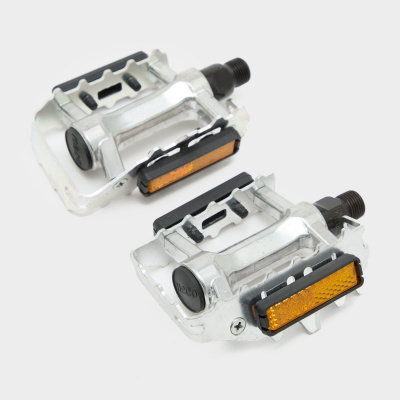
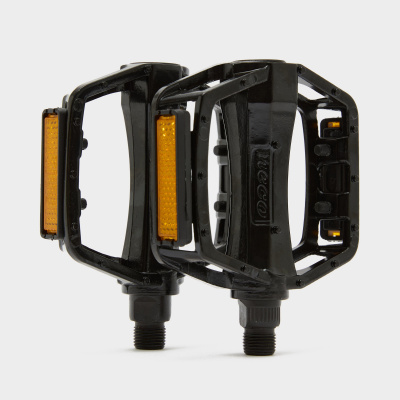
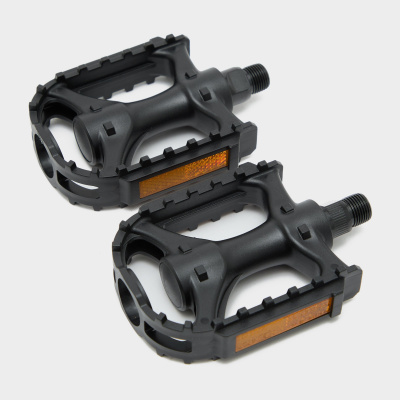
The range splits into two clear camps: lightweight nylon composite pedals aimed at everyday commuting, and wider alloy platform options for riders who want a bit more grip and impact resistance on rougher paths. Both use chromoly steel axles and the industry-standard 9/16 inch thread, so fitting them to your existing cranks is straightforward. Integrated amber reflectors on the commuter models keep you legal under UK Highway Code rules for night riding - no faffing about adding stick-on reflectors after the fact. Practical, honest kit at a sensible price point.
Prices and availability can change quickly. Delivery charges are not always included in listed prices.
Final price, stock status and delivery terms are set by retailer. We may receive a commission on purchases made.
Will Compass Pedals Fit Your Bike?
Compass pedals use the 9/16 inch thread standard - the same spec you'll find on the vast majority of adult bikes, whether that's a hybrid doing the school run, a hardtail on the local trails, or a road bike. If you're on an adult bike built in the last couple of decades, they'll almost certainly fit straight on.
The one exception worth knowing about: some kids' bikes and older one-piece BMX-style cranks use a smaller 1/2 inch thread. That's a completely different fit, and you can't force a 9/16 pedal onto a 1/2 inch crank without wrecking the threading. Always check your crankarm spec before ordering - it's usually printed on the crank or listed in the bike's manual. A two-second check saves a frustrating return.
One thing that catches people out every time: the left pedal is reverse-threaded. Turn it clockwise to loosen, counter-clockwise to tighten. It's designed that way to stop pedalling forces from gradually undoing it, but if you forget and go the wrong way, you'll just be tightening a stuck pedal further. Mark your spanners if you have to. The right pedal is conventional - righty tighty, lefty loosey - so at least one side behaves itself.
Resin Commuter vs. Alloy Platform: What's the Difference?
The entry-level Compass pedals use high-impact nylon composite bodies - that's a reinforced resin construction that's light, corrosion-resistant, and perfectly capable of handling daily commutes and leisure rides. These are not going to crack if you clip a kerb, but they're not designed to absorb repeated heavy impacts either. What they do well is keep weight low, resist the kind of surface rust you'd get from bare metal, and come with those pre-fitted amber reflectors that mean you're road-legal from the moment you bolt them on. If your riding is mostly tarmac and towpaths, they do everything you need.
Step up to the alloy platform models and you get a noticeably wider, more substantial base underfoot - think of the difference between standing on a skateboard deck versus a plank of wood. More contact area means more confidence, particularly if you ride in flat shoes or your commute involves the odd bit of loose gravel or wet decking. The alloy platform construction also takes knocks better, and the addition of grip pins gives your shoes something to bite into rather than skating across the surface. If you're using Compass pedals on a hybrid that occasionally ventures onto canal towpaths, gravel tracks, or anything loosely described as off-road, the alloy option earns its slightly higher price.
For comparison, brands like DMR and MKS occupy the mid-to-upper end of this market with more premium alloy and composite options - useful benchmarks if you're weighing up how far up the range to go. At Compass's price point, the alloy platform pedals sit as a genuinely capable everyday option rather than a placeholder until something better comes along.
Pairing new pedals with a Compass saddle or updated Compass handlebars can refresh the whole contact-point setup of a commuter bike without a major spend - worth thinking about if the whole cockpit is feeling tired.
Surviving UK Winters: Maintenance That Actually Matters
British winters are hard on pedal bearings. Road salt and grit work their way into any gap they can find, and if your pedals use loose-ball bearings rather than sealed cartridge bearings, you'll feel the roughness building up within a season. Compass pedals use sealed internals, which helps, but the real killer isn't the bearings - it's the threads seizing into the crankarm.
Salt and dissimilar metals are a bad combination. Leave alloy cranks and steel axle threads in contact through a wet winter without any protection, and you can end up with a pedal that's effectively welded in place. The fix is simple and takes thirty seconds: apply anti-seize grease to the pedal threads before installation. A small smear is all it takes. Lithium grease works too if that's what's in your toolbox. Do this every time you fit pedals and you'll never have to destroy a crankarm trying to extract a seized axle.
Checking for bearing wear is equally straightforward. Grab the pedal body and try to wiggle it side-to-side on the axle - a small amount of movement is normal, but noticeable play or a grinding sensation when you spin it means the bearing is on its way out. At Compass's price point, replacing the whole pedal rather than attempting a bearing service usually makes more economic sense. Keep a spare pair on the shelf if you commute year-round; it's not a bad habit.
Installation itself needs a 15mm pedal wrench or the appropriate hex key - most Compass pedals accept both. Torque them to around 35Nm if you're working with a torque wrench, or firm-but-not-gorilla-tight if you're going by feel. If you're also looking at a Compass hybrid bike, it's worth noting that the pedals fitted as standard on many complete bikes are basic enough that swapping them early is a worthwhile first step. Nukeproof makes a useful comparison at the upper end of the flat pedal market if budget allows for more.
Frequently Asked Questions
Are all bike pedals the same thread size?
Not quite. Most adult bikes - hybrids, mountain bikes, road bikes - use the standard 9/16 inch thread, and Compass pedals follow that spec. The exception is some kids' bikes and one-piece BMX cranks, which use a smaller 1/2 inch thread. The two aren't interchangeable, so check your crankarm before buying. If in doubt, your local bike shop can confirm in about ten seconds.
How do I remove and install Compass bike pedals?
The key thing to remember: the left pedal is reverse-threaded. Turn it clockwise to loosen it, counter-clockwise to tighten. The right pedal is conventional. Use a 15mm pedal wrench or a hex key on the axle end, and always apply anti-seize grease to the threads before fitting - this stops the axle bonding to the alloy crankarm over time, which is a genuine problem in UK riding conditions.
Are pedal reflectors legally required in the UK?
Yes. The UK Highway Code requires amber reflectors on the front and rear of both pedals when riding between sunset and sunrise. Many Compass commuter pedals come with these already fitted, which means you're sorted without any extra faff. If you're buying aftermarket pedals that don't include reflectors, you'll need to add them separately to stay legal.
Compass Pedals FAQs
Are all bike pedals the same thread size?
Most adult bikes use the standard 9/16 inch thread, and Compass pedals follow that spec. Some kids' bikes and one-piece BMX cranks use a smaller 1/2 inch thread - the two aren't interchangeable. Always check your crankarm spec before ordering to avoid a wasted return.
How do I remove and install Compass bike pedals?
The left pedal is reverse-threaded - clockwise to loosen, counter-clockwise to tighten. The right pedal is conventional. Use a 15mm pedal wrench or hex key, and apply anti-seize grease to the threads before fitting. That one step stops the axle seizing into the alloy crankarm over a British winter.
Are pedal reflectors legally required in the UK?
Yes. Under the UK Highway Code, amber reflectors are required on the front and rear of both pedals when riding between sunset and sunrise. Many Compass commuter pedals come with these pre-installed, so you're road-legal straight out of the box without needing to source separate reflectors.