
Coast Gravel Wheels
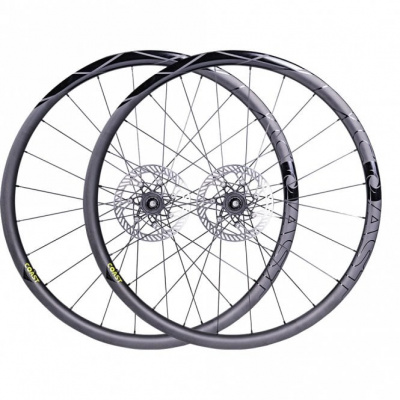
COAST gravel wheels sit in a genuinely useful place in the market: wide enough to make modern high-volume tyres work properly, stiff enough to handle the punishment that UK bridleways dish out, and built with the kind of hub quality that doesn't turn into a creaking mess by February. If you're running a gravel bike on anything from Lincolnshire droves to Dartmoor double-track, the wheels are where your money does the most work.
What sets COAST apart is the attention to the details that actually matter on a wet Tuesday. The internal rim profiles are optimised for 38mm to 45mm tyres - wide enough to stop that lightbulb-ing effect where a tyre balloons out beyond the rim edge and loses its shape under load. The rim beds come pre-taped from the factory, so tubeless setup doesn't require an afternoon of swearing. And the sealed cartridge bearings are built to cope with the kind of gritty, saline sludge that eats through cheaper hubs between October and March. Whether you're after a COAST road wheelset to complement your gravel build or you're going all-in on off-road capability, the gravel range covers a lot of ground - literally.
Prices and availability can change quickly. Delivery charges are not always included in listed prices.
Final price, stock status and delivery terms are set by retailer. We may receive a commission on purchases made.
Will COAST Wheels Fit Your Bike? Axles, Rotors, and Freehubs Explained
Before you click buy, spend two minutes with a tape measure and your bike's spec sheet. Most modern gravel frames use 12x100mm thru-axle spacing at the front and 12x142mm at the rear - and COAST gravel wheels are built around these standards. If you're running an older gravel or cyclocross frame with 15mm front axles or quick-release skewers, check carefully. Not all COAST wheels ship with adapter kits, so a quick email to the retailer before ordering saves a frustrating return.
Disc brake rotor mounts are the next check. COAST offers both Centerlock and 6-bolt options across their range. Centerlock is tidy and quick to swap, but you'll need a Centerlock-compatible lock ring tool - not the 6-bolt allen key job. If your rotors are already 6-bolt, match accordingly, or budget for new rotors at the same time.
Freehub body choice matters more than most riders realise. Running Shimano HG 10 or 11-speed? Standard. Jumped to SRAM AXS 12-speed? You need the SRAM XDR freehub body. Shimano 12-speed uses Micro Spline, which is a different interface again. Some COAST hubs allow freehub body swaps, which is worth factoring in if you're likely to change groupsets in the next few years. Get this wrong and your cassette simply won't fit - it's a surprisingly common mistake.
Internal rim width also dictates what tyres you can safely run. COAST gravel rims typically sit between 23mm and 25mm internal width, which suits tyres from 35mm up to around 50mm. Narrower than that and you risk the lightbulb-ing effect mentioned above; wider than your frame clearance and you'll be making some unpleasant discoveries on a muddy descent. Measure your clearance at the chainstay and fork crown before committing to anything over 45mm, particularly on older frames.
700c vs 650b: Picking the Right COAST Wheel for How You Ride
The choice between 700c and 650b isn't just about tyre volume - it changes how the whole bike feels and what it's actually good at. COAST gravel wheels are available in both, and the decision comes down to where and how you ride.
700c is the default for most UK gravel riders. The larger diameter rolls over hardpack, compacted bridleways, and canal towpaths more efficiently - it keeps your speed up between the rough bits. If you're doing long mixed-surface days, sportives, or anything where you want the bike to feel closer to a road bike, 700c is the sensible call. It also gives you the widest tyre selection, since most gravel-specific rubber comes in 700c first.
Go 650b and you're trading rollover efficiency for the ability to run genuinely chunky tyres - think 47mm to 2.1-inch mountain bike-adjacent rubber - at low pressures. On the Peak District's rocky bridleways, the South Downs' unpredictable flint-strewn chalk tracks, or anything that starts to blur the line between gravel and trail riding, that extra tyre volume transforms the experience. The bike sits lower too, which changes the handling in corners. Worth knowing before you commit.
On materials, COAST's alloy gravel wheels are the practical workhorse of the range. Tough, repairable, and sensibly priced - a dent from a hidden rock is annoying, not catastrophic. Move up to COAST's carbon options and you're paying for meaningful rotational weight savings and noticeably stiffer rim walls, which translates to snappier acceleration and better lateral precision when you're putting power through a corner. Whether that's worth the premium depends on how often you're actually riding fast enough to feel the difference. For weekend adventure riders, alloy is hard to argue against. For riders doing competitive gravel events or longer day loops where every watt counts, carbon earns its place. Brands like DT Swiss gravel wheels and Hope gravel wheels sit in the same conversation at this level, so it's worth comparing the full picture on Bikesy before you decide.
One more thing worth noting: COAST's rapid engagement freehub mechanism gives noticeably faster pickup when you re-apply power out of a corner or after a technical section. On a steep, rooty climb where you're constantly modulating effort, that instant drive - rather than the half-pedal-stroke lag of lower-engagement hubs - is actually useful, not just a spec sheet number.
UK Durability: Bearings, Sealant, and Keeping Things Running Through Winter
UK gravel riding is hard on wheels. It's not just the sharp flint on the South Downs or the loose shale in the Peak District - it's the salt spray from winter roads, the abrasive fine grit that works into every gap, and the kind of sustained damp that turns neglected bearings into grinding paste within a season.
COAST uses double-sealed cartridge bearings across their gravel hub range, and that extra seal layer makes a genuine difference in longevity if you're riding through winter. That said, no bearing is fully immune. If you're putting in regular wet miles between October and March, pull the wheels out every six months, check the freehub pawls for wear, and regrease the axle end caps. It takes twenty minutes and saves you an expensive bearing replacement. Mavic gravel wheels and Fulcrum gravel wheels use similar maintenance intervals, so this isn't unique to COAST - it's just the reality of riding proper off-road in the UK.
On the tubeless side, COAST's pre-taped rim beds and secure bead locks are a genuine time-saver at setup. The tape is factory-fitted and properly seated, so you're not fighting bubbles and leaks on your first attempt. That said, tubeless sealant doesn't last forever - top it up every three to four months, and more frequently if you're regularly riding sharp-flint country. A tyre that sealed perfectly in September can fail to hold air by December simply because the sealant has dried out. Keep a small bottle in your workshop and make it part of your seasonal check.
For the best COAST gravel wheels for UK winter use, the alloy options with double-sealed hubs and Centerlock rotor mounts are the most practical combination. Centerlock rotors are faster to remove for cleaning and bearing access, which matters when you're doing it regularly. If you're running a COAST 700c gravel wheelset through winter, a tyre with a tighter-knit centre tread - rather than an aggressive open lug - keeps rolling resistance manageable on the road sections without sacrificing too much on the muddy stuff.
Finally, if you're converting to COAST tubeless gravel wheels from a clincher setup for the first time, do it at home rather than five miles from the car. Seat the bead with a track pump or compressor, spin the wheel to distribute sealant, and leave it upright overnight before your first ride. You'll thank yourself when it holds air on a January morning in the Brecon Beacons.
Coast Gravel Wheels FAQs
Are COAST gravel wheels tubeless ready out of the box?
Yes. Most COAST gravel wheels leave the factory with rim tape already fitted and tubeless valves included. You mount a tubeless-compatible tyre, pour in your preferred sealant, and seat the bead - no additional taping required. Check the specific model listing to confirm, as a small number of entry-level options may vary.
What is the maximum tyre width for COAST gravel wheels?
COAST gravel rims typically run a 23mm to 25mm internal width, which safely accommodates tyres from 35mm up to around 50mm. The practical limit is your frame and fork clearance rather than the rim itself - measure at the chainstay and fork crown before fitting anything over 45mm, particularly on older or more road-biased frames.
Can I put COAST gravel wheels on a road bike?
You can, as long as your road bike has disc brakes and matching thru-axle spacing - 12x100mm front and 12x142mm rear. The main caveat is tyre width: COAST's wide internal rims aren't ideal for tyres narrower than 28mm. Running a skinny road tyre on a wide gravel rim distorts the tyre profile and can compromise cornering stability.