
Casco Aero TT Helmets
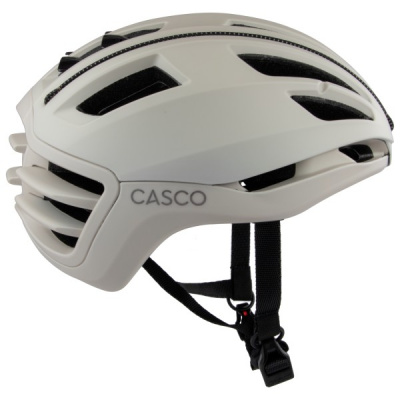
Casco Aero TT Helmets are among the most recognisable lids in the peloton - that distinctive teardrop silhouette is hard to miss on the start ramp or in the transition zone. German-engineered with a focus on drag reduction, integrated optics, and fit precision, Casco's aero range is built for riders who need their helmet to work as hard as they do across the full length of an effort.
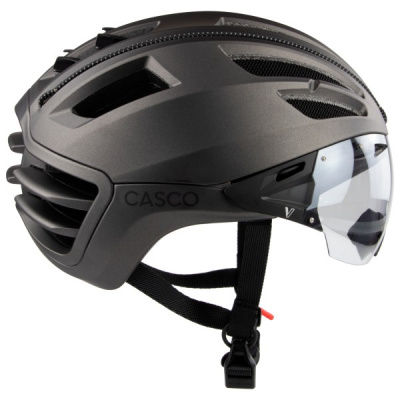
What sets Casco apart is the combination of adaptive aerodynamics and their SPEEDmask visor system. Rather than optimising purely for one fixed head position, the shell geometry manages airflow across different yaw angles - useful when you're grinding into a crosswind on an exposed UK dual carriageway or your chin drops during the final push of a 25-mile TT. The integrated Vautron photochromic lenses adjust automatically to changing light levels, which matters more than you'd think on a British morning that goes from flat grey to sharp sun inside twenty minutes.
Whether you're tracking down a club-run PB, racing long-course triathlon, or chasing velodrome records, there's a model in the range calibrated to that specific demand. This guide breaks down the tech, the fit systems, and the practical considerations so you can match the right helmet to your event.
Prices and availability can change quickly. Delivery charges are not always included in listed prices.
Final price, stock status and delivery terms are set by retailer. We may receive a commission on purchases made.
Aerodynamics and Visor Tech: What Casco Actually Does Differently
The teardrop and bob-tail shapes Casco uses aren't just for show - they're wind tunnel tested profiles designed to channel air cleanly over and around the helmet shell, reducing turbulence at the back of the head where drag tends to accumulate. The Monocoque-Ultra double shell construction stiffens the outer form without adding meaningful weight, keeping those aero lines intact under real riding loads rather than just in a test rig.
Adaptive aerodynamics is the term Casco uses for how their shells manage airflow when your head position shifts - leaning into the bars on a steep climb, looking ahead in an aero tuck, or glancing sideways for a junction. Most aero helmets are optimised for one position and penalise you aerodynamically the moment you deviate. Casco's geometry is more forgiving across yaw angles, which translates to consistent drag reduction whether you're perfectly dialled in or hanging on for the last five miles of a hard effort.
The SPEEDmask is Casco's integrated, flip-up panoramic visor system. It covers a wide field of vision without breaking the aero profile of the helmet, and the flip mechanism is fast enough to use in a triathlon T1 without fumbling. Pair that with Vautron automatic lenses - Casco's photochromic technology - and you have a visor that darkens and lightens in response to ambient light. On an overcast UK morning that suddenly brightens mid-ride, you're not squinting or reaching for sunglasses you've left in transition. The anti-fog coating on the inner surface keeps things clear during humid early starts, where a cold visor meeting warm breath would otherwise cloud over within minutes. That's a practical detail that earns its keep on a muggy August sportive as much as a crisp April TT.
If you're comparing Casco to other aero-focused brands, KASK Aero TT Helmets and Giro Aero TT Helmets both offer strong alternatives, though neither integrates photochromic visor tech at the same level across their range.
Making Sense of the Range: SPEEDtime, SPEEDairo, and Beyond
Casco's aero lineup splits broadly into two camps. Pure TT and track models - the SPEEDtime being the headline example - prioritise absolute drag reduction above everything else. Ventilation is minimal by design. These are helmets you wear for efforts measured in minutes, not hours, and the trade-off is acceptable at that level. If you're doing a club 10 or targeting a track pursuit, the SPEEDtime's fully closed shell and refined aero profile makes sense.
The SPEEDairo sits at the other end of the spectrum within the aero category - a triathlon and aero-road crossover that introduces ventilation channels into the shell without sacrificing the core aerodynamic properties. For an Ironman bike leg or a long sportive in warmer conditions, those internal air channels make a meaningful difference to head temperature and comfort over two-plus hours. It's the model most often seen racked in transition, and for good reason.
Fit is handled through two systems. CASCO-Loc is a dial-based retention mechanism at the rear of the helmet that applies even tension around the head - turn it until snug, and you're done. The Disk Fit Vario system adds height adjustability to that equation, letting you fine-tune the vertical position of the retention ring so it sits correctly for your specific head shape rather than just your circumference. To get sizing right, measure your head circumference in centimetres at the widest point - roughly a centimetre above your eyebrows - and cross-reference with Casco's size chart for that specific model. Aero helmets tend to have less adjustment latitude than road helmets, so getting the base size right matters. A helmet that moves under effort is both uncomfortable and slower.
Casco aero helmets generally fit true to size, but head shapes vary - particularly in the front-to-back versus side-to-side dimensions. If you can try before buying, do. If not, check the return policy.
For riders not yet committed to full aero, MET Aero TT Helmets offer a slightly more ventilated approach, while POC Aero TT Helmets are worth a look if head shape or safety certification is a deciding factor for you.
Ventilation, Fogging, and Looking After Your Kit
Even on a short TT, heat management matters. Casco's internal channeling routes air through the helmet's structure rather than relying on large open vents - which would compromise the aero shell. On the SPEEDairo in particular, these channels do real work during longer efforts. Positioning the helmet correctly on your head - with the front edge sitting roughly a finger's width above your eyebrows - ensures the intake openings align properly and the channeling actually functions as designed.
Visor care is where people go wrong. The Vautron lens has both photochromic and anti-fog coatings applied to its surfaces, and these are not robust to harsh cleaning. Lukewarm water and a soft microfibre cloth - that's it. No detergents, no bathroom spray, no rough sponges. Chemicals strip the coatings permanently, and a scratched or delaminated visor cannot be restored. After a muddy or sweaty ride, rinse gently and let it air dry away from direct heat. The SPEEDmask visor can typically be removed for cleaning, which makes the process easier and reduces the risk of accidentally stressing the flip mechanism.
Storage matters too. EPS foam - the energy-absorbing layer inside every certified helmet - degrades with prolonged UV exposure and fluctuating temperatures. Don't leave the helmet on the back shelf of a hot car or by a radiator. A bag or box in a stable room temperature environment extends the foam's integrity and keeps the lens coatings from cracking. Most manufacturers recommend replacing aero helmets every three to five years regardless of visible damage, and after any significant impact.
The broader Casco Helmets range covers road and commuter options if you need a helmet for everyday riding alongside your race-day lid - worth a look if you want to stay within the brand across different use cases.
Casco Aero TT Helmets FAQs
Are Casco aero helmets good for triathlons?
Yes, particularly the SPEEDairo. It balances aerodynamic efficiency with enough ventilation for a long bike leg, and the integrated SPEEDmask visor flips up quickly in T1 - no faffing with separate eyewear. It's a genuinely practical race-day choice for Olympic through to Ironman distances.
How do you clean a Casco helmet visor?
Lukewarm water and a soft microfibre cloth only. The Vautron lens has photochromic and anti-fog coatings that are permanently damaged by soaps, solvents, or abrasive materials. Rinse gently after each ride, let it air dry away from direct heat, and the coatings will last considerably longer.
Do Casco aero helmets fit true to size?
Generally yes. Measure your head circumference in centimetres at the widest point and check the size chart for the specific model - aero helmets have less adjustment range than road lids, so the base size needs to be right. The CASCO-Loc and Disk Fit Vario systems then handle fine-tuning from there.